


Dark Wood Drawers
Dark wood drawers bring depth and historic grain to a room, ranging from compact Georgian chests to substantial Victorian bookcases.
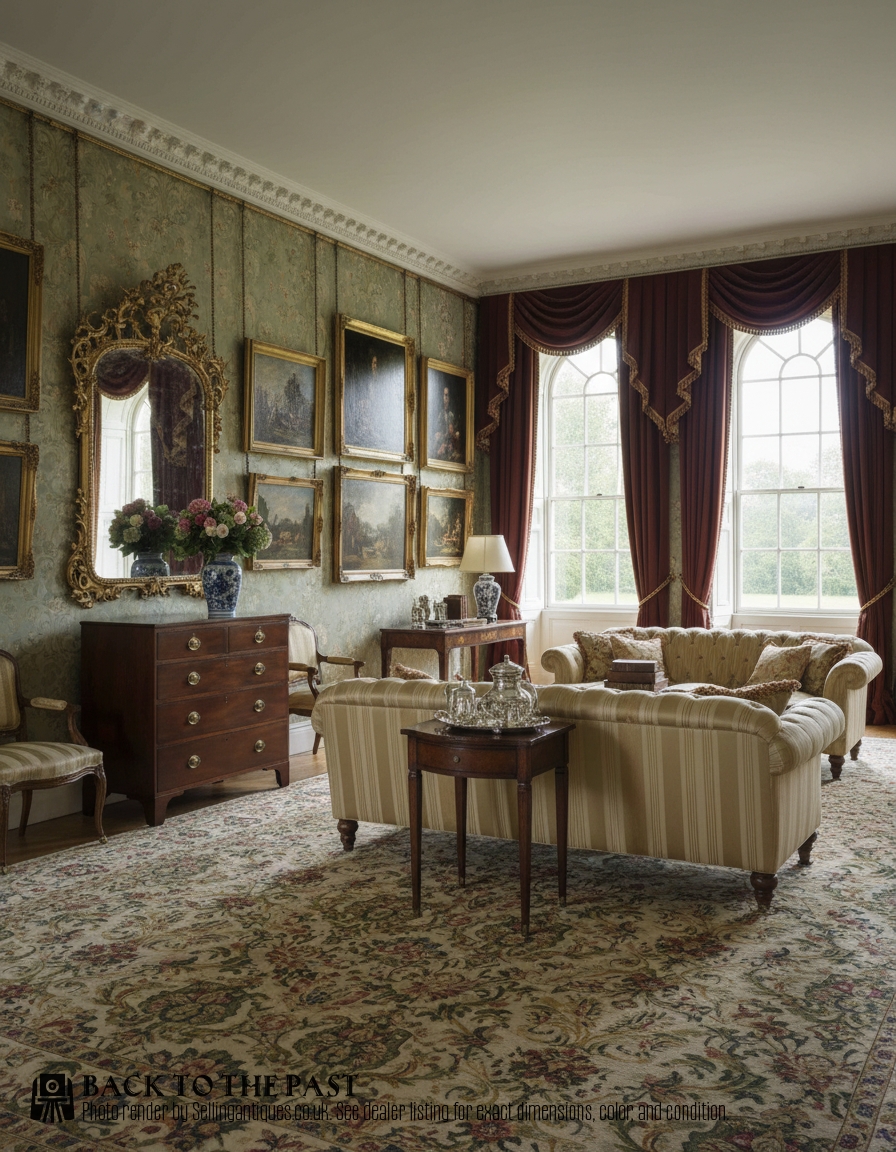
Dark Wood Drawers
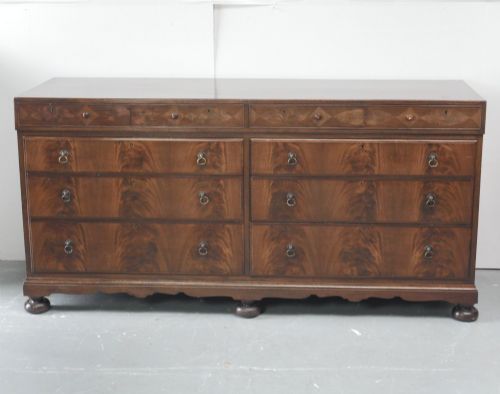
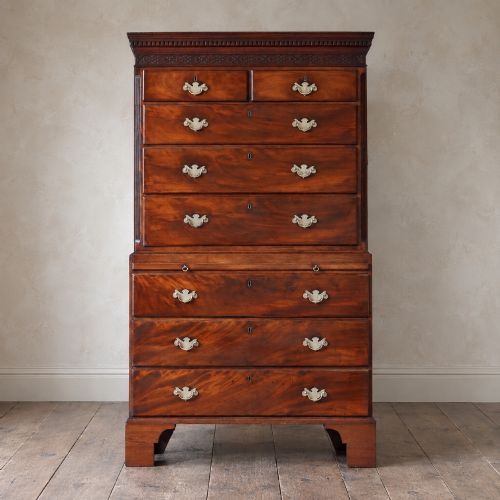
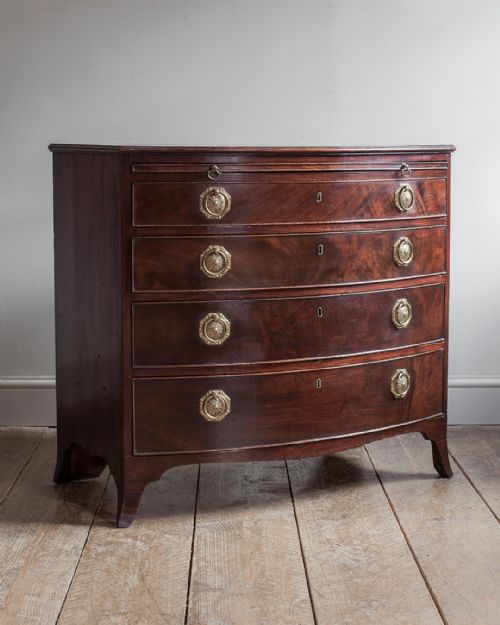
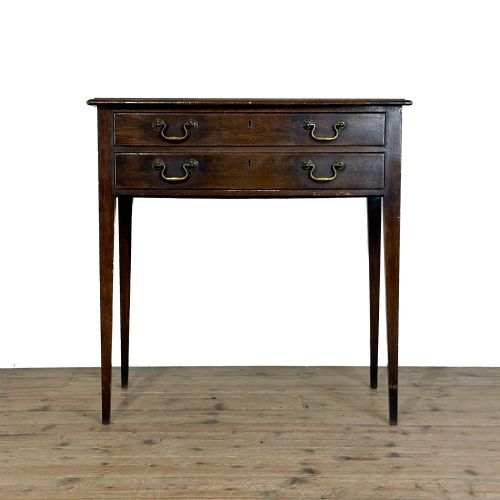
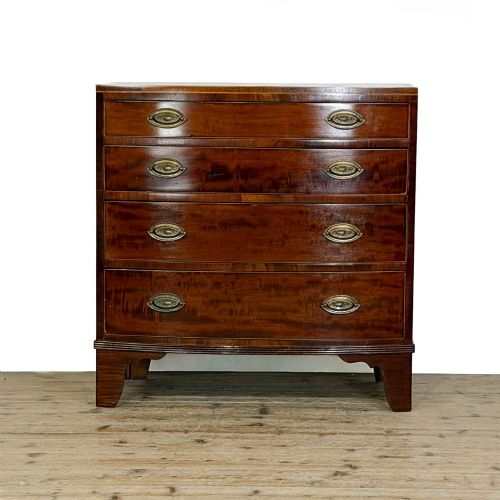
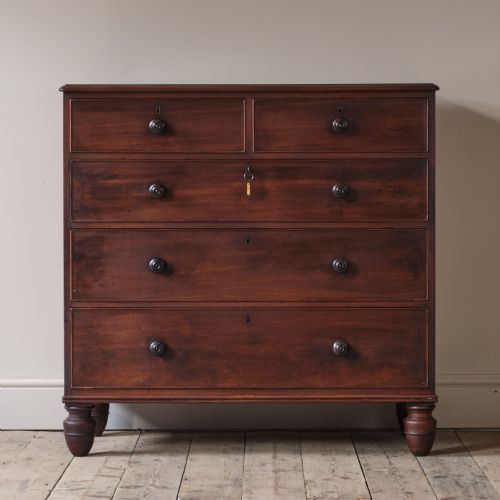
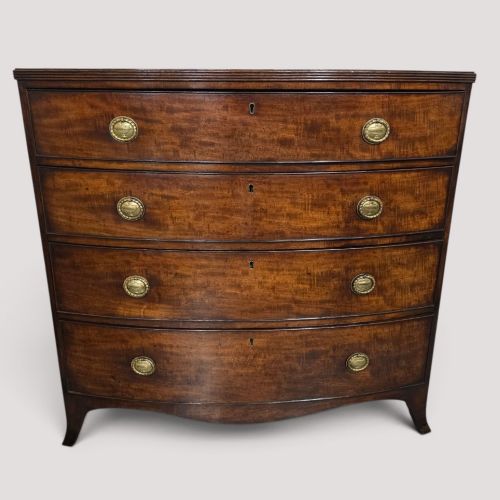
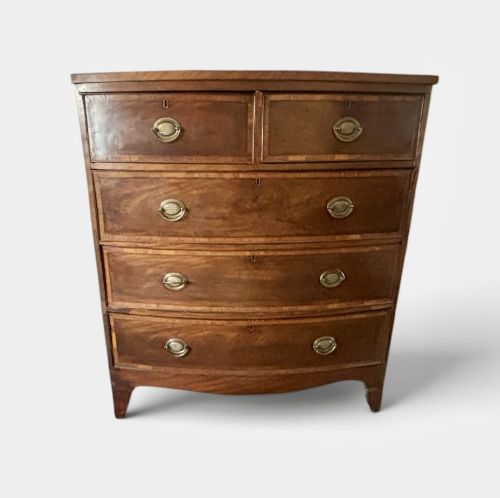
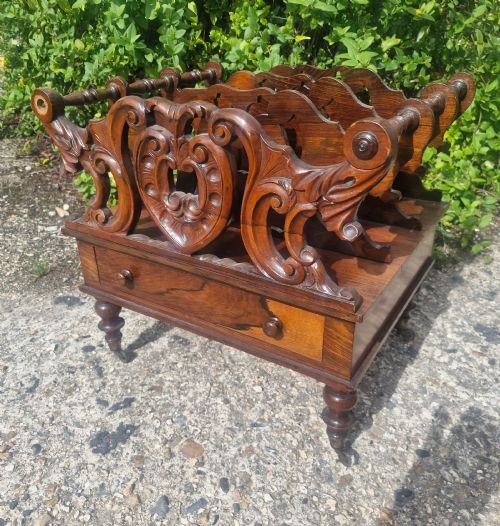
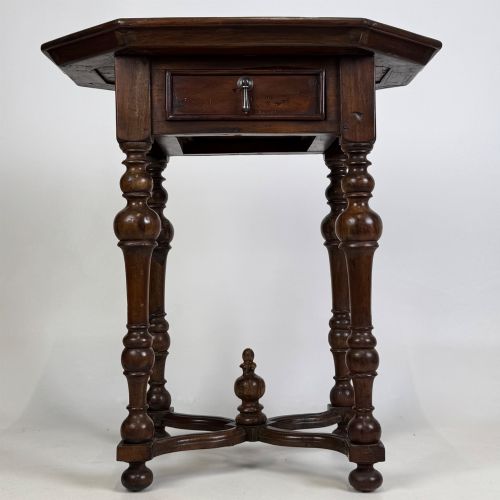
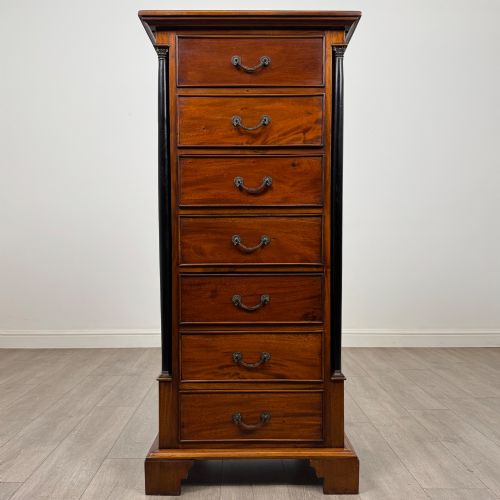
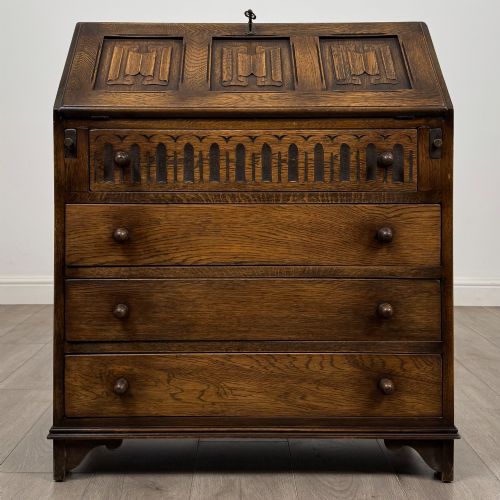
The selection ranges from classic mahogany and oak chests of drawers to side tables, desks, bookcases, and miniature apprentice pieces. Chests of drawers dominate the offerings, appearing in bow front, serpentine, and tall chest-on-chest formats.
Origins vary from British workshops to French commodes, with revival styles also appearing alongside genuine period items. Each piece reflects the domestic storage needs and cabinet-making conventions of its respective era.
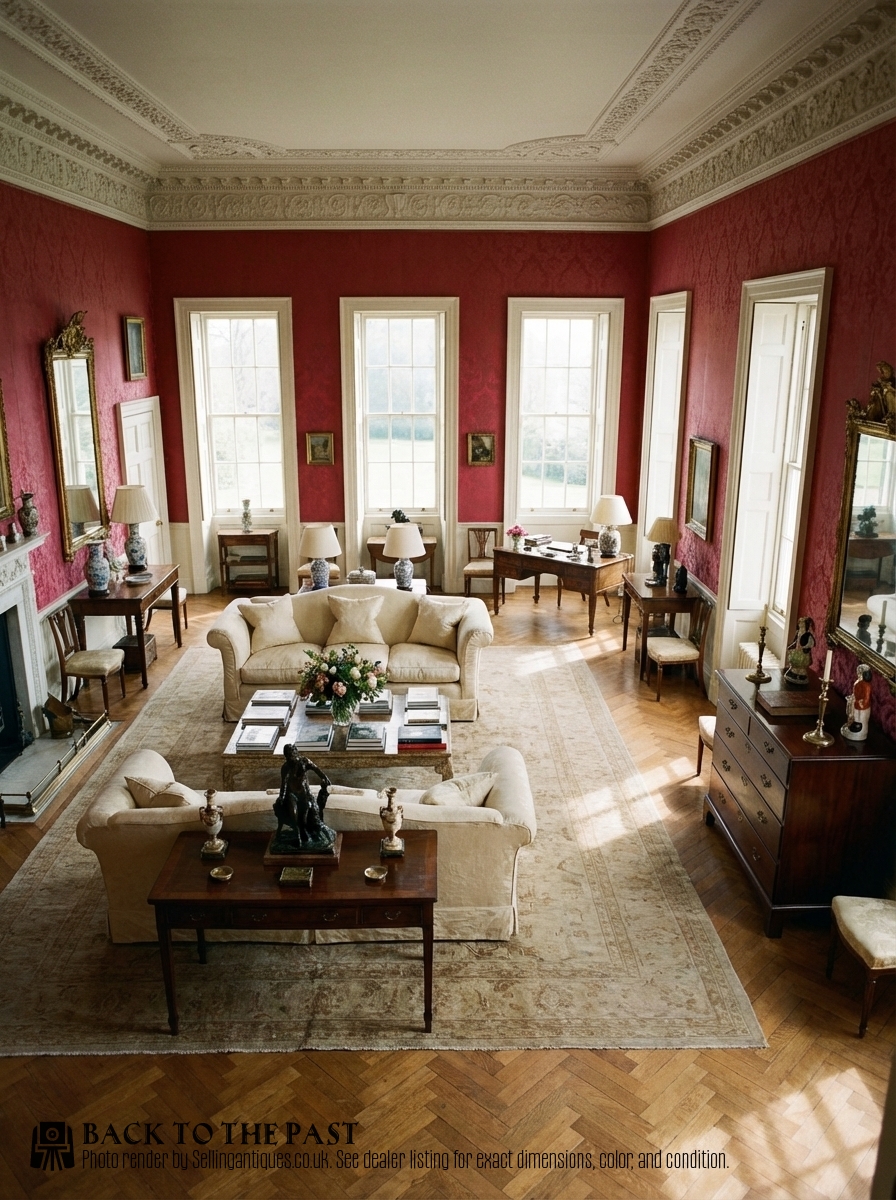
Materials and Construction
Makers utilised dense timbers such as mahogany, flame mahogany, oak, and hardwood, frequently pairing them with brass handles and escutcheons. Ebonised wood and rosewood also feature among the darker tones selected for these cabinets.
Construction methods relied on traditional joinery, dovetailing drawer carcasses and mounting panels to allow timber movement over time. Glass doors, satinwood banding, and carved linenfold details provide decorative contrast to the dark surfaces.
Dark Wood Drawers Retail Price Guide 2026
Typical asking prices for dark wood drawers among the pieces listed under this phrase on Sellingantiques today, from the lower quarter to the upper quarter. They describe what is for sale here now, not the wider market.
Storage forms include full-sized chests, bedside lamp chests, pedestal desks, and miniature apprentice drawers.
Assessing Quality
Quality rests in the selection of timber grain, such as figured mahogany or quarter-sawn oak, and the crispness of any carved or banded details. Superior examples exhibit precise dovetailing, intact original brass hardware, and balanced proportions.
The integrity of the structural carcass and the smooth operation of drawers separate utilitarian items from finer cabinet-making. Original surfaces and patination earned through age elevate the standing of a piece.

Whytock & Reid·T & G Seddon
The Dark Wood Drawers Glossary
- Bow front
- A cabinet front that curves outward in a convex shape, popular in Georgian and Victorian furniture design. This contour softens the profile of large chests.
- Brushing slide
- A pull-out shelf integrated above the top drawer of a chest, historically used for folding clothes or writing. It sits flush when closed.
- Chest on chest
- A tall storage unit comprising one chest stacked directly upon a larger lower chest, often called a tallboy. This form maximises vertical storage.
- Secretaire
- A desk disguised as a chest of drawers or bookcase, featuring a drop-front writing flap that conceals pigeonholes and small drawers. It combines workspace with storage.
- Serpentine
- A cabinet front shaped with a central convex curve flanked by two concave curves, creating an undulating silhouette. It demands high skill from the cabinet-maker.
Dark Wood Drawers: Frequently Asked Questions
How do I date a mahogany chest of drawers?
Dating relies on examining construction techniques, timber selection, and hardware styles across different design periods. Georgian pieces often display hand-cut dovetails and specific bracket feet, while Victorian examples introduce heavier proportions and different drawer linings.
Secondary woods used inside the carcass also provide clues to origin and era. Comparing the overall silhouette against known period styles helps narrow down the decade of manufacture.
What is a brushing slide used for?
A brushing slide served as a temporary folding surface in bedrooms before dedicated dressing tables became standard. Users pulled out the veneered shelf to brush garments or sort linen without walking across the room.
In polite company, it also offered a convenient ledge for writing short notes. Today, it remains a hallmark of better-quality 18th-century case furniture.
Are apprentice pieces genuine antiques?
Apprentice pieces are authentic miniature furniture items created by journeymen to demonstrate their skill before joining a trade guild. They replicate full-size chests of drawers in every construction detail, down to the dovetails and miniature brass pulls.
Collectors prize these small chests for their intricate scale and scarcity. They functioned as portable portfolios rather than toys for children.
How should I care for antique dark wood?
Antique dark wood thrives in stable room environments away from direct sunlight and sudden temperature shifts. Excessive heat causes timber to dry out and split, while dampness damages polish and glue joints.
Applying microcrystalline wax periodically helps nourish the surface and preserve the historic patina. Avoid modern silicone sprays, which degrade traditional wood finishes.