


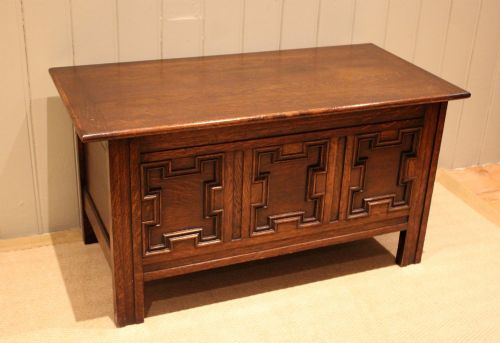
Dark Wood Coffer Box
A dark wood coffer box provides enduring domestic storage, bringing centuries of sturdy carpentry and rich timber tones into contemporary rooms.
Dark Wood Coffer Box
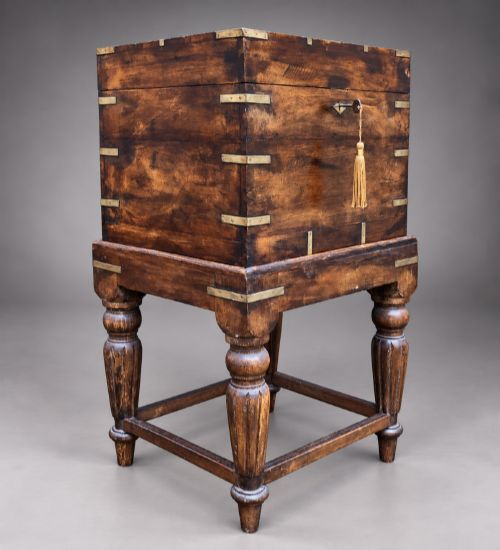
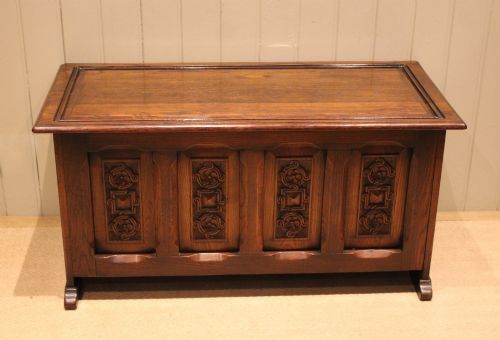
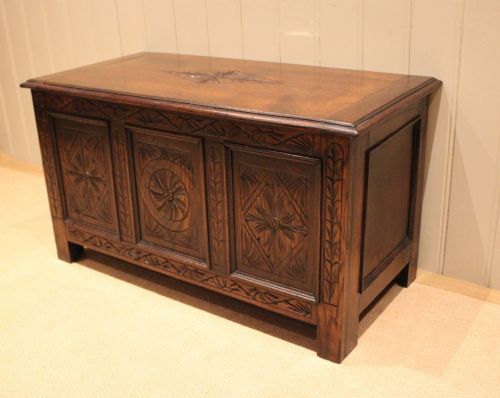
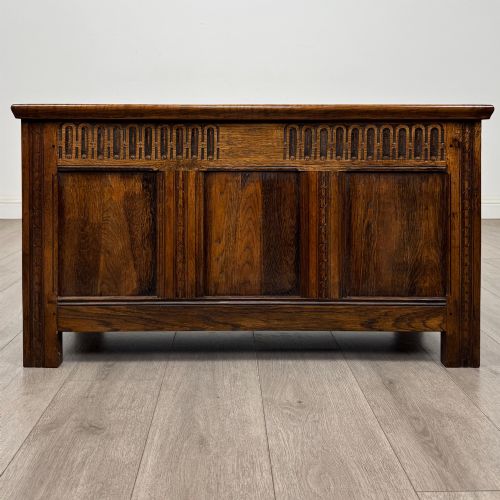
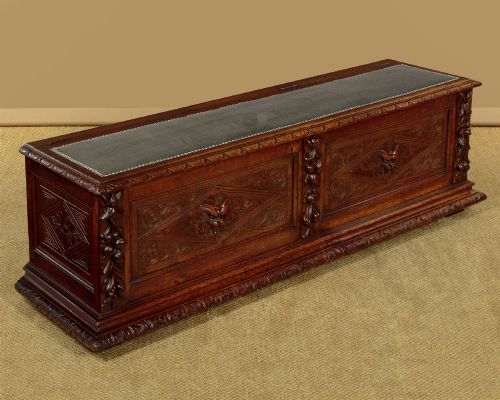
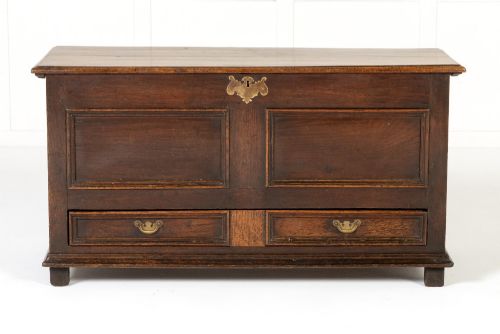
A dark wood coffer box is a sturdy storage chest designed for domestic use, frequently found in heavy timbers like oak. Buyers browsing this page will encounter substantial vessels intended for linens, blankets, or household valuables.
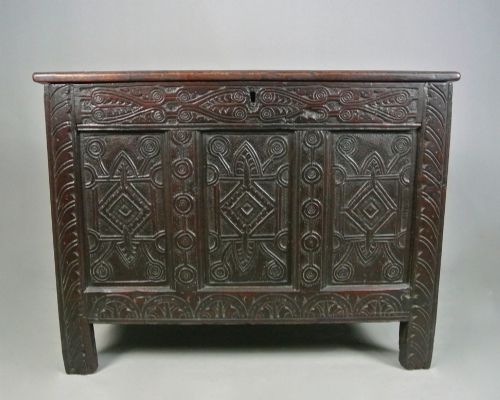
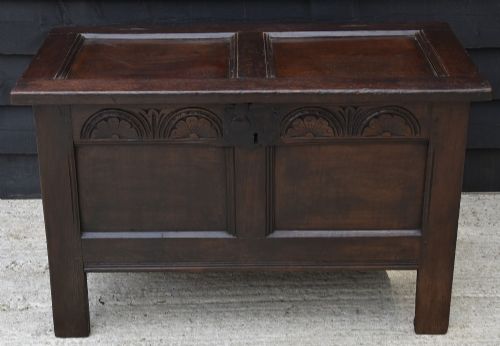
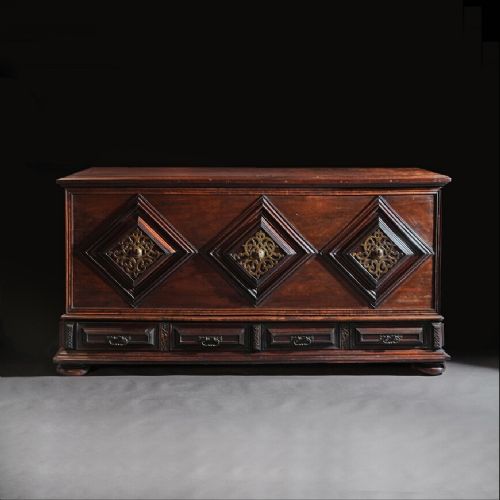
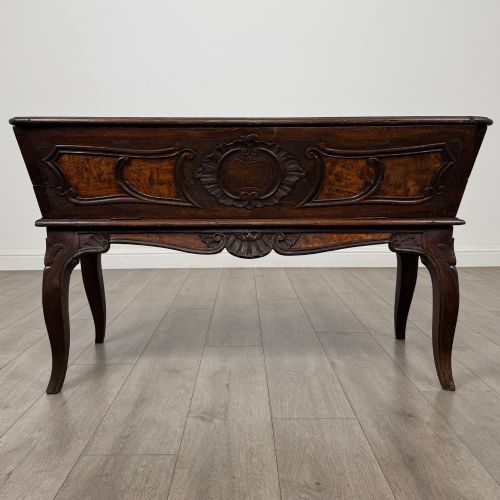
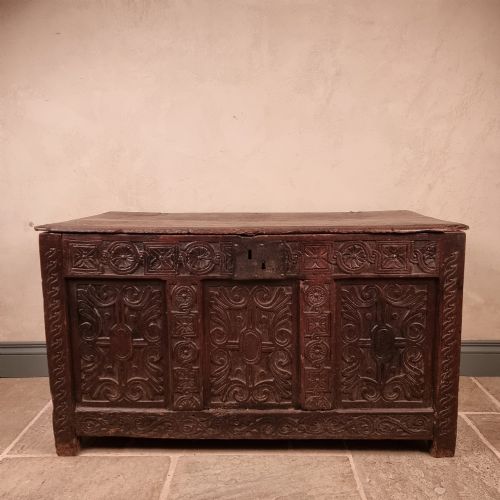
The selections span from seventeenth-century English panels to later regional pieces, including nineteenth-century examples and twentieth-century interpretations. These domestic containers range from simple plank constructions to heavily carved receptacles originating across Europe and beyond.
Common variations include mule chests featuring lower drawers, box settles incorporating seating backs, and dowry trunks decorated with regional carving or inlay. Most surviving pieces utilise dense hardwoods that have darkened gracefully through decades of handling and wax polish.
Materials and Construction
Makers relied principally upon native oak, supplemented by teak, walnut, elm, and exotic imported hardwoods depending on the origin and period. Iron and brass hardware such as strap hinges, locks, and corner brackets provided essential structural reinforcement.
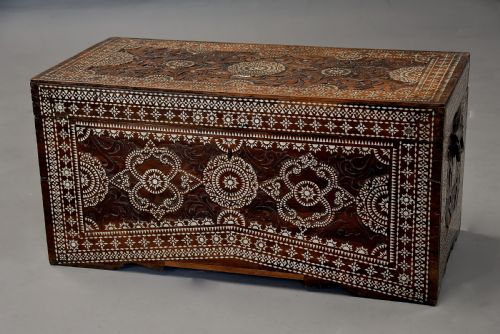
Construction techniques typically involved panel-and-frame joinery, six-plank assembly, or dovetailed joints designed to accommodate the natural movement of timber over time. Surfaces were frequently decorated with surface carving, linenfold panels, or inlaid mother-of-pearl.
Iron studs and wrought metal mounts secured the corners and lids of utilitarian trunks, while domestic chests often received hand-planed finishes and applied mouldings. The combination of dense wood and forged metal ensured these boxes endured centuries of hard service.
Regional styles represented include English Dorset and Welsh coffer bach forms alongside Middle Eastern and European trunks.
Distinctions in Quality
Quality rests upon the integrity of the timber selection, the crispness of any hand-carved ornamentation, and the original state of the joints and boards. Pieces retaining their original ironwork, floorboards, and lids command greater regard than those rebuilt with replacement timbers.
The sophistication of the joinery separates standard utilitarian boxes from superior commissioned works, visible in tight corner joints and well-proportioned panels. Finer examples display deliberate design choices in their mouldings and balanced proportions rather than purely functional assembly.
The Dark Wood Coffer Box Glossary
- Coffer
- A heavy wooden box with a lid, traditionally used for storing valuables, documents, or garments. These vessels often feature robust joinery and hinged tops.
- Mule chest
- A storage chest fitted with one or more drawers beneath the main compartment. This form emerged when makers sought easier access to stored linens without lifting the lid.
- Linenfold
- A style of carved wooden panelling that resembles folded cloth. This decorative motif appears frequently on sixteenth and seventeenth-century English panels.
- Six-plank
- A primitive box construction method utilising six distinct boards joined directly at the edges. This straightforward technique predates complex framed panel construction.
- Box settle
- A wooden bench featuring a high back and a hinged seat concealing a storage compartment beneath. These dual-purpose seats provided warmth and utility near hearths.
Dark Wood Coffer Box: Frequently Asked Questions
What were coffer boxes originally used for?
These receptacles served primarily to secure precious textiles, household silver, important documents, and personal garments safely away from dampness and theft.
Because houses lacked built-in closets, large wooden chests formed the foundation of domestic storage for centuries.
How do I date an antique oak coffer?
Dating relies on observing construction methods, tool marks left by hand planes, hinge types, and stylistic carving motifs characteristic of specific reigns.
Board shrinkage, timber oxidation, and the presence of handmade iron nails also offer reliable clues to an item's age.
Can I use a coffer box as a coffee table?
Many solid examples possess flat lids and sturdy proportions that suit modern living spaces as functional coffee tables with hidden storage.
Buyers should ensure the height and surface area complement surrounding seating before placing items on antique timber.
How should I clean and maintain dark wood?
Regular dusting with a dry, soft cloth prevents particle buildup, while periodic applications of quality beeswax nourish the dry grain.
Avoid placing these pieces near direct heat sources or strong sunlight to prevent the timber from splitting or fading.