


Antique Wood Trunk
When you search for an antique wood trunk, you are looking at substantial storage pieces built to travel or hold domestic linens across centuries.
Antique Wood Trunk
An antique wood trunk encompasses heavy vernacular storage pieces including early joined coffers, mule chests, and robust travel containers. These functional items served domestic households and military officers alike, travelling across maritime routes or sitting in period halls.
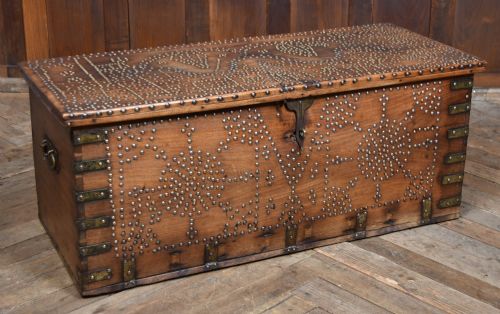
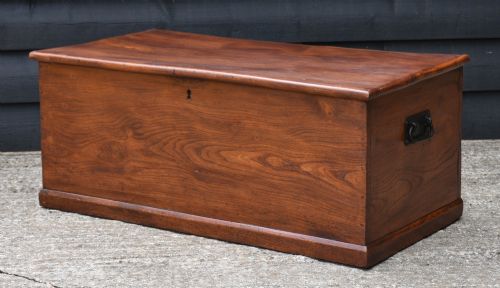
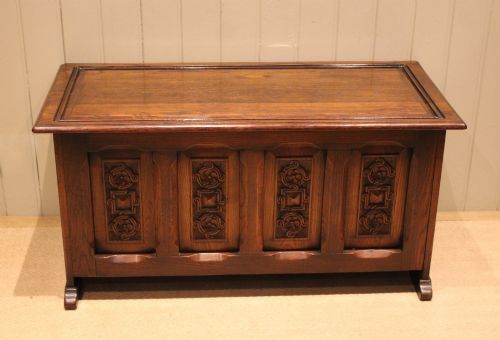
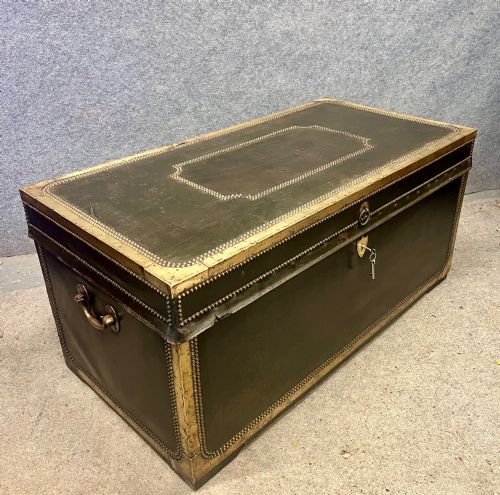
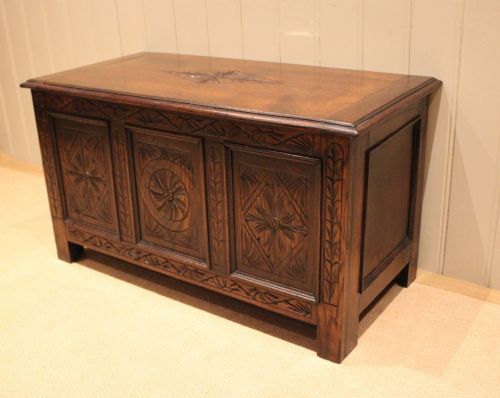
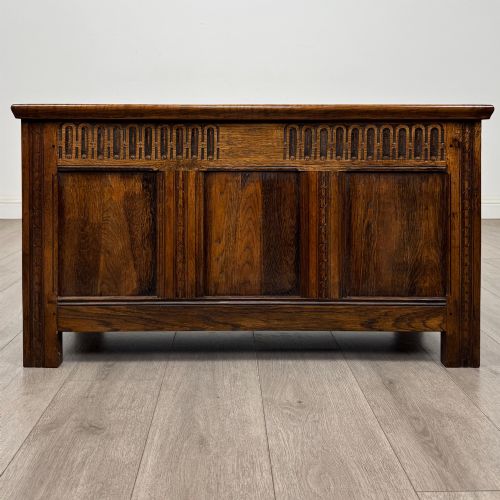
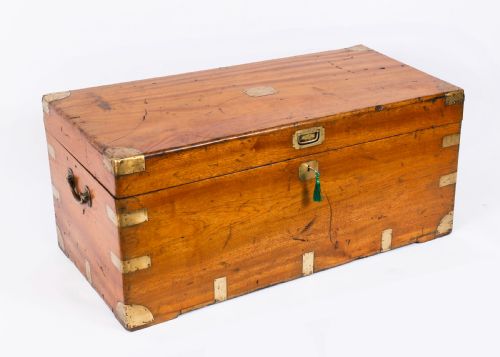
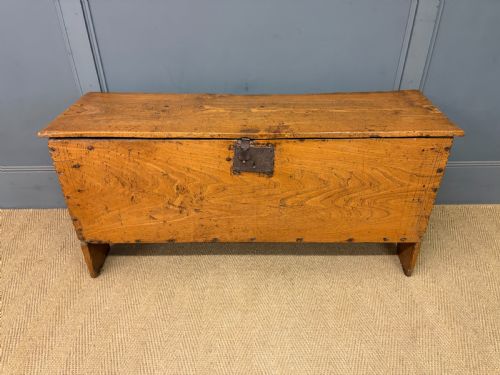
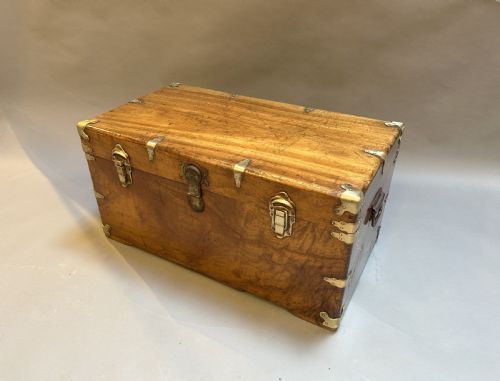
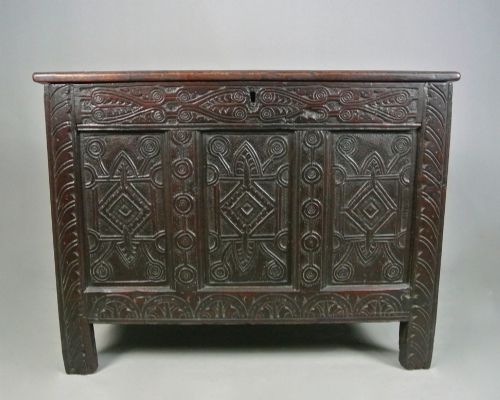
The most common examples met on this page are camphor wood campaign trunks fitted with brass mountings and robust oak coffers dating from the seventeenth to the nineteenth centuries. Buyers also encounter painted steamer trunks, elm six-plank coffers, and carved blanket chests from various British and international workshops.
How they were made
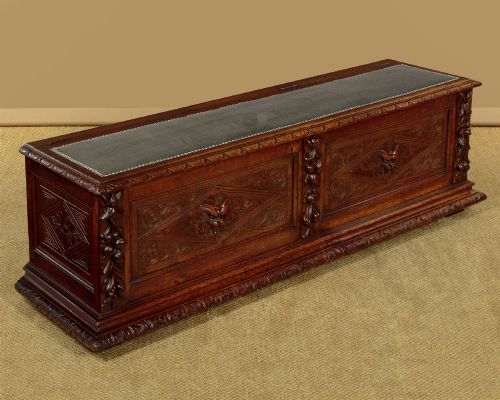
Joinery relies on solid timber construction such as oak, elm, camphor wood, and pine, often jointed with traditional plank methods or panelled frames. Master carpenters shaped dense hardwoods using hand tools, carving robust panels and fitting dovetailed or pegged joints that survived heavy travel.
Metalwork plays a defining role in construction, utilising brass corners, iron straps, and studded reinforcements to protect edges during long journeys. Leather coverings, paint finishes, and inlaid mother of pearl provide exterior protection and decoration on select campaign and steamer pieces.
Listings feature periods ranging from the 17th century through to Edwardian and 1930s designs, constructed in oak, camphor wood, brass, and iron.
What varies in quality
Quality rests upon the integrity of the original timber, the crispness of hand-carved panels, and the survival of period brass fittings or locks. Superior pieces retain their original patination and structural hardware without extensive timber replacement.
The sophistication of regional or colonial joinery separates standard utility boxes from high-status campaign chests or finely carved seventeenth-century coffers. Original linings, maker stamps, and untouched surface patinas elevate the standing of individual examples.
The Antique Wood Trunk Glossary
- Coffer
- A heavy wooden chest traditionally used for storing valuables or household goods. These early forms often feature hand-carved front panels and robust joined construction.
- Campaign trunk
- A portable storage chest designed for military officers on the move. They typically feature recessed brass handles, reinforced corners, and durable camphor wood bodies.
- Mule chest
- An eighteenth-century storage piece combining a blanket chest with one or more bottom drawers. This hybrid form bridges the gap between traditional coffers and modern chest of drawers.
- Six-plank coffer
- A primitive storage box constructed from six distinct boards joined simply at the edges. This vernacular form represents some of the earliest surviving domestic furniture.
- Steamer trunk
- A low-profile travel trunk built for transport in the luggage holds of ocean liners during the late nineteenth and early twentieth centuries. They often employ wood, canvas, and metal banding.
Antique Wood Trunk: Frequently Asked Questions
What is a campaign trunk?
A campaign trunk is a specialised military storage chest built for transport during active service. These pieces utilise durable camphor wood and robust brass mountings to withstand harsh travel conditions.
Officers relied on these sturdy boxes to transport uniforms and equipment across land and sea. Their distinctive recessed hardware prevented snagging in transit.
How do I date an oak coffer?
Dating an oak coffer involves examining the construction methods, tool marks, and style of carving present on the panels. Seventeenth-century examples often display pegged frame-and-panel assembly and geometric or floral chip carving.
Later revival pieces from the nineteenth and twentieth centuries utilise modern fixings or machine-sawn timber. Comparing the patination of the wood helps confirm the age of the piece.
Why use camphor wood?
Camphor wood was favored for travel trunks because its natural aromatic oil repels insects and moths. This property made it ideal for protecting woollens and uniforms during long maritime journeys.
The distinctive scent often lingers in antique examples, providing a practical advantage for modern domestic storage.
How do I care for antique wood?
Maintaining antique wood requires keeping pieces away from direct heat sources and sudden humidity changes. Applying natural beeswax periodically preserves the historic surface and feeds dry timber.
Avoid harsh modern cleaning chemicals that strip the original patina built up over centuries of handling.