
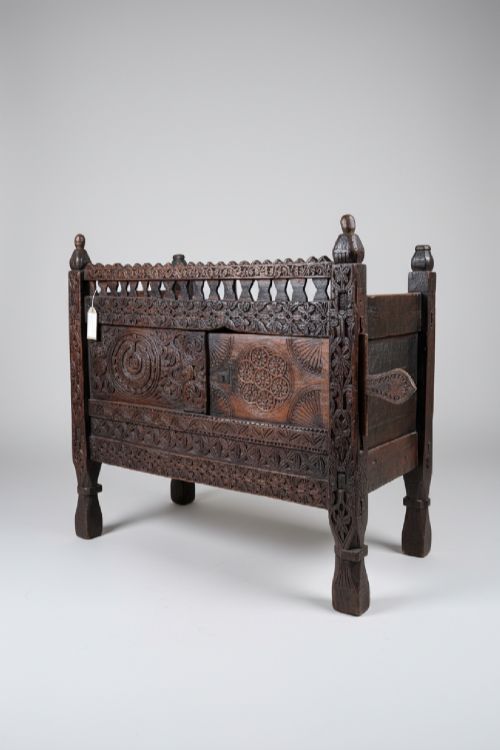


Carved Timber Blanket Chest
A carved timber blanket chest anchors a room with generations of utility, holding linens and heirlooms behind robust panelled sides.
Carved Timber Blanket Chest
A carved timber blanket chest serves as heavy domestic storage, appearing in forms ranging from joined oak Lancashire coffers to Indian dowry boxes and French provincial pieces. These items originate across centuries and continents, reflecting local domestic needs for secure storage.
The version most commonly met on this page is the sturdy oak coffer or camphor wood chest from the seventeenth or nineteenth century. Such items often double as benches or tables while securing textiles and valuables.
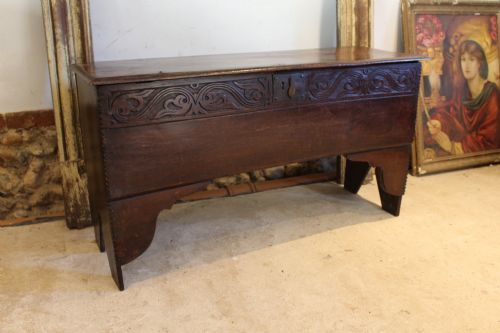
Regional variations span from Welsh vernacular six plank construction to ornate Swat Valley folk art and Anglo Indian storage boxes. Each geography imparts distinct architectural traits to the timber.
Materials and Construction
Carpenters constructed these boxes primarily from solid timbers like oak, teak, camphor wood, pine, walnut, elm, and cedarwood. These woods were chosen for local availability and durability against heavy daily use.
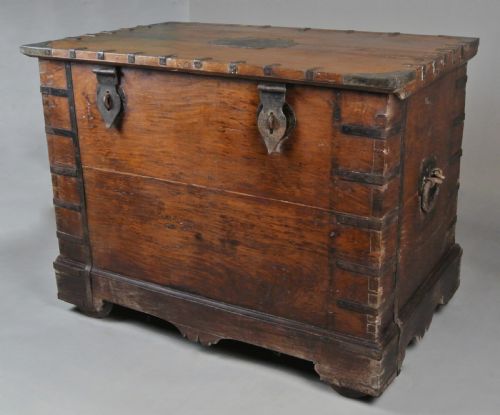
Construction techniques involve joined framework, six plank assembly, or heavy iron bindings securing thick boards. Metalwork in iron and brass reinforced corners and lids, while hand carving decorated the exterior surfaces.
Camphor wood chests arrived from distant ports smelling perpetually of aromatic wood that naturally kept household moths at bay.
Assessing Quality
Quality rests in the integrity of the timber selection and the depth of the hand carving executed across the panels. Superior pieces display harmonious proportions and original structural hardware rather than replaced components.
The sophistication of regional joinery distinguishes finer examples from basic utilitarian boxes. Crispness in relief carving and timber stability indicate superior workshop standards.
The Carved Timber Blanket Chest Glossary
- Coffer
- A heavy wooden chest traditionally used for storing valuables or documents. These storage pieces often feature hinged lids and robust panel construction.
- Cassone
- An Italian antique chest, frequently carved or painted, designed for marriage or dowry goods. These items represent grander domestic furnishings from continental Europe.
- Six plank
- A primitive construction method utilising six individual boards joined directly at the edges. This technique forms the foundation of early vernacular storage boxes.
- Dowry chest
- A storage trunk prepared for a bride containing household linens and possessions. These boxes often bear significant regional carving or painted decoration.
- Joined oak
- Furniture constructed using mortise and tenon framing rather than simple board assembly. This method provides greater structural stability for seventeenth century items.
Carved Timber Blanket Chest: Frequently Asked Questions
What is a carved timber blanket chest?
A carved timber blanket chest is a heavy storage box designed to hold textiles, linens, and personal valuables securely. These pieces utilise solid woods like oak, teak, and camphor, ornamented with relief carving or iron hardware.
Historically placed in domestic bedchambers or halls, they functioned for both storage and casual seating. Their robust construction allowed them to survive centuries of household relocation.
How were these chests used originally?
These trunks held valuable household goods, winter blankets, and marital dowries away from dampness and pests. Families stored precious documents and textiles inside, often locking the heavy lids with iron mechanisms.
Beyond simple containment, their flat lids provided practical surfaces for folding clothes or sitting near hearths. In larger homes, they served as mobile wardrobes before fitted closets became common.
How do I live with a wooden chest?
Place the chest away from direct heat sources and strong sunlight to prevent the timber from drying out or splitting. Allow adequate air circulation around the piece in domestic spaces.
The flat top makes an ideal surface for displaying lamps or decorative objects while keeping interior storage accessible. Regular dusting and occasional wax treatment maintain the finish of antique wood.
How can I tell the period apart?
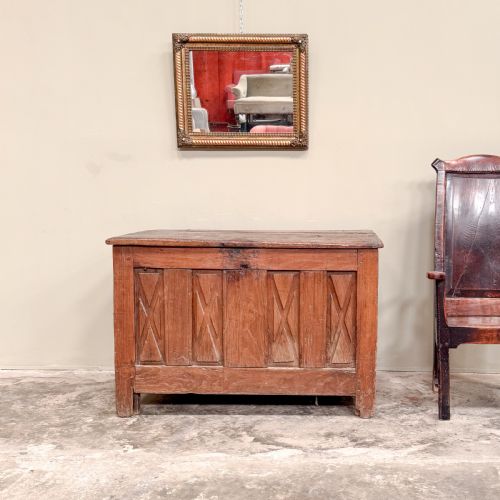
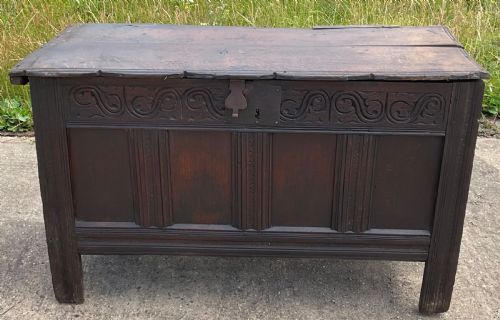
Seventeenth century pieces often display joined oak framing, pegged joints, and geometric panels typical of vernacular workshops. Nineteenth century examples frequently incorporate exotic hardwoods like camphor or teak with carved motifs from regional traditions.
Hardware styles, timber choices, and construction methods offer clear clues to manufacturing dates. Joined frameworks contrast sharply with later panel assembly or simple box construction.