
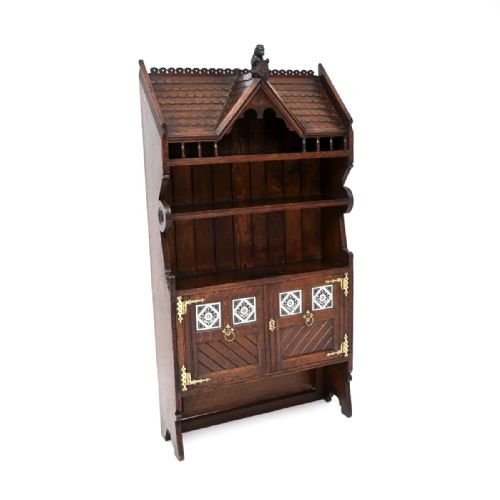
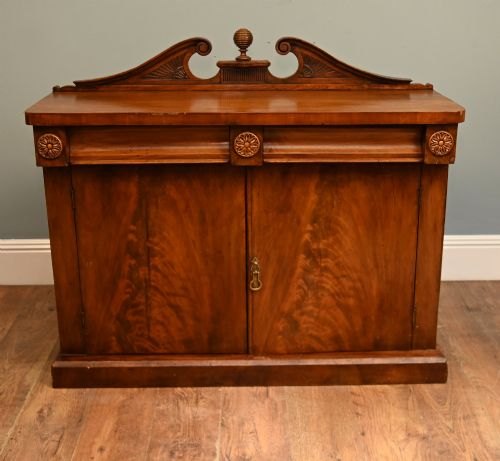
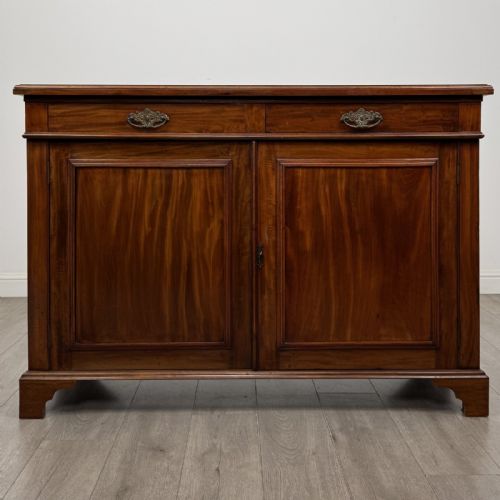
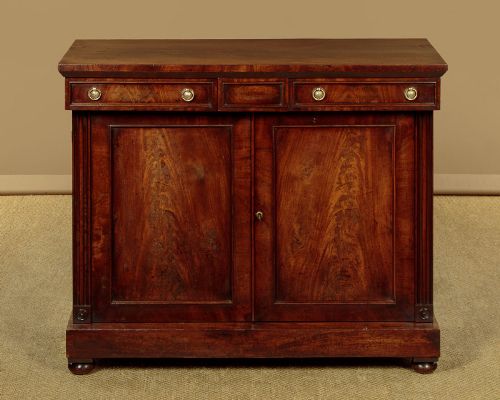
Dark Wood Chiffonier Cabinet
A dark wood chiffonier cabinet combines lower cupboards with upper shelves or mirrors, offering practical low-profile storage shaped by Regency and Victorian tastes.
Dark Wood Chiffonier Cabinet
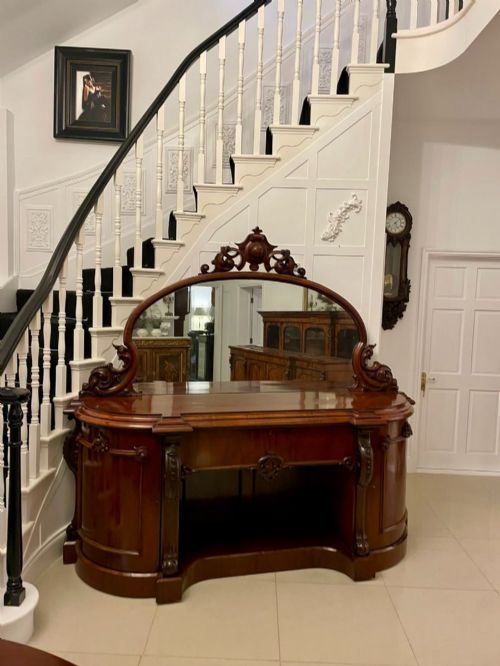
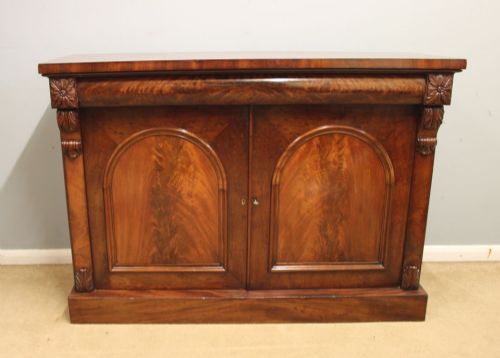
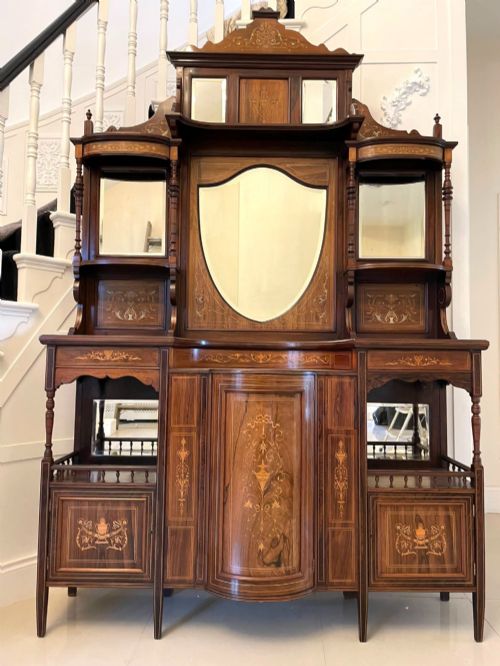
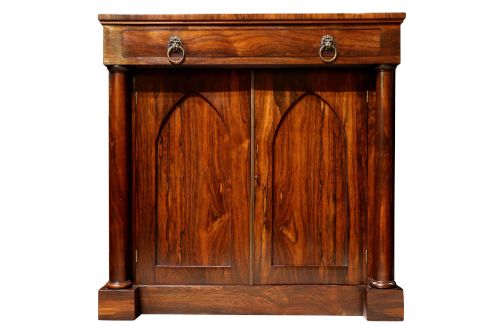
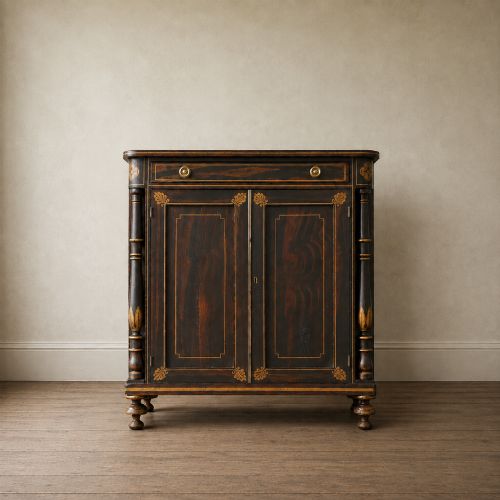
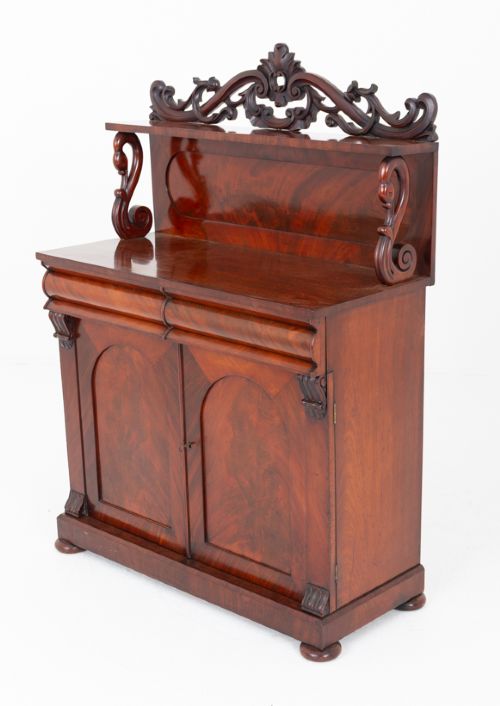
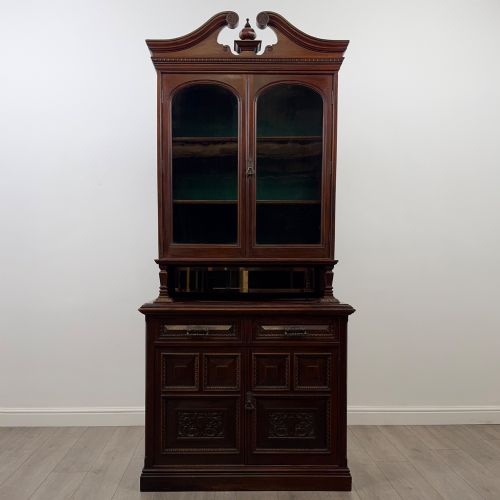
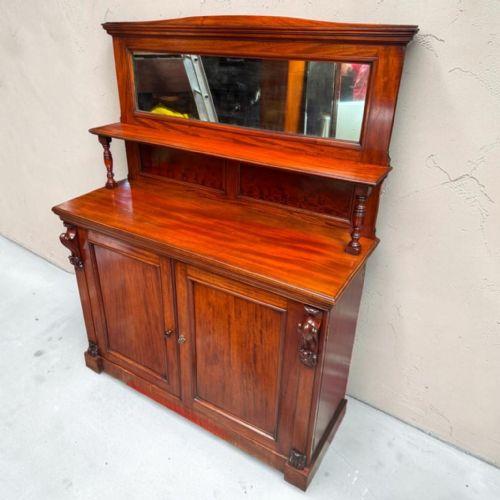
A dark wood chiffonier cabinet is primarily a low-standing storage piece combining enclosed lower cupboards with shelves or a mirror back above. When exploring this selection, buyers encounter forms ranging from compact Regency and William IV pieces to heavier Victorian and late Victorian iterations.
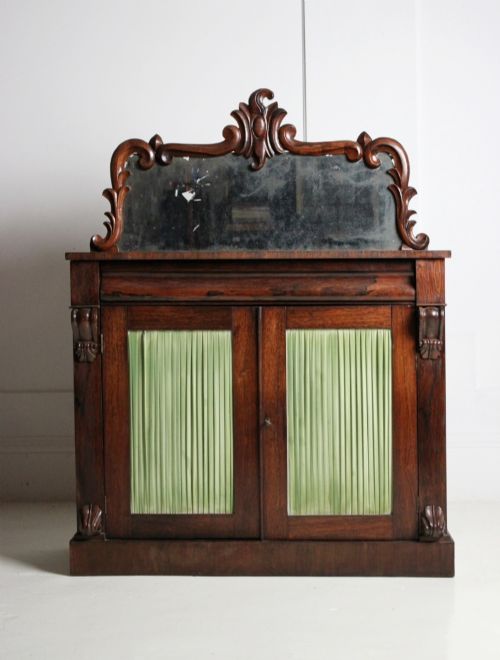
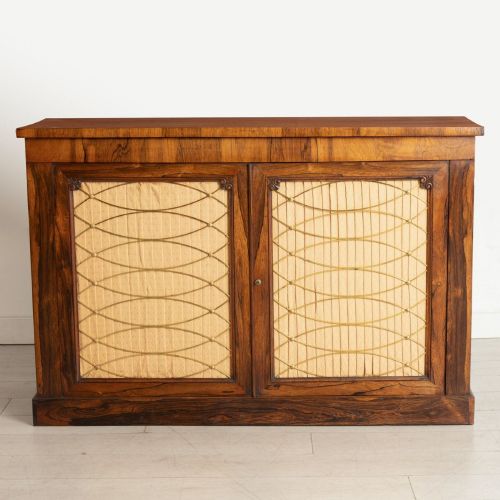
The versions most commonly met on this page belong to the 19th century, drawing on periods such as the Regency and early Victorian eras. These designs function as sideboards, display cabinets or servers, often incorporating glazed doors, open shelving or pleated fabric panels behind brass grilles.
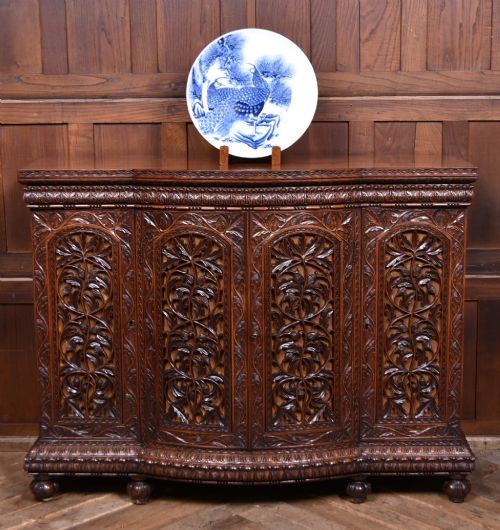
Origins span standard British cabinet-making traditions alongside notable examples of Anglo-Indian colonial work. The resulting assortment provides low-profile storage tailored for dining rooms, sitting rooms and hallways.
How they were made
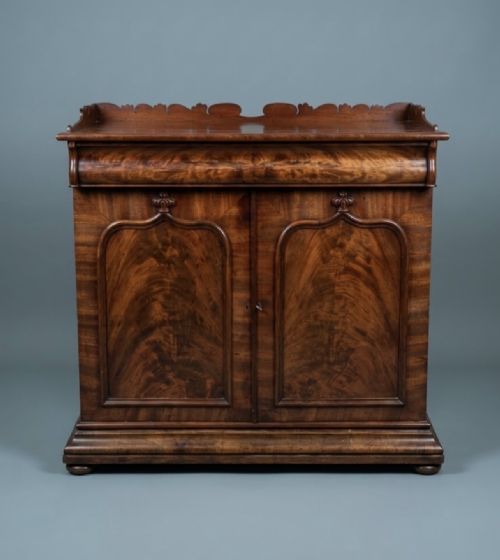
Cabinet-makers relied heavily on dense tropical hardwoods like mahogany and rosewood, frequently applying flame mahogany veneer to achieve striking grain patterns on door fronts and drawers. Secondary timbers provided internal structure while exterior surfaces showcased the natural depth of the dark wood.
Decorative embellishments utilised contrasting materials, including brass inlays, delicate marquetry, and glass panels. Metal grilles backed by pleated fabric or mirrored backs added reflective light and texture to the upper portions of the cabinet.
Materials appearing across the current selection include brass, marble, mirror glass, and pleated fabric panels behind cabinet grilles.
What varies in quality
Quality rests significantly on the selection of timber veneers and the precision of decorative inlays. Finer pieces demonstrate careful matching of flame mahogany or rosewood grains across doors and panels, paired with crisp brass work rather than cast substitutes.
Construction methods determine durability and finish, visible in the tightness of drawer joints, the stability of marble tops, and the integrity of applied mirror frames. Superior execution shows restraint and balance in the carved architectural details.
Holland & Sons·Robert Strahan
The Dark Wood Chiffonier Cabinet Glossary
- Chiffonier
- A low sideboard or cabinet featuring enclosed cupboards below, sometimes topped with a shelf superstructure or mirror back. This form evolved during the early 19th century to serve dining and drawing rooms.
- Flame Mahogany Veneer
- A thin slice of mahogany timber cut from the fork of the tree where branches meet the trunk. It creates a distinctive, fiery flame-like pattern across cabinet doors.
- Marquetry
- The art of applying small pieces of veneer to a structure to form decorative patterns or pictures. Craftsmen utilised different wood tones to create floral or geometric motifs.
- Goncalo Alves
- A dense exotic hardwood imported from South America featuring striking dark brown and warm golden-brown contrasting stripes. It appeared in select high-end Regency furniture.
- Brass Grille
- A pierced metal lattice fitted into cabinet doors instead of solid wood or glass. These grilles were often backed with pleated silk or fabric to conceal contents while allowing airflow.
Dark Wood Chiffonier Cabinet: Frequently Asked Questions
What is a chiffonier cabinet used for?
These cabinets served primarily in dining rooms and parlours for storing china, linens, and silver. The lower cupboards held bulkier items while upper shelves displayed decorative objects.
Over time, they adapted into versatile side units suited for books, glassware, and general household storage in various reception rooms.
How do I date a chiffonier?
Dating relies on architectural styling, timber choice, and hardware details. Regency and William IV pieces often display heavier rosewood veneers and brass inlay, while Victorian examples introduce mirror backs and carved ornamentation.
Earlier 19th-century models tend to feature cleaner lines and simpler bracket feet, transitioning into more ornate cupboard doors and backboards by the mid-Victorian period.
Are these cabinets made of solid wood?
Most examples utilise solid secondary timbers for internal framing and drawer construction. Premium exterior surfaces feature thick timber veneers, such as flame mahogany or rosewood, applied over stable base woods.
This technique prevented warping while showcasing dramatic wood grain patterns that solid planks could not achieve uniformly.
How do I care for dark wood furniture?
Maintain the finish by keeping pieces away from direct sunlight and sudden temperature changes, which can dry out antique veneers. Regular dusting with a soft, dry cloth preserves the polished surface.
Apply a quality wax sparingly when the wood appears dry, buffing gently to maintain the natural lustre without building up heavy residues.