


Antique Painted Chiffonier
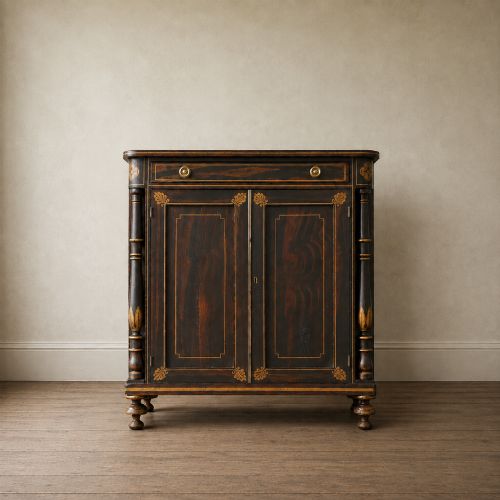
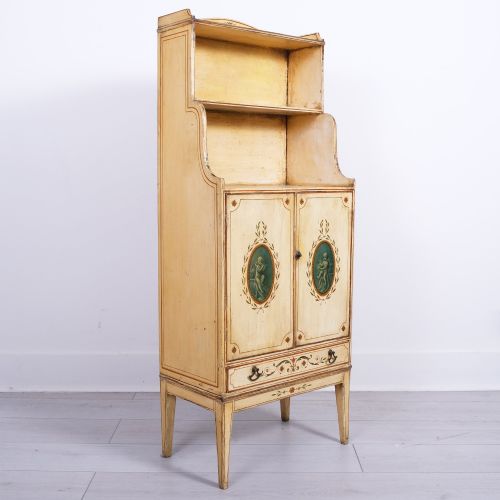
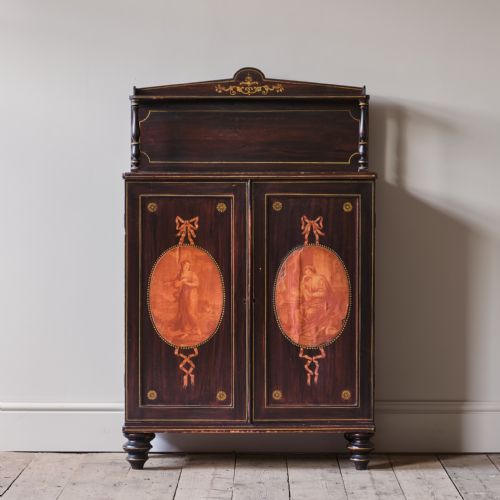
An antique painted chiffonier brings versatile low storage and display surface into a room, finished with decorative brushwork that softens formal timber.
Antique Painted Chiffonier
An antique painted chiffonier combines low cabinetry with surface display space, drawing on forms recorded across the Regency, Victorian, and later nineteenth century periods. These pieces serve as practical sideboards and display units, often incorporating glass doors, shelves, or mirror backs.
The versions most commonly met utilise pine, mahogany, and timber carcasses treated with decorative paint surfaces. Stylistic influences range from George III satinwood elegance to French Provincial and Aesthetic Movement ebonisation.
Materials and construction methods
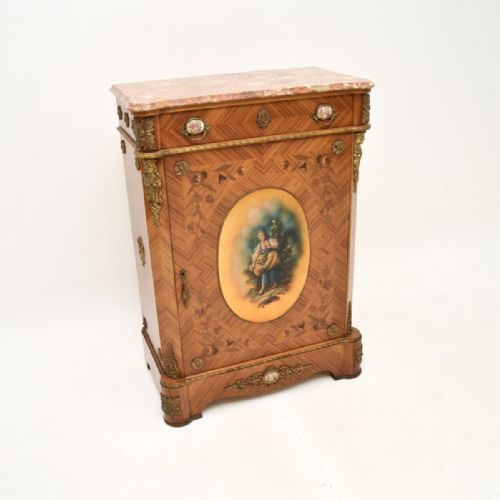
Construction relies on timber foundations such as pine and mahogany, shaped into side cabinets, bookcases, and chiffonier forms. Brass hardware, glass panels, and marble tops frequently supplement the woodwork.
Surface decoration employs paint, gilt highlights, and simulated finishes like rosewood, alongside detailed pen-work and majolica panels inset into the structure.
Listings span the Georgian, Regency, and Victorian eras, showcasing materials from pine and mahogany to marble, brass, and majolica panels.
Distinctions in quality
Quality rests upon the execution of the painted decoration and the precision of the underlying cabinet work. Pieces featuring finely rendered painted panels or simulated wood graining demonstrate superior workshop skill.
The integration of secondary materials such as marble tops, gilt highlights, and majolica inserts elevates the character of the piece above standard utilitarian storage.
The Antique Painted Chiffonier Glossary
- Chiffonier
- A low sideboard or cabinet, typically featuring shelving or enclosed storage beneath a display surface. This form evolved during the nineteenth century into a central piece for the parlour.
- Simulated Rosewood Paint
- A decorative technique where common timber is painted to imitate the rich grain and colour of exotic rosewood. Artisans achieved this effect using layered glazes and fine brushes.
- Aesthetic Movement
- A late nineteenth century style emphasising visual beauty over narrative content, often expressed through ebonised wood and gilt highlights. Pieces from this movement frequently incorporate Japanese-inspired motifs.
- Majolica
- Tin-glazed earthenware popular in the nineteenth century, characterised by colourful opaque glazes. These ceramic panels were often inset into cabinet doors for decorative effect.
- Pen-Work
- A detailed surface decoration applied using ink or paint with a fine pen nib. This technique created intricate linear patterns on furniture surfaces.
Antique Painted Chiffonier: Frequently Asked Questions
What is an antique painted chiffonier used for?
These cabinets provide low storage space for dining or living rooms while offering a top surface for lamps or decorative items.
Many examples also include shelving or enclosed cupboards to hold books, linen, or tableware.
How do I date an antique chiffonier?
Dating relies on examining the construction timber, hardware, and stylistic details such as Regency curves or Victorian ebonisation.
Painted decoration techniques and secondary materials like majolica panels or marble tops further help narrow the period of origin.
Where should I place a painted cabinet?
A painted chiffonier suits living rooms, hallways, or dining spaces where its decorative surface can add colour and focal interest.
Position it against a solid wall away from direct sunlight to protect the painted finish and timber.
How do I care for painted antique furniture?
Dust the surface gently with a dry, soft cloth and avoid chemical cleaners that might damage the aged paint layers.
Keep the piece away from extreme temperature shifts and damp environments to preserve both the timber and the decorative finish.