

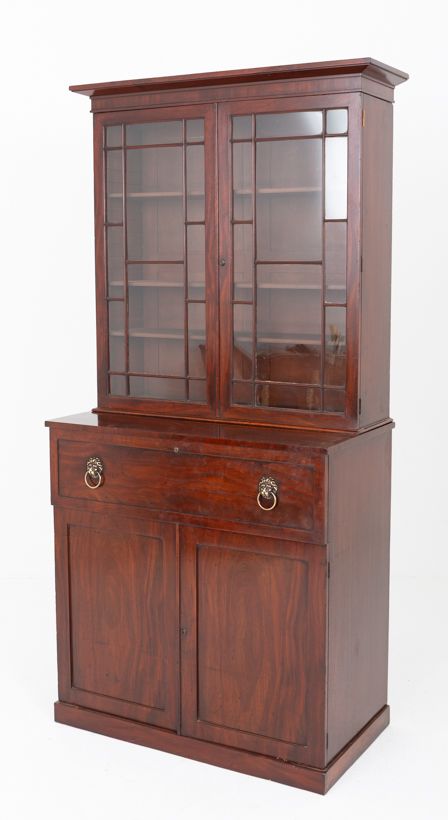
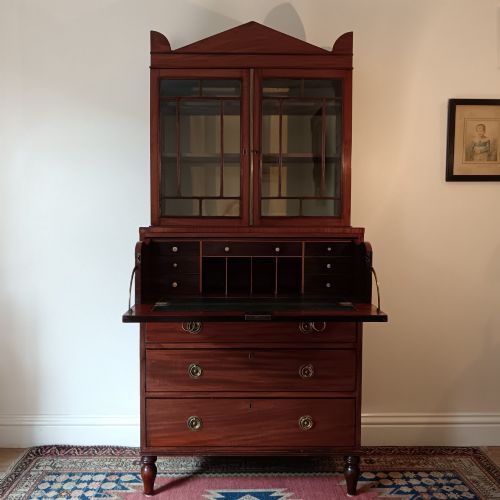
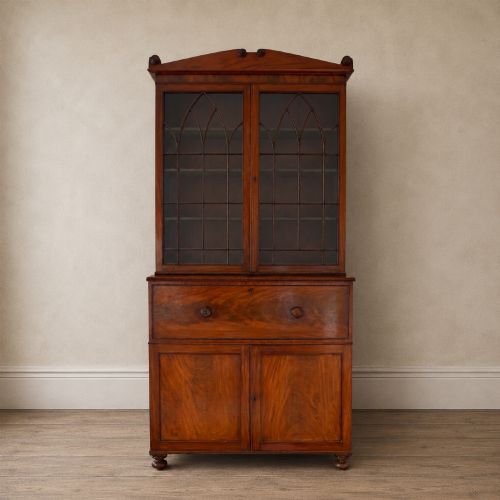
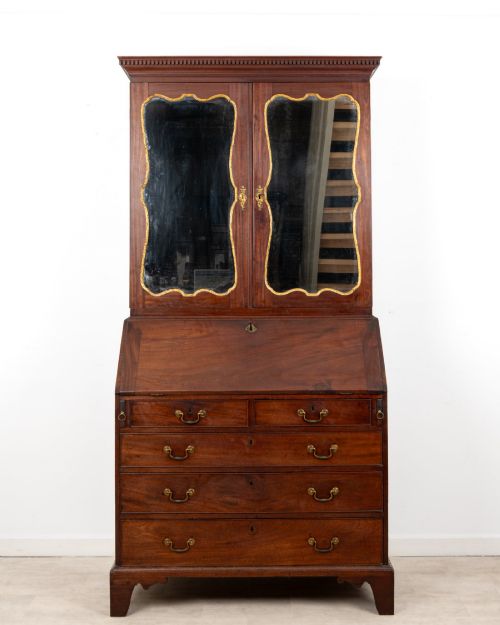


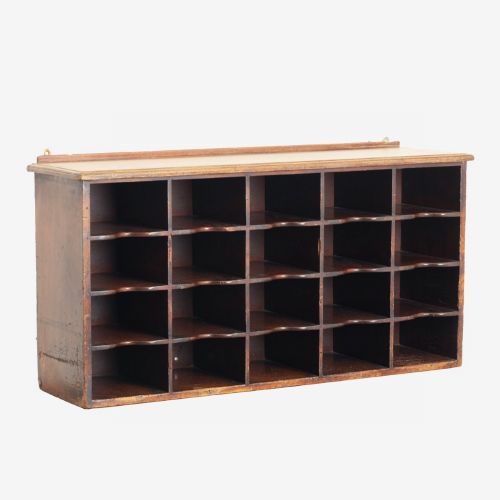
Dark Wood Bookcase Desk
Dark wood bookcase desk pieces combine upper shelving with a drop-front writing surface, offering a dual-purpose solution for storage and study.
Dark Wood Bookcase Desk
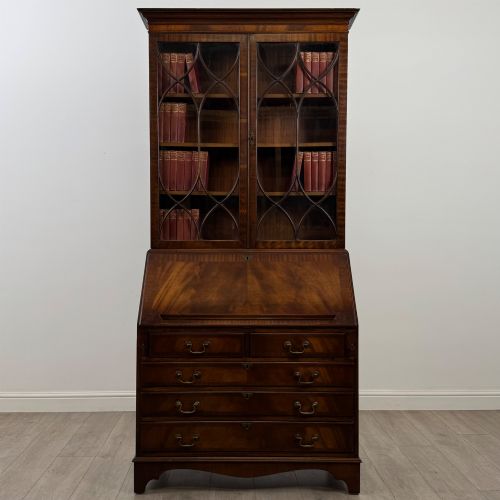
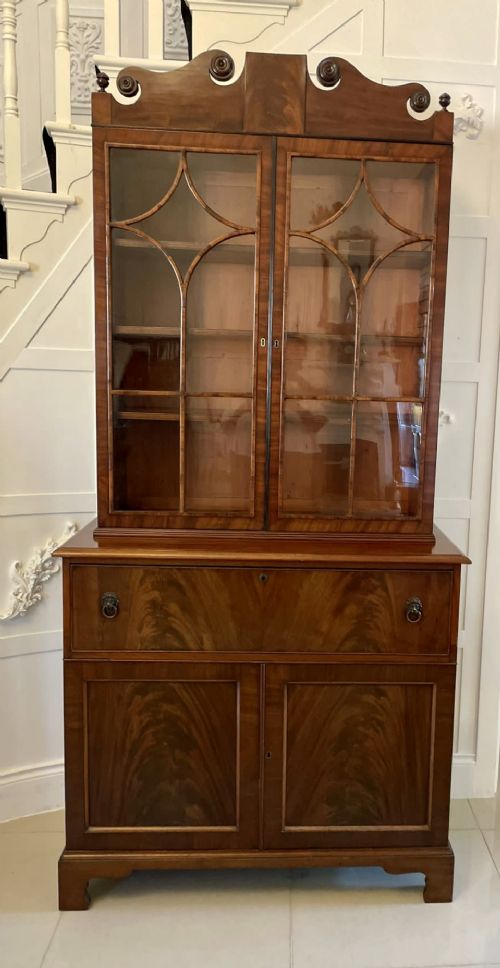
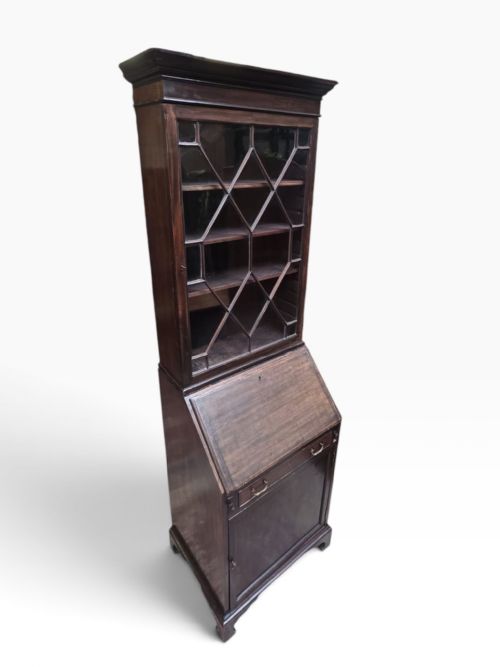
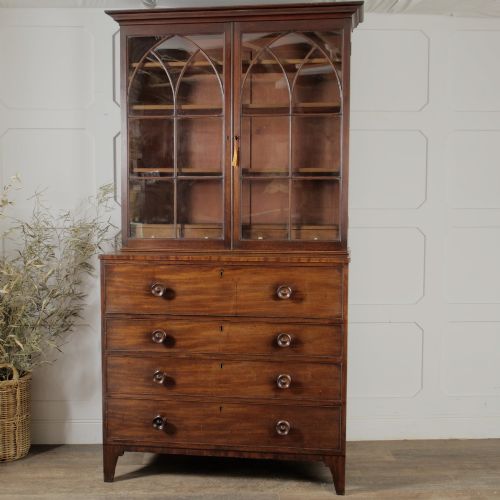
A dark wood bookcase desk brings together a glazed or open upper library cabinet and a lower writing compartment, uniting two distinct forms into a single tall piece of furniture. When exploring a dark wood bookcase desk, the most common form met on this page is the bureau bookcase or secretaire bookcase originating from the eighteenth and nineteenth centuries.
These items span periods from the Georgian and Regency eras through to the Victorian, Edwardian, and 1920s years, reflecting evolving domestic needs for organised writing space alongside book storage. Makers utilised dense timbers to build structures that housed libraries and provided a sloping fall-front or a pull-out drawer fitted with a drop front for correspondence.
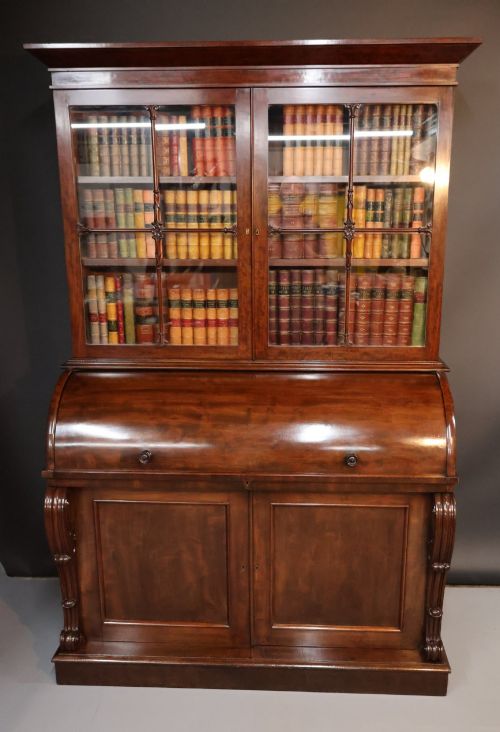
While many examples rely on traditional bureau layouts, variants include cylinder bureau bookcases and smaller desktop book carriers or sliding book slides designed for portable utility. The integration of shelving above and a writing surface below remains the defining characteristic across all listed forms.
What varies in quality
The distinction between standard utility items and finer pieces rests in the selection of the timber figure and the precision of the cabinet work. Highly figured mahogany and carefully matched rosewood veneers indicate a workshop of higher standing, where grain patterns flow seamlessly across drawer fronts and fall-front panels.
Internal complexity also separates the tiers, with superior examples featuring finely fitted pigeon holes, secret compartments, and satinwood small drawers within the secretaire section. Furthermore, the refinement of astragal glazing bars and the weight of the cast brass fittings demonstrate the original commission's budget and ambition.
Listings feature eighteenth-century and nineteenth-century pieces built from mahogany, rosewood, oak, and satinwood, paired with glass and brass.
George Oakley·Gillows
The Dark Wood Bookcase Desk Glossary
- Secretaire bookcase
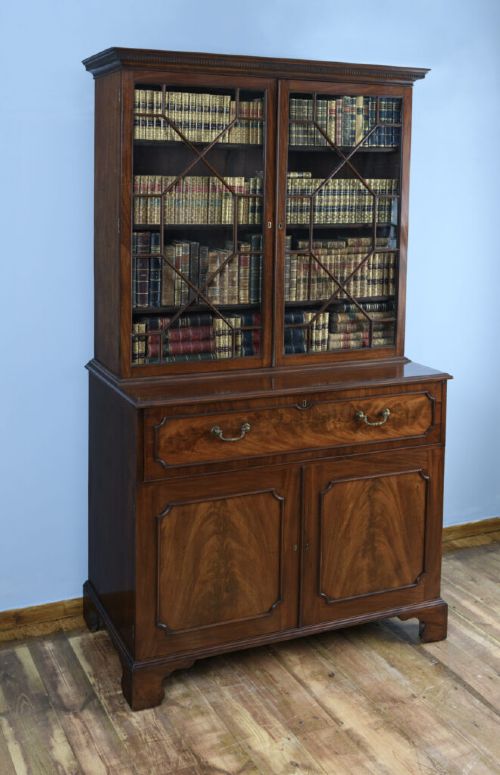
- A tall cabinet featuring a dedicated writing drawer with a drop-front mechanism, positioned beneath an upper tier of bookshelves. This form conceals small pigeon holes and stationery drawers behind the main writing flap.
- Astragal glazed
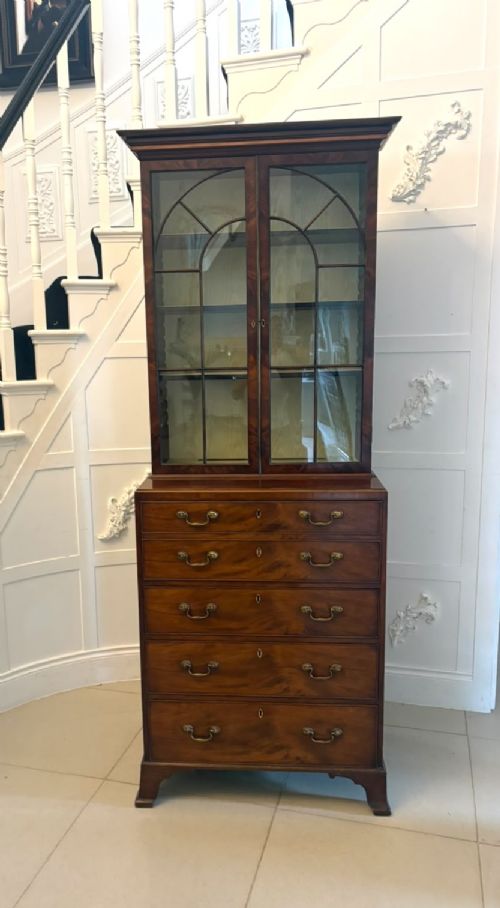
- Glass cabinet doors divided into smaller panes by thin wooden mouldings known as glazing bars. These frames create geometric patterns across the upper bookcase section.
- Fall-front bureau
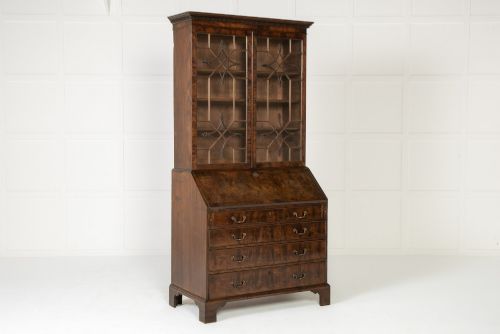
- A writing desk featuring an angled or vertical hinged flap that pulls down to create a flat horizontal writing surface. It conceals an interior arrangement of pigeon holes and small compartments.
- Figured mahogany
- Timber harvested to reveal rich, decorative grain patterns such as flame or curl. Cabinet makers placed these veneers symmetrically across prominent surfaces.
- Cylinder bureau
- A writing desk topped with a quarter-circle rotating wooden cylinder that rolls back to reveal the writing slide and interior fittings. It combines the height of a bookcase with a mechanical cylinder desk.
Dark Wood Bookcase Desk: Frequently Asked Questions
What is a secretaire bookcase?
A secretaire bookcase combines an upper library cabinet with a lower section containing a pull-out writing drawer that drops forward.
Inside this drop-front drawer, makers built small compartments and pigeon holes for letters and stationery.
How do I date a bureau bookcase?
Dating relies on observing structural details, timber choices, and hardware styles associated with periods like the Georgian or Victorian eras.
Earlier eighteenth-century pieces often display solid construction and astragal glazing, while later Edwardian examples show lighter timbers and different internal drawer configurations.
Where should I place a heavy bookcase desk?
These tall wooden pieces require stable placement against a flat wall in a room with regulated temperature and humidity.
Keeping them away from direct sunlight protects the polished mahogany or rosewood surfaces and prevents the timber veneers from drying out.
How do I maintain the wood finish?
Regular dusting with a soft, dry cloth preserves the polished surface of mahogany and rosewood furniture.
Aplied wax polish used sparingly helps nourish the old timber without building up heavy residues on the grain.