

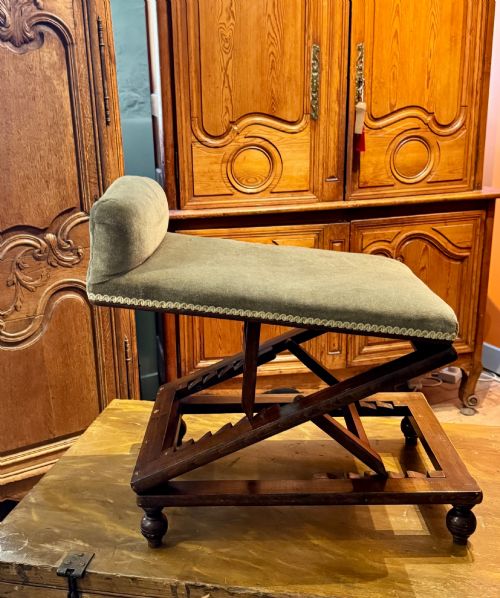


Dark Wood Adjustable Stool
These dark wood adjustable stool examples are functional seats designed for musicians and pianists, offering height control for performance.
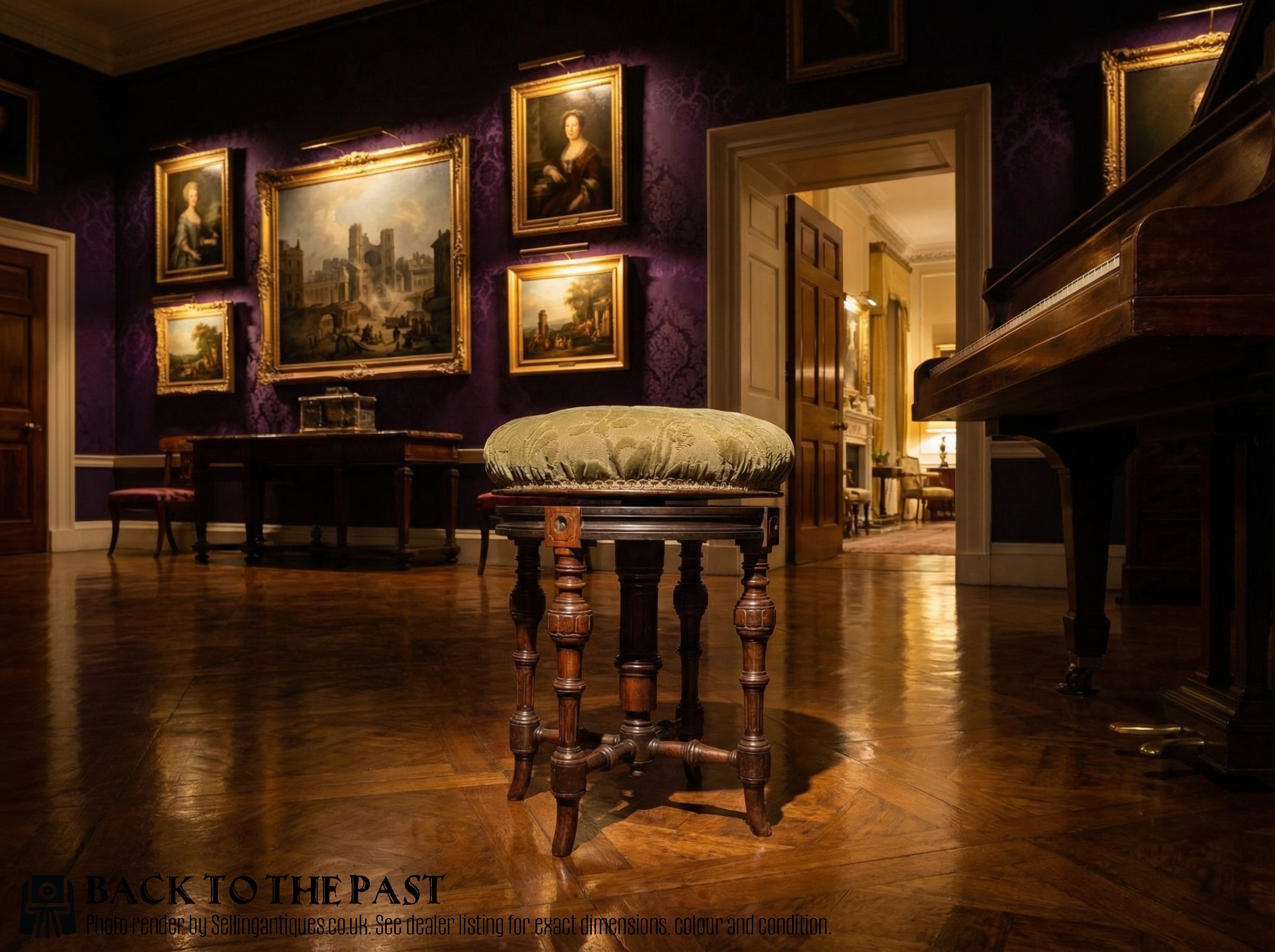
Dark Wood Adjustable Stool
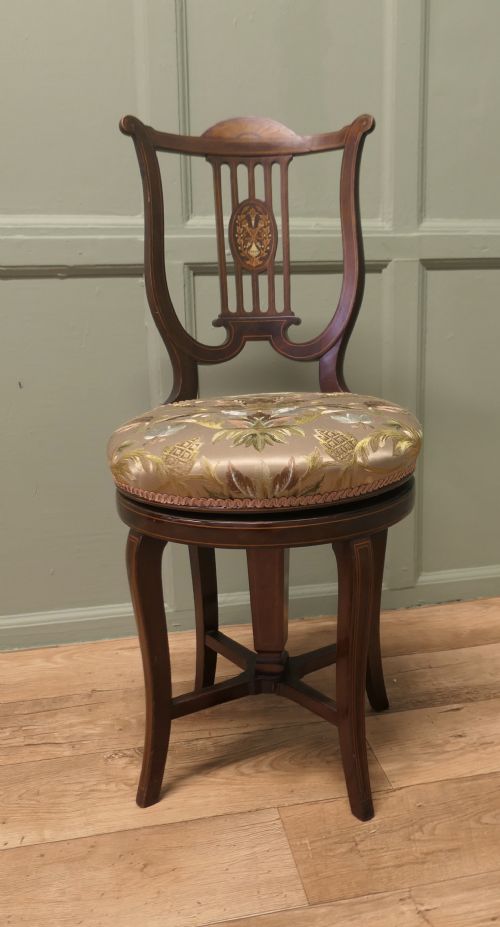
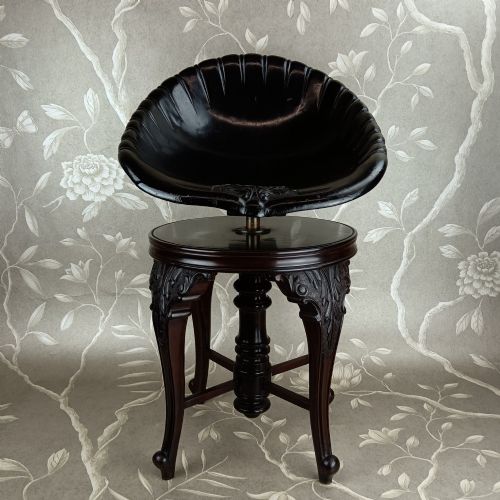
A dark wood adjustable stool serves musicians, pianists and households requiring adaptable seating heights. The selection centres heavily on Victorian and 19th Century forms, particularly revolving piano stools and music chairs.
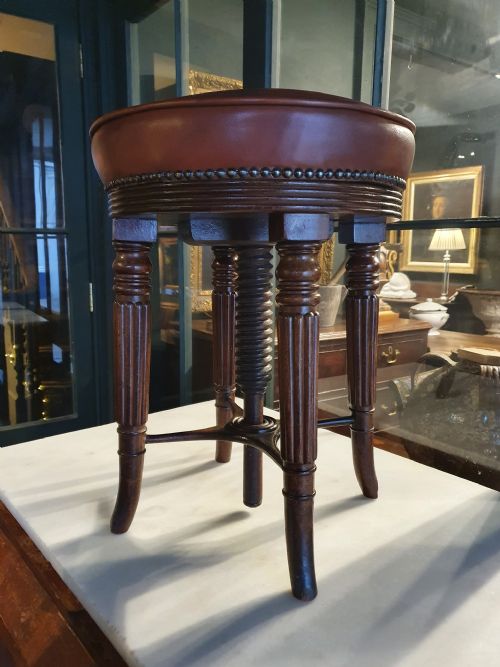
Makers and manufacturers of the period utilised rich timbers such as mahogany and rosewood, shaping them into classical revival styles, William IV designs and Arts and Crafts creations.
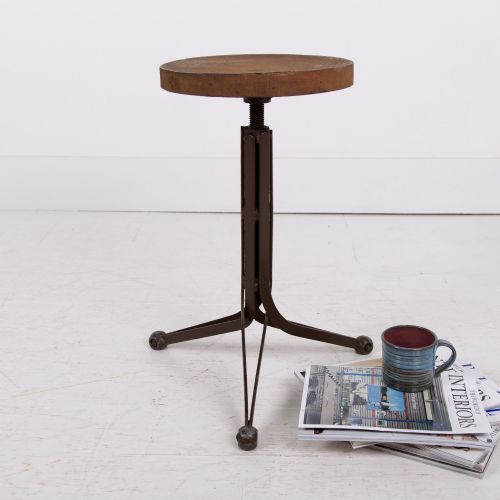
Alongside domestic music room seating, the listings encompass industrial workshop stools from the early twentieth century featuring iron and timber construction.
Materials and construction
Cabinet makers utilised dense hardwoods including mahogany, rosewood and walnut, often turning, carving or polishing the timber to achieve deep lustrous surfaces. Structural elements incorporate metal mechanisms, brass fittings and cast iron components to permit smooth height adjustment.
Seating platforms frequently feature upholstered pads covered in fabric, velvet or contemporary materials, secured over padded foundations to ensure comfort during extended periods of sitting.
The listings span the Georgian, Victorian and Edwardian periods, alongside early 20th-century industrial workshop pieces.
Evaluating craftsmanship and mechanism
Superior examples demonstrate robust mechanical ingenuity within the revolving or rise and fall screw mechanisms, allowing effortless height alteration without binding or wobble. The integrity of the timber joinery and the precision of hand-carved details separate high workshop output from simpler production pieces.
The choice of primary timber and secondary framing woods dictates structural longevity, with dense grain and substantial weight marking out the finer pieces produced by established cabinet makers.
Jennens and Bettridge·Gillows·James Shoolbred·H Brooks and Co
The Dark Wood Adjustable Stool Glossary
- Revolving piano stool
- A seat featuring a threaded spindle or screw mechanism allowing the top to spin and alter the height. This mechanism is central to most music stools.
- Rise and fall
- A mechanical system that raises or lowers the seat platform uniformly. It relies on internal tracks or screws operated by handles or manual rotation.
- Metamorphic gout stool
- A specialised piece of furniture designed to transform into an inclined footrest. It accommodates comfort needs for lower limbs.
- Lyre back
- A chair backrest shaped to resemble the ancient musical instrument. It frequently appears on Victorian music chairs and harpist seats.
- Swivel top
- A rotating upper platform permitting movement while seated. This feature appears on both domestic music seats and industrial workshop examples.
Dark Wood Adjustable Stool: Frequently Asked Questions
How do I adjust the height on these stools?
Most variants rely on a central wooden or metal screw mechanism hidden beneath the seat pad. Turning the top clockwise or anti-clockwise alters the elevation.
Some examples utilise mechanical levers or rise and fall tracks for quick adjustments during musical performances.
Are these stools suitable for daily desk use?
While originally built for pianists and musicians, many antique revolving stools function well at modern writing desks. Their compact footprints and height flexibility suit task seating.
Buyers should verify that the lowest height setting aligns comfortably with standard desk measurements before purchase.
What wood types should I expect to find?
The pieces predominantly feature dark hardwoods such as mahogany, rosewood and walnut. These timbers provide the necessary density for weight-bearing swivel mechanisms.
Alternative materials include stained beech and industrial cast iron combined with elm for workshop variants.
How do I date a Victorian adjustable stool?
Dating relies on stylistic clues like carved walnut decoration, brass screw threads and upholstery techniques. Victorian pieces often display registration marks or maker stamps underneath.
Industrial workshop stools from the twentieth century utilise cast iron frames and simple timber seats without ornate carving.