


Vintage Upholstered Music Seat
A vintage upholstered music seat brings period character to a room, offering practical seating alongside adjustable height or clever internal storage.
Vintage Upholstered Music Seat
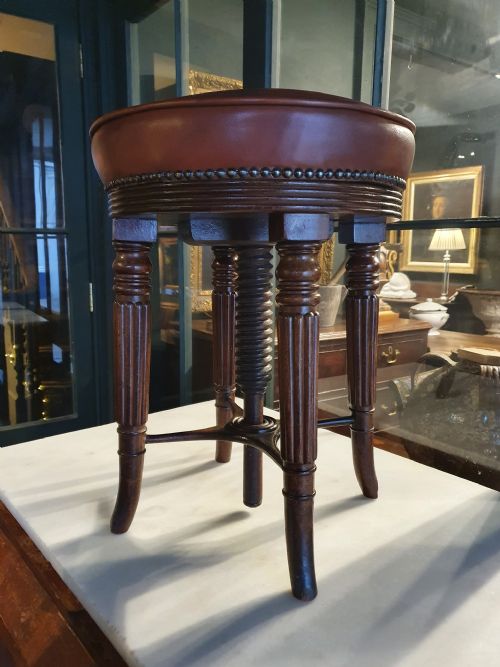
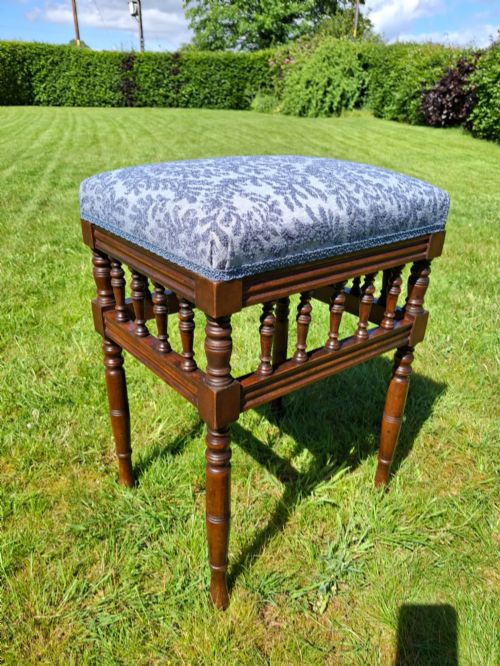
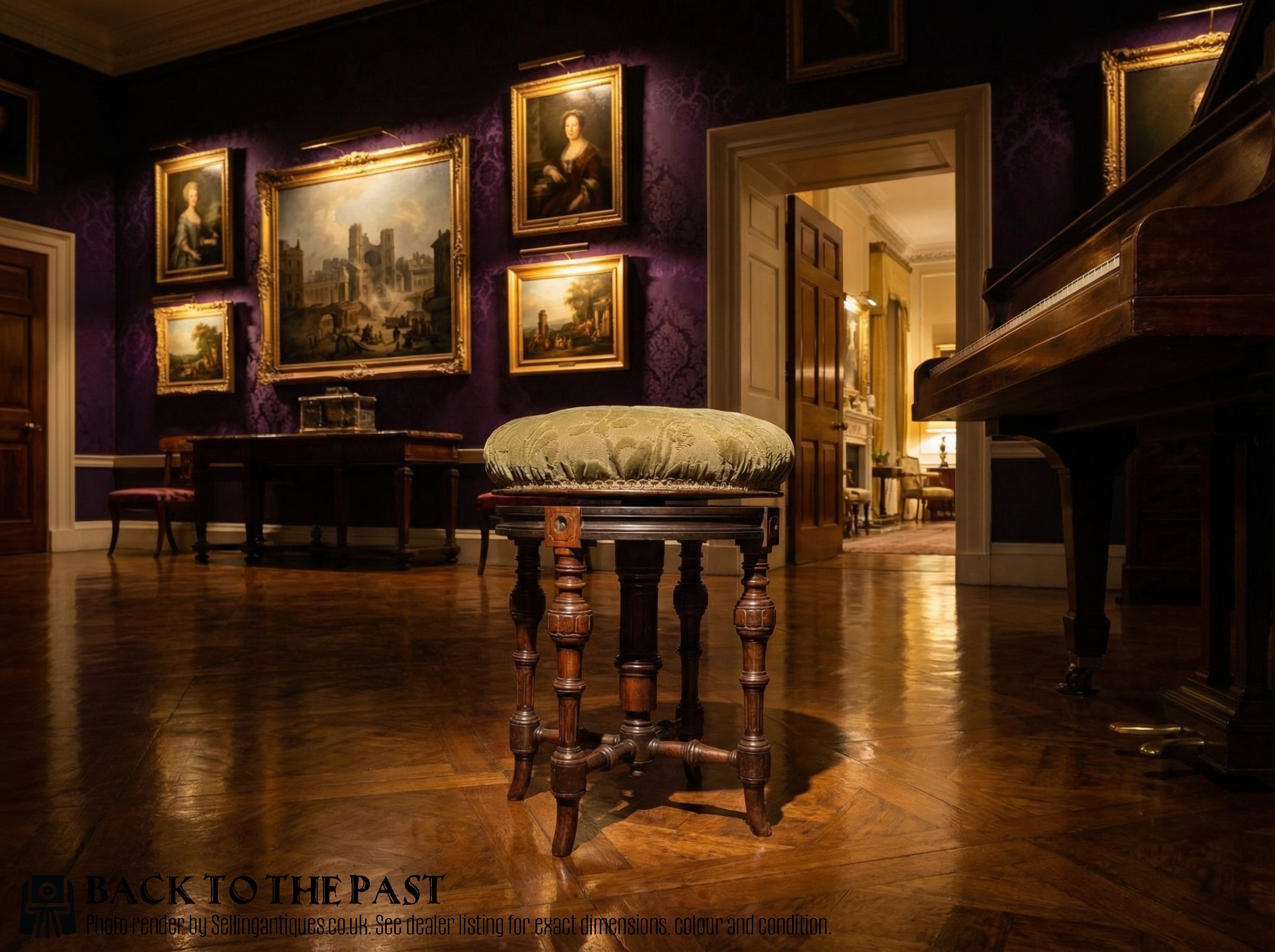
When you search for a vintage upholstered music seat, you are looking at seating designed specifically for musicians at the piano or harp. These pieces range from solo piano stools to wider duet stools and music chairs with supportive backs.
The versions you are most likely to meet on this page date from the Victorian, Edwardian, and early twentieth-century periods. They appear in forms such as revolving stools, fall-front storage seats, and adjustable height designs originating from various stylistic revivals.
Materials and construction
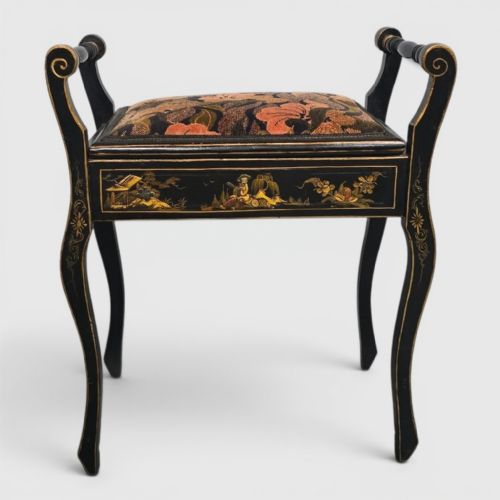
Cabinetmakers utilised solid timbers such as mahogany, walnut, oak, and rosewood to build the frames, frequently incorporating satinwood inlay, brass fittings, and gilt paint for decorative emphasis.
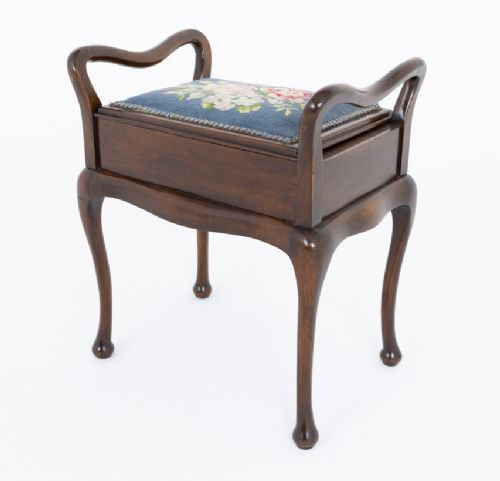
The seats themselves feature traditional upholstery finished in fabric, velvet, leather, or satin, often combined with mechanical screw mechanisms for height adjustment or hinged lids for sheet music storage.
Musicians once required specialised seating that could spin, lift, tilt, and swallow sheet music whole without missing a beat.
Judging the quality
The standard of a vintage upholstered music seat rests on the crispness of the timber carving, the choice of hardwoods, and the fidelity of revival styles like Sheraton Revival or Queen Anne Revival.
Mechanisms also divide the standard range from the exceptional, as smooth-operating brass screw adjustments and robust revolving pivots demonstrate superior period engineering.
James Shoolbred
The Vintage Upholstered Music Seat Glossary
- Duet piano stool
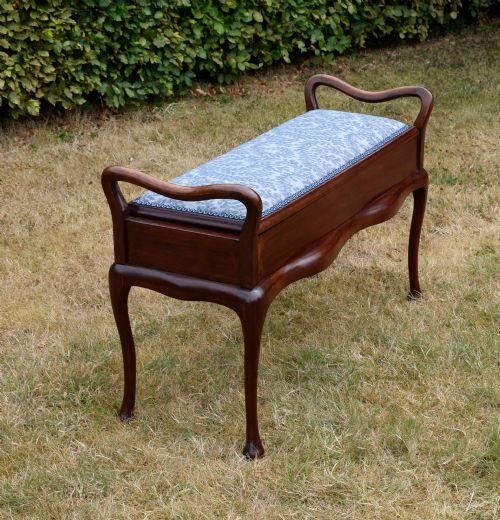
- A wider seating form designed to accommodate two players side by side at the keyboard. These often include lift-up seats concealing internal storage for sheet music.
- Revolving piano stool
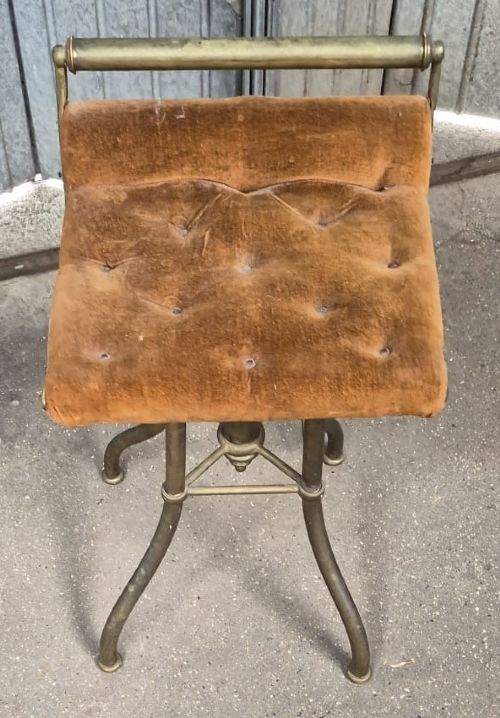
- A design featuring a central screw mechanism that allows the seated musician to rotate and adjust height. The mechanism is typically supported on a pillar and tripod base.
- Fall-front piano stool
- A cabinet-style seat where the front panel folds downward to provide easy access to internal music compartments. This form gained popularity during the Victorian era.
- Sheraton Revival
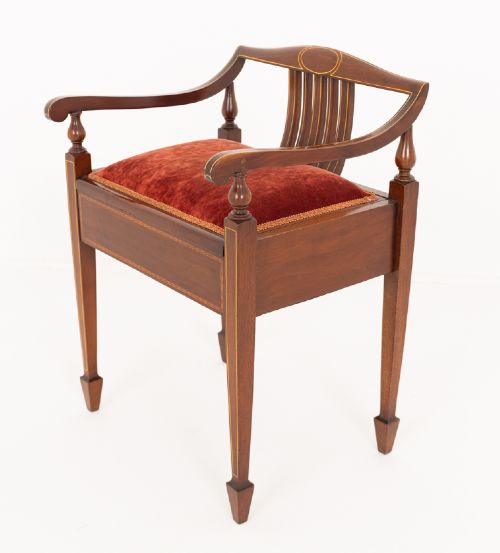
- A late nineteenth and early twentieth-century style emulating the elegant neoclassical furniture of the eighteenth century. Pieces in this style frequently display delicate mahogany and satinwood inlay.
- Patent music chair
- An adjustable seating form incorporating mechanical innovations designed for musician comfort. These examples sometimes utilise leather upholstery and metal framing.
Vintage Upholstered Music Seat: Frequently Asked Questions
How do I adjust the height?
Many examples feature a central screw mechanism that raises or lowers the seat when rotated.
Other pieces utilise side levers or mechanical ratchets hidden beneath the frame.
Where were they used?
These seats were placed beside pianos, harps, and music stands in period parlours and drawing rooms.
Today they function equally well as dressing table stools or small occasional seats in living spaces.
How do I spot an Edwardian piece?
Edwardian examples frequently display lighter mahogany timbers combined with delicate satinwood inlay.
They often date from around nineteen hundred and reflect refined, understated revival aesthetics.
What is a duet stool?
A duet stool is built wider than a standard piano seat to accommodate two people.
They frequently incorporate hinged upholstered lids that open to reveal storage compartments inside.