





Dark Walnut Clock Case
A dark walnut clock case brings a rich, deep timber tone and centuries of craftsmanship straight to your wall or floor.
Dark Walnut Clock Case
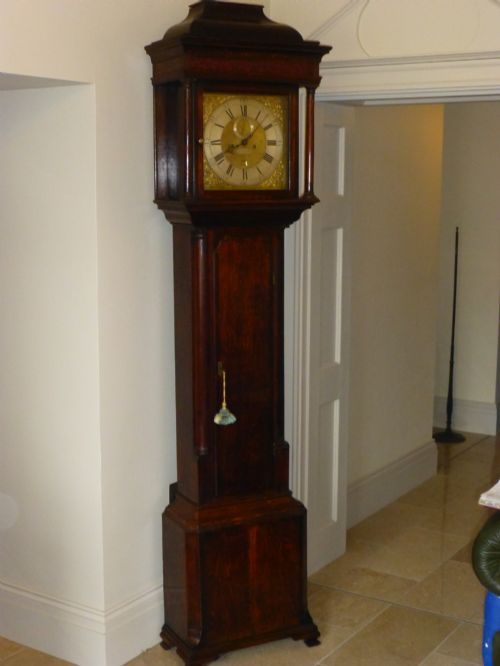
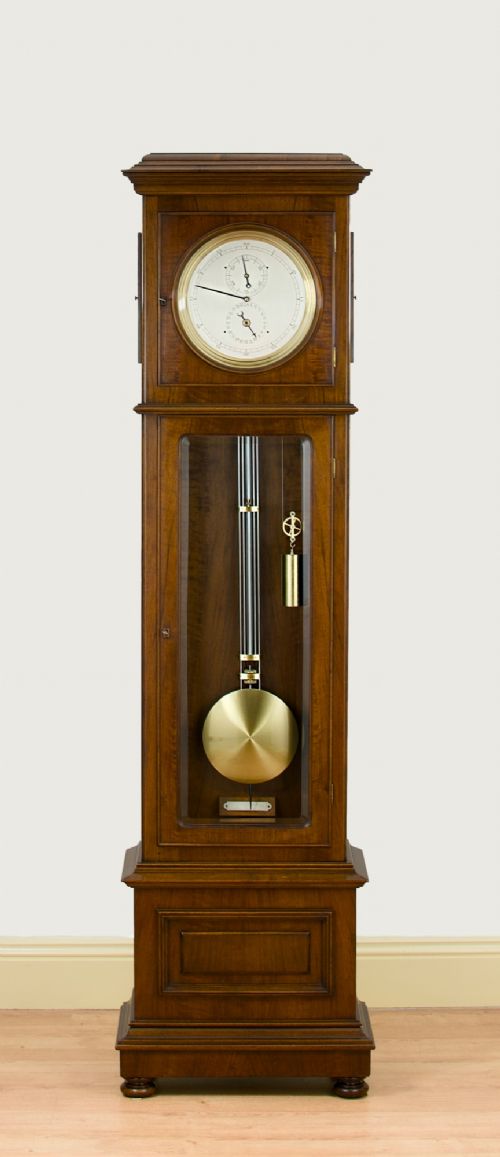
When you search for a dark walnut clock case, you are looking at tall floor-standing longcase examples and wall-hanging regulators from several distinct eras. The pieces listed on this page span from the seventeenth century through the Georgian and Victorian periods up to nineteen hundred.
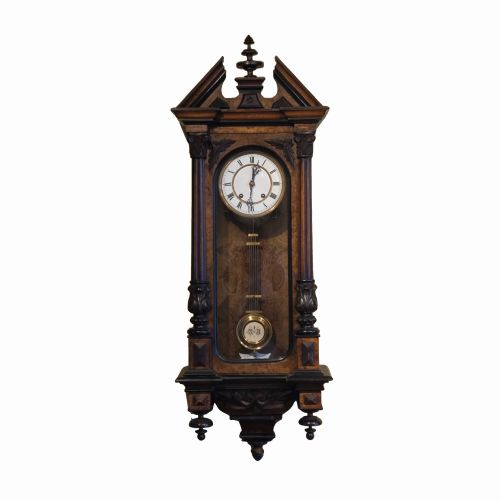
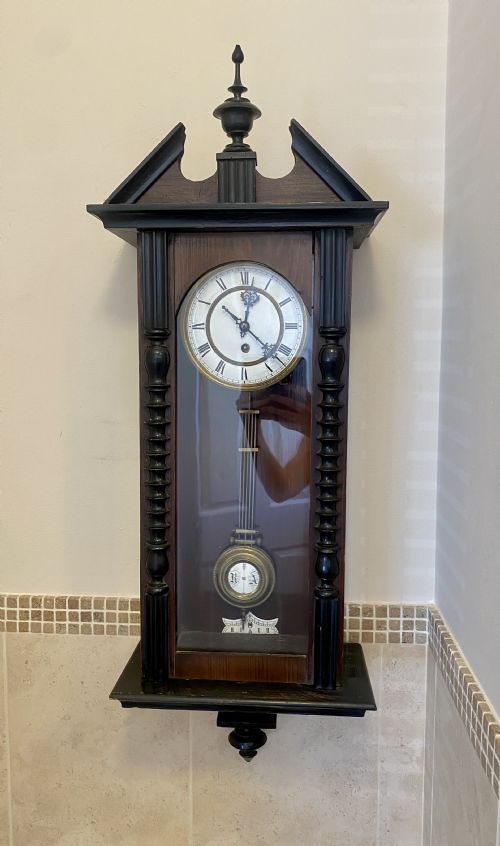
You are most likely to meet tall grandfathers and wall clocks, built in walnut alongside oak and ebonised wood. These enclosures protect delicate movements while serving as grand architectural furnishings in a room.
The styles range across William and Mary, Queen Anne, Georgian, Victorian, and Edwardian designs. Each period brings its own proportion and detail, from early marquetry panels to clean Victorian regulator glazing.
How they were made
Cabinet makers utilised dense walnut timber, frequently pairing it with oak carcases or applying intricate marquetry patterns directly onto the front panels. The wood was carefully selected for its rich grain, then polished to a deep, dark lustre.
Glass panels were fitted into doors to display brass dials, enamel faces, and swinging pendulums with weights. Brass and steel mechanical components were housed securely within these heavy wooden enclosures.
Materials appearing across the current selection include solid walnut, oak, ebonised wood, glass, brass, enamel, and steel.
What varies in quality
The distinction between standard examples and finer pieces lies in the crispness of the cabinet work and the depth of the timber grain. Early seventeenth and eighteenth-century marquetry work demands exceptional skill, showing intricate floral or geometric patterns that remain sharp and intact.
Proportion and the integration of secondary timbers also define the tier of the piece. Superior examples display thoughtful construction where walnut veneers are matched symmetrically across the door and trunk.
Richard Corless of Stockport·Lenzkirch·Samuel Young Nantwich and Bunbury·Joseph Jackeman London·Henry Massy of London
The Dark Walnut Clock Case Glossary
- Marquetry
- Decorative veneer work inlaid in wood to form patterns or pictures. This technique often appears on seventeenth and early eighteenth-century longcase doors.
- Regulator
- A precision pendulum clock designed for high accuracy. These wall-hanging or floor-standing cases usually feature long glass viewing doors.
- Longcase clock
- A tall pendulum clock enclosed in a wooden case standing directly on the floor. They are frequently referred to as grandfather clocks.
- Ebonised wood
- Timber treated to resemble ebony, providing a dark, contrasting finish. It appears alongside walnut on specific nineteenth-century wall models.
- Brass dial
- The metal face of the clock, often engraved with maker details and chapter rings. These dials sit prominently behind the glazed door of the case.
Dark Walnut Clock Case: Frequently Asked Questions
How do I date a walnut clock case?
Dating relies upon examining the construction methods, timber combinations, and the specific style of the door and hood. Earlier seventeenth and eighteenth-century pieces often feature distinct marquetry and proportions compared to Victorian wall models.
Hardware such as brass hinges and the execution of the wood finish further help place the piece within the Georgian or Victorian eras.
Where should I place a longcase clock?
Longcase clocks need a stable, plumb vertical surface and a solid floor to ensure the pendulum swings evenly. Placing them away from direct sunlight and damp exterior walls protects the walnut timber and internal mechanism.
Hallways, living rooms, and libraries provide traditional settings where the height and dark wood tones complement the interior.
What is the difference between a regulator and a grandfather clock?
A grandfather clock is a tall floor-standing timepiece designed to house a weight-driven movement and a long pendulum within a substantial wooden trunk. They date back to the seventeenth century and earlier.
A regulator is typically a wall-hanging case built for extreme timekeeping accuracy, featuring a long glass door to observe the pendulum and weights.
Are walnut clock cases fragile?
Walnut timber is durable, but older cases require sensible handling regarding room humidity and temperature changes. Sudden shifts can cause veneers to lift or timber to split.
Routine care involves dusting with a soft cloth and avoiding harsh chemical polishes that can damage the historical finish of the wood.