




Striking Vienna Wall Clock
A striking vienna wall clock brings precise movement and architectural presence to a room, measuring time with an eight-day striking train.
Striking Vienna Wall Clock
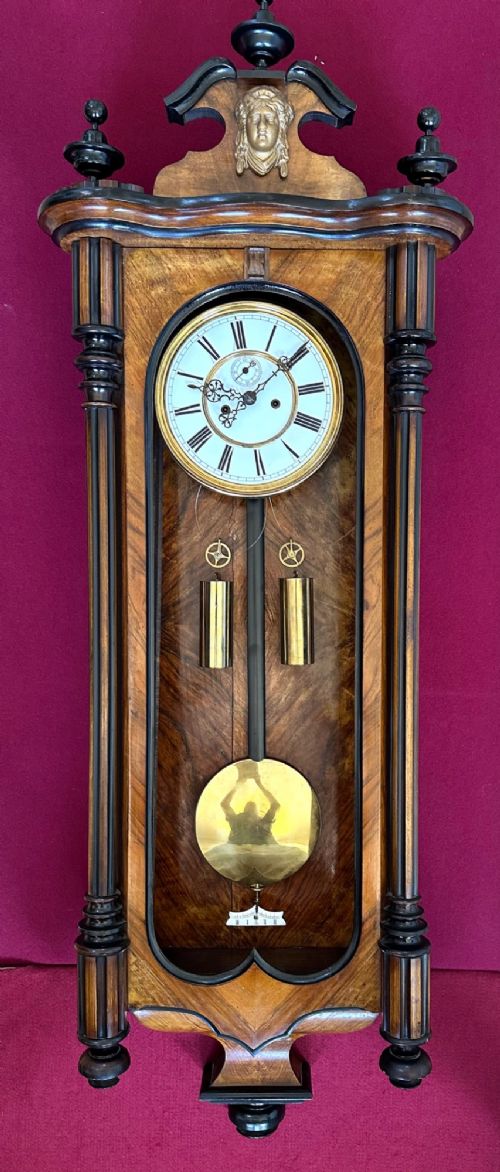
A striking vienna wall clock is a regulator or wall-mounted timekeeper rooted in nineteenth-century Austrian and German clockmaking tradition. When you search for a striking vienna wall clock, you are looking at tall case-mounted dial movements designed to hang in principal rooms.
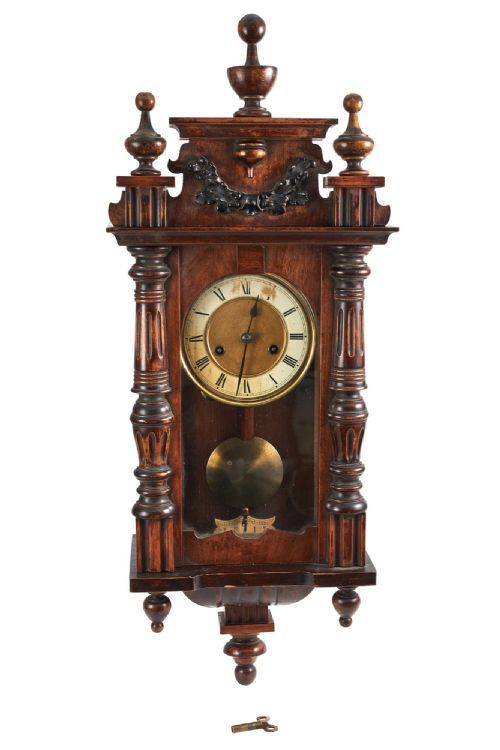
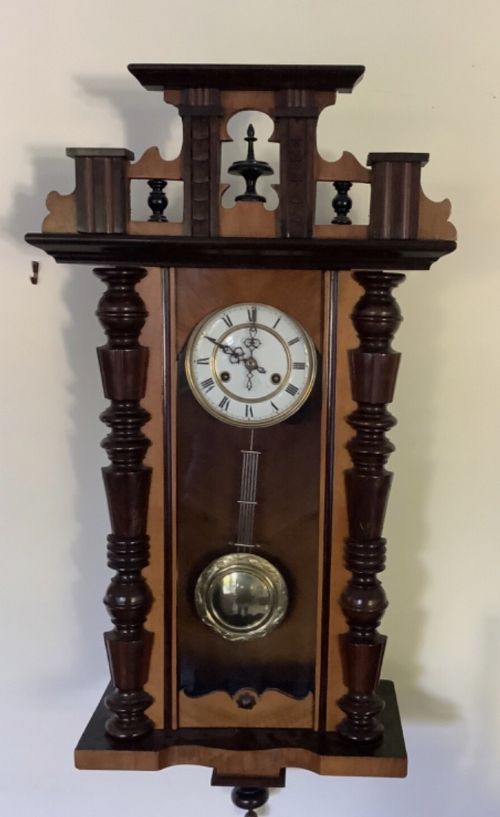
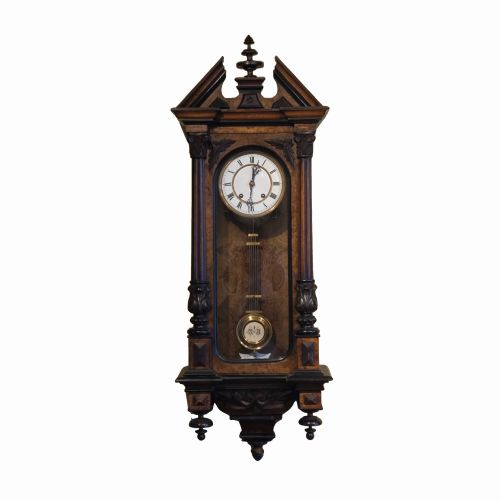
The pieces listed on this page span from the Victorian period through to nineteen hundred, encompassing walnut and ebonised wood cases. The examples most frequently met here are walnut double weight wall clocks and eight-day regulators.
Originating from Vienna and broader German workshops, these clocks range from simple drop dial forms to elaborate carved architectural cases. They combine dependable timekeeping with significant decorative weight on the wall.
How they were made
Cases are constructed from walnut and ebonised wood, often incorporating glazed doors to display the swinging pendulum and weights. The timber is selected for grain and colour, then polished to a smooth finish.
Dial faces feature enamelled numerals paired with brass bezels and hands, driven by mechanical eight-day movements. These movements rely on brass gears and steel arbors, powered by hanging weights or springs.
Listings feature walnut, ebonised wood, and brass materials across Victorian, Biedermeier, and Gothic styles.
What varies in quality
Quality separates in the precision of the movement and the architectural ambition of the walnut or ebonised case. Finer examples display crisper wood carving around the crest and base, alongside heavier brass weights.
The legibility and finish of the enamel dial and the fineness of the cut hands also distinguish better workshops. Consistency in the striking mechanism reveals the original skill of the maker.
Johann Baptist Beha·Johann Bohm Wien
The Striking Vienna Wall Clock Glossary
- Regulator
- A precision pendulum clock designed to keep accurate time and often used as a standard against which other clocks are set. They typically feature long pendulums and clear, easy-to-read dials.
- Eight-day
- A movement capable of running for eight days before requiring winding by key or pulling the weights. This term denotes the duration between winding sessions.
- Double weight
- A movement driven by two separate suspended weights, supplying power to the time train and the striking train independently. These require sufficient vertical drop space beneath the clock.
- Ebonised
- Wood finished with a dark stain or coating to imitate expensive ebony. This treatment was common in nineteenth-century cabinetmaking.
- Drop dial
- A clock design featuring a circular dial mounted on top of a longer wooden case body or trunk. The lower portion accommodates the swing of the pendulum.
Striking Vienna Wall Clock: Frequently Asked Questions
How do I wind a striking vienna wall clock?
Winding involves inserting a key into the winding holes on the enamel dial or pulling the chains depending on the specific weight-driven mechanism. Care must be taken not to overwind the movement.
Ensure the weights are allowed to descend fully before the next wind, and handle the pendulum gently if the clock needs to be moved or stopped.
Where should I hang my wall clock?
These clocks require a sturdy interior wall capable of supporting the substantial weight of timber cases and brass components. Placement should avoid damp environments and direct sunlight that might damage the walnut veneer.
Position the clock at a height that allows easy access for weekly winding and setting the hands without standing on unstable furniture.
What does an eight-day movement mean?
An eight-day movement indicates that the clock operates for approximately one week on a single winding before the weights reach the bottom of their descent. This was a standard convenience in nineteenth-century domestic timekeepers.
Owners typically choose a specific day of the week to wind the clock to maintain a regular routine and steady timekeeping.
How do I tell the difference between periods?
Earlier pieces from the mid-nineteenth century often display cleaner Biedermeier lines with restrained walnut veneers. Later Victorian examples tend towards more elaborate carved decoration and architectural crests.
Examining the casework and the style of the enamel dial provides clear indicators of whether a clock originates from eighteen sixty or nineteen hundred.