

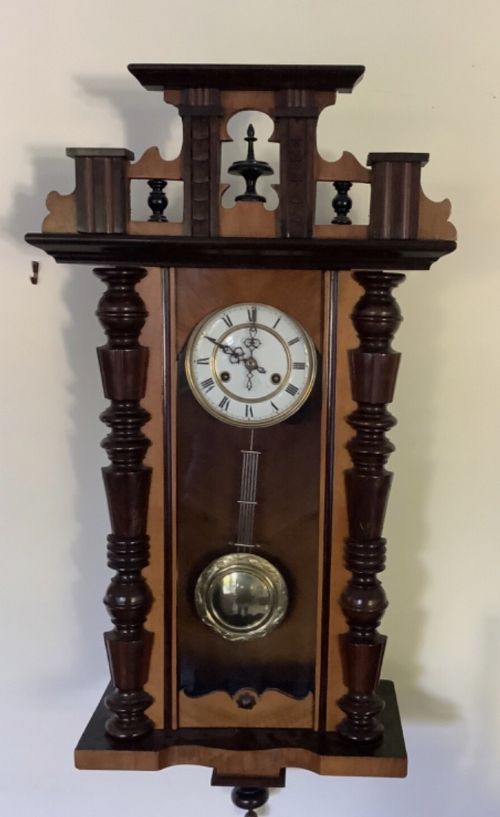


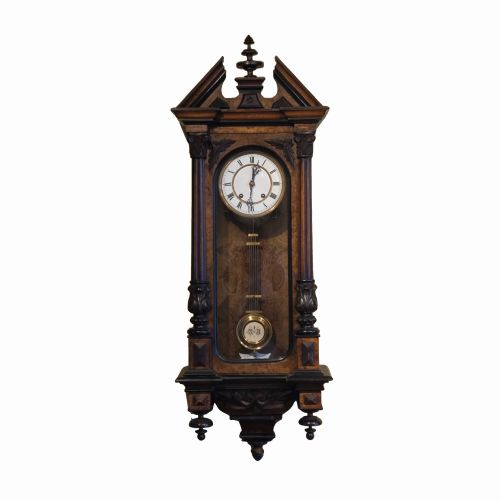


German Vienna Wall Clock
A german vienna wall clock brings precise movement and architectural presence into a room, drawing the eye with pendulum motion and polished timber cases.
German Vienna Wall Clock
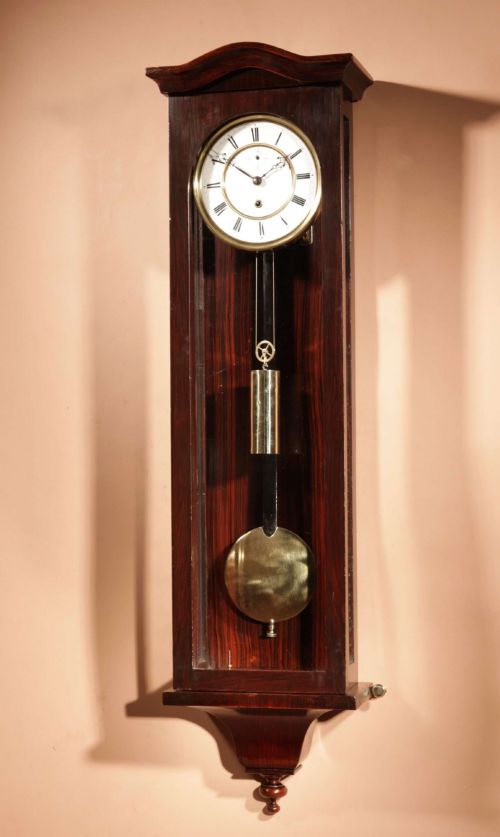
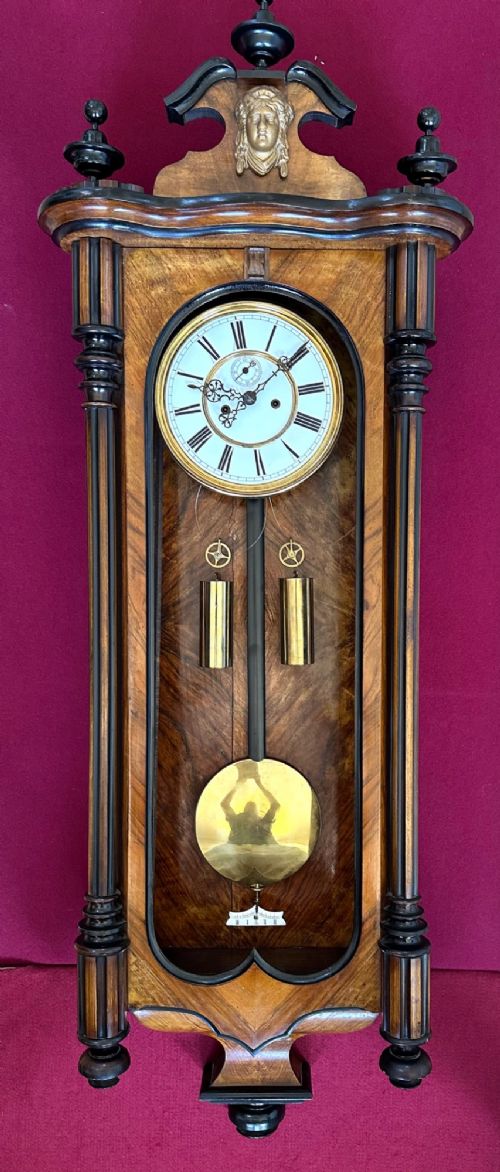
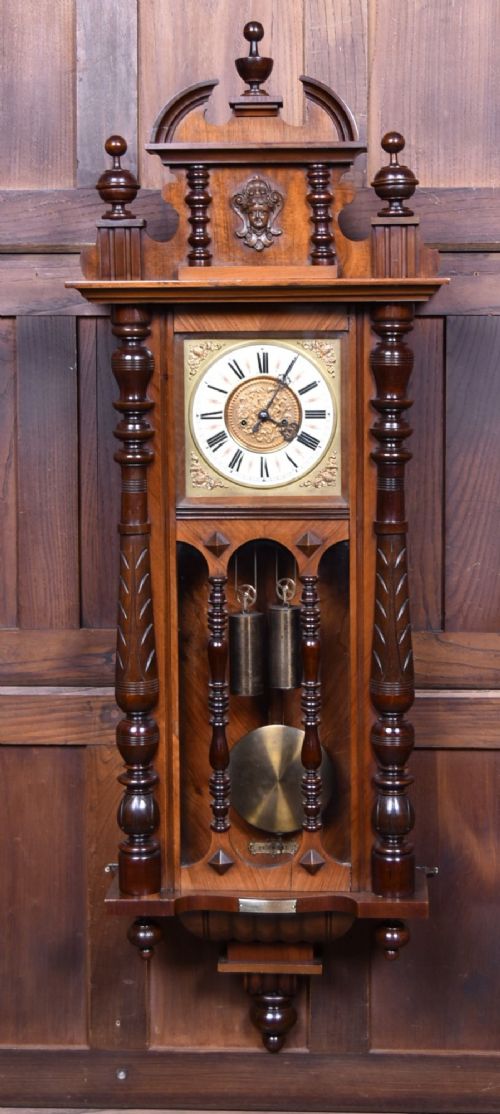
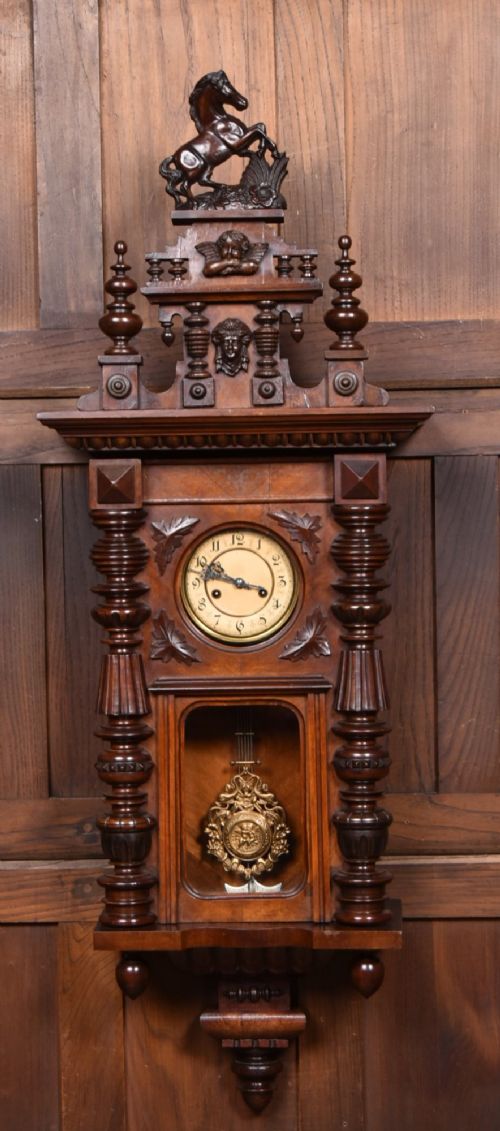
A german vienna wall clock brings together classical architectural casework and reliable pendulum movement, primarily originating from the nineteenth century. These items include walnut, mahogany, and ebonised wood cases designed to hang securely in principal rooms.
Buyers frequently encounter nineteenth-century walnut and ebonised examples, often styled as Vienna regulators or influenced by the Vienna style. The selection ranges from simpler spring-driven timepieces to substantial double and triple weight driven mechanisms.
Origins span German and Austrian workshops, encompassing Black Forest production and renowned makers who perfected the striking clock. Pieces frequently display Victorian stylistic influences, merging precise engineering with decorative timber veneers.
Construction and Materials
Cases are predominantly constructed from walnut, mahogany, or ebonised wood, often enhanced with brass bezels and glazed glass panels to protect the dial. These timber surfaces are polished to highlight the natural grain and colour of the wood.
Interiors house intricate brass movements paired with enamel or porcelain dials, driven by weights or springs depending on the complexity of the clock. Pendulums swing within the glazed trunk, maintaining accurate time through careful mechanical calibration.
A good pendulum keeps secrets well, but announces every quarter hour with a brassy chime.
Factors That Separate the Finest Pieces
Superior examples demonstrate exceptional cabinetwork in the walnut or mahogany veneer, featuring crisply carved architectural details and proportioned framing around the glass door. Lesser items present simpler construction with minimal detailing.
The sophistication of the movement distinguishes the top tier, particularly triple weight mechanisms or Grande Sonnerie striking capabilities that demand advanced horological skill. Simpler spring-driven or single weight systems offer reliable timekeeping with less mechanical complexity.
Gustav Becker·Johann Baptist Beha·AG Lenzkirch
The German Vienna Wall Clock Glossary
- Vienna Regulator
- A precision pendulum wall clock developed in nineteenth-century Vienna, characterised by a long glass door displaying the swinging pendulum and a refined enamel dial.
- Grande Sonnerie
- A complex striking mechanism that chimes the hours and quarters automatically on every quarter hour, representing high horological achievement.
- Ebonised Wood
- Timber treated with a dark finish to imitate expensive ebony, frequently utilised in nineteenth-century clock cases for a dramatic contrast against brass and white enamel.
- Enamel Dial
- A metal clock face coated in fused glass powder and fired, providing a smooth, durable, and brilliant white surface for painted numerals.
German Vienna Wall Clock: Frequently Asked Questions
How do I wind a wall clock?
Winding requires inserting the appropriate key into the winding holes on the dial and turning gently until resistance is met. Care should be taken not to overwind the springs or pull the weights improperly.
Ensuring the weights are lifted evenly or the spring is not forced preserves the delicate gear train and prevents damage to the brass movement inside.
Where should I hang a weight driven clock?
These clocks require a sturdy interior wall capable of supporting the weight of the timber case and the suspended mechanism. Plasterboard walls should be avoided unless secured directly into structural studs.
The location must remain free from excessive vibration, draughts, and direct sunlight to maintain the pendulum beat and protect the wooden veneer.
How do I set the correct time?
The minute hand is gently moved clockwise to the correct hour, allowing the strike train to complete its sequence at each quarter or hour mark. Moving hands anticlockwise can jam or damage the internal rack and snail mechanism.
Allowing the pendulum to settle into an even beat after adjustment ensures the clock maintains steady timekeeping.
How do I distinguish Victorian styles?
Victorian and late nineteenth-century pieces often incorporate Gothic revival elements or architectural pediments atop the walnut or mahogany casework. Examination of the timber finish, dial typography, and brass casting provides clear clues to the period.
German workshops during this era adapted Austrian regulator designs, creating distinct regional variations within the broader Victorian aesthetic.