
Dark Walnut Chest
A dark walnut chest carries deep figure and rich tone, offering solid storage shaped by centuries of cabinet-making skill.
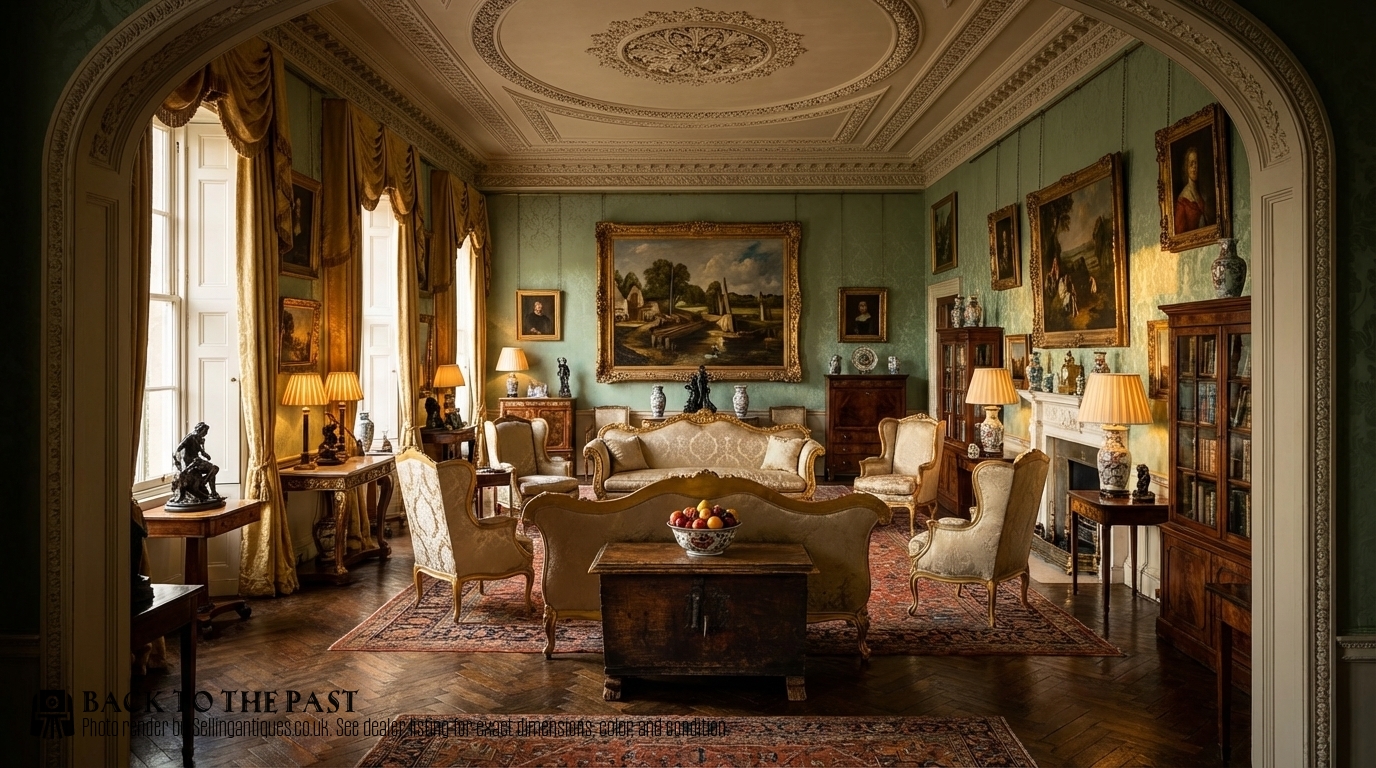
Dark Walnut Chest
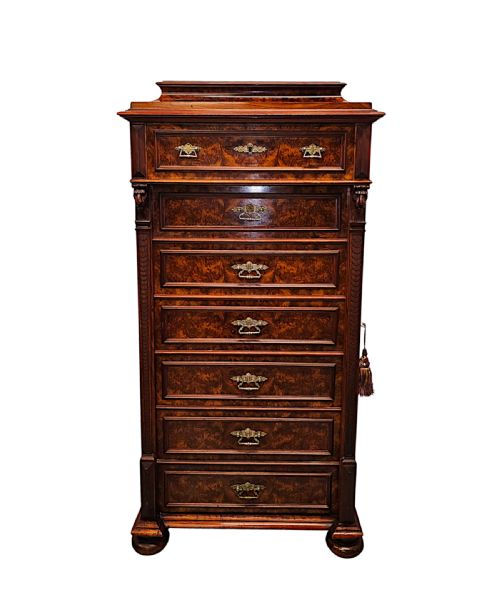
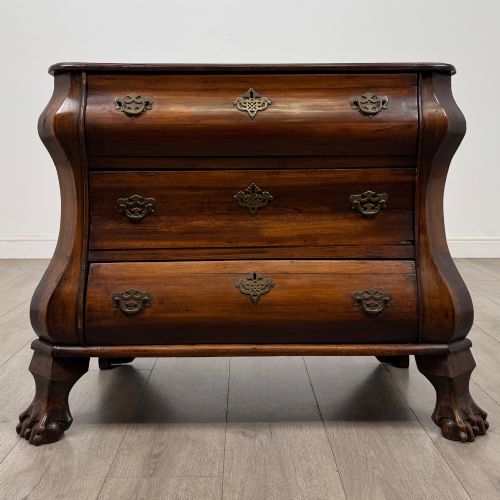
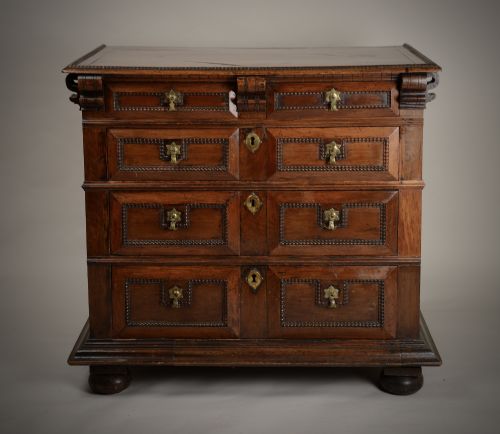
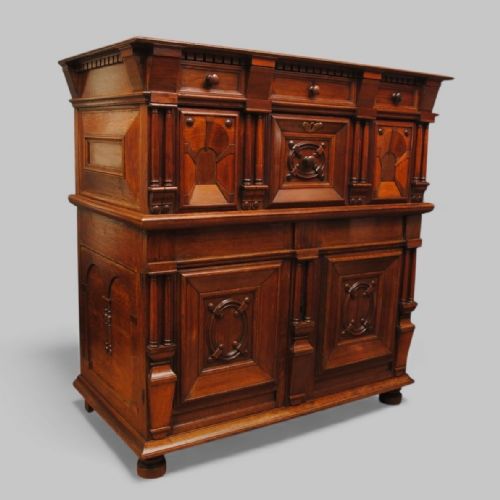
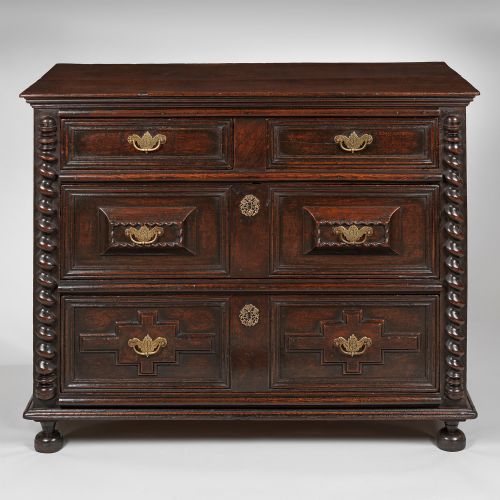
A dark walnut chest brings together traditional forms like drawers, commodes, and cabinets produced across the seventeenth, eighteenth, and nineteenth centuries. These pieces serve practical storage needs while displaying the dense grain and deep colour inherent to walnut timber.
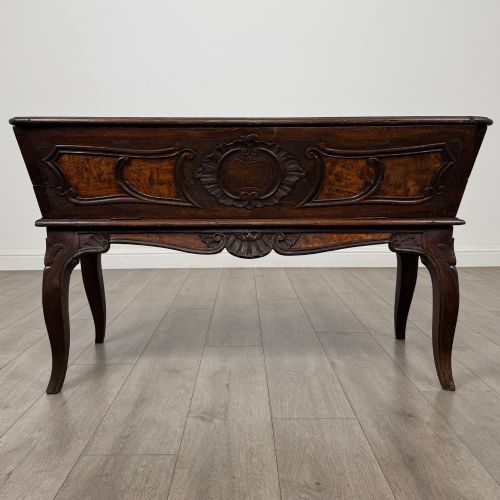
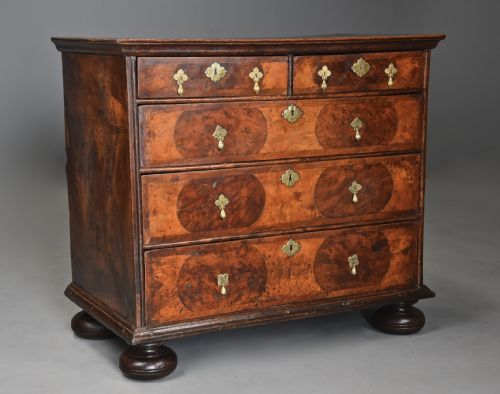
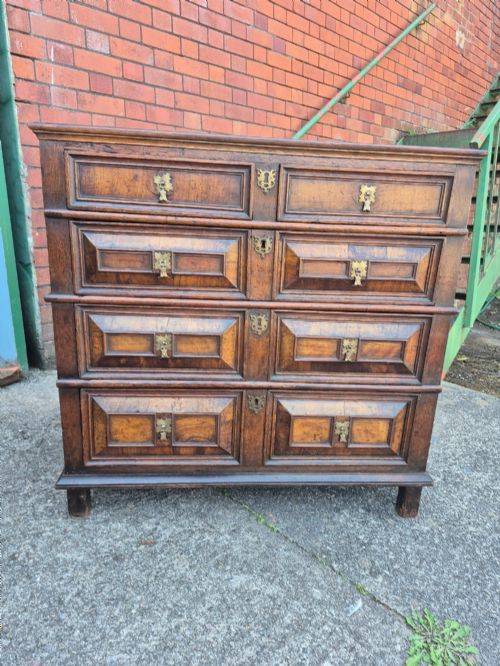
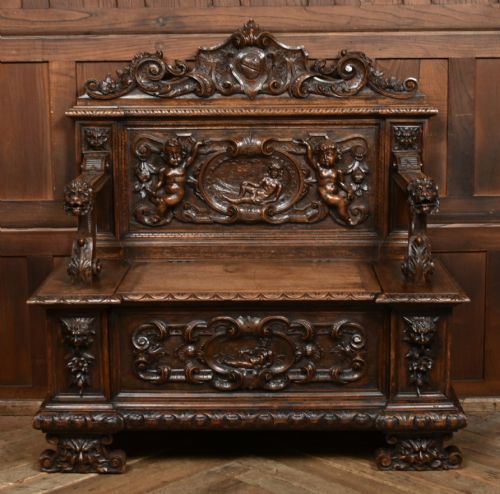
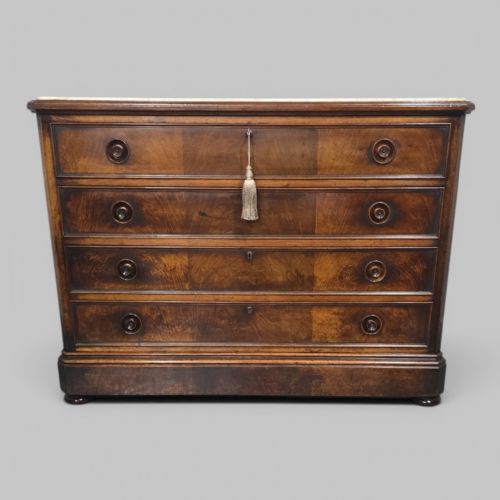
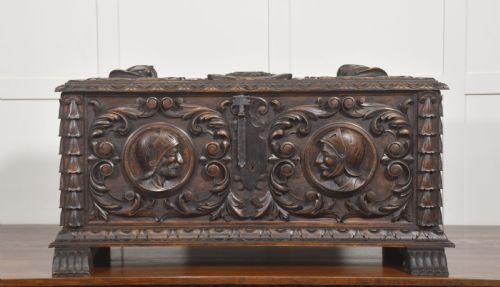
The selection here includes regional variations from English William and Mary periods, French provincial workshops, and Italian renaissance revivals. Chests of drawers dominate the forms, alongside specialised cabinets, bedside tables, and occasional coffers.
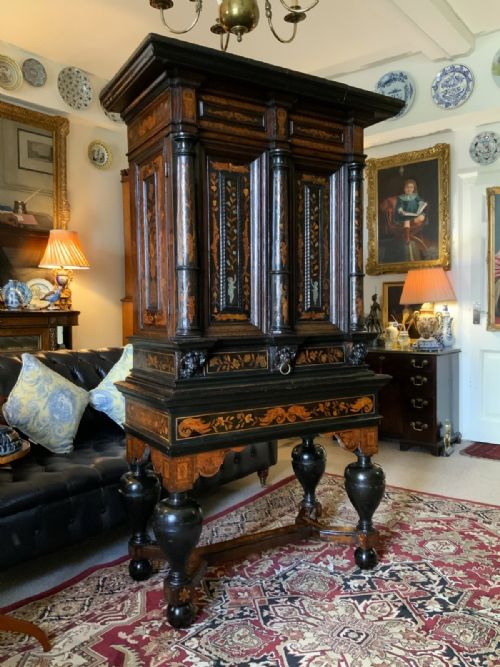
Buyers meet examples finished with geometric inlay, floral marquetry, or simple polished surfaces that highlight the natural wood. Each piece reflects the aesthetic priorities of its specific era, ranging from austere seventeenth-century framing to ornate Victorian proportions.
Materials and construction
Cabinet-makers utilised solid walnut, burr walnut veneers, and contrasting secondary timbers like oak and fruitwood to build these storage pieces. Selected veneers allowed artisans to create symmetrical grain patterns across drawer fronts and cabinet doors.
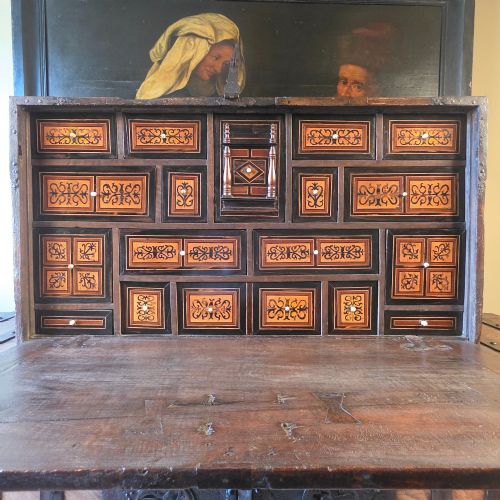
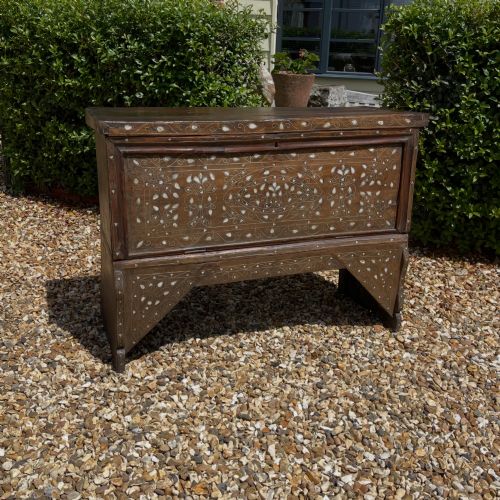
Metal hardware in brass and iron provided functional handles and escutcheons, often secured with hand-cut fixings. Bone and pewter elements occasionally appear in marquetry and inlay work, adding tonal contrast to the dark timber surfaces.
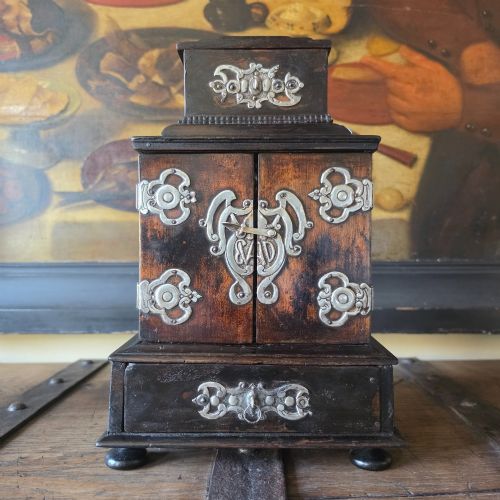
An apprentice once practiced high art on a miniature scale by building a tiny chest of drawers.
Distinctions in quality
Quality rests on the selection of timber figure, the precision of joinery, and the integrity of the original surface patina. Pieces retaining their early polish and uncompromised structural framing command greater attention from collectors.
The sophistication of decorative techniques, such as intricate marquetry, parquetry veneers, or geometric moulding, separates standard utility items from masterwork case pieces. Well-executed dovetailing and smooth drawer operation indicate superior workshop execution.
The Dark Walnut Chest Glossary
- Marquetry
- Decorative veneer patterns arranged in pictorial or geometric designs on wooden surfaces. Artisans cut contrasting woods, bone, or metal to form these elaborate surface decorations.
- Veneer
- Thin slices of fine timber applied over a secondary wood structure to create decorative patterned surfaces. This technique allowed makers to utilise highly figured burr walnut efficiently.
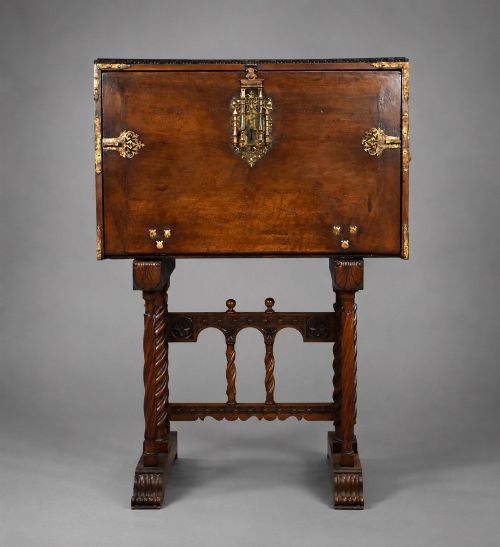
- Bargueño
- A traditional Spanish cabinet with numerous small drawers behind a drop-front writing surface. These pieces often rest on carved stands and incorporate intricate bone inlay.
- Dovetail
- A joint formed by interlocking wedge-shaped fingers used to construct sturdy drawer boxes. Hand-cut dovetails indicate traditional period craftsmanship.
- Patina
- The deep sheen and surface alteration developed by wood over years of handling and waxing. A rich patina signals age and consistent care.
Dark Walnut Chest: Frequently Asked Questions
How do I date a walnut chest?
Dating relies on examining construction methods, timber choices, and hardware styles associated with specific periods like William and Mary or the Georgian era. Hand-cut joints and original fixings offer reliable clues to a piece's age.
Changes in stylistic proportions and decorative inlay also help place a chest within its historical century. Comparing secondary woods inside the drawers provides further evidence of origin.
How should I care for dark walnut furniture?
Maintain walnut surfaces by applying quality beeswax periodically and buffing gently with a soft cloth. Avoid placing these items in direct sunlight or near heat sources to prevent timber splitting.
Keep indoor humidity stable to protect vulnerable veneers and historic joinery. Gentle dusting preserves the natural patina without stripping the historic finish.
Where were most walnut chests made?
Production centres spanned England, France, Italy, Spain, and the Low Countries, each region utilising local woodworking traditions. English pieces often favor restrained walnut veneers, while continental workshops embraced bold carving and marquetry.
Trade routes and changing royal fashions influenced the spread of specific cabinet-making styles across Europe. Regional variations remain visible in the construction woods and decorative motifs used.
What is burr walnut?
Burr walnut comes from a tree growth abnormality that produces swirling, highly decorative grain patterns. Cabinet-makers sliced this timber into thin veneers for use on prominent drawer fronts and tabletops.
Its striking appearance made it a favored material for high-status furniture during the seventeenth and nineteenth centuries. The complex grain requires careful application to prevent lifting over time.