
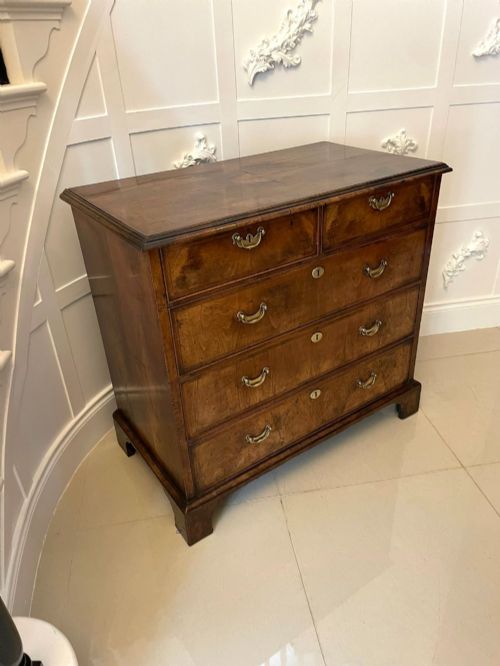
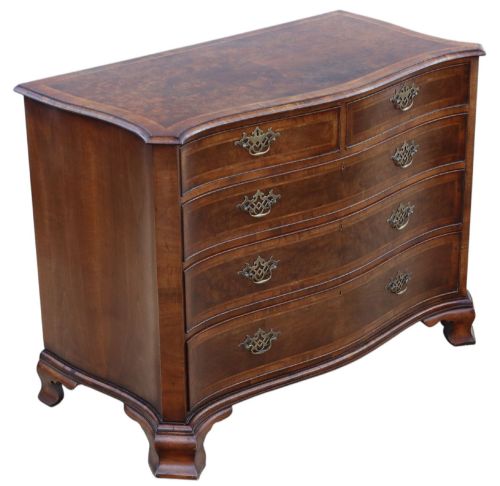
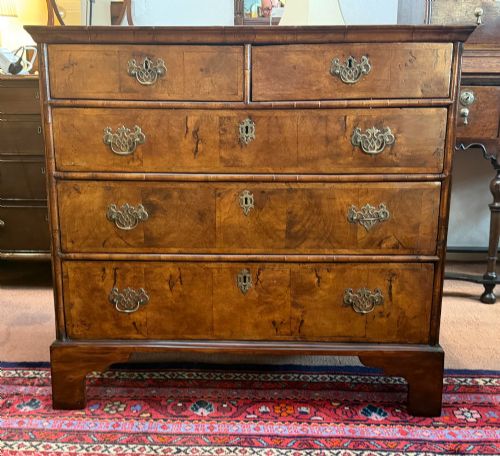
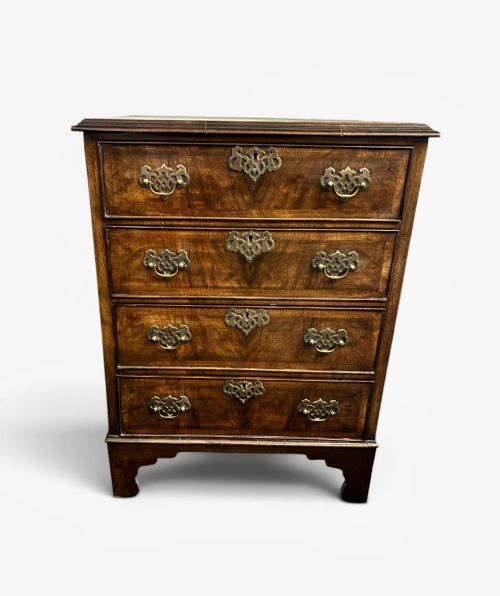
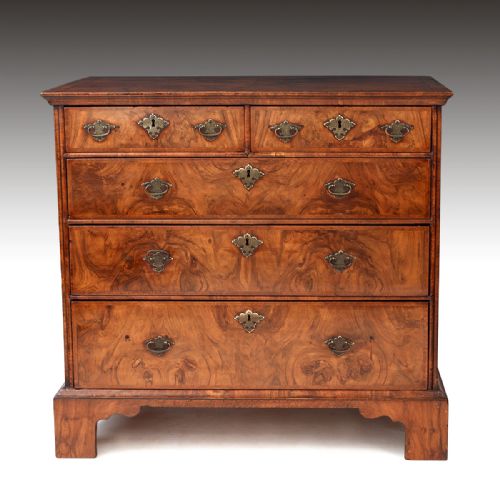
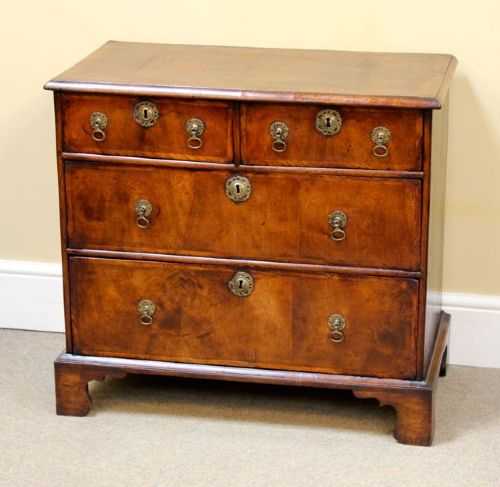
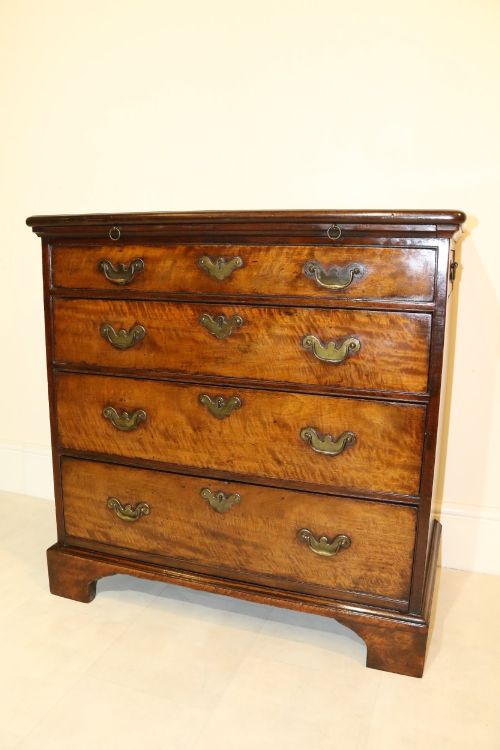
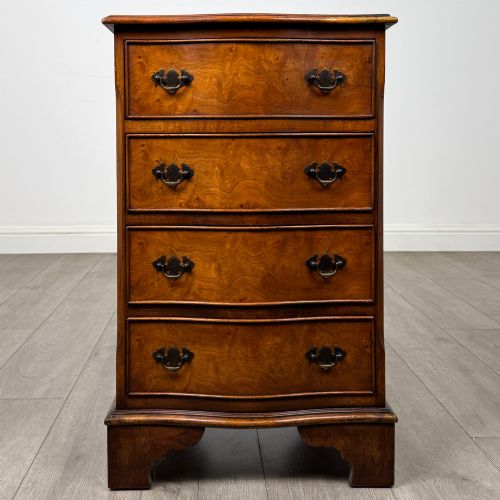
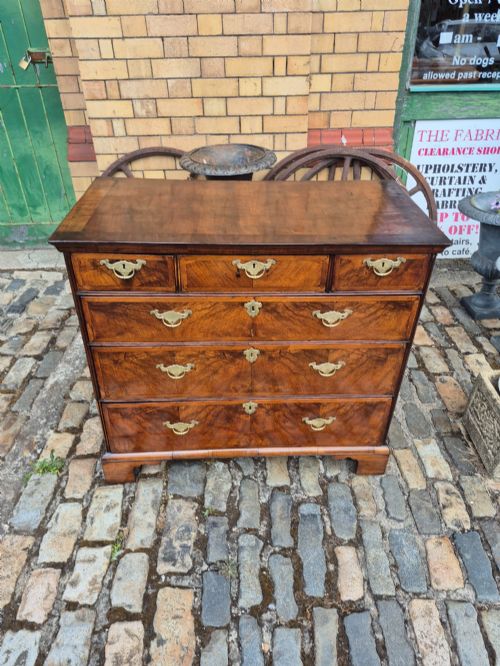
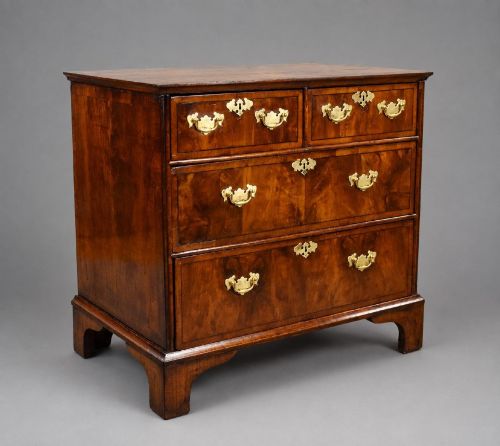
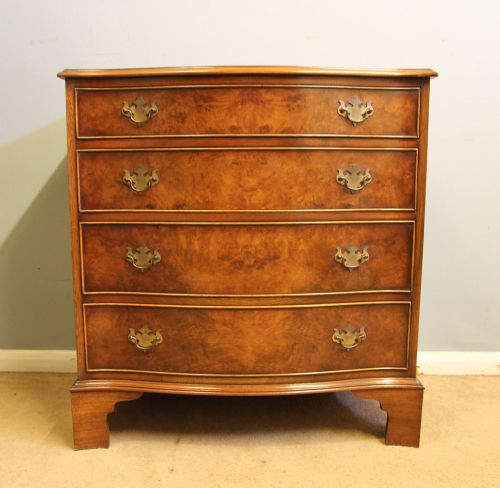
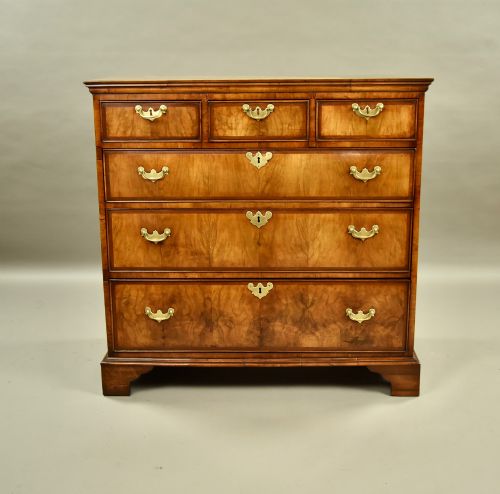

Walnut Bracket Foot Chest
A walnut bracket foot chest offers figured grain and historic timber, anchoring a room with formal proportions.
Walnut Bracket Foot Chest
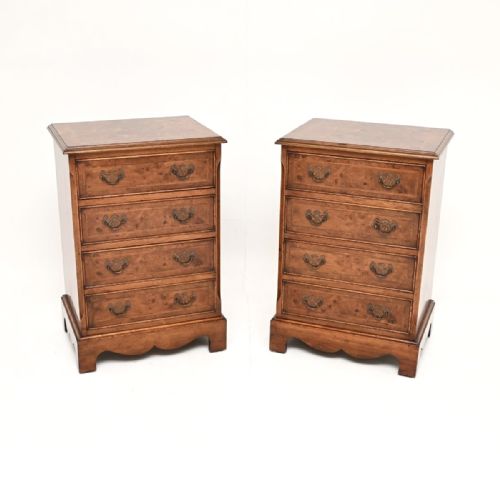
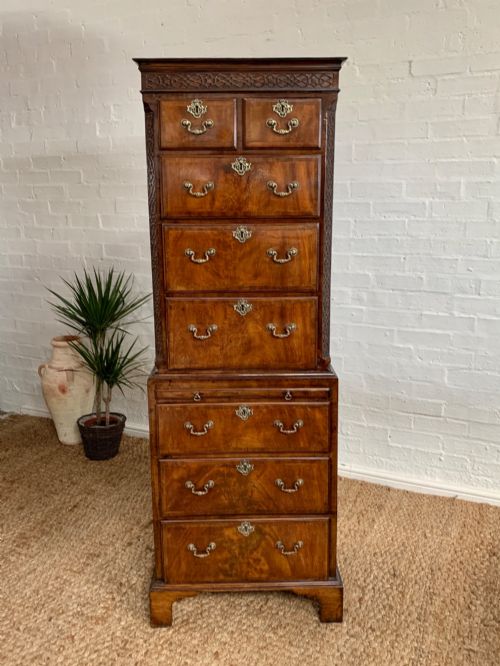
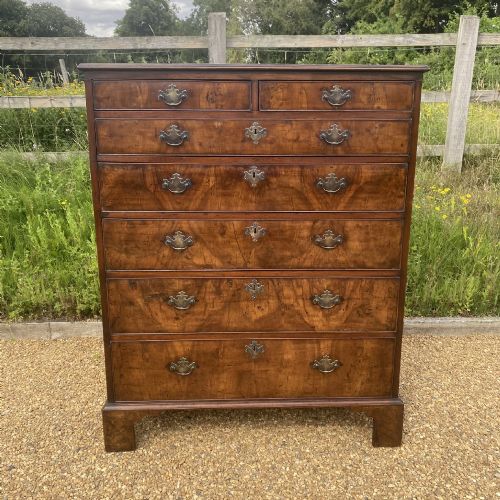
A walnut bracket foot chest brings together centuries of cabinetmaking, most commonly appearing in 18th century Georgian forms alongside later 19th and 20th century iterations. These pieces function primarily as chests of drawers, though variations stretch to small proportions, bachelor desks, tallboys, and bedside tables.
The material vocabulary spans solid walnut, burr walnut, and burr walnut veneer, frequently supported by secondary timbers like oak, pine, and fruitwood. Stylistic markers range from William and Mary and Queen Anne periods through George I, George II, and George III reigns, down to Edwardian and later revival pieces.
How they were made
Cabinetmakers constructed these pieces using solid walnut or applied burr walnut veneer over structural carcases of oak, pine, or fruitwood to achieve rich surface patterns. Crossbanding and inlay work further defined the fronts and tops of these pieces.
Brass handles and escutcheons provided functional and decorative hardware, while the characteristic bracket feet elevated the body securely off the floor.
Miniature chests were made by apprentices to prove their skill.
What varies in quality
Quality rests upon the selection and matching of the timber figure, particularly in burr walnut veneers where grain movement creates dynamic visual depth. The crispness of crossbanding and the retention of original brass hardware elevate certain examples.
Proportion and scale dictate the desirability of pieces, with small proportions and miniature or apprentice formats commanding distinct attention alongside larger tallboys and commodes.
The Walnut Bracket Foot Chest Glossary
- Bracket foot
- A corner foot shaped like a bracket, supporting the base of a case piece with a clean, mitered profile. It provides a stable structural foundation without heavy bulk.
- Burr walnut
- Timber taken from a growth on a walnut tree, yielding highly decorative swirling grain patterns. Cabinetmakers sliced this wood into thin veneers for polished surfaces.
- Crossbanding
- A border technique where thin strips of veneer are laid so the grain runs perpendicular to the main surface. This frames drawer fronts and top panels.
- Tallboy
- A tall chest of drawers made by stacking one chest upon another, maximising storage verticality. These pieces often feature graduated drawer sizes from top to bottom.
- Commode
- A low chest of drawers originating in French taste, often featuring serpentine or bow fronts. English makers adopted the term for decorative case furniture.
Walnut Bracket Foot Chest: Frequently Asked Questions
What periods do these chests come from?
The selections span from the late 17th century through the Georgian eras of George I, George II, and George III, extending into Victorian, Edwardian, and early 20th century revivals.
Early pieces often display William and Mary or Queen Anne stylistic traits, whilst later 20th century examples replicate Georgian proportions using burr walnut veneers.
How do I care for a walnut chest?
Keep the timber away from direct heat sources and strong sunlight to prevent the walnut veneers from drying out or splitting. Gentle dusting with a dry cloth maintains the polished finish.
Avoid silicone-based polishes and apply traditional wax sparingly to nourish the grain without building up heavy residue.
What is the difference between a tallboy and a chest on chest?
A tallboy typically describes a tall chest of drawers, sometimes incorporating a hanging space or dressing section in distinct configurations. A chest on chest specifically refers to two distinct chest sections stacked vertically.
Both forms utilise the vertical space of a room whilst displaying figured walnut drawer fronts.
Where were these pieces used originally?
These pieces served primary storage functions in bedchambers, withdrawing rooms, and parlours of substantial houses. Smaller versions and bachelor chests functioned as writing desks or personal storage.
Bedside chests and miniature formats fulfilled more specialised domestic roles in private quarters.