


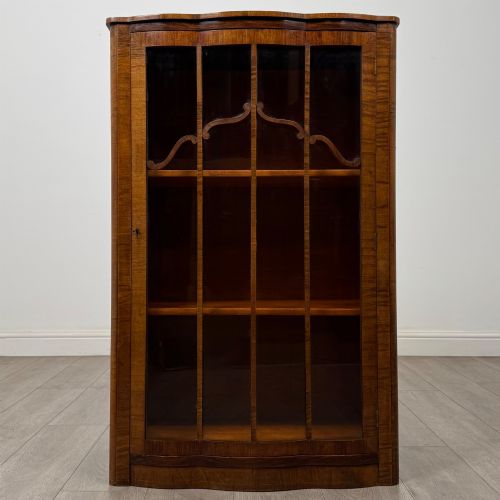
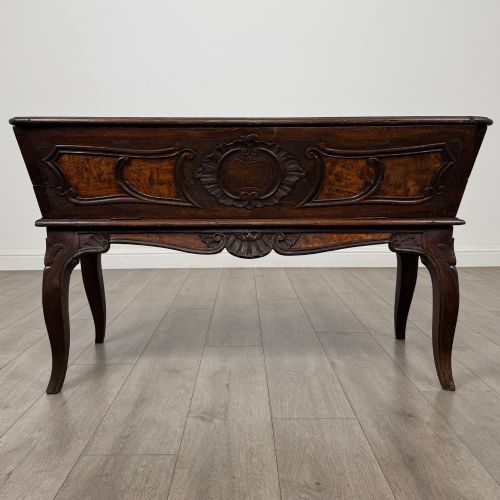
Dark Walnut Cabinet
A dark walnut cabinet brings rich grain and deep tone into a room, offering practical storage through centuries of craftsmanship.
Dark Walnut Cabinet
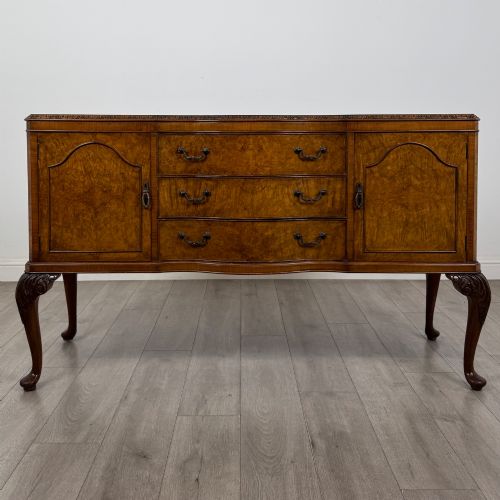
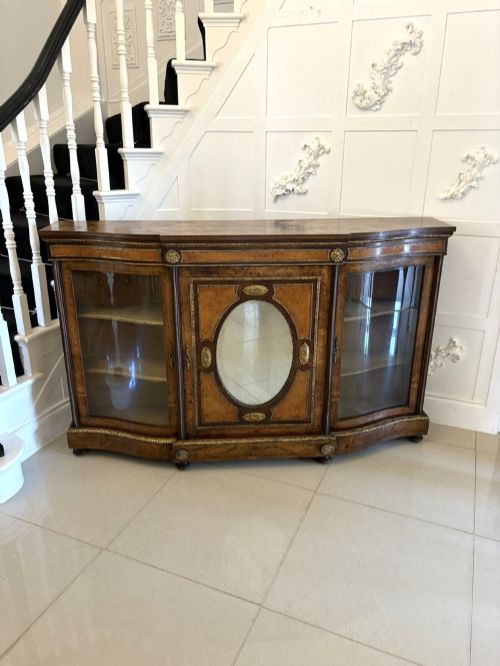
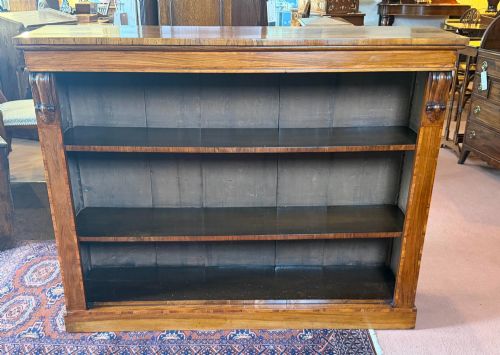
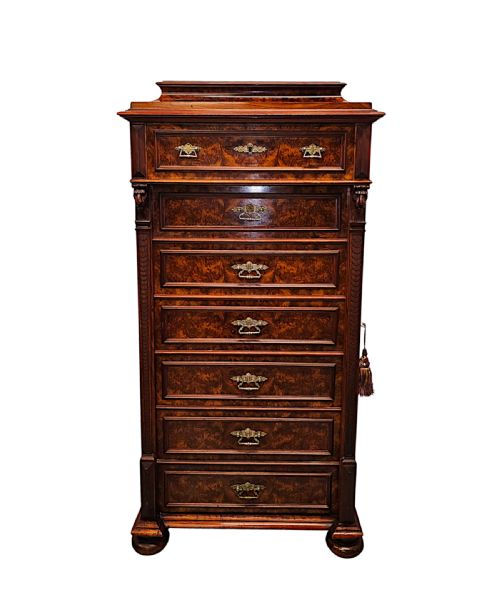
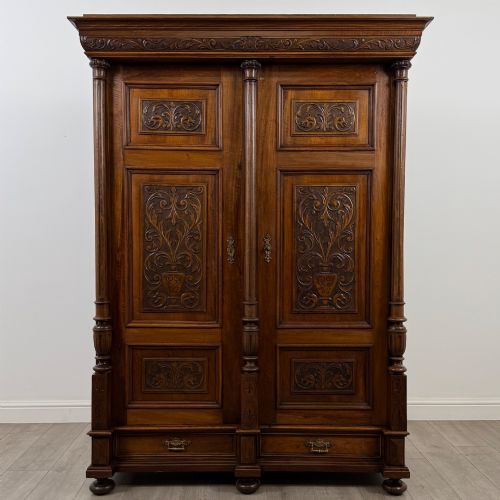
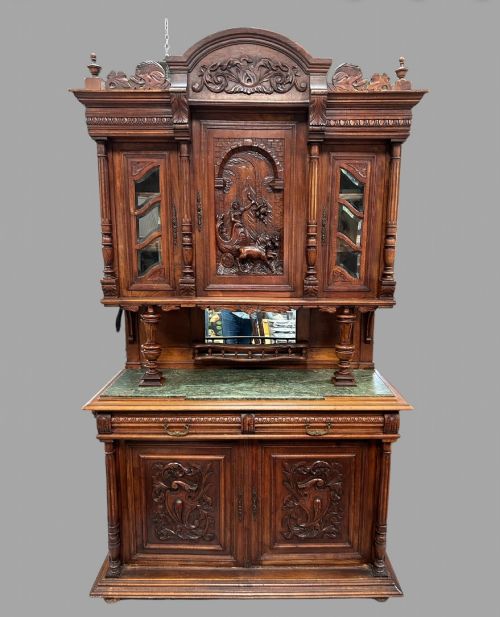
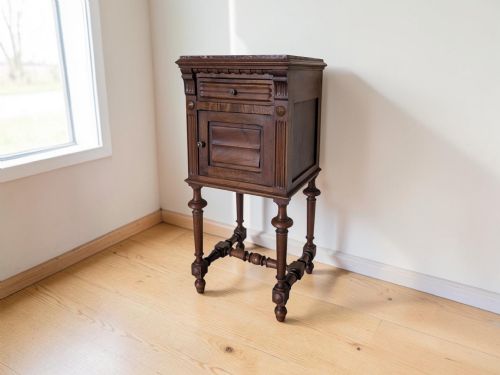
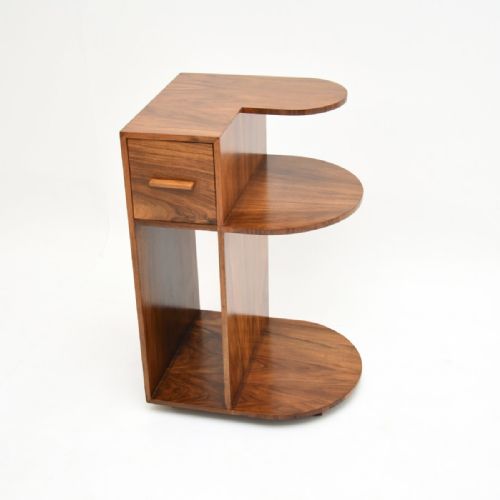
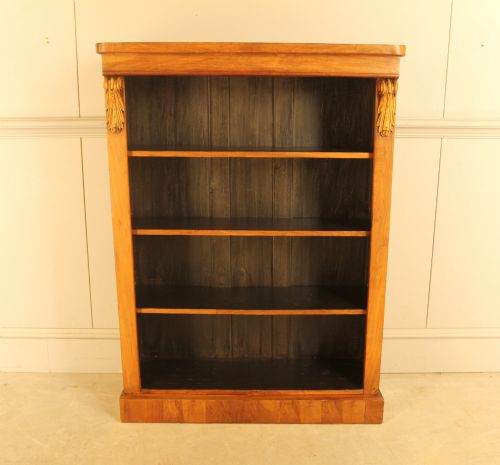
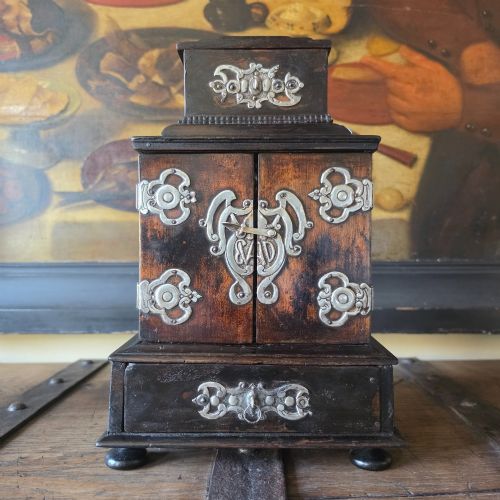
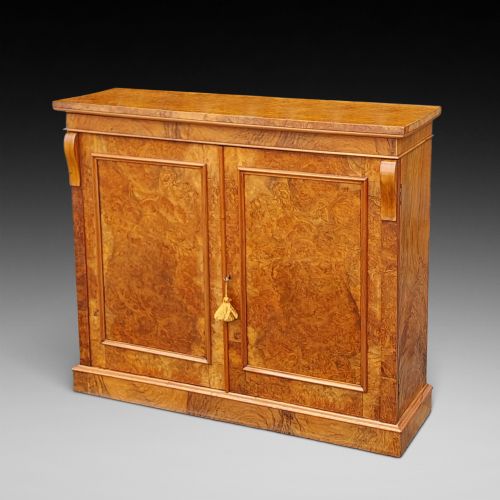
A dark walnut cabinet encompasses a wide variety of domestic storage forms, from Victorian credenzas and Edwardian display pieces to 17th-century examples on stands. Buyers seeking a dark walnut cabinet often encounter Victorian burr walnut bookcases, bedside units, and sideboards featuring rich timber figures.
The selection ranges across several periods, notably the 17th century, the Victorian era, and the Art Deco movement. Forms include breakfront bookcases, hanging wall cabinets, commodes, and music cabinets, reflecting changing interior needs across generations.
What varies in quality
The visual impact of a dark walnut cabinet depends heavily on the selection and matching of wood veneers. Burr and figured walnut demand skilled handling to create symmetrical grain patterns across doors and drawer fronts.
Execution of secondary details, such as brass mounts, glass quality, and inlay work, distinguishes standard domestic output from exceptional studio or regional pieces. Structural integrity and surface preservation dictate the overall standing of an antique.
Pop-up davenports ensure your writing desk conceals its stationary compartments until you press the secret release.
Gabriel Viardot·Maurice Adams
The Dark Walnut Cabinet Glossary
- Burr walnut
- A prized wood veneer obtained from tree growths, showing swirling, knotted grain patterns. It provides highly decorative surfaces on Victorian and Edwardian cabinet doors.
- Marquetry
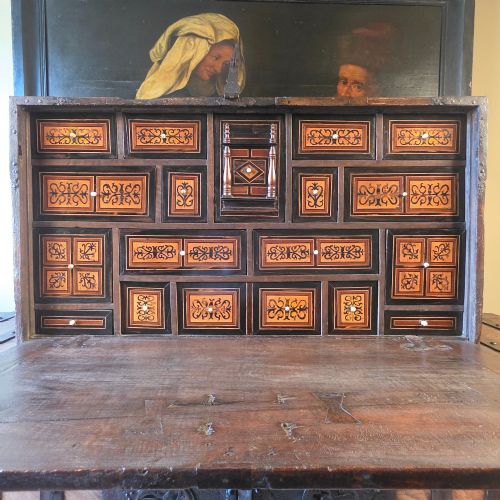
- Decorative patterns formed by inserting pieces of wood, metal, or other materials into a veneered surface. This technique appears on elaborate 17th-century cabinet doors and drawer fronts.
- Credenza
- A sideboard or display cabinet originating in Italy, often raised on legs or plinths. Victorian makers adapted this form in burr walnut with ormolu mounts.
- Bargueño
- A type of chest on stand or cabinet with multiple small drawers, originating in Spain. Examples feature intricate woodwork and drop-front writing surfaces.
- Davenport
- A compact writing desk featuring a sloped top above a pedestal of drawers. Walnut versions often incorporate clever internal compartments and side fittings.
Dark Walnut Cabinet: Frequently Asked Questions
How do I date a walnut cabinet?
Dating relies on construction methods, hardware styles, and timber preparation visible across the piece. Examining drawer linings, backboards, and locking mechanisms reveals the period of manufacture.
Earlier pieces from the 17th century utilise heavy frames and pegged joints, whereas Victorian and Edwardian examples show machine-sawn elements and refined internal fittings.
Where should I place a walnut cabinet?
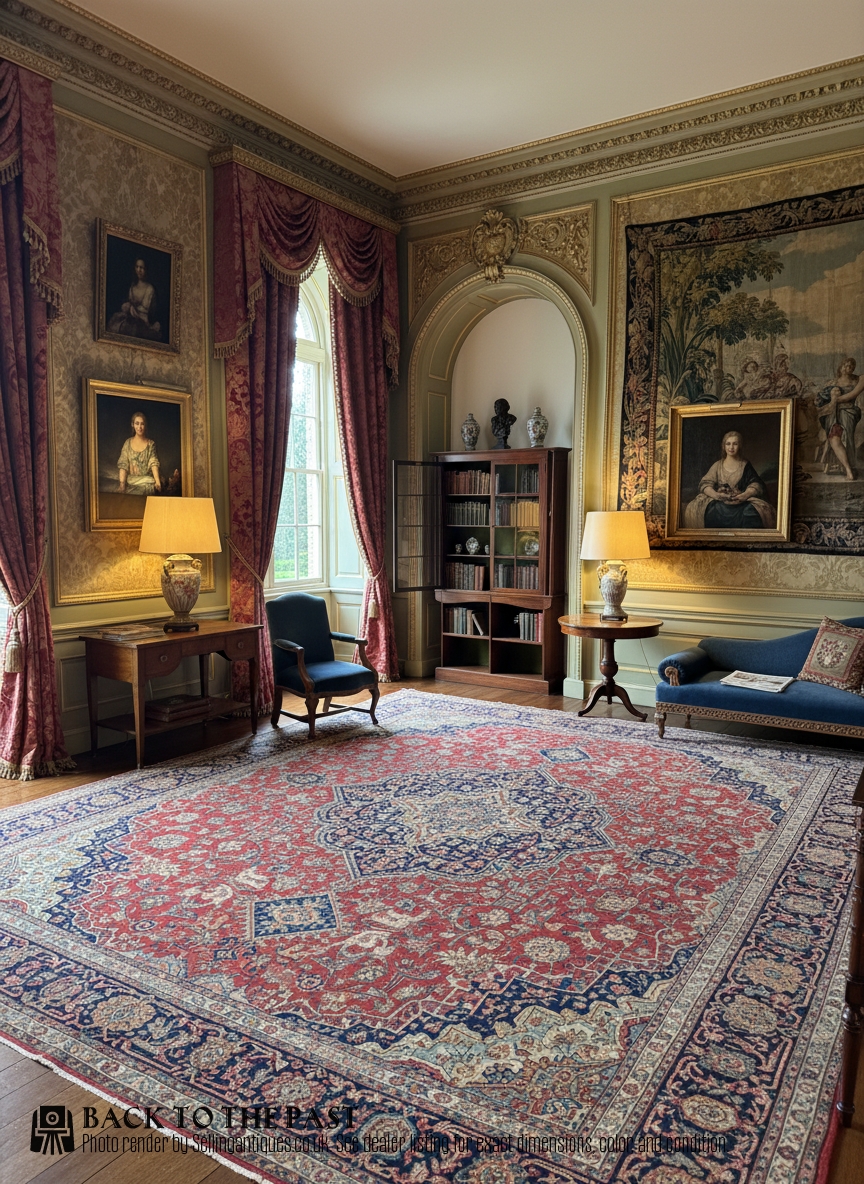
A dark walnut cabinet suits living rooms, dining spaces, or studies where its deep tones can anchor the room's colour scheme. Display cabinets and bookcases work well against plain walls that highlight the timber grain.
Positioning pieces away from direct sunlight and heat sources prevents the walnut veneer from drying out or fading over time.
How do I care for antique walnut furniture?
Maintenance involves dusting with a soft cloth and applying appropriate wax polish sparingly to nourish the wood finish. Avoid silicone-based sprays, which can penetrate old polish and damage the timber.
Maintaining stable room humidity protects both the solid walnut structure and delicate veneers from warping or cracking.
What is the difference between a credenza and a sideboard?
A credenza traditionally lacks the standing legs of a standard sideboard, sitting lower to the ground with enclosed cupboards. Victorian makers frequently used the term for elaborately mounted display cabinets.
Sideboards generally offer broader surfaces and dedicated drawer space for dining room storage and serving.