



Mother of Pearl Inlay Cabinet
A mother of pearl inlay cabinet brings remarkable iridescence and intricate detail to a room, offering both practical storage and striking visual depth.
Mother of Pearl Inlay Cabinet
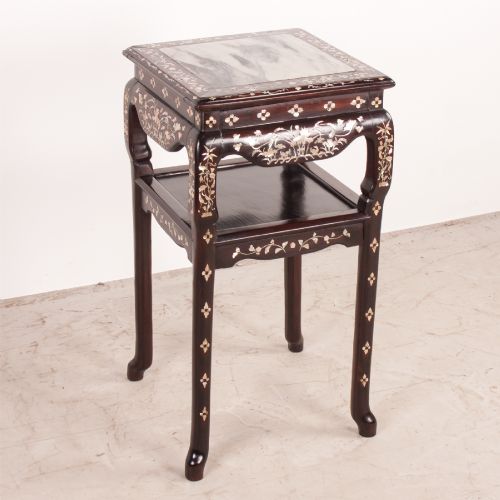
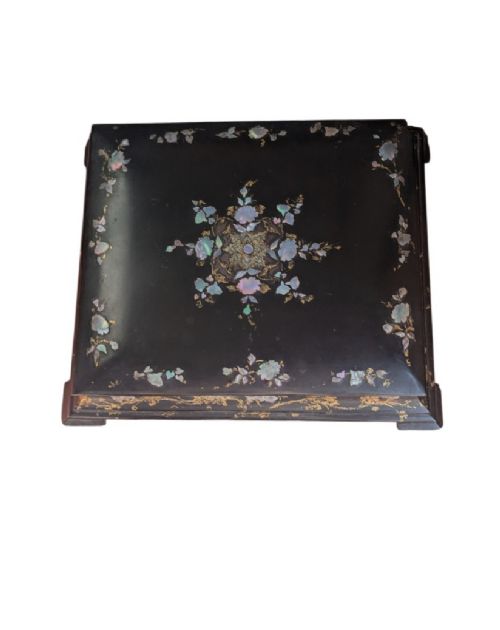
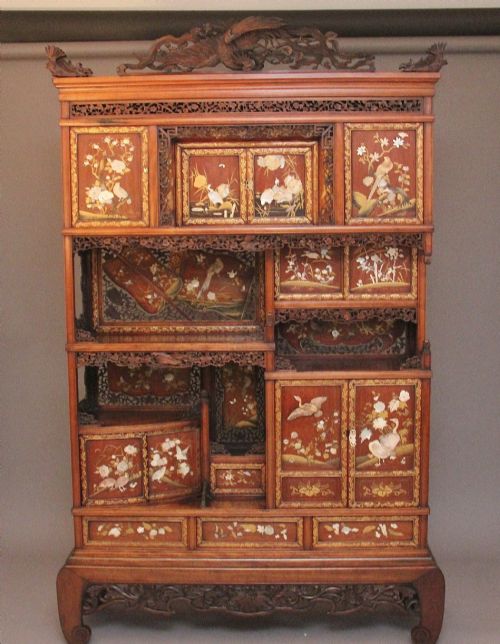
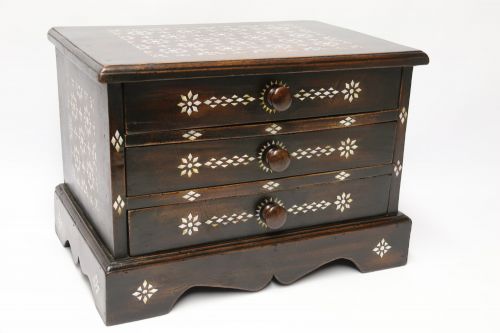
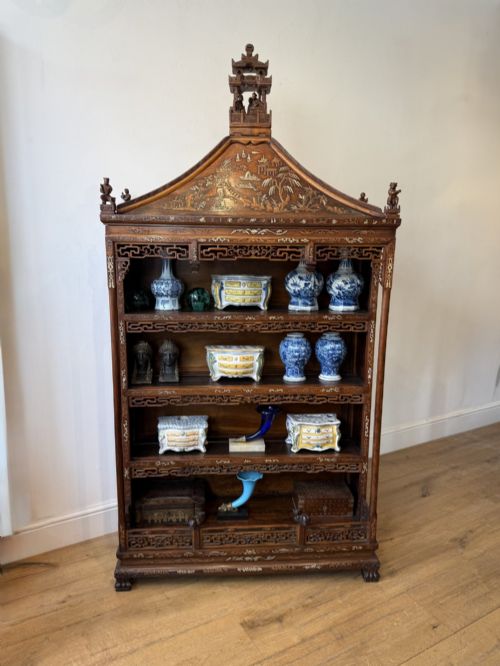
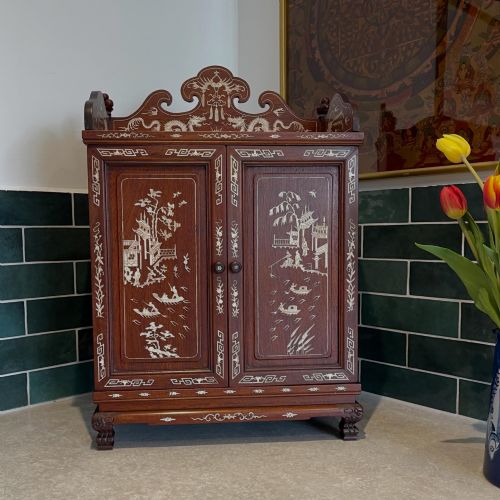
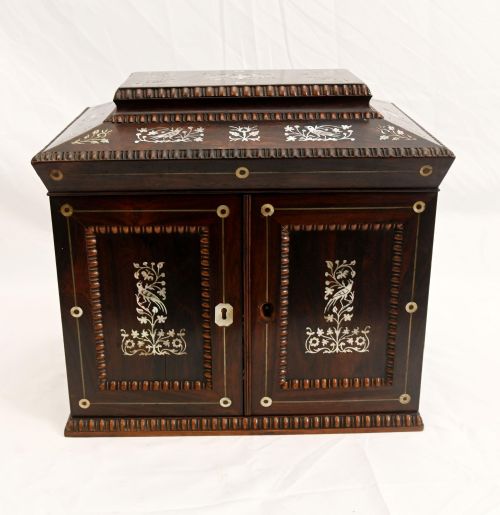
A mother of pearl inlay cabinet encompasses a diverse range of forms, from large Japanese Meiji period shodana display cabinets to compact Victorian jewellery chests and Chinese occasional tables. These pieces span centuries of global craftsmanship, frequently appearing in forms designed for desktop use, tabletop display, or freestanding storage.
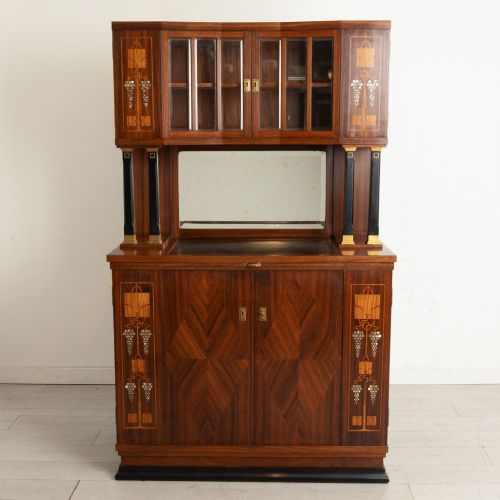
Buyers encountering this selection will find an array of stylistic traditions represented, including Chinese export work, Anglo-Indian hardwood pieces, and Viennese Secessionist design. The variety extends across diverse regional aesthetics while maintaining a shared reliance on lustrous decorative surfaces.
The objects serve multiple functions, operating as miniature collector chests, writing boxes, and larger sideboards or display cabinets. Each variation reflects the specific taste and cabinet-making traditions of its origin, whether Victorian Britain, Meiji Japan, or Qing dynasty China.
How they were made
Craftsmen utilised foundational timbers such as rosewood, walnut, mahogany, and ebony, constructing sturdy carcases to support intricate decorative programmes. These dark or richly grained woods provided a strong tonal contrast against the pale, shimmering iridescence of the inlaid material.
The central technique relies on recessing fragments of mother-of-pearl, abalone, bone, and brass directly into the timber or lacquer substrate. Artisans meticulously shaped each tiny shell or metal piece to form elaborate floral, geometric, or figural motifs before securing the elements flush with the surrounding surface.
Mother of Pearl Inlay Cabinet Retail Price Guide 2026
Typical asking prices for mother of pearl inlay cabinet among the pieces listed under this phrase on Sellingantiques today, from the lower quarter to the upper quarter. They describe what is for sale here now, not the wider market.
Certain Victorian stationers' boxes carried secret compartments designed specifically for holding postage stamps when the penny black was a recent marvel.
What varies in quality
The standard of execution in the inlay work itself defines the upper tier of these pieces, distinguishing crisp, tightly fitted shell segments from coarse, heavily grouted insertions. Superior examples demonstrate remarkable precision where individual fragments curve seamlessly along complex contours without excessive adhesive visible to the eye.
Material selection and structural harmony also separate ordinary items from exceptional ones, particularly in the choice of dense hardwoods and the refinement of the underlying cabinet-making. A cohesive design where the secondary woods, such as bone or brass accents, complement the primary mother-of-pearl decoration indicates a higher level of workshop output.
August Ungethüm
The Mother of Pearl Inlay Cabinet Glossary
- Shodana
- A traditional Japanese multi-tiered display cabinet featuring staggered shelving and enclosed cupboards. These pieces often showcase intricate carving and extensive inlay.
- Papier-mâché
- A composite material made from paper pulp or layers of paper reinforced with glue, moulded and dried. It served as a smooth, dark surface for inlaid shell decoration on Victorian boxes and small cabinets.
- Anglo-Indian
- A descriptive term for decorative arts produced in India during the British period, often combining traditional local techniques with European furniture forms.
- Abalone
- A mollusc shell harvested for its deep, highly coloured iridescence, featuring blues and greens alongside traditional mother-of-pearl tones. It is frequently employed in Syrian and Japanese work for heightened visual contrast.
- Seccessionist
- A modernist design movement originating in Vienna around nineteen hundred that rejected historicism in favour of geometric clarity and new decorative expressions.
Mother of Pearl Inlay Cabinet: Frequently Asked Questions
What is a shodana cabinet?
A shodana is a Japanese cabinet featuring asymmetric shelving and small cupboards designed for displaying treasured objects.
These pieces emerged strongly during the Meiji period and frequently incorporate detailed carving alongside mother-of-pearl inlay.
How were table cabinets used?
Table cabinets served as secure repositories for precious correspondence, jewellery, and small collectibles in nineteenth-century homes.
Placed upon desks or larger pieces of furniture, they kept intimate items organised and protected behind locking doors or lids.
How do I care for mother of pearl?
Mother of pearl requires gentle cleaning with a soft, dry cloth to prevent scratching the delicate surface.
Avoid harsh chemical polishes and keep the cabinet away from direct sunlight and extreme humidity changes to protect the underlying timber and adhesive.
How do I distinguish regional styles?
Regional styles reveal themselves through the combination of timber and the specific motifs chosen for the inlay work.
Chinese and Japanese pieces often employ lacquer and distinct floral or landscape compositions, whereas European and Anglo-Indian variants lean towards exposed hardwoods like rosewood and walnut.