


Dark Teak Carved Table
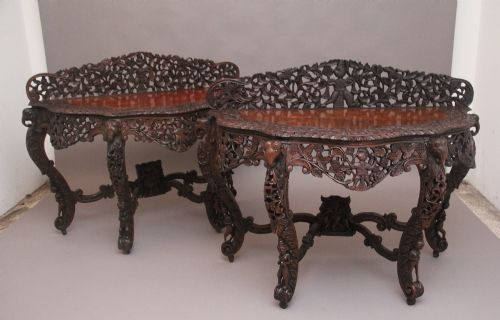
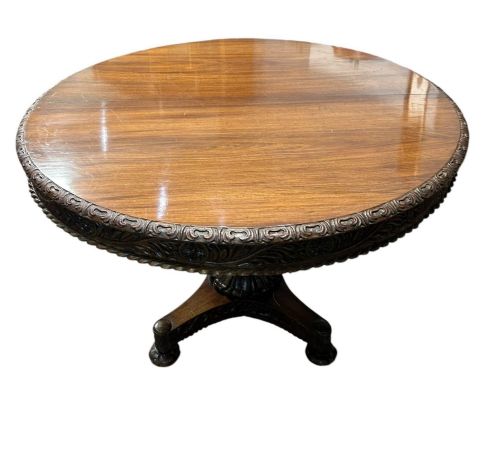
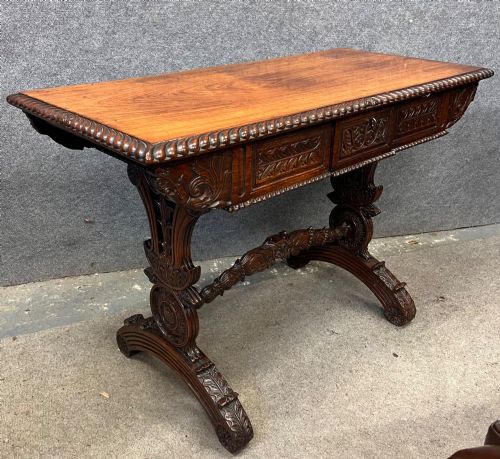
These pieces of dark teak carved table bring dense colonial craftsmanship and deep timber tones into modern rooms.
Dark Teak Carved Table
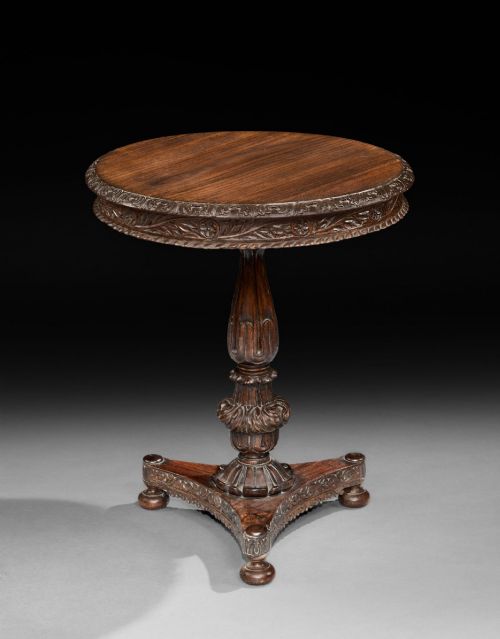
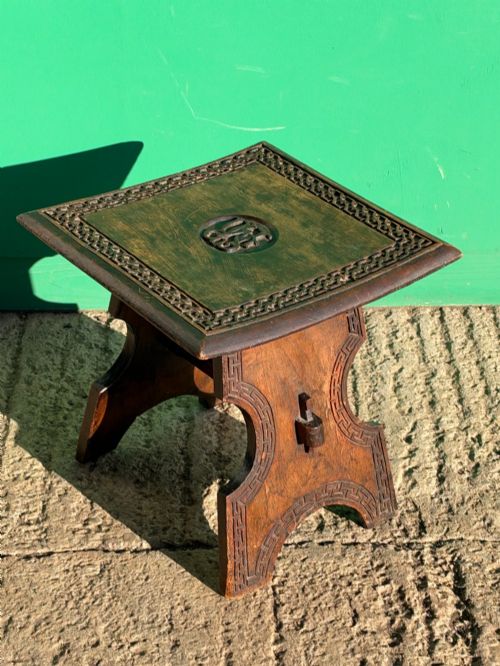
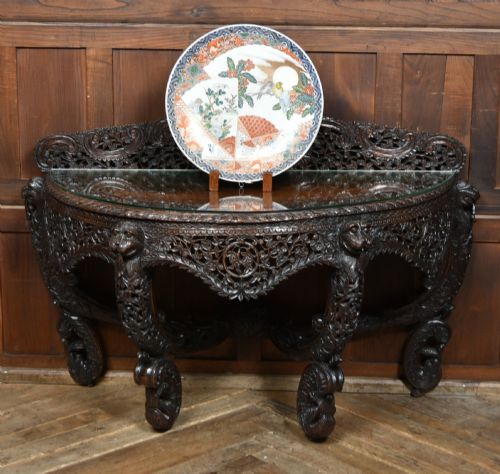
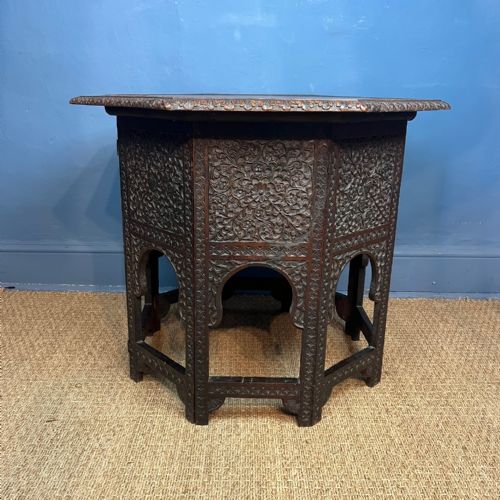
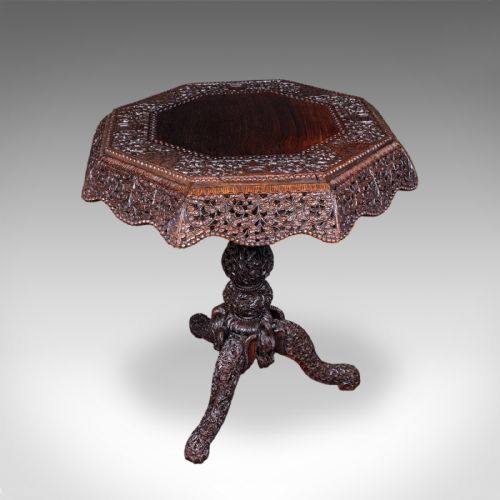
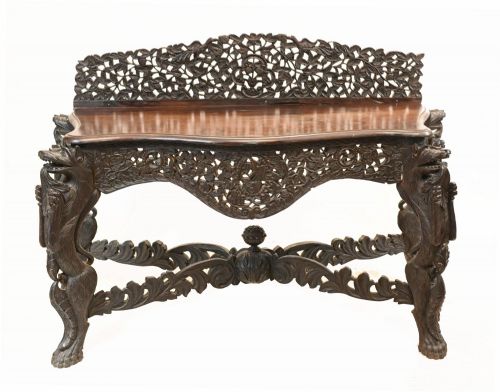
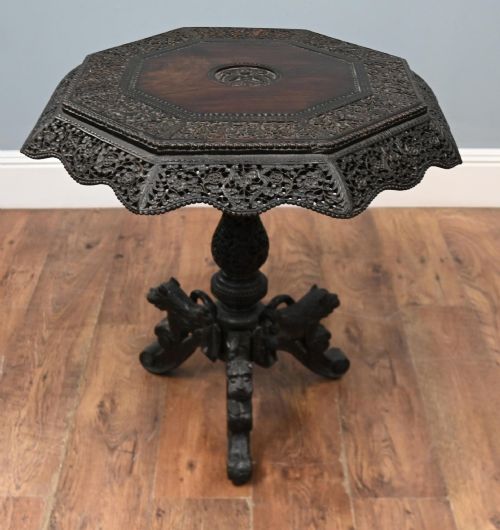
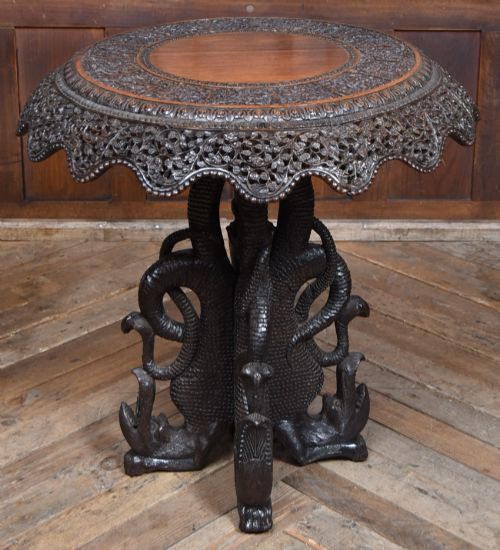
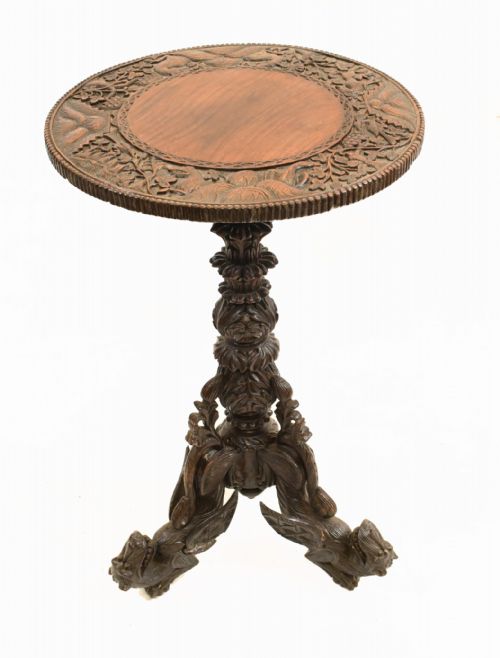
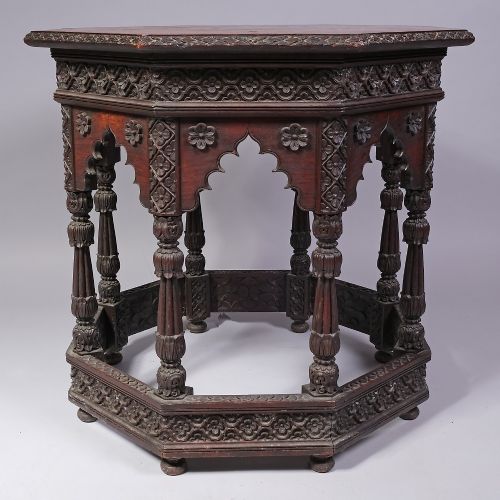
A dark teak carved table encompasses a range of nineteenth and early twentieth century colonial forms, most frequently encountered as octagonal occasional tables, side tables, and coffee tables originating from India and Burma. Buyers searching this phrase will find heavily ornamented surfaces featuring traditional motifs, animal figures, and geometric patterns rooted in Anglo-Indian and Burmese traditions.
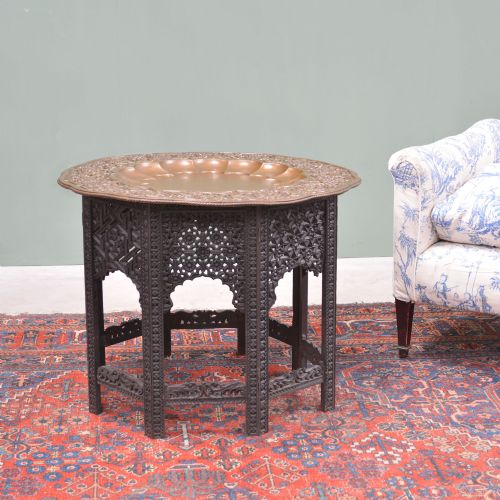
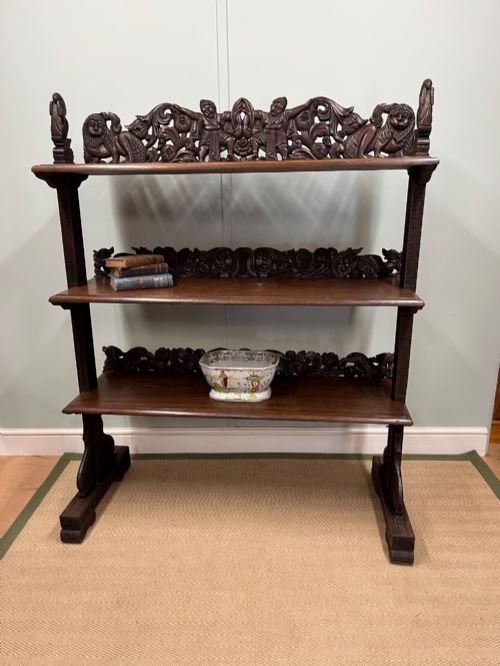
The selection on this page leans heavily towards compact occasional furniture, such as tray top tables, folding tripod designs, and multi-tiered stands alongside larger dining and coffee tables. These items reflect the exchange of craft and trade during the Victorian and Edwardian eras, combining local timber resources with British domestic requirements.
Alongside standard side tables, the inventory includes specialised forms like elephant tables, nest sets, and tilt-top tea tables. Teak forms the foundational material across these varied shapes, often paired with contrasting inlay work or intricate pierced carving across the top and legs.
Materials and construction
The primary material across these pieces is dense teak, supplemented by other hardwoods and occasionally rosewood, chosen for its stability and suitability for deep relief carving. Artisans utilised hand tools to undercut foliage, deities, and animal figures, creating high-contrast surfaces that catch the light.
Many surfaces incorporate contrasting decorative elements, utilising brass wire inlay, bone, and bone inlay set directly into the carved timber channels. Structural joints often rely on traditional pinned construction and folding mechanisms, allowing heavy occasional tables to collapse flat for transport.
Dark Teak Carved Table Retail Price Guide 2026
Typical asking prices for dark teak carved table among the pieces listed under this phrase on Sellingantiques today, from the lower quarter to the upper quarter. They describe what is for sale here now, not the wider market.
The inventory spans the nineteenth century through the early decades of the twentieth century.
Assessing quality
Quality in a dark teak carved table rests on the depth, sharpness, and discipline of the carving. Superior examples display crisp undercut foliage and well-defined animal figures where details remain distinct rather than rounded off by hasty finishing.
The integration of secondary materials dictates the upper tier of pieces, particularly where brass wire or bone inlay sits flush with the timber surface without missing sections. Timber selection also plays a role, with choice pieces exhibiting consistent dark grain and minimal structural distortion over time.
The Dark Teak Carved Table Glossary
- Anglo-Indian
- Descriptive term for furniture made in India during the British colonial period, combining local craftsmanship with European forms. These items often merge traditional Indian motifs with British domestic furniture types.
- Hoshiarpur
- A style of woodwork originating from the Punjab region, characterised by intricate geometric patterns formed from brass wire and shisham or teak inlay. Pieces from this centre are typically densely patterned across every available surface.
- Tray top
- A table design featuring a raised rim around the edge of the surface, sometimes removable to function as an independent serving tray. This form is common in Hoshiarpur and Anglo-Indian occasional tables.
- Tilt top
- A table mechanism allowing the surface to hinge vertically for storage against a wall when not in use. This feature appears frequently on nineteenth-century occasional and tea tables.
Dark Teak Carved Table: Frequently Asked Questions
How do I date a carved teak table?
Dating relies on examining construction methods, tool marks, and stylistic clues typical of the nineteenth century. Pieces from the Victorian and Edwardian periods often display specific colonial trade characteristics.
Changes in hardware, timber ageing, and the evolution of Anglo-Indian workshop patterns help narrow down the decade of manufacture. Comparing the joinery against documented examples from the same region provides further confirmation.
Where were these tables made?
These pieces originated primarily in workshops across the Indian subcontinent and Burma during the colonial era. Major production centres included Hoshiarpur in the Punjab and the Bombay Presidency.
Local artisans adapted indigenous woodworking techniques to satisfy the tastes of British residents and the export market. The resulting furniture was shipped back to Britain and Europe, establishing a distinct colonial aesthetic.
How should I clean carved teak?
Maintenance requires gentle dusting with a soft, dry brush to remove particles from the deep recesses of the carving. Avoid wet cloths or harsh commercial polishes that can build up in the detailed grain.
Occasional application of natural beeswax preserves the moisture in the hardwood without leaving a sticky residue. Keeping the timber away from direct heat sources prevents the wood from drying and splitting.
What is an elephant table?
An elephant table is a specific form of occasional furniture where the base or support structure incorporates carved elephant figures. These animals are often depicted with trunks raised and intricate caparisons.
Such tables reflect the exoticism popular in late nineteenth-century British interior design. They serve as compact side or display pieces within a room scheme.