

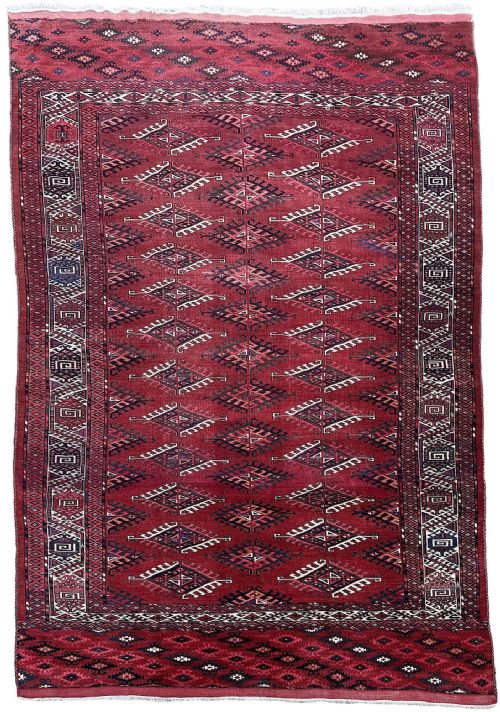


Dark Red Turkmen Carpet
A dark red turkmen carpet brings deep tribal character and rich wool texture into a room.
Dark Red Turkmen Carpet
A dark red turkmen carpet encompasses tribal rugs, main carpets, and smaller face bags created by Central Asian weavers. These pieces frequently feature distinctive geometric motifs known as güls, arranged in structured rows across the field. Buyers searching for a dark red turkmen carpet encounter textiles originating from the nineteenth and early twentieth centuries.
The selection on this page includes Yomut, Ersari, Tekke, and Saryk tribal works, alongside village productions from Afghanistan. Pieces range from large main carpets down to smaller torba faces and asmalyk trappings with tassels. These traditional floor coverings and wall hangings display deep madder red colour palettes woven by nomadic groups.
Materials and Construction
Weavers constructed these carpets predominantly using hand-spun wool for the pile, combined with cotton and occasional silk highlights. Natural dyes produced the characteristic deep reds, while additional organic colorants supplied contrasting details in the geometric patterns.
The structural foundations rely on sturdy wool or cotton warps and wefts to support the dense pile. Fine weaves demand precise knotting techniques passed down through generations of tribal artisans.
Dark Red Turkmen Carpet Retail Price Guide 2026
Typical asking prices for dark red turkmen carpet among the pieces listed under this phrase on Sellingantiques today, from the lower quarter to the upper quarter. They describe what is for sale here now, not the wider market.
Assessing Quality and Execution
Quality rests upon the fineness of the weave and the clarity of the drawing in the main motifs. Tighter knots and well-defined gül proportions distinguish superior pieces from standard village work.
The depth and brilliance of the natural dyes significantly influence the visual impact of each carpet. Exceptional examples retain rich saturation across the entire field without fading or muddy tones.
The Dark Red Turkmen Carpet Glossary
- Gül
- A repeating primary medallion or octagonal design element found across Turkmen tribal rugs. These motifs often identify the specific weaving tribe.
- Torba
- A small tent-bag or storage pouch with a flat-woven back and a piled face. They hung inside nomadic dwellings for domestic storage.
- Asmalyk
- A pentagonal trapping traditionally mounted on the flank of a camel during wedding processions. These decorative textiles display elaborate pile work and tassels.
- Chuval
- A large storage bag produced by nomadic weavers for household use. Surviving examples often circulate as standalone face fragments.
Dark Red Turkmen Carpet: Frequently Asked Questions
How do I identify a Yomut carpet?
Yomut carpets typically display distinctive diamond or octagonal dyrnak güls in deep madder red tones. The drawing tends to be precise with balanced proportions.
They often include distinctive elem panels at the shorter ends filled with tree or plant motifs. Examining the border arrangements helps confirm the tribal origin.
What is an Ersari torba used for?
An Ersari torba served as a practical storage bag inside nomadic tents. They held small household possessions and personal items.
Today, these pieces function primarily as decorative wall hangings or small collector rugs. Their detailed gül designs make them striking focal points.
How are natural dyes identified?
Natural dyes display subtle tonal variations and depth across individual wool strands. Madder root produces the characteristic rich reds seen in these textiles.
Under closer inspection, the colours age gracefully with a soft patina. Chemical testing is rarely necessary when the visual harmony of the palette is evident.
Where were these carpets made?
Nomadic and village groups produced these textiles across Central Asia, including regions of modern Turkmenistan and Afghanistan. Different tribes inhabited distinct geographical territories.
Their weaving traditions reflected specific cultural markers and local environmental resources. Trade networks subsequently distributed the carpets to wider markets.