


Dark Padauk Table
A dark padauk table brings dense hardwood and deep reddish-brown tone into a room, offering sturdy utility paired with intricate regional carving.
Dark Padauk Table
When you search for a dark padauk table, you encounter nineteenth century furniture originating from colonial workshops and export markets. The selection spans the Victorian era, specifically drawing on decades between eighteen fifty and eighteen ninety.
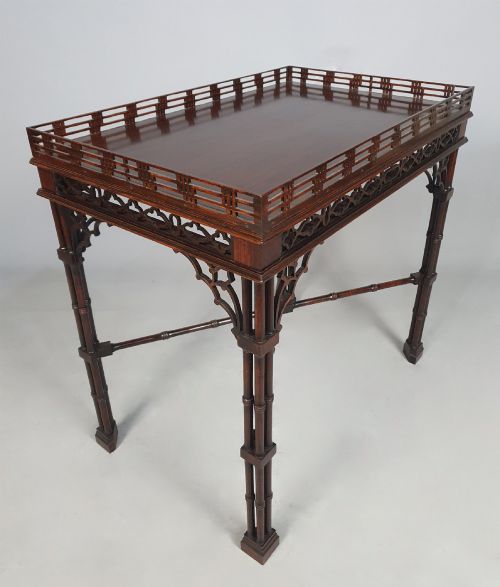
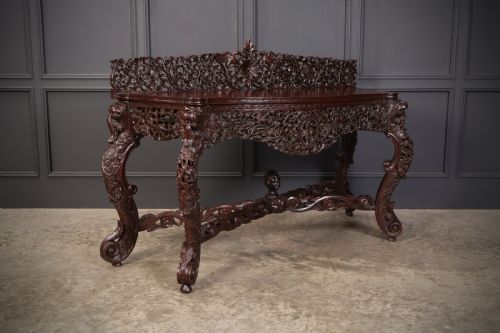
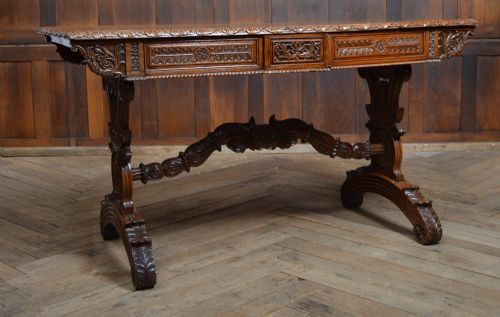
Most examples on this page take the form of side tables, centre tables, and console tables, alongside occasional tables, library tables, desks, and dining pieces. These items frequently reflect Anglo-Indian, Anglo-Burmese, and Chinese Export traditions.
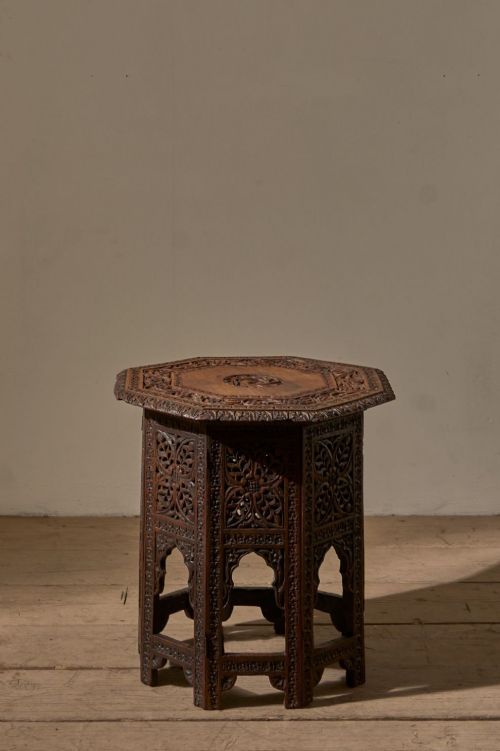
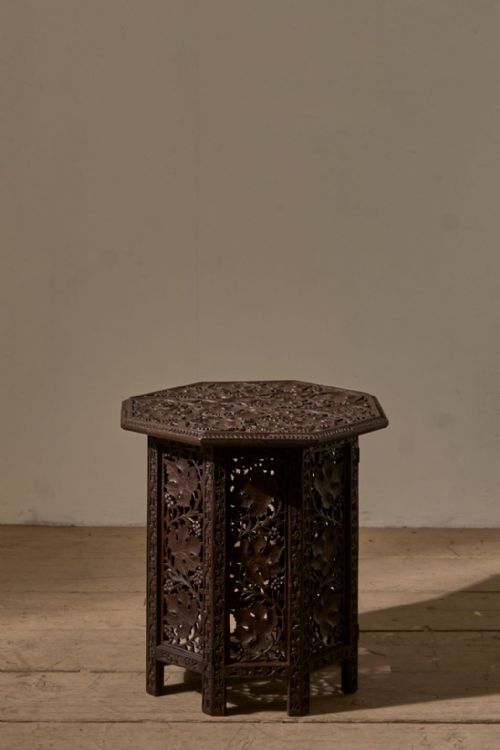
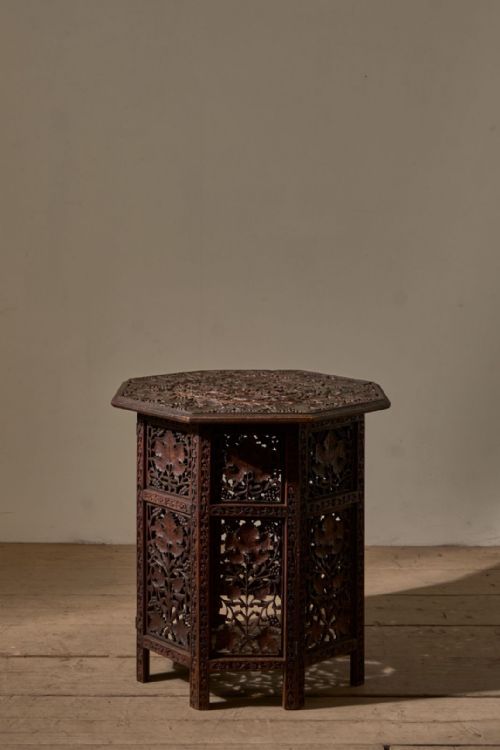
Makers shaped padauk wood into versatile furniture ranging from small collapsible occasional tables to large partners desks and multi-tiered buffets. The forms combine solid dense timber with varied regional decorative vocabularies.
How they were made
Craftsmen utilised heavy tropical padauk wood, often complemented by secondary materials like brass hardware, marble tops, and bone inlay. The dense nature of padauk allowed artisans to execute deep, sharp relief carving without splitting the timber.
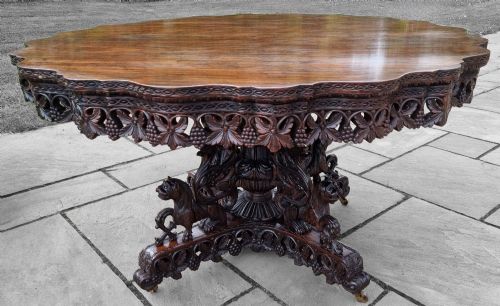
Workshop methods combined structural joinery with elaborate surface decoration, including dragon and leaf motifs. Tables were built as stationary centrepieces or functional items like collapsible occasional tables and pedestals.
Several tables feature hand-carved dragons keeping a watchful eye over nineteenth century parlours.
What varies in quality
The standard of a dark padauk table rests on the crispness and depth of the carved woodwork. Workshops varied significantly in whether foliage and figurative elements retained sharp relief or appeared soft and shallow.
Quality also appears in the selection of the timber itself, where uniform dark grain and well-matched panels elevate the piece. The integration of functional elements, such as pedestals or collapsible joints, distinguishes finer examples from simpler utilitarian items.
The Dark Padauk Table Glossary
- Padauk
- A dense, heavy tropical hardwood prized for its dark reddish-brown colour and durability. It takes fine carving exceptionally well.
- Anglo-Indian
- Furniture made in India during the British colonial period, often combining British furniture forms with local carving traditions. Artisans utilised native timbers such as padauk.
- Partners Desk
- A large desk designed for two people to work opposite one another, featuring drawers and cupboards on both sides. These heavy pieces formed central fixtures in nineteenth century libraries.
- Centre Table
- A freestanding table finished on all sides so it could sit in the middle of a room rather than against a wall. They frequently served as display surfaces or gathering points in Victorian interiors.
- Console Table
- A table designed to stand flat against a wall, sometimes secured with brackets. In colonial workshops, they were carved from dense hardwoods like padauk.
Dark Padauk Table: Frequently Asked Questions
What is a padauk table?
A padauk table is a nineteenth century item of furniture constructed from dense tropical hardwood. These pieces frequently emerge from Anglo-Indian and Burmese colonial workshops.
They appear in various forms including centre tables, side tables, and desks. The dense timber allowed artisans to carve deep, intricate designs into the wood.
How do I care for padauk wood?
Care for padauk involves keeping the timber away from direct heat sources and sudden humidity changes. Regular dusting with a soft cloth preserves the natural finish of the heavy hardwood.
Avoid harsh chemical polishes that can build up on the surface. Natural beeswax applied sparingly helps maintain the deep reddish-brown tone.
Where were these tables made?
These tables were produced during the nineteenth century in regions influenced by British colonial trade. Workshops in India and Burma created substantial quantities of carved furniture for export.
Chinese export workshops also utilised padauk wood to build tables for international markets. This global exchange blended European furniture forms with local carving styles.
Are these tables heavy?
Padauk wood is exceptionally dense and heavy, making tables constructed from it quite solid. Moving a large library table or partners desk requires multiple people.
Smaller items like occasional tables remain manageable, and some nineteenth century examples were specifically built as collapsible pieces for travel.
How do I date a padauk table?
Dating relies on examining the construction methods, stylistic markers, and recorded periods associated with the piece. Nineteenth century examples often display specific Victorian or colonial revival design traits.
The combination of dense padauk timber, regional carving motifs, and hardware like brass elements helps narrow down the decade of manufacture.