


Dark Oak Wainscot Chair
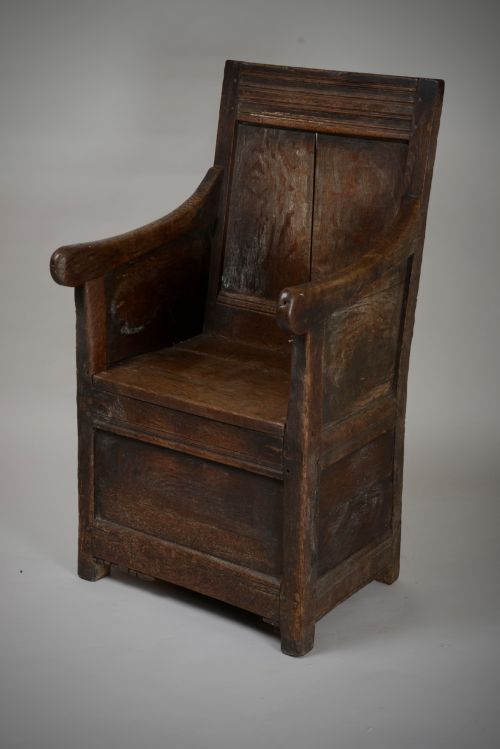
A dark oak wainscot chair is a heavy wooden armchair built for the master of a household during the sixteenth and seventeenth centuries.
Dark Oak Wainscot Chair
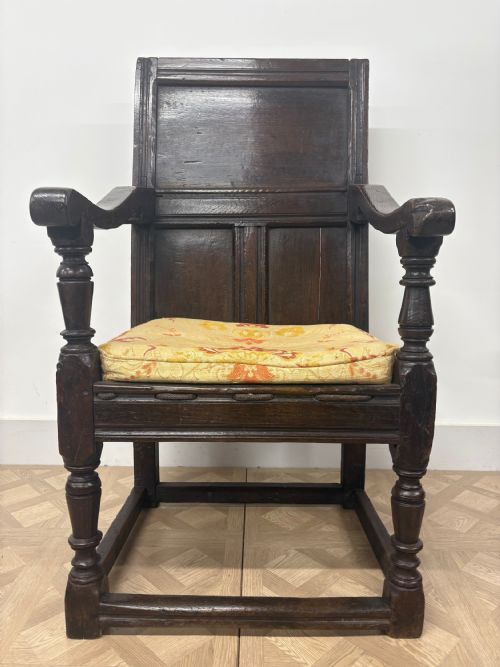
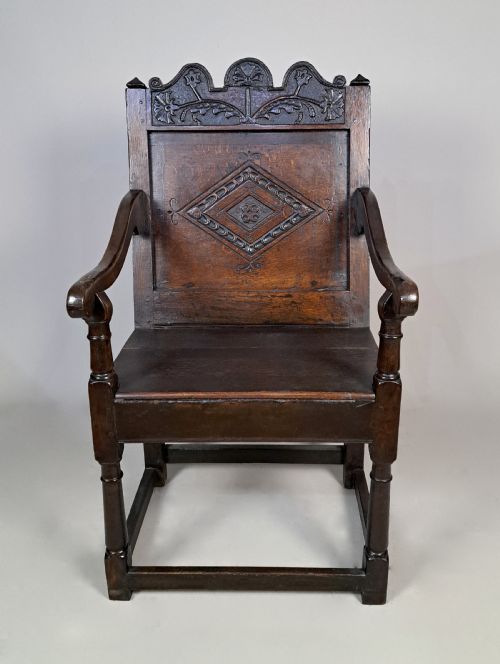
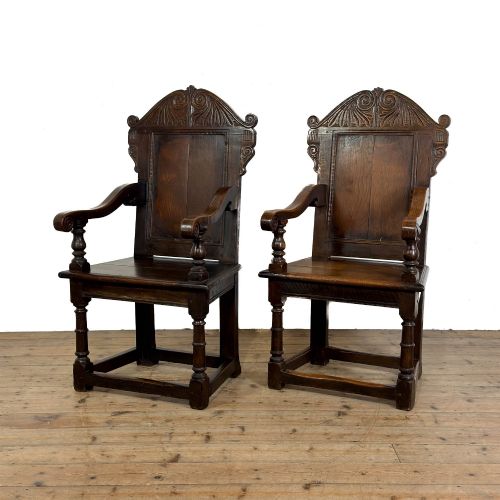
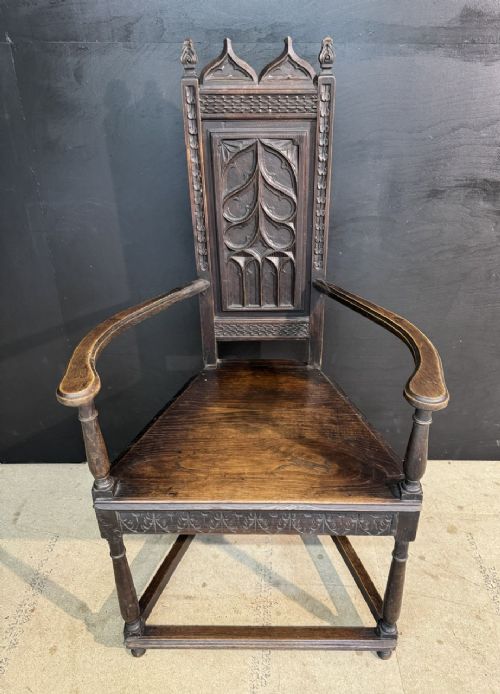
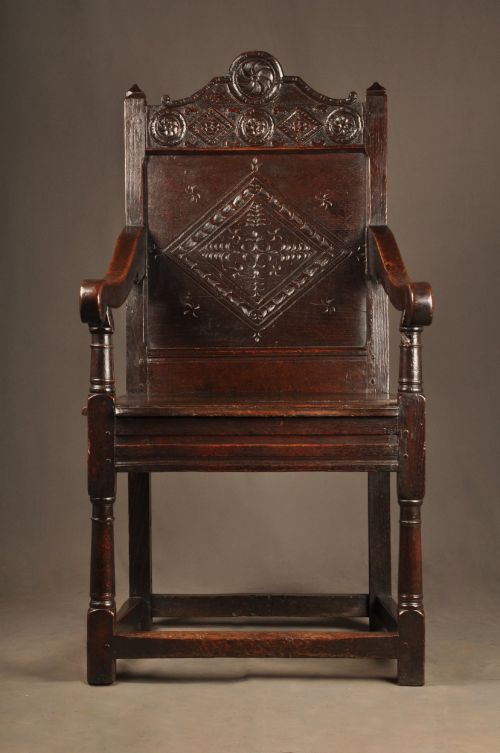
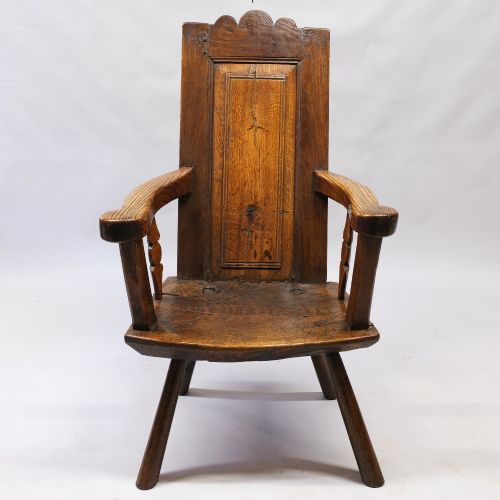
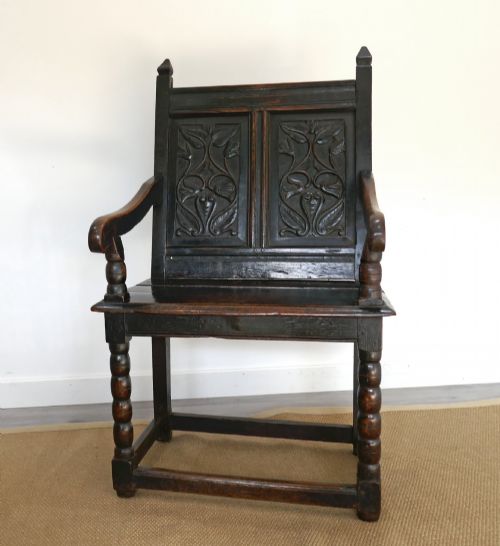
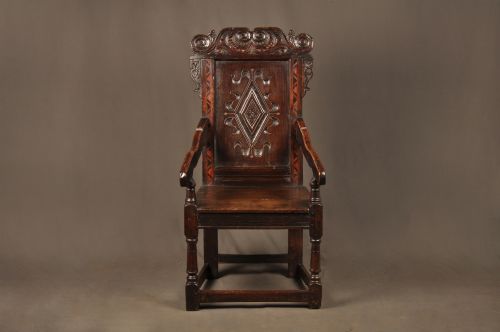
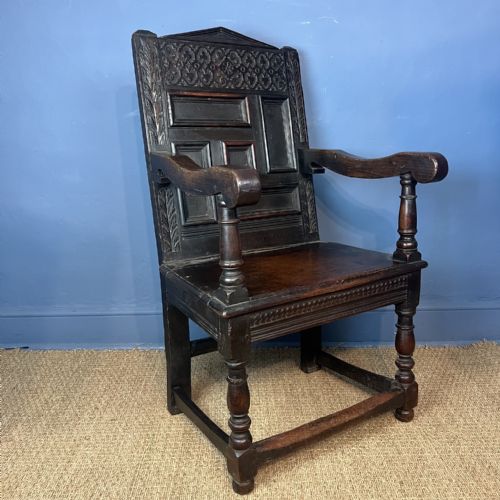
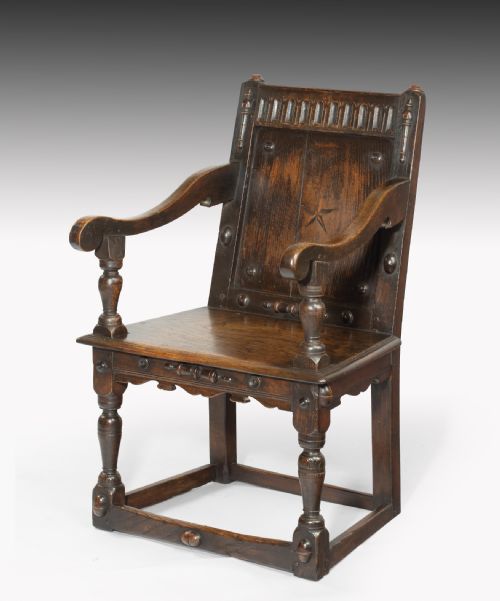
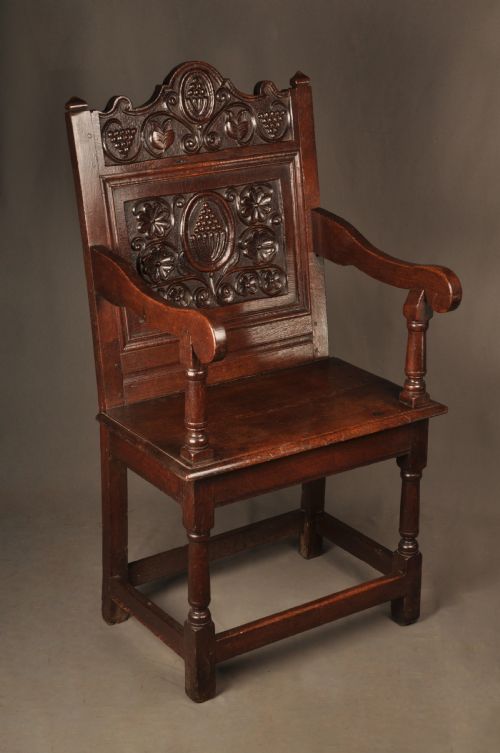
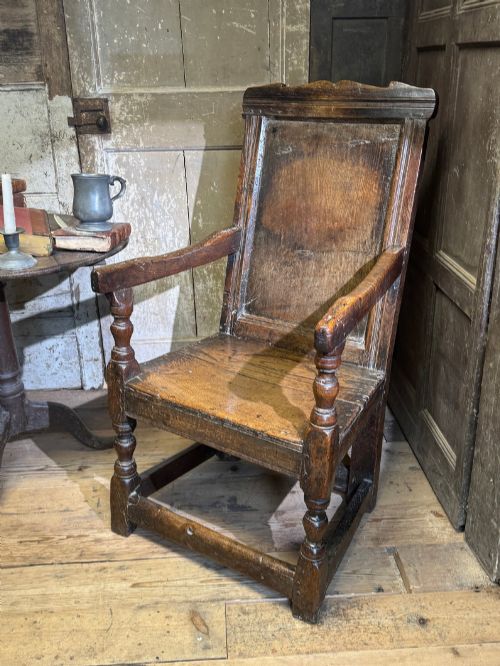
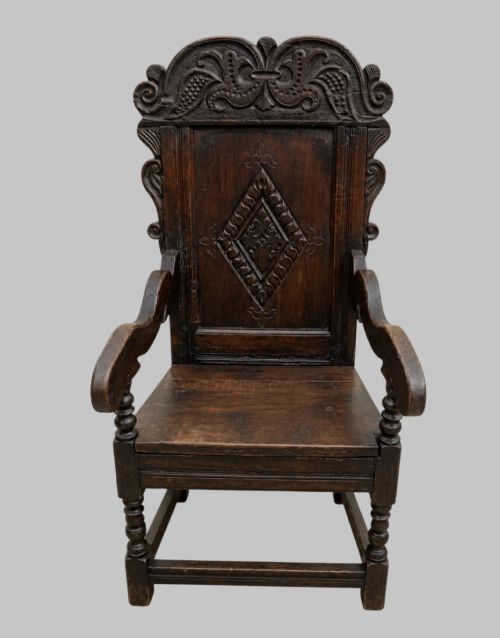
A dark oak wainscot chair stands as a rigid timber seat with solid panelled backs, heavy armrests, and turned legs joined by stretchers. You encounter regional variants from Yorkshire, Lancashire, Wales, and Scotland alongside later revival interpretations.
Most examples date from the seventeenth century, constructed as armchair forms designed for domestic prestige rather than comfort. Regional vernacular types appear frequently, showing distinct carving motifs on the crest rails and back panels.
Makers built these seats using joined timber construction, creating robust frames intended to last for centuries. The form evolved from box chairs and panel-backed seats into distinct regional chair patterns across Britain.
How they were made
Cabinet makers built these chairs using solid oak, often supplemented with elm for secondary timbers and occasional wood inlay for decoration. Carpenters relied on mortise and tenon joints locked with wooden pegs to hold the heavy framework together.
Surface decoration involved hand carving with gouges and chisels directly into the solid oak boards, producing geometric strapwork, scrolling foliage, and arcaded panels. Finish relied on natural waxing and polishing of the timber over decades of use.
Listings feature solid oak and elm alongside textile and velvet upholstery, spanning the sixteenth, seventeenth, eighteenth, and nineteenth centuries.
What varies in quality
The crispness and depth of the original hand carving separate provincial output from pieces commissioned for wealthier patrons. Well-executed crest rails and carved back panels display precise tool work and balanced composition.
Proportion and structural integrity define the remaining differences across surviving examples, with timber thickness and the extent of original components dictating authenticity. Chairs retaining their original joined stretchers and un-thinned panels command greater regard among collectors.
The Dark Oak Wainscot Chair Glossary
- Wainscot
- A type of oak panelled chair derived from the imported oak boards historically known as wainscot. These boards were prized for their straight grain and stability.
- Backstool
- An early form of upholstered or plain-backed seat without arms, essentially a chair built on a smaller scale. These pieces function as side chairs within historic interiors.
- Joined oak
- Furniture constructed using mortise and tenon joinery secured with wooden pins rather than iron nails. This method defines seventeenth-century carpentry.
- Stretcher
- The horizontal wooden rails connecting the lower legs of a chair to provide rigidity. They prevent the joined legs from splaying outward under heavy weight.
- Strapwork
- A carved decorative motif resembling intersecting flat bands or leather straps, commonly found on seventeenth-century friezes and panels.
Dark Oak Wainscot Chair: Frequently Asked Questions
How do I date an early oak chair?
Dating relies on observing construction methods, tool marks, and stylistic indicators such as carved crest rails and regional joint patterns. Seventeenth-century examples show pegged mortise and tenon joinery alongside hand-riven oak boards.
Later revival pieces from the nineteenth or twentieth centuries often reveal machine sawing, modern adhesives, or incorrect proportions. Comparing the patination and wear patterns against known period pieces helps clarify the age of the timber.
Where were wainscot chairs used?
These heavy armchairs stood at the head of the dining table or beside the hearth in important seventeenth-century households. Their imposing presence marked the status of the head of the house.
Secondary rooms and chambers also accommodated smaller variants, while later centuries relegated them to hallways and parlours. Their solid wooden construction suited heavy everyday domestic use.
Are these chairs comfortable to sit in?
Period wainscot chairs were not designed for lounging, offering upright wooden backs and rigid armrests without upholstery. Sitters often added loose cushions or squabs covered in textile or velvet for comfort.
The geometry encourages an upright posture typical of seventeenth-century domestic life. Modern users typically treat them as occasional seats or decorative focal points.
What is a Yorkshire wainscot chair?
A Yorkshire wainscot chair is a regional variant characterised by specific carved motifs on the crest rail and back panel, often reflecting local woodworking traditions. These pieces frequently feature carved lunettes, scrolling foliage, or inscribed initials.
North Country workshops developed distinct structural proportions that separate them from Welsh or West Country equivalents. Carpenters in these northern counties maintained traditional joinery methods well into the seventeenth century.