




Dark Oak Standing Desk
A dark oak standing desk offers an imposing, functional workspace grounded in centuries of solid craftsmanship.
Dark Oak Standing Desk
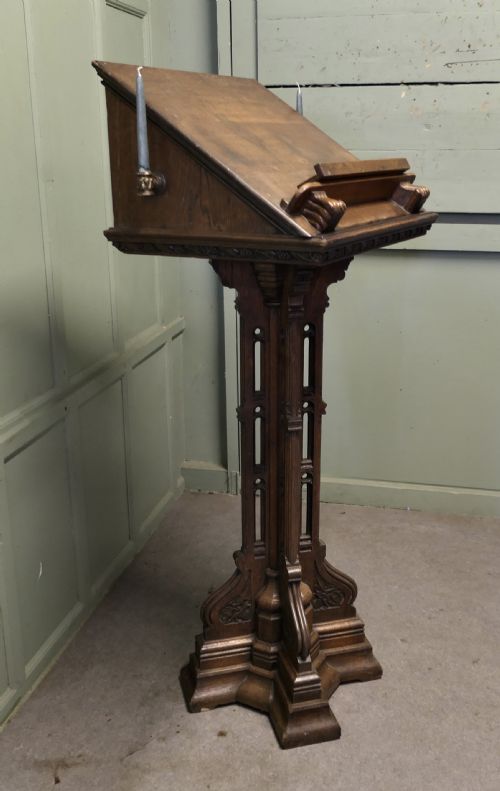
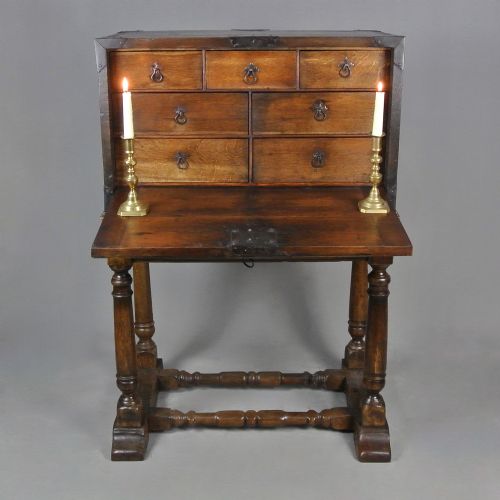
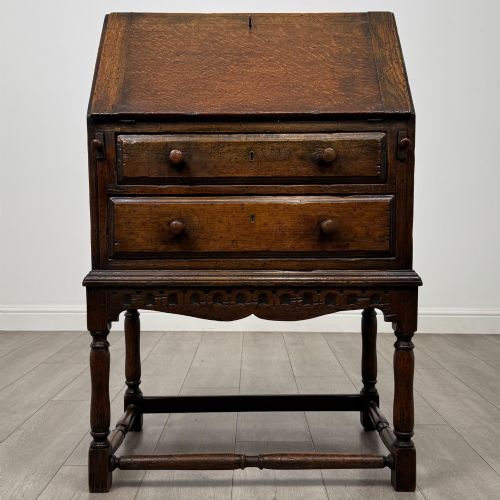
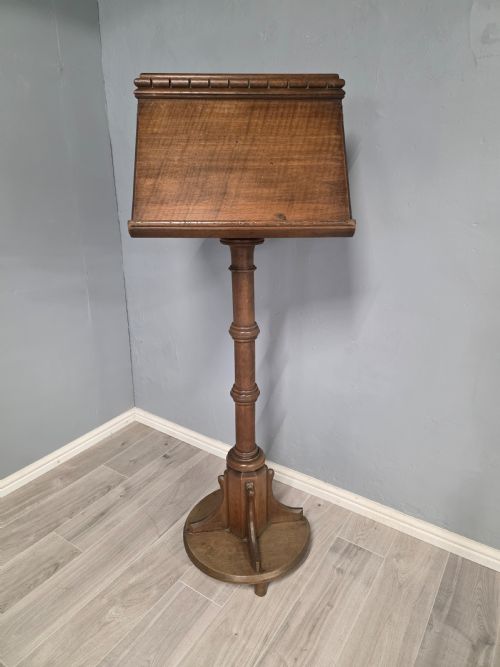
When you search for a dark oak standing desk, you encounter pieces designed for elevated writing, reading, and clerical work. The selection spans utilitarian church lecterns, clerks' desks on stands, and substantial reading podiums rooted in historical periods.
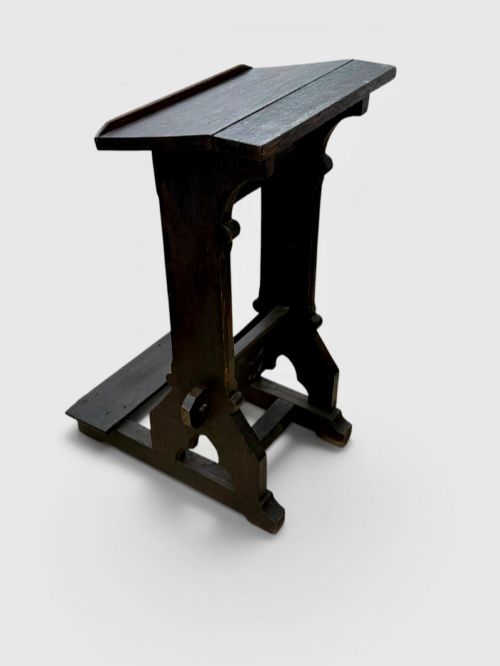
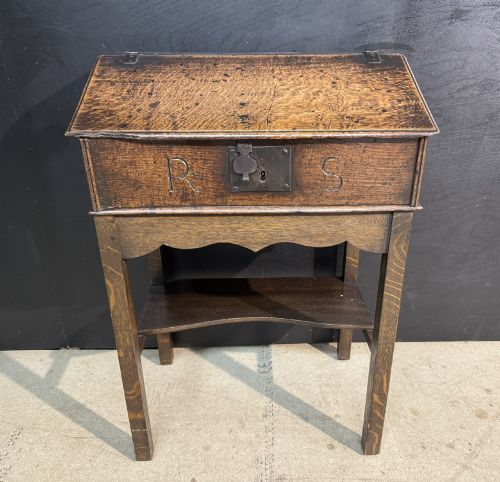
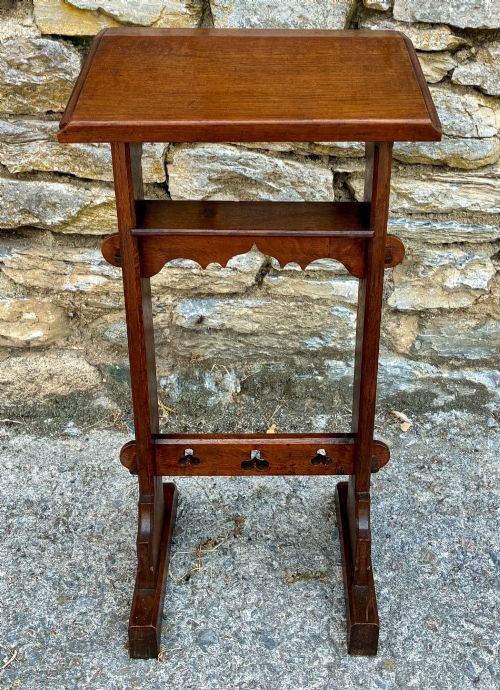
The pieces appearing here lean heavily toward church lecterns, ecclesiastical reading stands, and elevated writing furniture. You will find items originating from the seventeenth century through the Edwardian era, rendered in heavy timber.
Forms range from simple prayer desks and book stands to large clerks' desks and writing bureaus mounted on stands. The unifying element is the use of dark oak, often augmented by carved details drawn from Gothic Revival and Jacobean styles.
How they were made
Makers utilised solid oak supplemented by secondary woods such as elm and walnut, fastening structural elements with traditional joinery. Iron and brass hardware frequently appears on hinges, handles, and desk accessories.
Carving defines the decorative vocabulary, displaying Gothic Revival tracery, Jacobean motifs, and Arts and Crafts simplicity. Surfaces were often treated with dark finishes to highlight the dense grain of the timber.
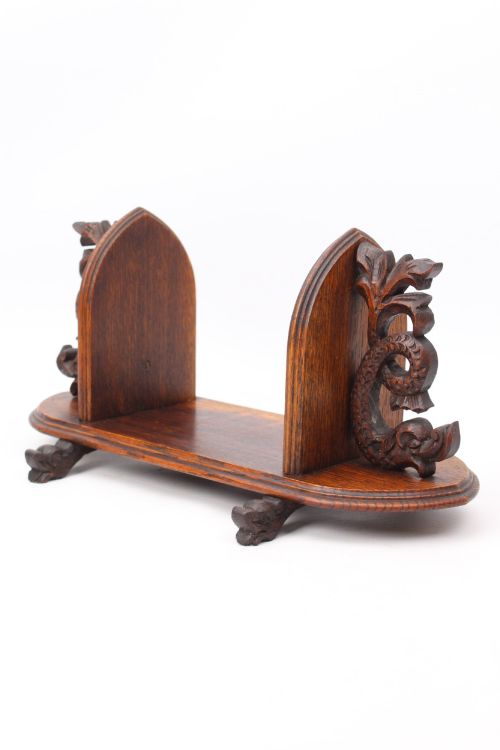
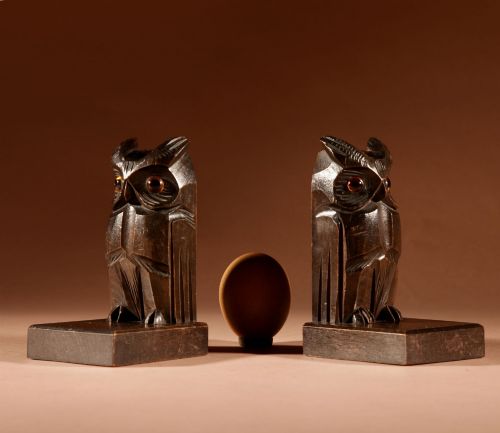
Owl-carved bookends emerge unexpectedly among the ecclesiastical lecterns, watching over the library with solemn wooden wisdom.
What varies in quality
The standard of carving distinguishes standard ecclesiastical furniture from exceptional vernacular pieces. Crisp, deeply undercut relief work on lecterns and reading desks indicates a higher tier of craftsmanship.
Integrity of the timber and originality of the stands govern the standing of individual pieces. Bureau boxes or desks sitting on later or bespoke stands contrast with those retaining their original seventeenth or eighteenth-century framing.
The Dark Oak Standing Desk Glossary
- Lectern
- A tall stand with a sloping top designed to hold a book for reading aloud. These pieces often feature carved panels and heavy pedestals.
- Gothic Revival
- A nineteenth-century design movement imitating medieval architecture. Expect pointed arches, trefoils, and heavy tracery on these works.
- Jacobean
- A seventeenth-century style marked by geometric mouldings and robust proportions. Surviving examples display dark patinated oak surfaces.
- Bureau
- A desk with a sloping writing flap enclosing pigeonholes and small drawers. Many rest upon dedicated stands or supporting frames.
Dark Oak Standing Desk: Frequently Asked Questions
What is a standing desk?
A standing desk is an elevated piece of furniture designed for working while upright. Historical examples include clerks' desks and church lecterns.
These pieces prioritise a high writing or reading surface, often incorporating storage compartments or sloping book rests beneath the main board.
How old are these desks?
The pieces span multiple centuries, ranging from seventeenth-century strong boxes and bureaus to Edwardian and Victorian church lecterns.
Construction methods and stylistic details like Gothic Revival or Jacobean carving help indicate the specific era of manufacture.
Where were lecterns used?
Lecterns primarily served ecclesiastical functions in churches, chapels, and monastic settings for reading scriptures aloud. Domestic variants also existed for libraries and study rooms.
Their sturdy oak construction ensured they could support heavy liturgical books and large volumes over generations of daily use.
How do I maintain dark oak?
Dark oak furniture benefits from consistent indoor humidity and protection from direct sunlight. Simple dusting preserves the finish.
Applying occasional wax feeds the timber and maintains the rich patina developed over centuries of handling.