




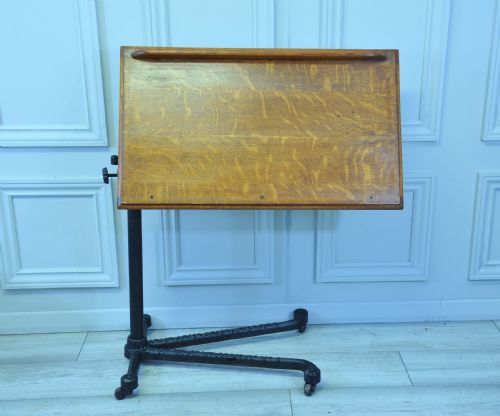


Desk Lectern Oak
Desk lectern oak stands combine practical reading surfaces with solid timber construction, offering a sturdy platform for books and papers.
Desk Lectern Oak
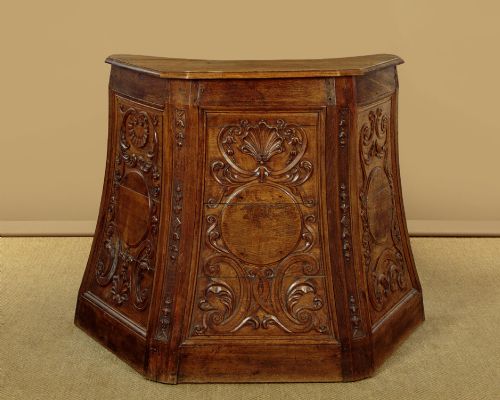
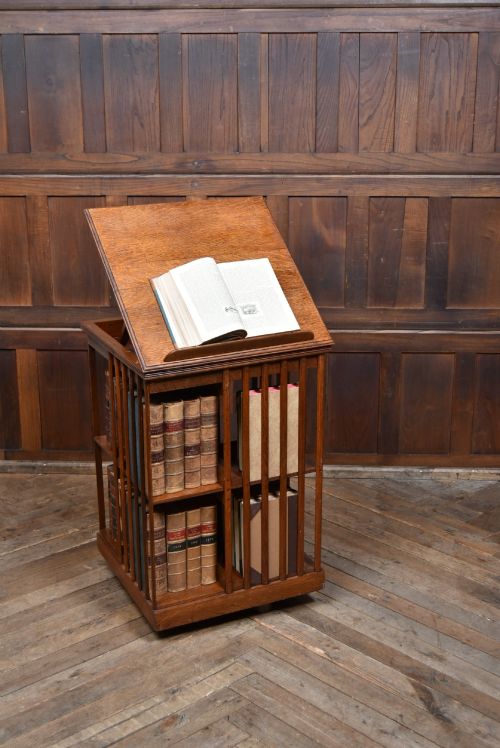
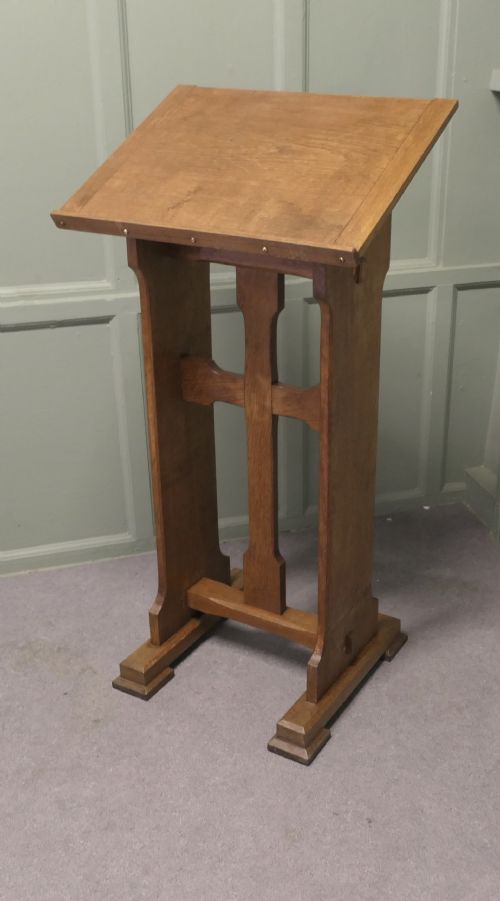
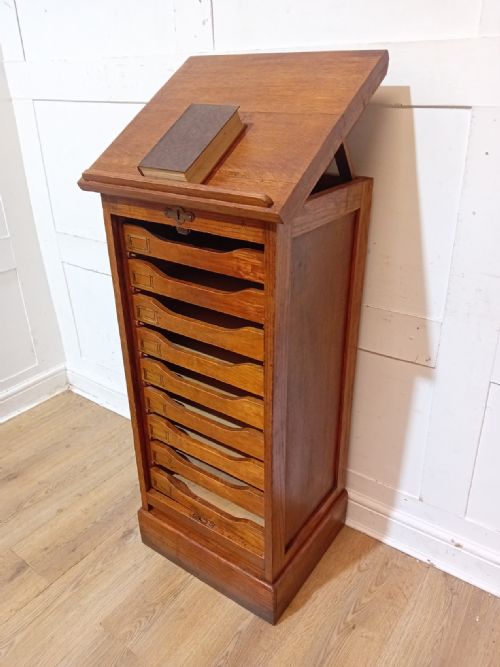
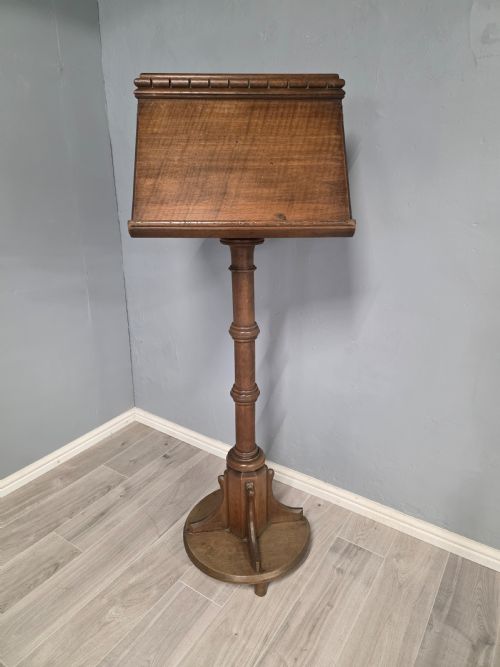
Desk lectern oak pieces span functional reading furniture, ecclesiastical items and reception stands. You will frequently encounter church lecterns, reading podiums and clerk desks.
Makers utilised various secondary woods alongside the primary timber, resulting in combinations such as oak and pine. Pieces often display ecclesiastical, Gothic Revival or Arts and Crafts stylistic influences.
How they were made
Adjustable tables incorporate metal and cast iron components to allow movement. Brass work appears on reading stands, whilst glass and mahogany occur in related desk and bookcase forms.
One exceptional piece arrives carved as an eagle, watching over its notes with avian attentiveness.
What varies in quality
The refinement of the carving distinguishes standard utility items from more ambitious ecclesiastical or Gothic Revival pieces. Crisp detail in the woodwork elevates the visual presence of a stand.
The integration of functional hardware, such as adjustable brass fittings and solid cast iron bases, dictates the mechanical capability of the piece.
Carters Of London
The Desk Lectern Oak Glossary
- Lectern
- A slanted stand designed to hold a book or notes for a speaker. These pieces support reading in both ecclesiastical and domestic settings.
- Gothic Revival
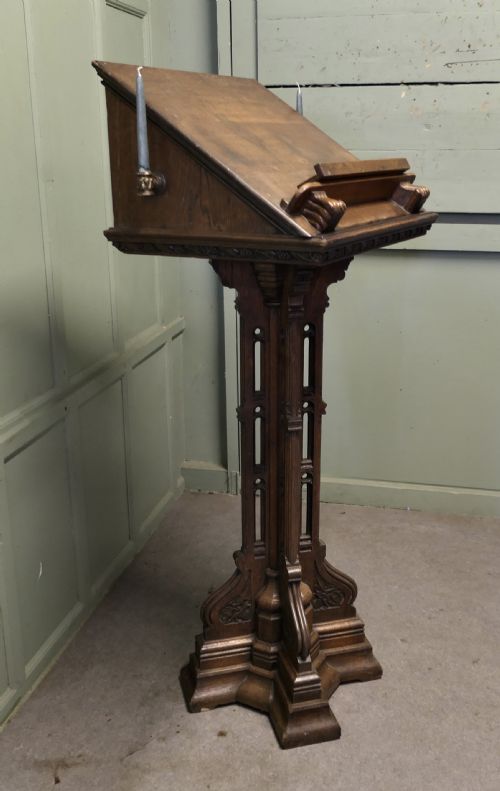
- An architectural and decorative style drawing on medieval forms. You see pointed arches and heavy carved oak decoration.
- Arts and Crafts
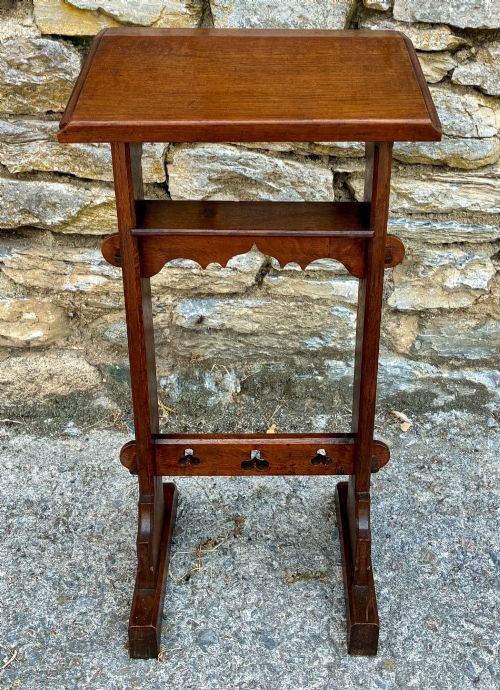
- A design movement prioritising traditional craftsmanship and visible construction methods. Golden oak and simple rectilinear forms define these objects.
- Duet stand
- A music or reading stand configured to hold two scores simultaneously. These unusual pieces accommodate shared reading.
Desk Lectern Oak: Frequently Asked Questions
What is a desk lectern oak used for?
These pieces serve as elevated writing or reading surfaces. They hold books, menus and documents securely at an angle.
Historically, they supported texts in churches, offices and reception areas. Today, they function similarly in homes and hospitality venues.
How do I identify a Gothic Revival lectern?
Gothic Revival pieces display characteristic architectural motifs such as pointed arches and trefoils. The carving tends to be deep and geometric.
These stands frequently appear in dark oak with ecclesiastical or medieval styling.
Are these lecterns adjustable?
Certain models feature mechanical adjustments using brass and cast iron components. These allow the height or angle of the surface to change.
Simpler stands remain fixed in position, relying on a static wooden frame.
What period do these pieces come from?
The listings span the nineteenth century, Victorian era, Edwardian period and early twentieth century. Styles shift from George III clerk desks to later Arts and Crafts interpretations.
Each era brings distinct hardware, timber finishes and decorative carving.