
Sloped Oak Writing Desk
A sloped oak writing desk is a practical surface for correspondence and record keeping, shaped by centuries of craftsmanship from the seventeenth century onwards.
Sloped Oak Writing Desk
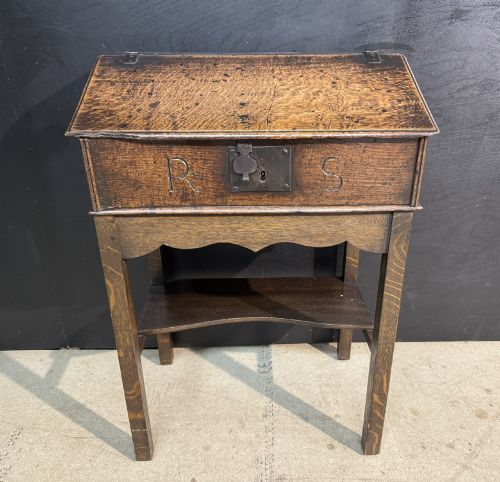
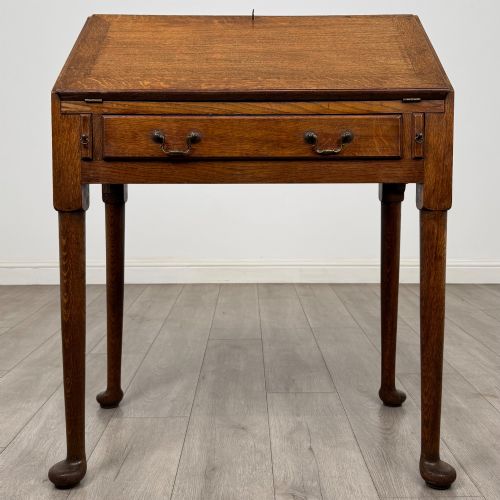
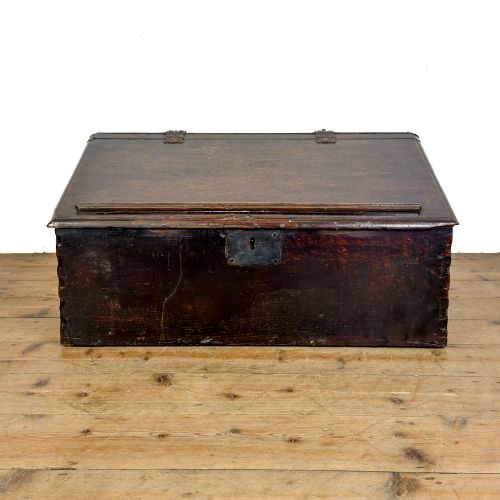
A sloped oak writing desk provides a firm, angled platform designed for handwriting and document storage. These pieces appear across multiple eras, ranging from early seventeenth-century Bible boxes and desk boxes to eighteenth-century fall-front bureaux and Victorian clerks' desks.
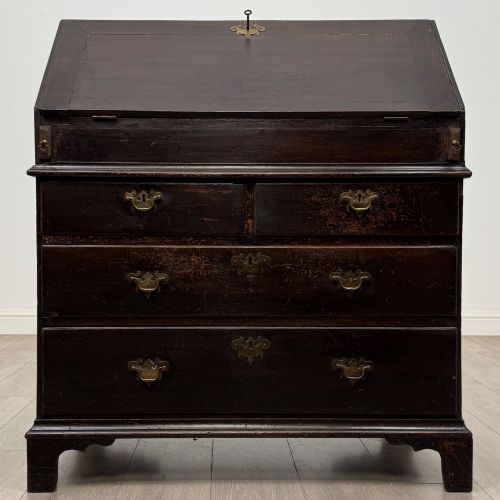
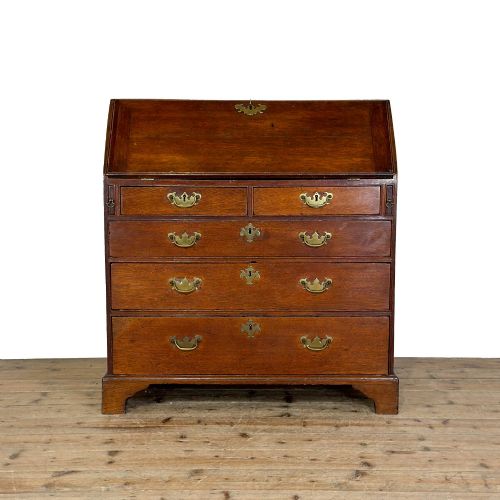
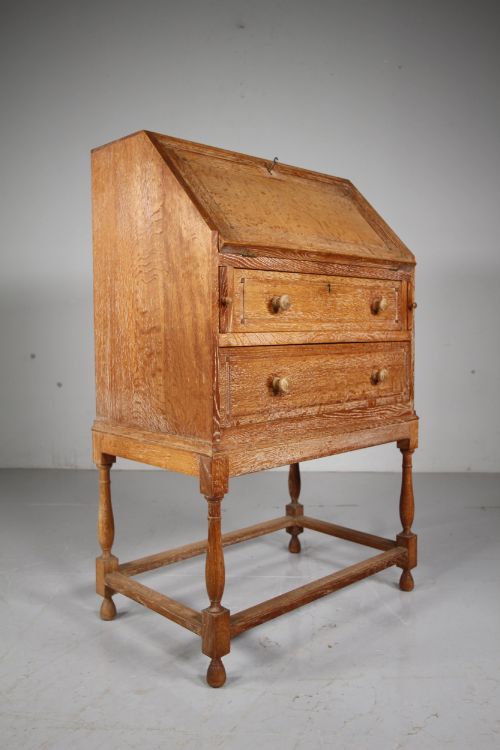
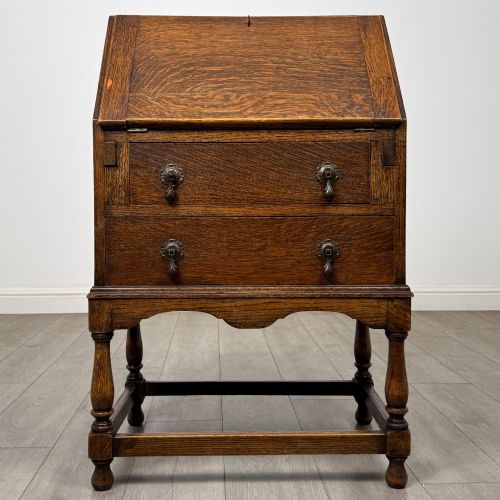
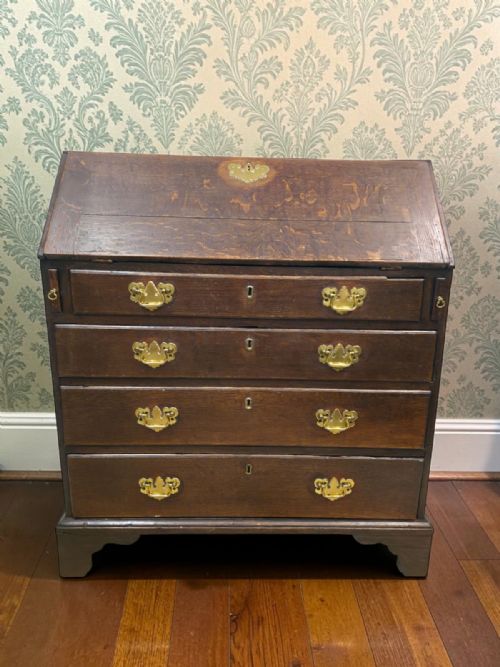
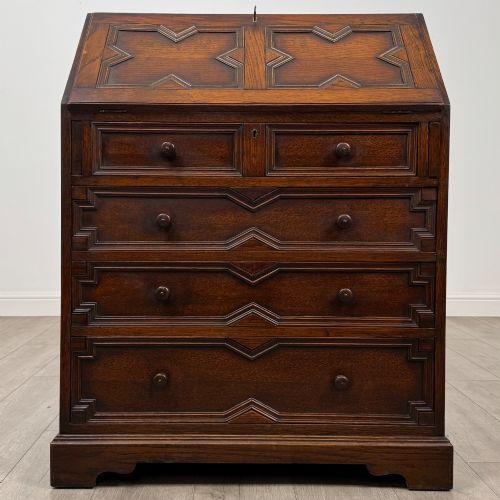
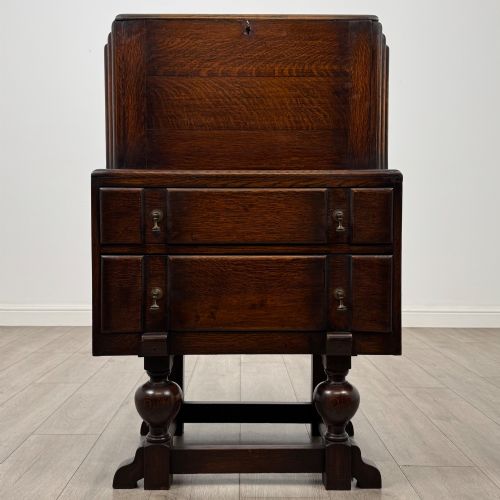
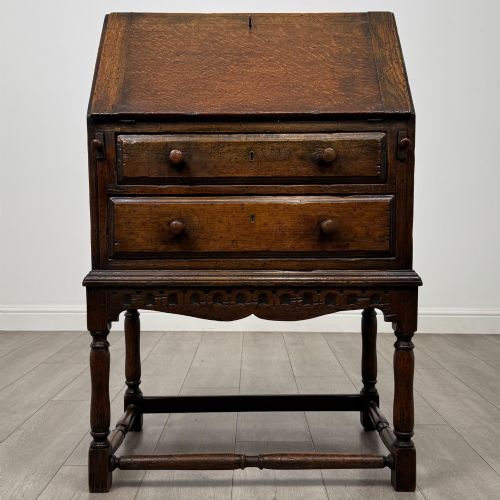
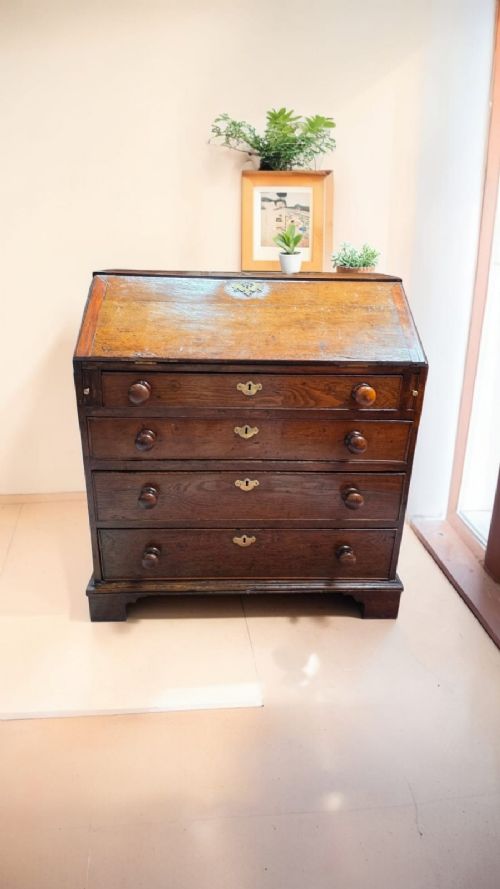
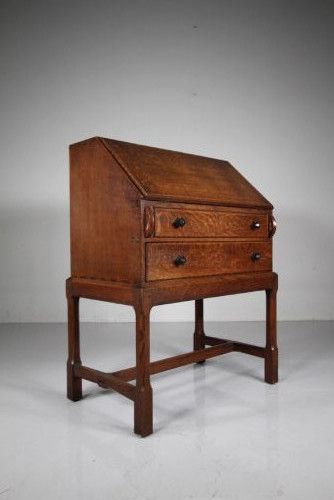
The version most commonly encountered on this page is the oak bureau, featuring a sloping lid that opens to reveal internal compartments and drawers. Pieces span the Georgian, Victorian and Edwardian periods, alongside vernacular and revivalist interpretations.
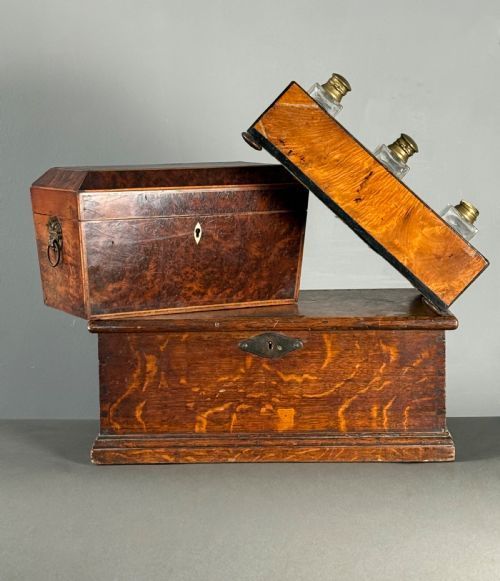
Forms vary from compact table-top writing slopes and stationery boxes to substantial freestanding architectural and partners' desks. Each construction reflects the domestic and professional storage needs of its respective period.
Materials and construction
Timber selection centres primarily on solid oak, occasionally augmented by pollard oak or walnut veneers for decorative contrast. Makers utilised quarter-sawn boards to ensure stability and reveal distinctive medullary rays within the grain.
Hardware components such as hinges, escutcheons and carrying handles are fashioned from brass or iron, providing functional reinforcement and contrast against the dark timber. Secondary materials include leather writing surfaces inset into the fall fronts and desks.
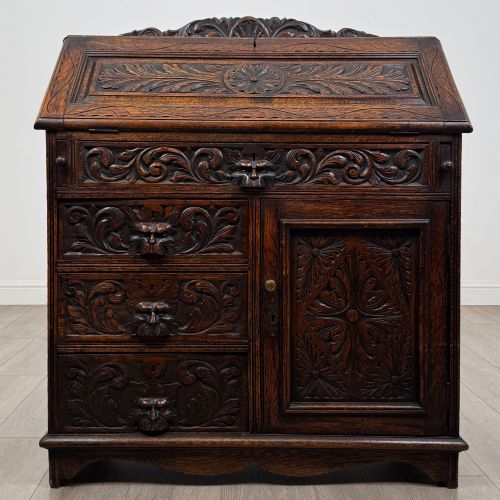
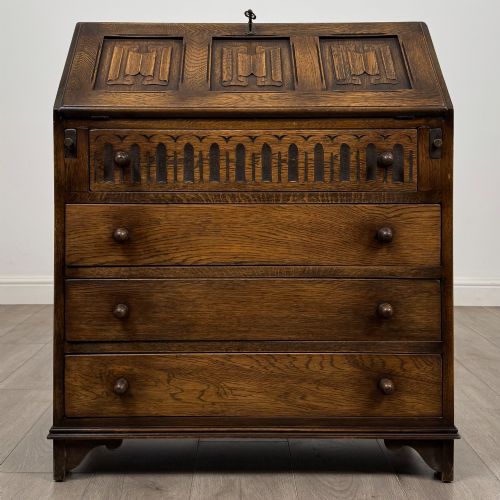
Joinery relies on traditional techniques including dovetailing for drawer construction and mortise and tenon joints for the structural frames. Surfaces show hand-planing and occasionally carved ornamentation such as linenfold or green man motifs.
Several pieces conceal secret compartments behind miniature drawers, designed to outwit curious guests and prying family members.
Assessing quality and execution
Quality reveals itself in the integrity of the timber selection and the precision of the joinery, particularly where the sloping lid meets the main carcase. Superior examples exhibit carefully matched grain patterns across the fall front and robust internal pigeonholes that demonstrate thoughtful interior architecture.
Carved details and decorative elements distinguish standard production from exceptional workshops. Crisp hand-carved panels, well-fitted secret compartments and original brass hardware indicate higher standards of craftsmanship.
Heals of London·Stanley Webb Davies·Pairs MFG Co
The Sloped Oak Writing Desk Glossary
- Bureau
- A writing desk featuring a sloping hinged lid that covers a fitted interior of small drawers and pigeonholes. This form evolved from smaller portable desk boxes during the seventeenth century.
- Bible Box
- A small wooden box with a sloping lid used originally for storing sacred texts and documents. These early pieces often sat upon tables before developing into independent desks.
- Fall Front
- A hinged writing flap that drops down to a horizontal position for use. It conceals the internal compartments when closed and locked.
- Pollard Oak
- Timber taken from trees that have been pollarded, producing a highly figured, knotted grain pattern. It was selected for veneering prominent surfaces.
- Davenport
- A compact pedestal writing desk with a sloped top, originating in the nineteenth century. It typically incorporates side drawers and a lifting lid.
Sloped Oak Writing Desk: Frequently Asked Questions
How do I date an oak bureau?
Dating relies on examining construction methods, hardware, and stylistic details. Hand-cut dovetails, panel thickness, and specific moulding profiles help distinguish seventeenth-century pieces from later Georgian and Edwardian examples.
Secondary woods and the style of internal drawers also offer clues. Earlier pieces often display vernacular joinery, whereas Edwardian revivals employ machine-sawn timber and standardised fittings.
What is the difference between a slope and a bureau?
A writing slope is a portable box with an angled lid designed to sit on a table or lap for travel. It contains compartments for ink and paper but lacks an integral base.
A bureau is a freestanding item of furniture with a built-in stand or chest of drawers below the writing surface. Both share the characteristic sloping lid used for correspondence.
How were these desks used originally?
These desks served as private spaces for reading, accounting, and writing letters before the widespread use of manufactured stationery. Merchants, clerks, and household managers stored ledgers, correspondence, and writing implements inside.
The sloping lid provided an ergonomic angle for handwriting with quill or steel nib pens. Internal compartments kept important documents and wax seals organised and secure.
How do I care for antique oak furniture?
Maintain oak furniture by placing it away from direct heat sources and strong sunlight, which cause timber to dry and split. Regular dusting with a soft, dry cloth preserves the finish.
Apply a traditional beeswax polish sparingly to nourish the wood and maintain its natural lustre. Avoid silicone-based sprays that can penetrate the pores and damage the historic patina.