
Oak Standing Desk
When you search for an oak standing desk, you enter a world of practical writing furniture built to endure.
Oak Standing Desk
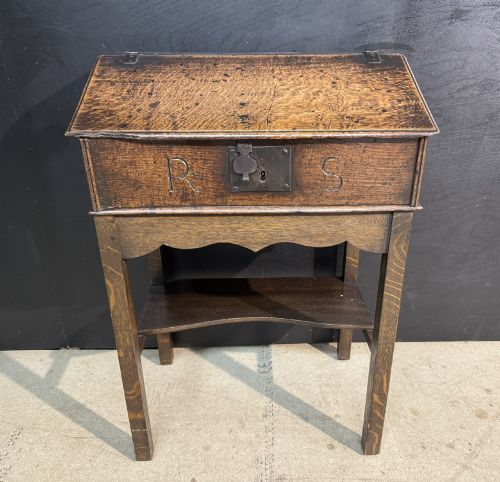
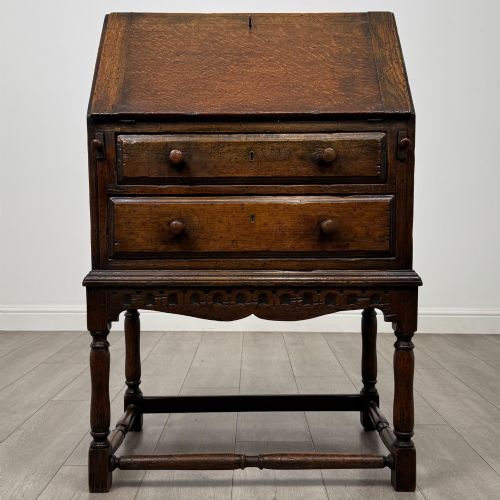
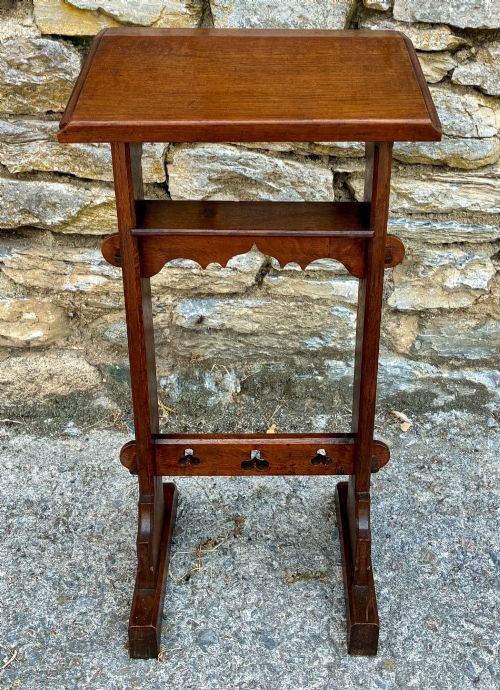
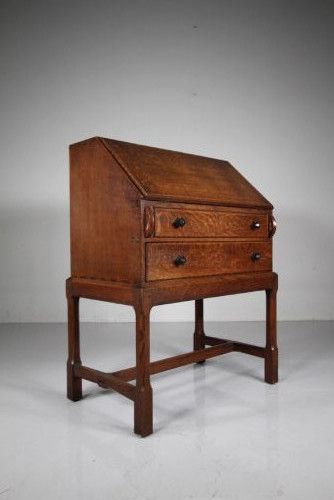
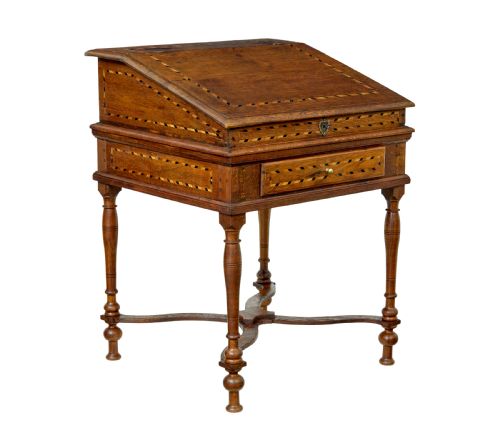
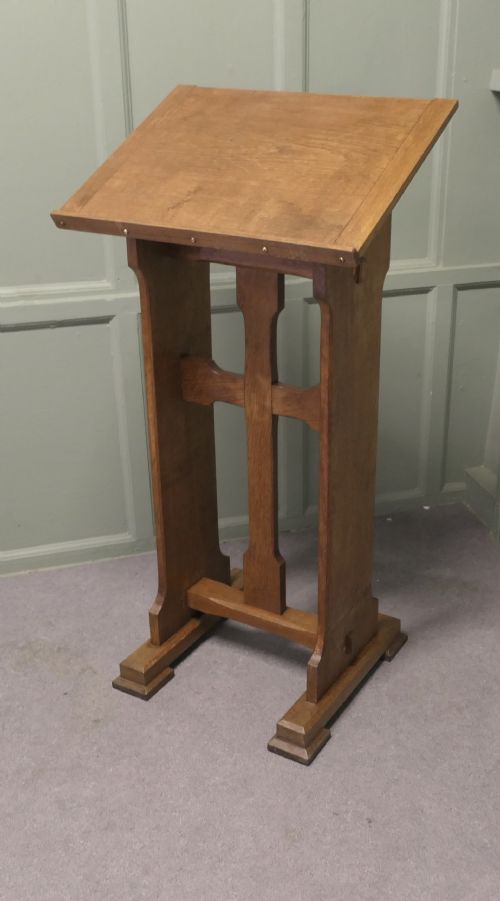
An oak standing desk encompasses a variety of elevated writing surfaces, clerks' desks, lecterns, and pedestal furniture designed for working upright or from a high stool. These pieces span centuries from the seventeenth century through the Edwardian period, incorporating styles such as Gothic Revival, Arts and Crafts, and Victorian.
The selection frequently includes larger freestanding pedestal desks in oak, alongside smaller writing slopes, church lecterns, and specialised reception stations. The construction reflects utilitarian origins in offices, institutions, and churches, transitioning into domestic use.
How they were made
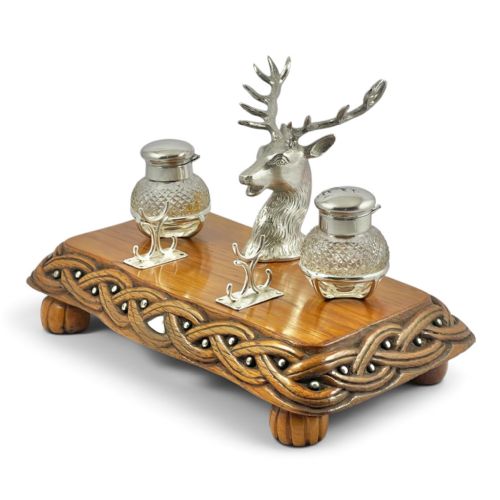
The primary material across these pieces is solid oak, often paired with secondary woods like pine or enhanced by brass, cast iron, glass, and leather inserts. Cabinetmakers utilised robust joinery suited to heavy daily use in public spaces and private studies.
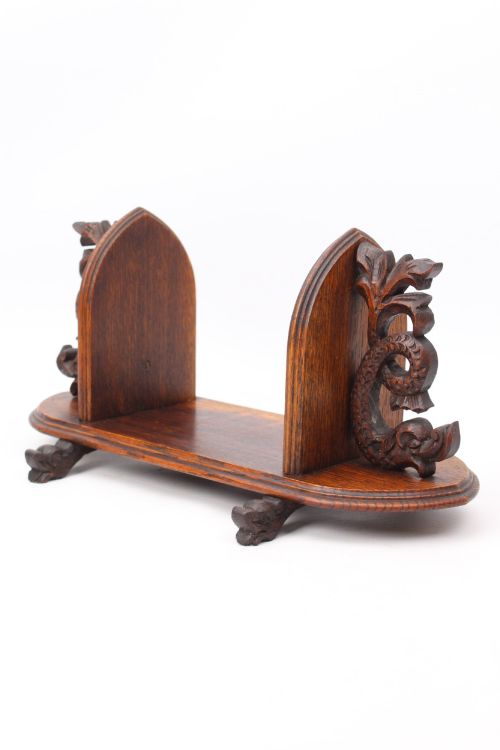
Carving, particularly in Gothic Revival and Arts and Crafts examples, defines the ornamentation, while simpler pieces rely on the natural grain of dark or golden oak. Metal fittings such as cast iron adjustments and brass handles provide functional durability.
What varies in quality
Quality rests in the integrity of the timber selection, ranging from plain utility boards to finely figured golden oak, and the crispness of any hand-carved detailing. Maker attribution, such as labelled pieces from known workshops, elevates certain examples above standard commercial output.
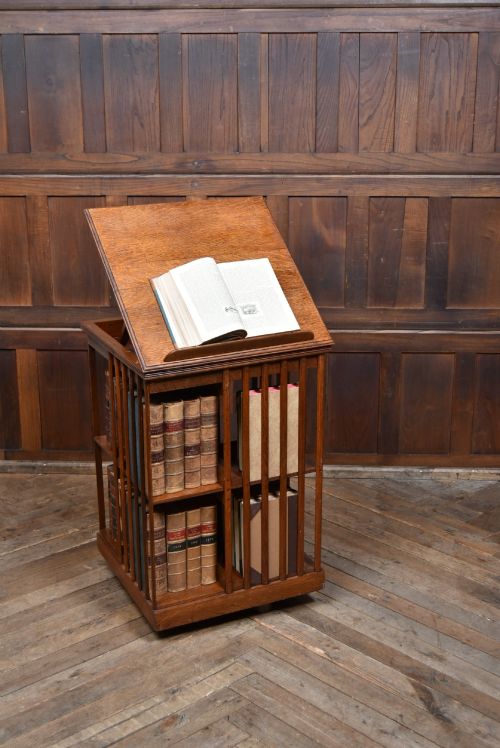
The sophistication of the mechanism - whether adjustable cast iron frames, revolving book tiers, or fitted interior compartments - separates basic writing stands from more complex architectural furniture.
Arthur Simpson·Stanley Webb Davies·Simpsons of Kendall·Carters Of London
The Oak Standing Desk Glossary
- Pedestal desk
- A freestanding writing table supported by two pedestals of drawers or cupboards rather than simple legs.
- Lectern
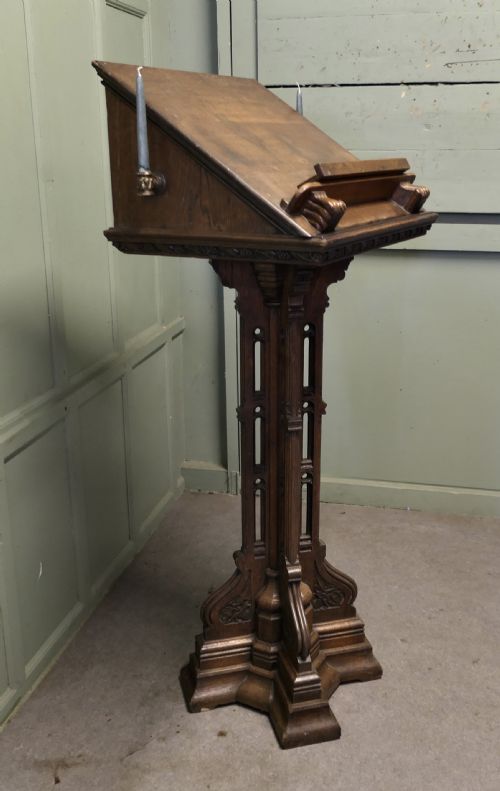
- An inclined desk surface supported by a stand, traditionally used for holding books or papers while reading aloud.
- Arts and Crafts
- A design movement prioritising traditional craftsmanship, simple forms, and the natural qualities of materials like oak.
- Gothic Revival
- An architectural and decorative style utilising medieval forms, pointed arches, and heavy carved ornamentation.
- Writing slope
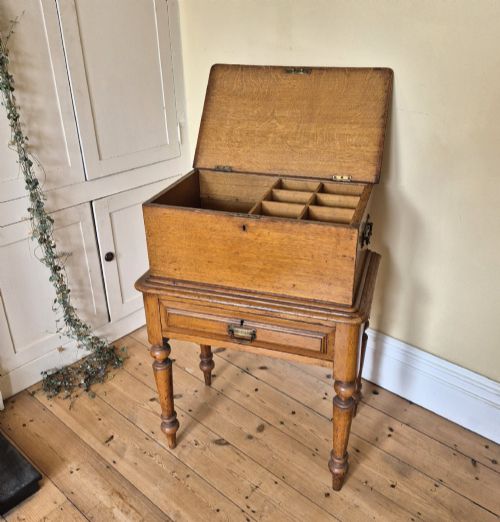
- A portable or table-top box with a slanted lid that opens to reveal a writing surface and compartment storage.
Oak Standing Desk: Frequently Asked Questions
What is an oak standing desk used for?
These elevated pieces served clerks, church officials, and receptionists for writing, reading, and clerical work while standing. Today, they function effectively in home studies and offices for modern standing work.
Their robust construction ensures they handle daily tasks while providing a distinct historical focal point in a room.
How do I date an antique oak desk?
Dating relies on stylistic clues such as Gothic Revival carvings, Arts and Crafts simplicity, or Edwardian proportions, combined with construction methods. Hardware like brass handles and cast iron mechanisms also offer chronological markers.
Examining the drawer joints, timber preparation, and any maker labels helps narrow the origin to a specific century or decade.
Are these desks strictly for standing?
While originally designed for upright work, many historical examples pair well with tall drafting stools or serve as elevated display stations. Some variants incorporate adjustable iron frames to alter the working height.
Their versatility makes them suitable for contemporary living spaces as writing desks or reception podiums.
What maintenance does antique oak require?
Solid oak furniture benefits from minimal intervention, typically requiring only dusting with a dry cloth and occasional application of appropriate wax. Avoiding direct sunlight and extreme temperature fluctuations preserves the finish and timber.
Careful handling of leather inserts and brass hardware ensures these working antiques remain functional for daily use.