

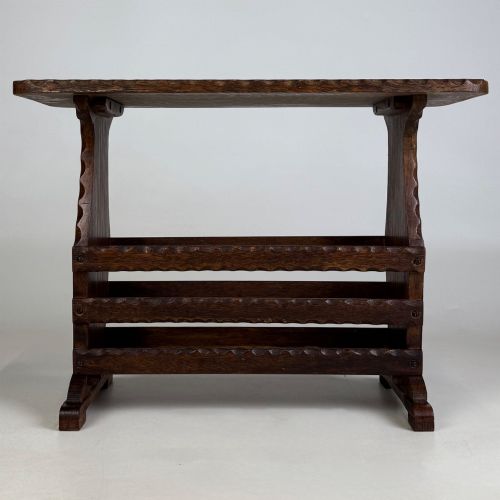
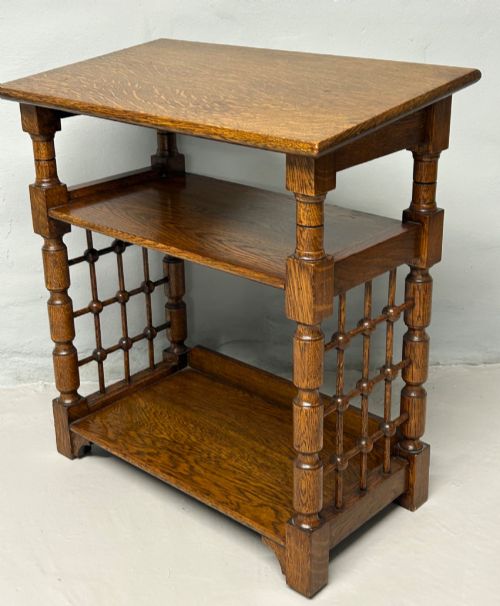


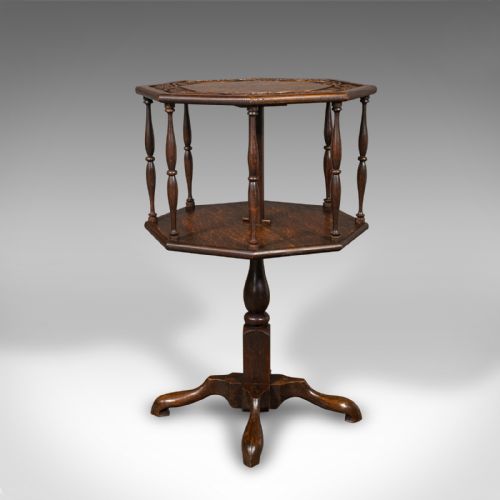
Brown Oak Book Trough
A brown oak book trough brings rich timber grain and straightforward utility to a room, keeping volumes tidy in homes that value traditional craftsmanship.
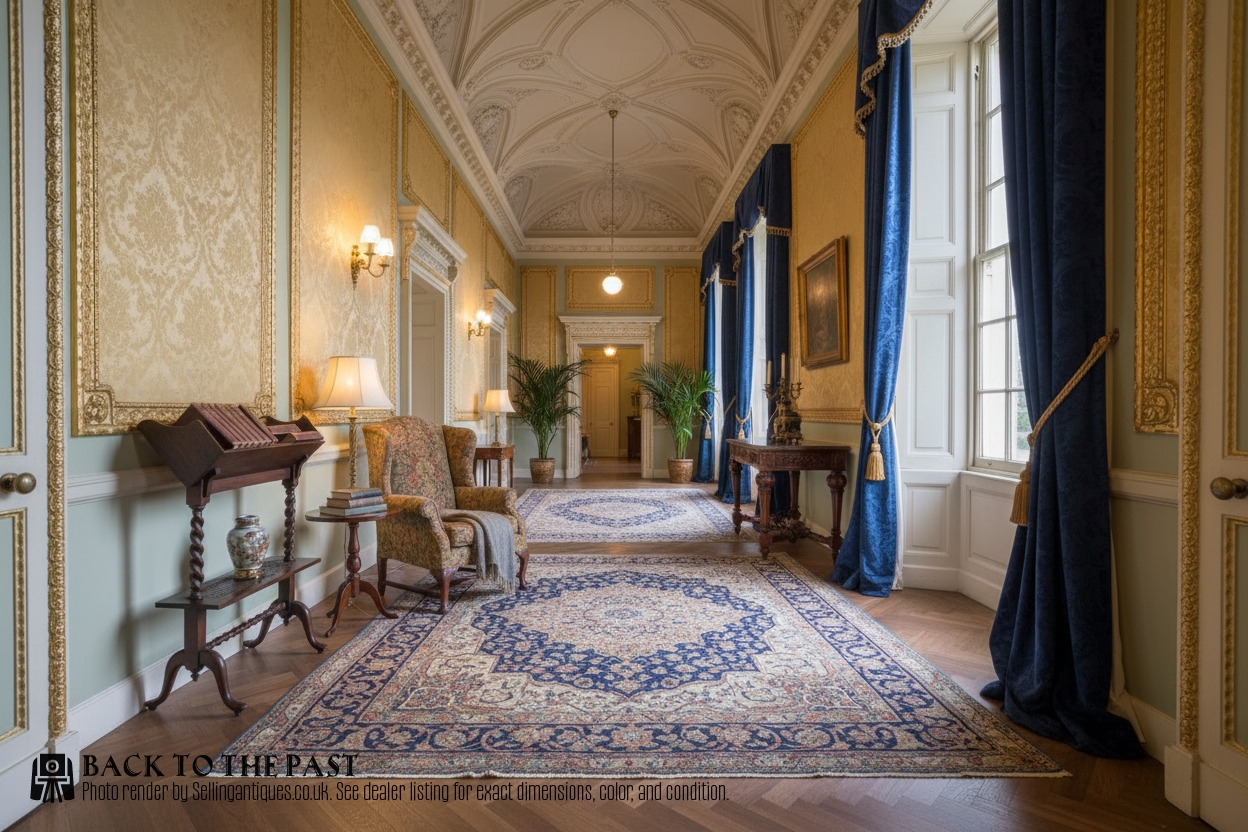
Brown Oak Book Trough
A brown oak book trough is a practical repository for volumes, appearing across the late nineteenth and early twentieth centuries in forms such as slope-shelf fireside book troughs, table top revolving bookcases, and standing open bookcases. These pieces frequently manifest within Arts and Crafts, Edwardian, Art Deco, and Victorian Gothic styles, reflecting the prevailing domestic tastes of their respective periods.
Buyers browsing this selection will most commonly encounter pieces fashioned from oak, often accompanied by related items like side tables, magazine racks, and extending book slides. The variety spans from compact table top items to robust standing structures, accommodating different spatial requirements in a study, library, or sitting room.
Origins stretch from Victorian and Edwardian workshops to specific regional pieces, such as Irish Arts and Crafts examples featuring carved oak details. Dating ranges from the late nineteenth century through to the 1930s, offering a clear continuum of domestic furniture design centred around the storage and display of books.
Materials and construction
Construction relies primarily on oak, valued for its durability and distinctive grain pattern, which forms the structural core of these book troughs, bookcases, and occasional tables. Subsidiary materials such as cane and brass appear selectively to provide functional detailing or structural contrast.
The methods of fabrication align closely with the Arts and Crafts and Gothic traditions present in the titles, emphasising honest construction, open shelving, slope-shelf designs, and occasional carved ornamentation. Joinery is robustly executed to support the considerable weight of books without reliance on excessive ornamentation.
Brown Oak Book Trough Retail Price Guide 2026
Typical asking prices for brown oak book trough among the pieces listed under this phrase on Sellingantiques today, from the lower quarter to the upper quarter. They describe what is for sale here now, not the wider market.
Certain shelves proudly accommodate horses, proving that even a humble book stand can harbour an unexpected equestrian passion.
Assessing quality and craftsmanship
Quality in a brown oak book trough depends on the integrity of the timber selection, the crispness of any carved detailing, and the stability of the overall construction. Pieces that demonstrate thoughtful proportion and careful finishing sit apart from standard utility items.
The execution of specific mechanical elements, such as revolving mechanisms on table top bookcases or extending actions on book slides, further distinguishes finer examples. Honesty of materials and restraint in design remain the principal indicators of superior manufacture across the period.
The Brown Oak Book Trough Glossary
- Book trough
- An open-topped container designed to hold books upright or at a slight angle for easy selection. These items typically sit on a table, desk, or directly by the fireside.
- Arts and Crafts
- A design movement spanning the late nineteenth and early twentieth centuries that prioritised traditional craftsmanship, simple forms, and the natural qualities of materials such as oak. It rejected mass-produced ornamentation in favour of honest construction.
- Book slide
- An adjustable stand designed to hold a small row of books on a desk or table, often featuring extending ends to accommodate varying numbers of volumes. They frequently incorporate brass fittings to assist movement.
- Revolving bookcase
- A compact bookcase mounted on a hidden pivot so that it can be turned smoothly to access books from any angle. They are commonly made in small table top formats.
- Victorian Gothic
- A nineteenth-century revival style drawing inspiration from medieval architecture and design, characterised by sturdy proportions, pointed arches, and deep carved details in dark timbers.
Brown Oak Book Trough: Frequently Asked Questions
How were brown oak book troughs used?
These troughs were placed on tables, desks, or beside hearths to keep frequently read volumes close at hand. Their open design allowed owners to browse titles quickly without opening cabinet doors.
Over time, they adapted to various domestic settings, serving as functional desktop accessories or dedicated repositories for magazines and literature in the living room.
How do I date an oak book stand?
Dating relies on stylistic markers, construction methods, and materials associated with specific eras such as the Victorian, Edwardian, or Art Deco periods. Arts and Crafts pieces typically display hand-carved details and exposed joinery characteristic of the turn of the twentieth century.
Examining the fixings, such as brass screws or hinges where present, alongside the depth of colour in the oak, helps narrow down the decade of manufacture.
Where should I place a book trough at home?
A book trough suits study desks, side tables, or open spaces beside a fireplace where reading material is frequently gathered. Their compact footprint allows them to sit comfortably on wider occasional tables or low floor stands.
Positioning them away from direct heat sources helps protect the oak timber from drying out or splitting over time.