


Vintage Oak Trough Table
These vintage oak trough table pieces bring honest craft and warm timber into daily rooms, offering sturdy utility with timeless character.
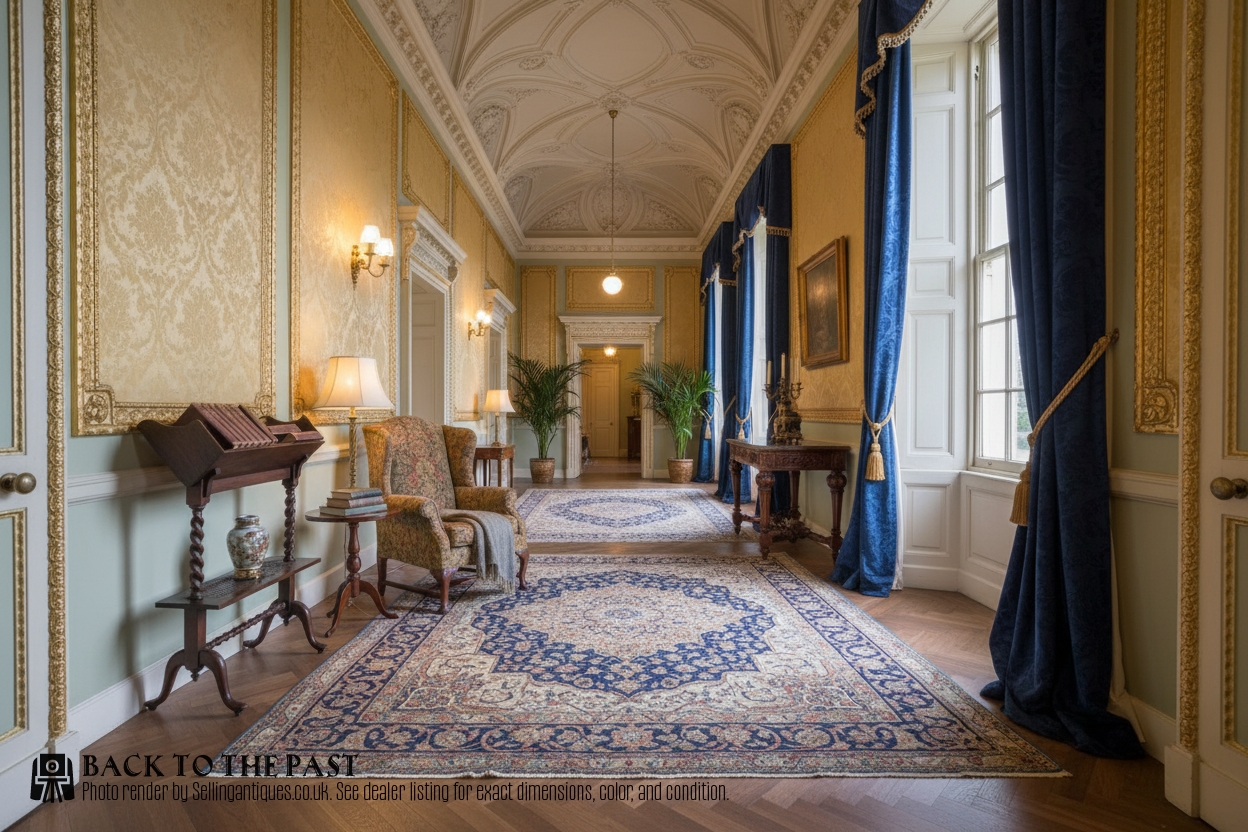
Vintage Oak Trough Table
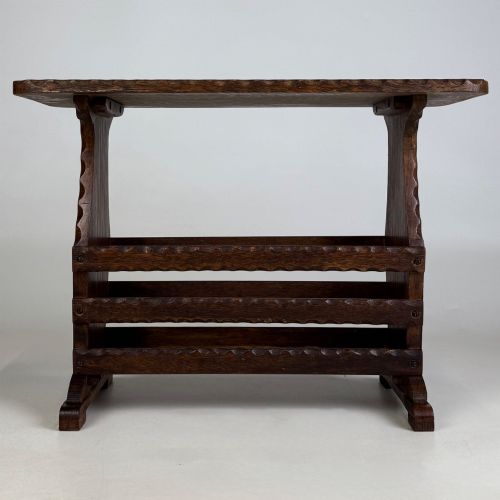
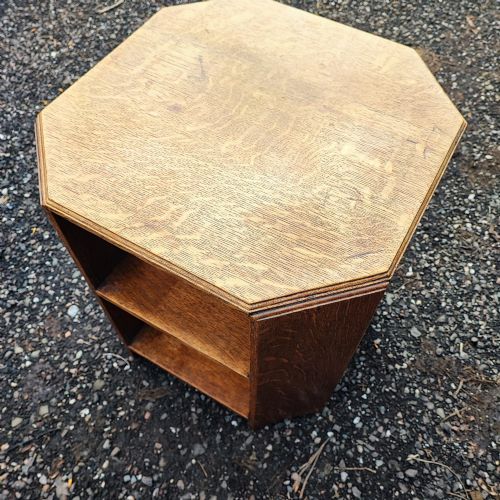
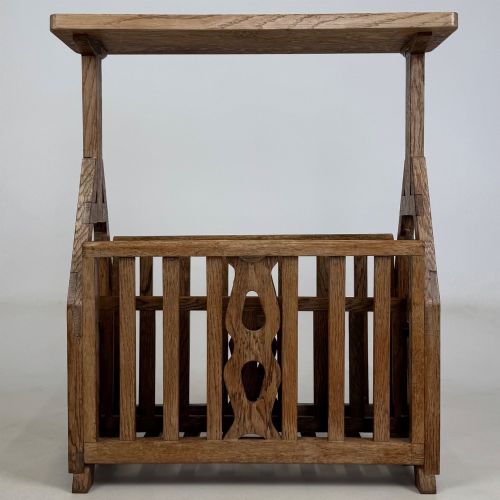
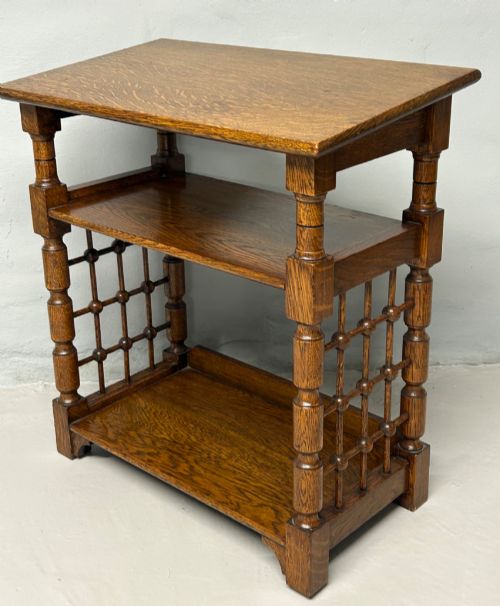
The selections on this page most commonly appear as book stands, side tables, and book tables rather than standard dining furniture. Makers utilised oak, elm, and limed oak alongside zinc, cane, and brass fittings to build functional household companions.
Styles lean heavily towards the Arts and Crafts movement, French Arts and Crafts, and rustic farmhouse aesthetics. Pieces such as open front slope-shelf bookcases and dough bins demonstrate the diverse utilitarian functions housed within this category.
How they were made
Carpenters relied principally on solid oak and elm to construct these functional pieces, often leaving the natural grain visible. Metal elements like brass and zinc appeared on specific designs to add durability or practical utility to surfaces.
Construction methods followed traditional joinery appropriate for domestic furniture, whether shaping a simple dough bin or an extending book slide. Limed oak finishes and cane details surface in specific pieces to alter the texture and visual weight of the timber.
Listings feature items spanning the Victorian era, Edwardian period, and the nineteen-thirties, utilising oak, elm, zinc, cane, and brass.
What varies in quality
Quality rests in the honesty of the construction and the integrity of the timber selected by the maker. Pieces displaying thoughtful Arts and Crafts joinery or careful attention to grain alignment stand apart from purely utilitarian items.
The integration of secondary materials such as brass fittings or zinc linings dictates the refinement of the object. Finer examples maintain their original finish, whether standard oak or limed surfaces, without losing the tactile warmth of the wood.
The Vintage Oak Trough Table Glossary
- Arts and Crafts
- A design movement prioritising traditional craftsmanship, visible construction, and simple forms. It rejected mass production in favour of honest materials.
- Limed oak
- Timber treated with a specialised finish that leaves a whitish pigment in the grain. This technique lightens the overall tone while accentuating the natural texture of the wood.
- Dough bin
- A deep wooden container traditionally used for kneading bread dough. These utility pieces later found favour as side storage in country interiors.
- Book slide
- An adjustable rack designed to hold volumes upright on a desk or table. Extending mechanisms allowed the frame to expand according to the number of books held.
- Jardinière
- An ornamental pot or stand for holding plants or flowers. In Arts and Crafts contexts, these often featured metal linings to protect the surrounding timber structure.
Vintage Oak Trough Table: Frequently Asked Questions
How were these oak pieces used originally?
Households utilised these items to organise reading materials, display plants, or store household goods near living spaces. Book stands kept volumes accessible beside seating.
Larger forms served specific domestic chores like preparing dough or extending across surfaces to manage growing home libraries.
How do I identify Arts and Crafts styles?
Arts and Crafts pieces emphasise visible joinery, honest use of solid oak, and simple geometric forms. They avoid excessive ornamentation in favour of practical utility.
Details often include subtle chamfering, exposed pegs, and functional hardware in brass that highlights the construction process.
Where do these tables fit in a modern home?
These pieces integrate easily beside sofas or desks as practical surfaces for books and everyday objects. Their neutral timber tones complement contemporary interiors.
Compact book stands and side tables provide useful storage without overwhelming smaller rooms, bringing historical warmth to daily spaces.