
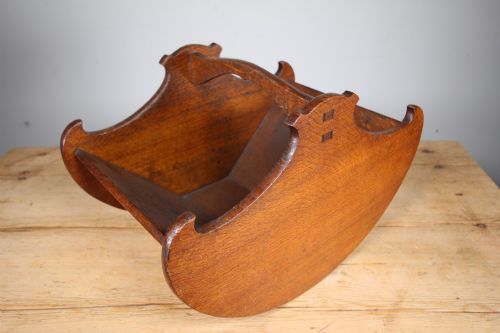
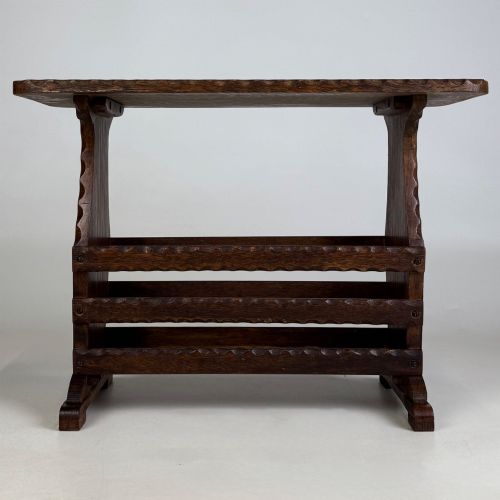
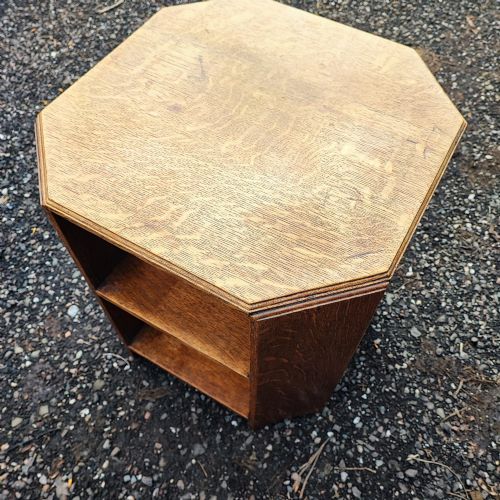
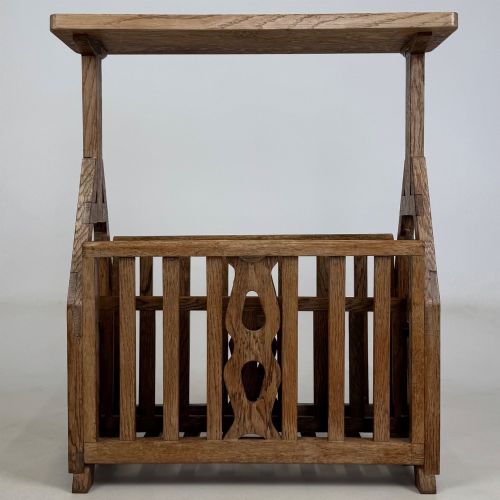
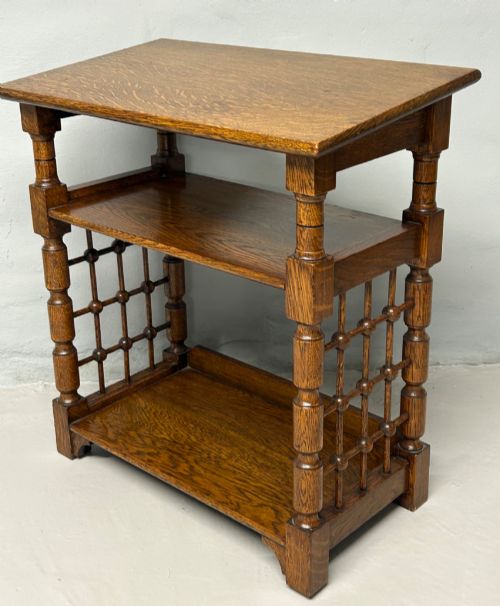


Standing Oak Book Trough
These standing oak book troughs are sturdy timber units designed to keep volumes close at hand in a study or sitting room.
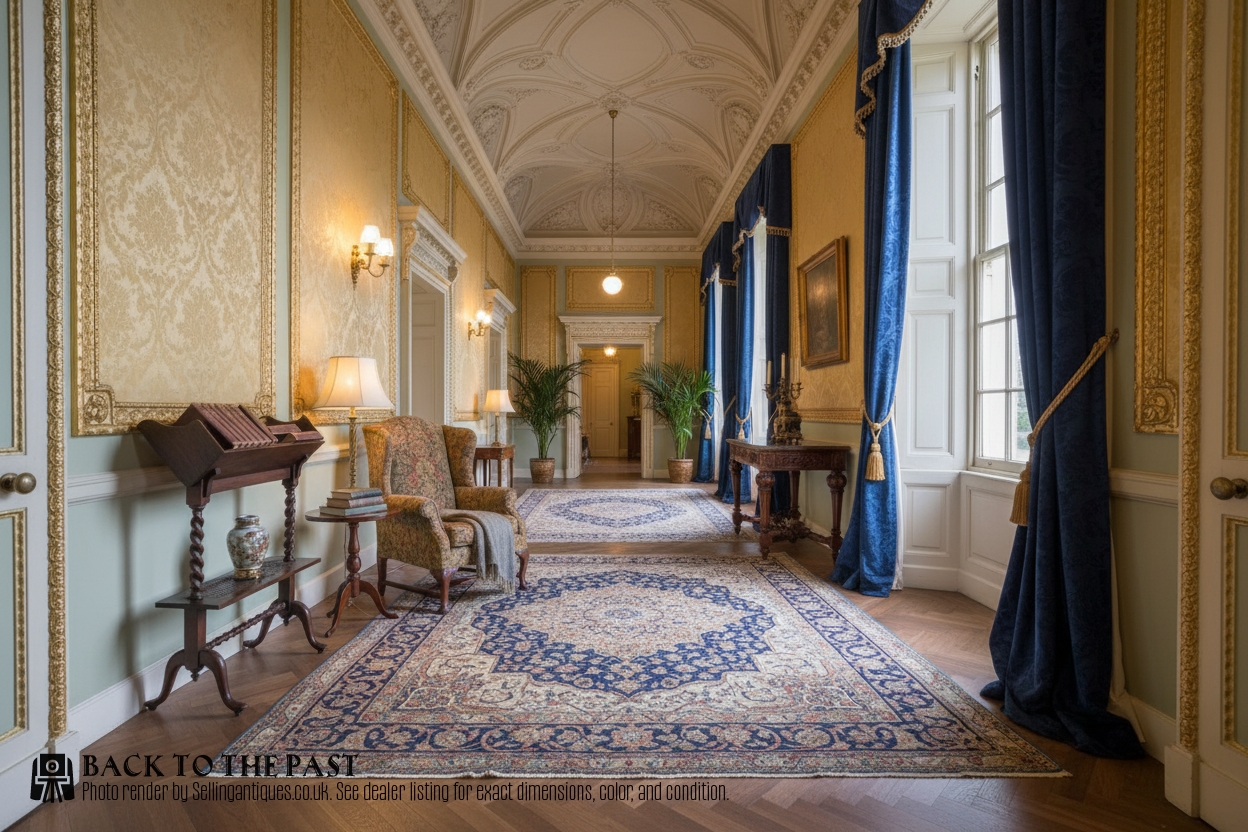
Standing Oak Book Trough
When you search for a standing oak book trough, you encounter sturdy timber furniture designed to hold volumes upright in living spaces and libraries. The selections here span the Victorian era, the Edwardian period, and into the 1920s and 1930s.
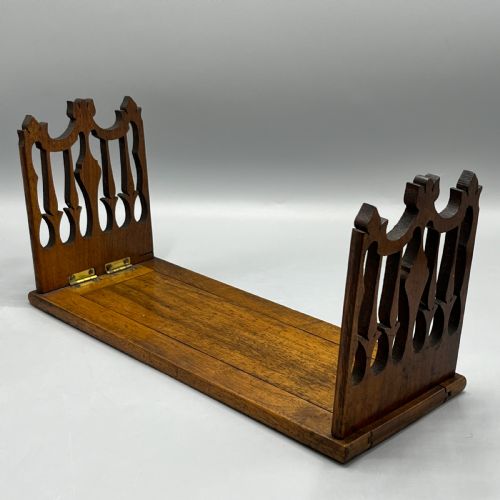
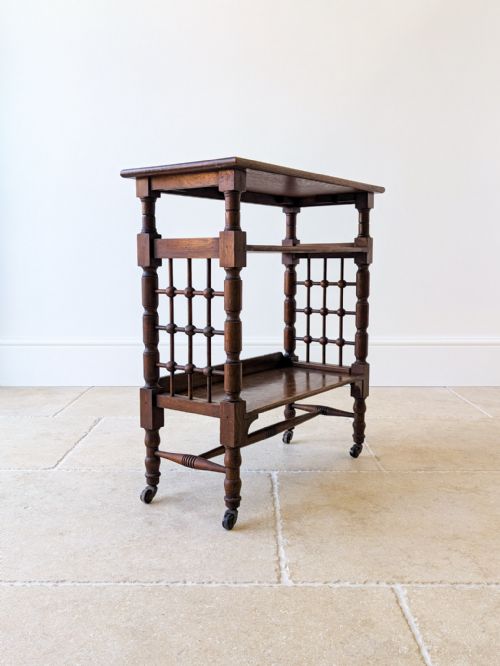
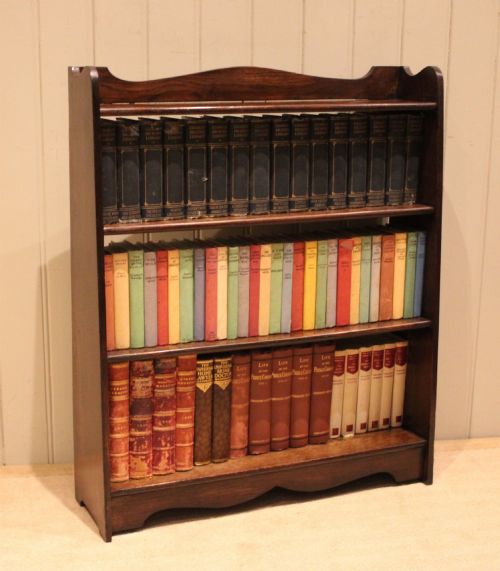
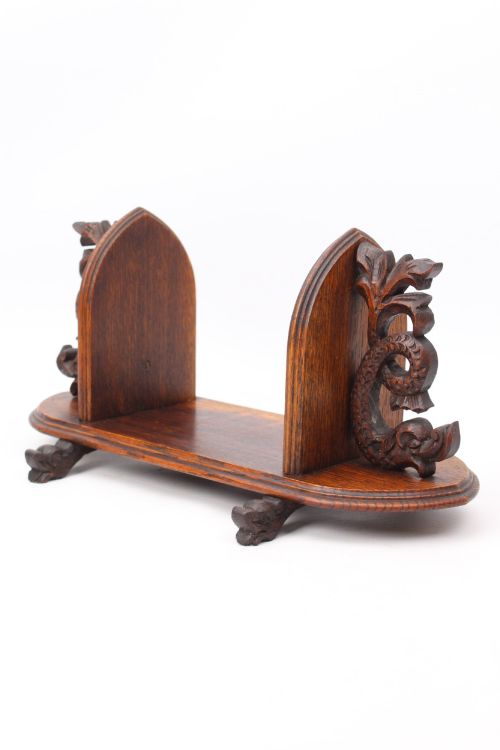
You are most likely to meet pieces built in solid oak during the Edwardian period or the 1920s, often bearing the distinct influence of the Arts and Crafts movement or Gothic Revival styles. These items function variously as open-front slope-shelf troughs, side tables with magazine racks, and extending book slides.
The forms range from compact table-top revolving bookcases and two-tier golden oak bookcases to floor-standing units and metamorphic canterbury stands. Their primary purpose remains the organised display and storage of books within domestic interiors.
What varies in quality
The standard of a standing oak book trough depends upon the crispness of the carpentry and the selection of the timber. Pieces featuring well-figured oak grain and thoughtful proportions stand apart from simpler utilitarian items.
The presence of maker labels, such as those associated with Arthur Simpson or attributions to Heals, elevates a piece's standing. Additionally, integrated functional elements like brass hardware, extending slides, or carved decoration indicate higher ambition in the workshop.
One piece manages to combine horses with Art Deco oak shelving, proving makers welcomed unexpected motifs into the home library.
Arthur Simpson·Heals
The Standing Oak Book Trough Glossary
- Book trough
- An open container designed to hold books upright on a desk, table, or floor. These units typically feature angled sides to keep volumes visible and accessible.
- Arts and Crafts
- A design movement valuing handcraftsmanship, simple forms, and natural materials over mass production. Pieces from this style often display honest construction and subtle decorative carving.
- Metamorphic
- Furniture designed to transform from one form into another for dual utility. In these listings, this describes stands that adapt their configuration to hold magazines or books.
- Book slide
- An extending device placed on a table to hold a row of books upright between two ends. The sliding mechanism allows the width to adjust as the number of volumes changes.
- Gothic Revival
- An architectural and decorative style drawing inspiration from medieval forms. Pieces in this style frequently incorporate pointed arches, heavy mouldings, and robust oak construction.
Standing Oak Book Trough: Frequently Asked Questions
What is a standing oak book trough?
A standing oak book trough is a floor-standing or table-top piece of furniture built to hold books in an accessible open compartment. They appear in styles ranging from plain Edwardian utility to decorative Arts and Crafts designs.
These pieces served domestic reading habits in studies, libraries, and sitting rooms by keeping frequently consulted volumes within reach.
How do I date an oak book trough?
Dating relies on stylistic markers such as the heavy ornamentation of Victorian Gothic Revival pieces, the cleaner lines of Edwardian Arts and Crafts items, or the streamlined geometry of 1930s Art Deco examples. Construction methods and any accompanying labels also provide chronological clues.
The listings here span from the 1880s through to the 1930s, capturing shifts in domestic tastes across those decades.
Where should I place a book trough?
These pieces suit placement beside an armchair, against a study wall, or upon a side table depending on their scale. Floor-standing troughs keep heavier volumes at hand in a library or lounge.
Smaller variants, such as table-top revolving bookcases or extending slides, sit neatly upon desks or larger surfaces.
What styles are common in these listings?
Arts and Crafts designs dominate the selection, alongside Edwardian utilitarian pieces and Victorian Gothic Revival items. You will also find occasional Art Deco and 1920s interpretations.
These varied aesthetic approaches reflect the changing preferences of cabinetmakers and their clients across the late nineteenth and early twentieth centuries.