
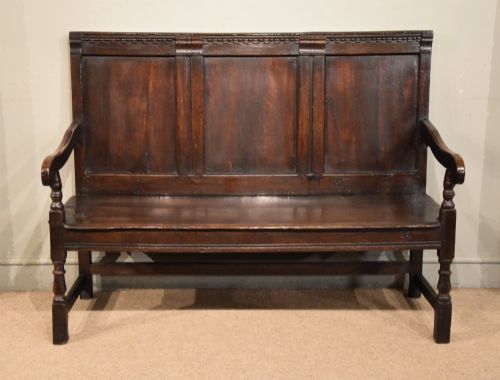
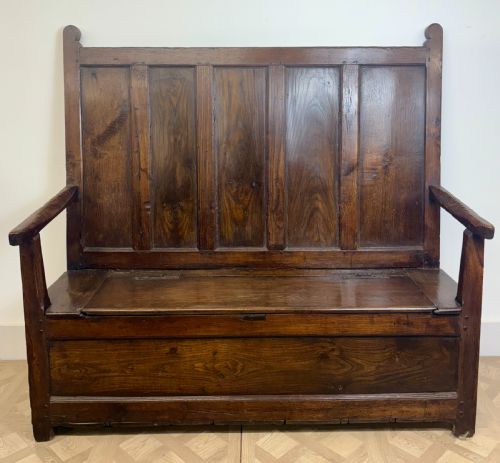
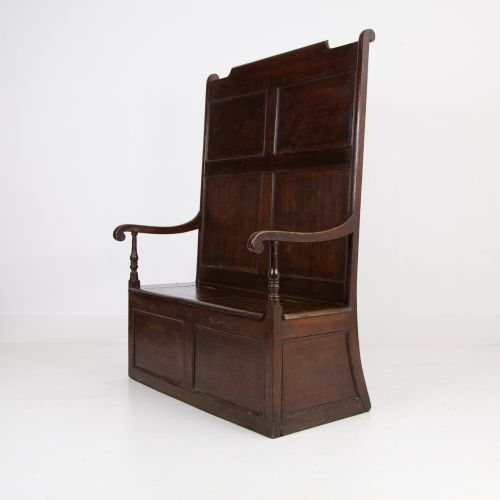
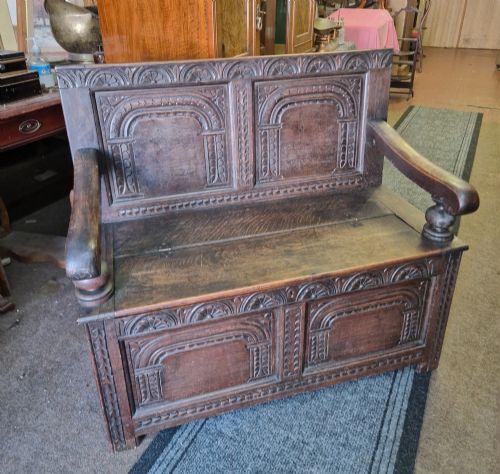
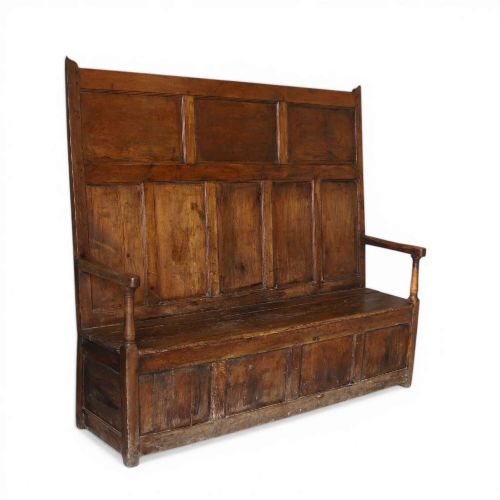
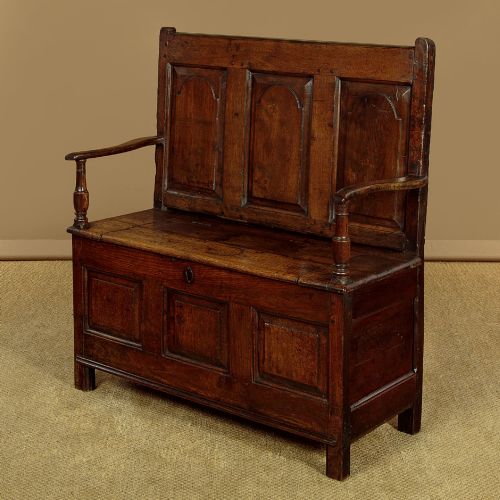

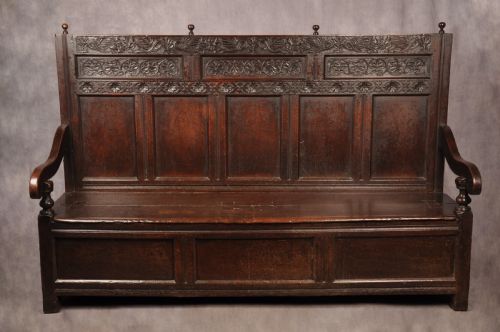
Dark Oak Panelled Bench
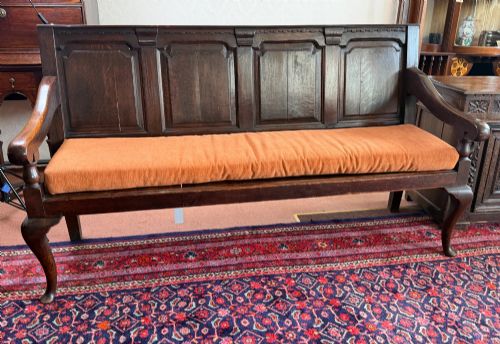
A dark oak panelled bench is a robust timber seat built to anchor a hall or living space, prized for its panelled construction and longevity.
Dark Oak Panelled Bench
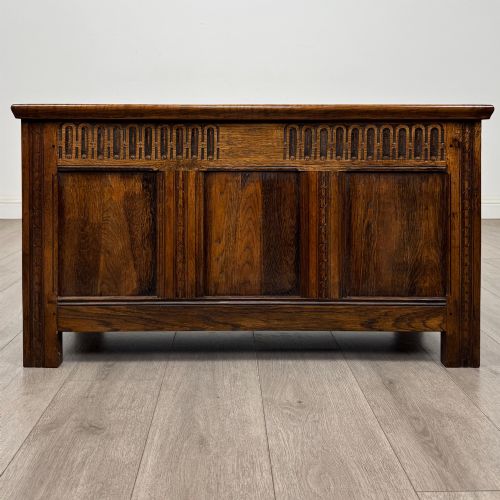
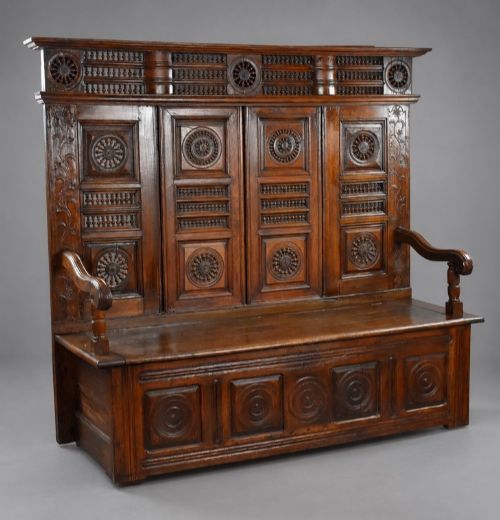
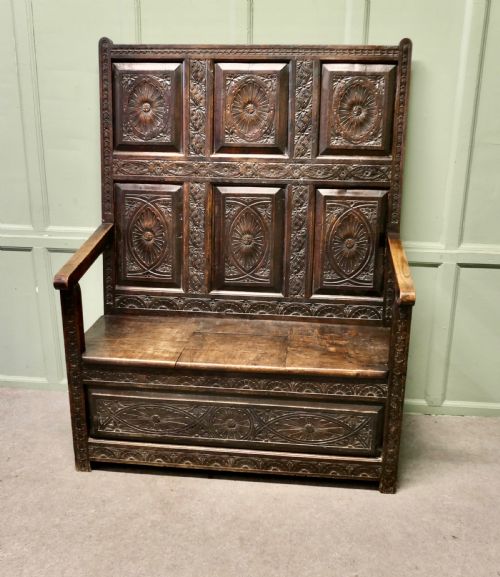
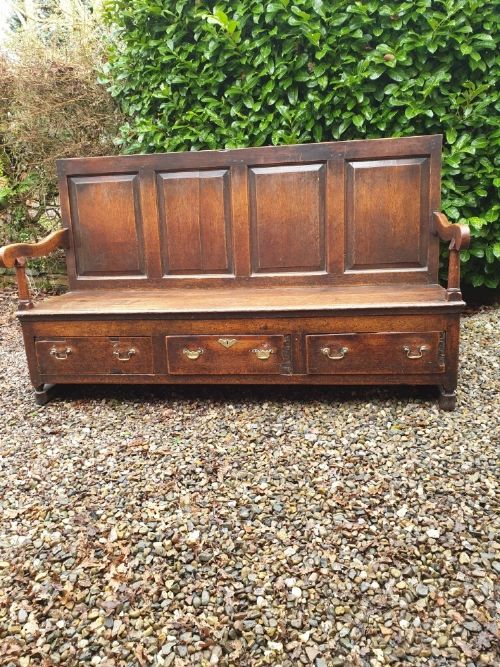
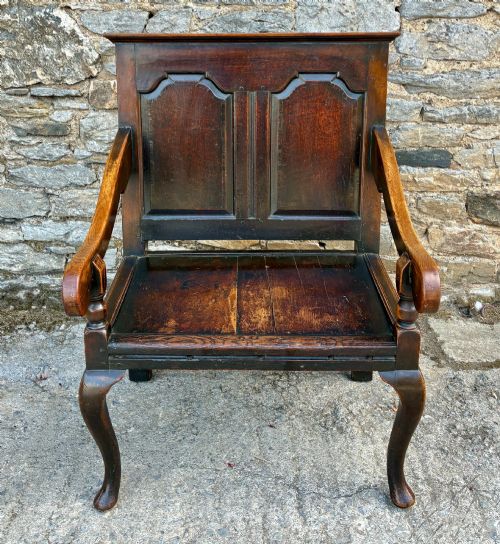
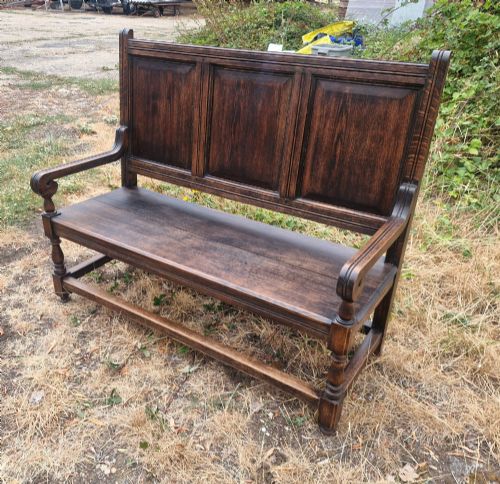
A dark oak panelled bench brings together traditional seating and compartment storage in forms like the box settle, hall bench, and high-back settle. When exploring a dark oak panelled bench, a buyer encounters pieces originating from the seventeenth, eighteenth, and nineteenth centuries, alongside revival and vernacular interpretations.
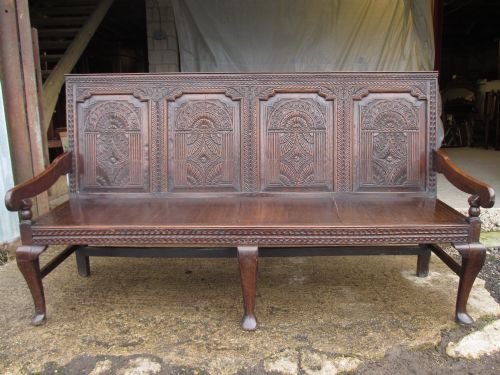
The selections span regional English, Welsh, and continental workshops, incorporating styles from Georgian country and Jacobean revival to Gothic revival. High-back designs and panel-back configurations dominate the available forms, often featuring integrated storage beneath the seat or enclosed box bases.
How they were made
Construction relies primarily on solid oak, frequently paired with secondary timbers like ash, elm, and walnut for internal elements or structural framing. Cabinetmakers utilised traditional mortise and tenon joints to secure the heavy panels, holding the uprights and stretchers together without metal fixings.
Surface embellishments on these seats involve hand-carved panels, fielded mouldings, and occasional panelled backs designed to block draughts in older domestic interiors. Iron and brass hardware appears on hinges and catches for storage compartments, while secondary materials such as cane, fabric, and iron emerge on specific variants.
Period representation ranges from seventeenth-century north country box settles to Edwardian hall seats.
What varies in quality
The distinction between standard village pieces and finer regional workshop examples rests on the depth and crispness of the carved panels and the integrity of the timber framing. Superior items display balanced proportions, particularly in high-back and wingback barrel configurations where the timber thickness provides structural stability.
Surface patination and the retention of original structural components distinguish well-preserved examples from heavily restored ones. The quality of the joinery in the box base or underframe dictates how firmly the seat bears weight over centuries of domestic use.
The Dark Oak Panelled Bench Glossary
- Box settle
- A high-backed wooden bench featuring a concealed storage compartment beneath the seat. This form served to keep rooms warm by blocking draughts while offering domestic storage.
- Panel-back
- A chair or bench back constructed from framed wooden boards fitted into grooves within stiles and rails. This method allows the timber to expand and contract naturally with humidity changes.
- Vernacular
- Furniture built by local regional craftsmen following traditional local designs rather than high-style metropolitan fashions. These pieces often utilise regional timbers such as ash and elm alongside oak.
- Gothic revival
- An architectural and decorative style drawing inspiration from medieval forms, featuring pointed arches and tracery. This aesthetic appears on nineteenth-century seating designed to evoke older periods.
- Wingback
- A seating form featuring upholstered or timber extensions flanking the upper back and head area. In wooden settles, these wings deflected cold air away from the seated person.
Dark Oak Panelled Bench: Frequently Asked Questions
How do I date an oak settle?
Dating relies on examining the construction methods, tool marks, and framing styles visible on the piece. Earlier seventeenth-century examples tend to feature heavier peg fastenings and simpler, deeper panel mouldings.
Later Victorian and Edwardian revival pieces often display machine-sawn timber elements and lighter framing. Comparing the joinery against known period characteristics helps clarify the timeline.
Where were box settles used?
Box settles traditionally stood in the kitchens and halls of farmhouses and country houses. Their high panelled backs and enclosed bases protected occupants from cold draughts coming through older doors and windows.
The integrated storage box beneath the seat held household textiles, fuel, or dry goods.
Are these benches comfortable to sit on?
These wooden benches feature rigid timber seats and upright panelled backs designed for posture rather than lounging. They were intended for short periods of sitting near hearths or in hallways.
Owners frequently add loose cushions or squabs to the seat base for added comfort during extended sitting.
How do I care for antique oak?
Maintaining antique oak involves keeping the timber away from direct heat sources and sudden humidity shifts that cause wood to split. Regular dusting with a dry or slightly damp cloth preserves the surface finish.
Occasional application of traditional wax feeds the wood and maintains its natural lustre without building up heavy chemical residues.
What is a barrel settle?
A barrel settle is a specialised seating form featuring a curved, enclosing high back that wraps completely around the occupant. This curved wooden hood further insulates the person from cold air currents in large rooms.
Such pieces represent some of the most dramatic forms of vernacular seating.