


Dark Oak Coffer Panel
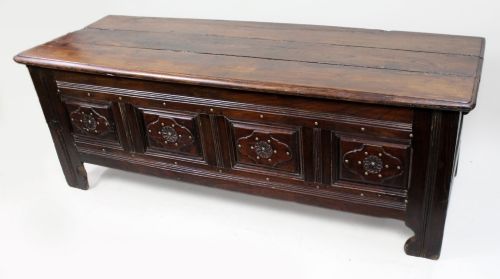
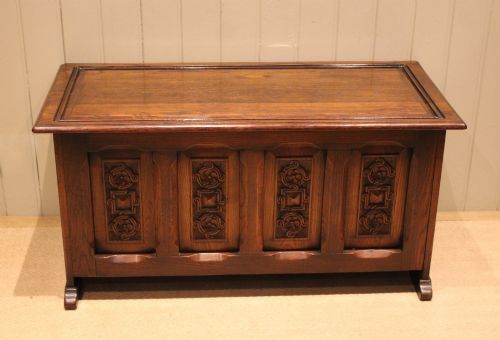
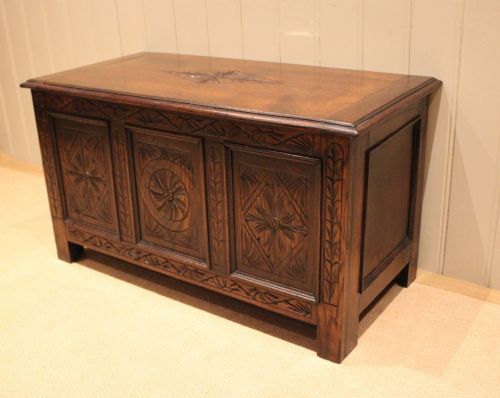
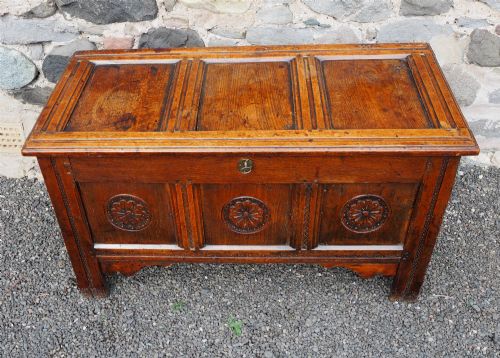
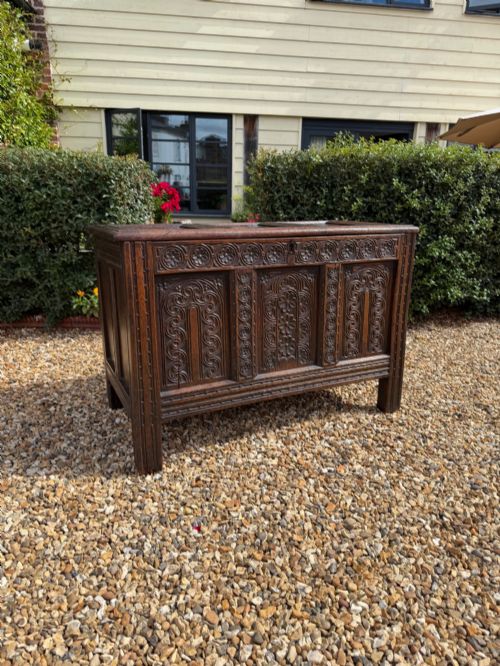
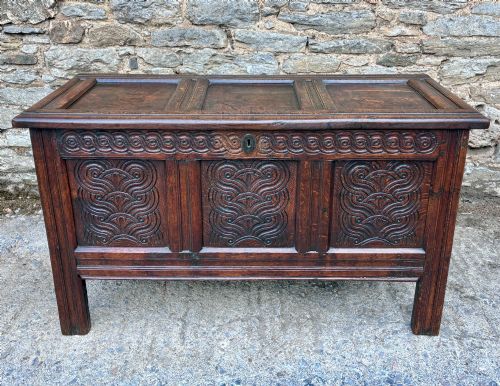
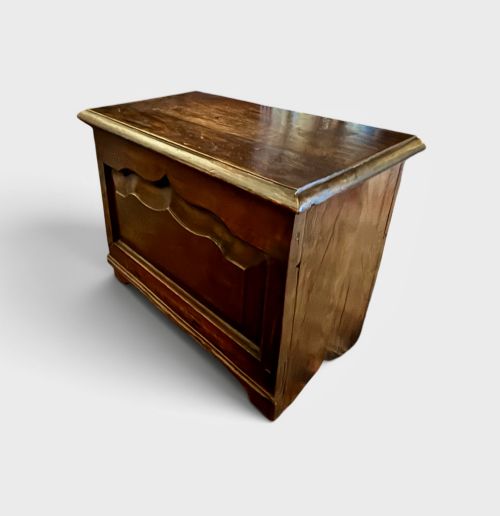
These dark oak coffer panel items are solid timber storage pieces built to hold linens and valuables.
Dark Oak Coffer Panel
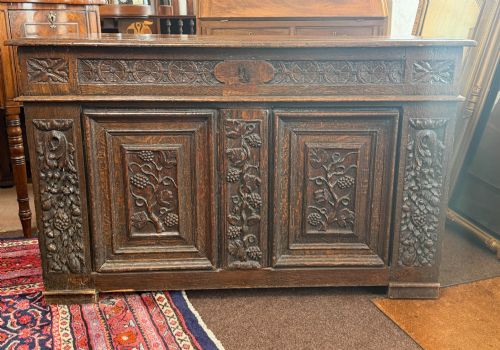
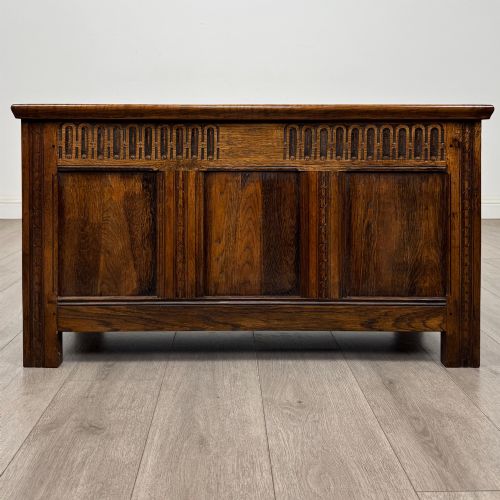
A dark oak coffer panel search brings up heavy timber storage chests and individual carved woodwork sections from sixteenth-century origins onwards. Most examples on this page date from the seventeenth and eighteenth centuries, bearing the deep patination of age.
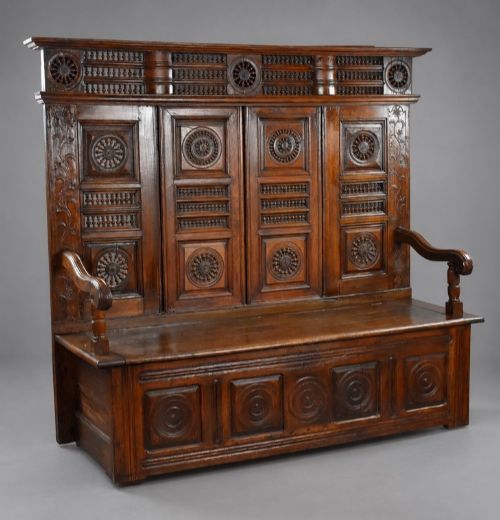
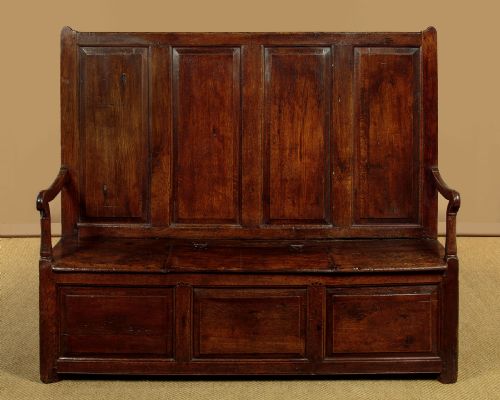
Makers utilised sturdy native timbers to construct storage boxes, panelled settles and mule chests with hinged lids. Regional pieces such as Welsh coffer bach variants and Gower Peninsula boxes appear alongside standard panelled formats.
Earlier pieces show strict period styles including Jacobean and Charles II influences, while later items encompass nineteenth-century revivals and twentieth-century interpretations.
Materials and construction
Carpenters built these storage chests using solid oak frames housing rebated panels, frequently supplemented with secondary woods like ash, walnut and ebonised timber. Iron hardware and brass fixings secure the lids and hinges.
Surface decoration relies on hand carving, high-relief panel work and occasional wood inlay to define the front elevations and lid borders.
Listings feature items spanning from the sixteenth century through the Edwardian era, with seventeenth-century examples predominating.
Judging the standard
Quality rests in the crispness of the hand-carved details on individual panels and the structural integrity of the timber framing. Early pieces with original patination and untouched surfaces command attention.
The degree of regional character, such as Welsh vernacular traits or documented provenance, separates standard workshop output from exceptional examples.
The Dark Oak Coffer Panel Glossary
- Coffer
- A heavy wooden chest with a hinged lid used for storing valuables and household textiles. These pieces form the primary focus of this category.
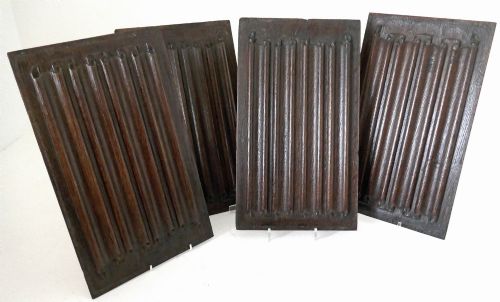
- Linenfold
- A style of wood carving that imitates folded cloth, commonly seen on sixteenth-century panels. It gives flat timber surfaces a textured, textile-like appearance.
- Coffer bach
- A small Welsh box on legs or drawers, translated literally as little coffer. They served domestic storage functions in regional households.
- Mule chest
- A storage chest fitted with one or more drawers beneath the main internal compartment. This form bridges the gap between traditional coffers and chest of drawers designs.
- Panel
- A distinct section of wood fitted into a grooved frame to prevent warping as the timber moves. Individual panels often carry the primary decorative carving of the piece.
- Patina
- The surface sheen and deep colour developed by aged wood through handling, waxing and exposure over centuries. It serves as an indicator of genuine age.
Dark Oak Coffer Panel: Frequently Asked Questions
What is a dark oak coffer panel used for?
These pieces function as traditional storage chests for blankets, linens and household goods, while individual panels serve as decorative elements or architectural fragments.
In domestic settings, they sit at the foot of beds or anchor hallway spaces as storage benches.
How do I date a seventeenth-century coffer?
Dating relies on construction methods, timber movement patterns, tool marks and the specific style of carving present on the frame. Seventeenth-century examples typically employ pegged mortise and tenon joints.
Comparative analysis with dated pieces from periods like Jacobean or Charles II reigns helps confirm the timeline.
What is a Welsh coffer bach?
A coffer bach is a miniature Welsh storage chest, often raised on bracket feet and sometimes featuring small drawers beneath the main compartment. Domestic households used them to store precious documents, keepsakes and small linens.
Regional variations pinpoint construction to specific areas such as Carmarthenshire or the Gower Peninsula.
Are these chests made entirely of solid oak?
Most primary structures use solid oak timbers, though secondary woods like ash and walnut appear in internal framing or specific regional builds. Iron hinges and brass escutcheons provide functional hardware.
Inspect the interior floorboards and back panels to verify the material consistency across the whole carcass.