


Carved Oak Chest Front
A carved oak chest front brings heavy grain and deep relief directly into a room, offering both storage history and architectural presence.
Carved Oak Chest Front
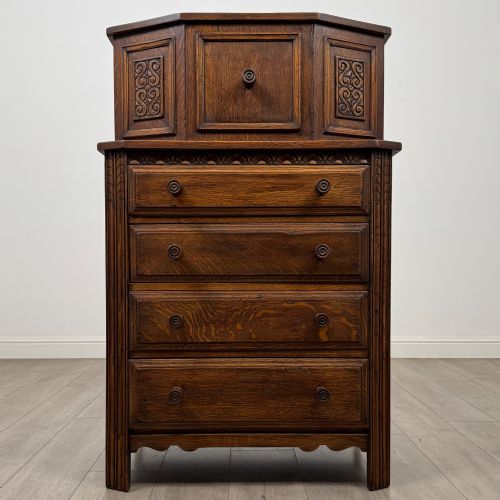
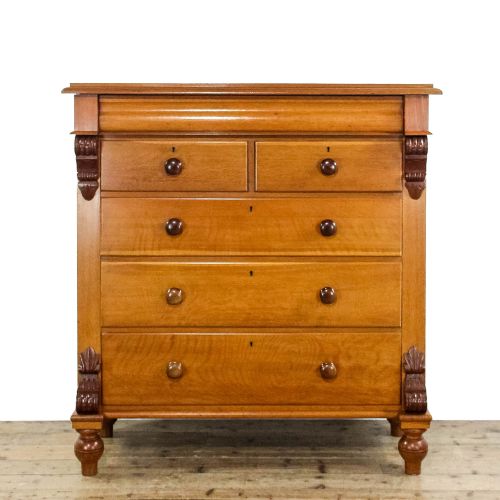
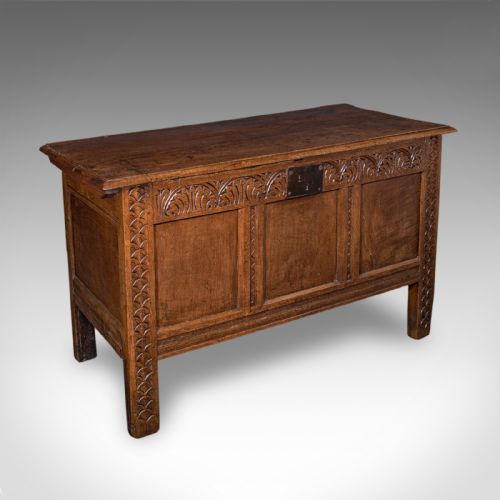
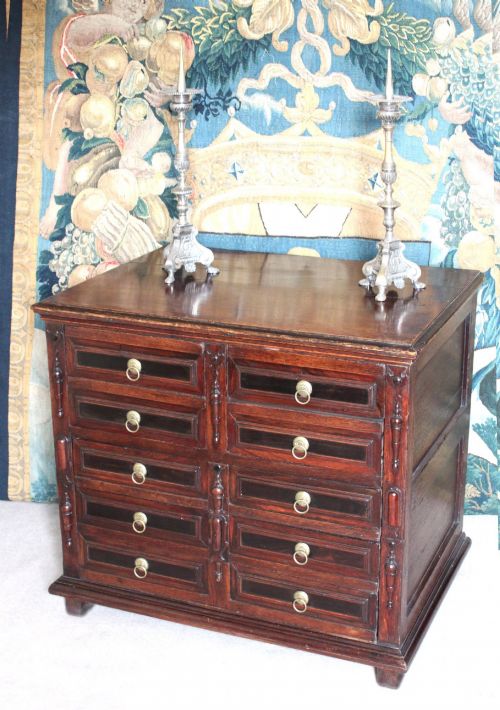
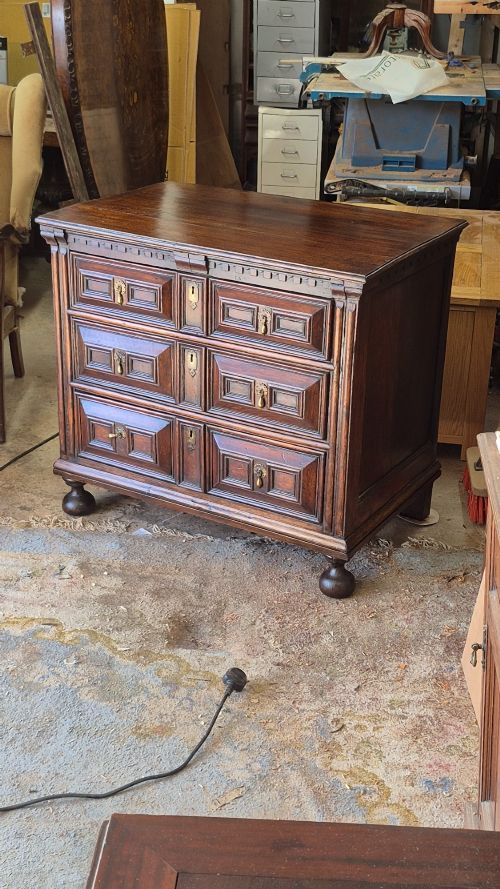
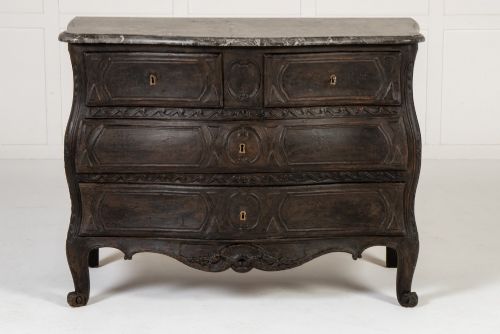
When you search for a carved oak chest front, you are looking at panel work, coffer sections, and drawer faces salvaged or preserved from early furniture. These pieces isolate the decorative focal point of larger items such as coffers, blanket chests, and chests of drawers.
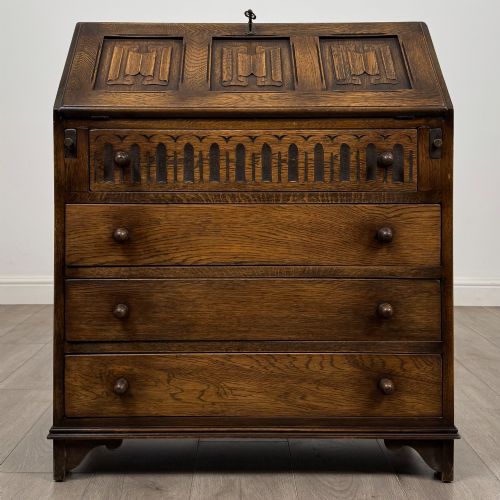
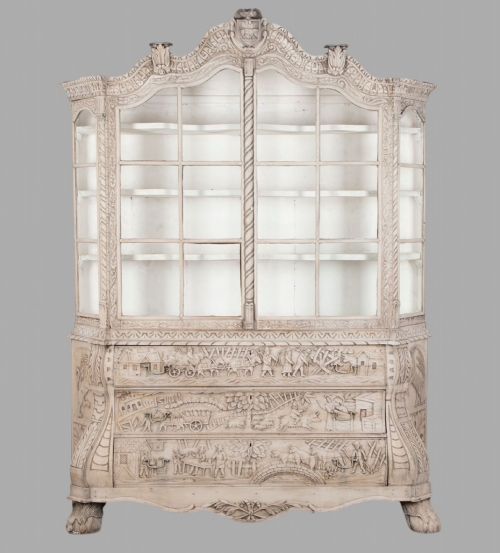
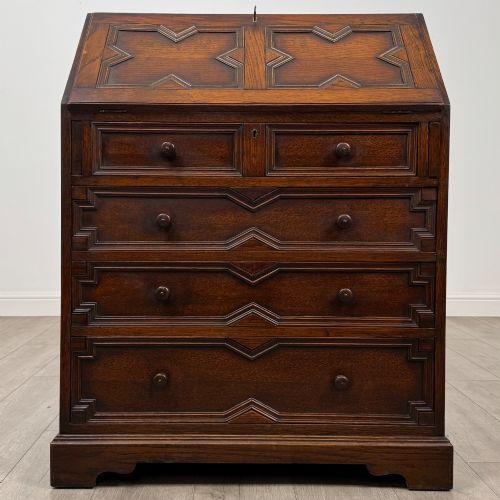
The versions you are most likely to meet on this page date predominantly from the seventeenth and eighteenth centuries, alongside later revival pieces from the Edwardian era and the nineteen-twenties. They span English, Welsh, and French origins, taking the form of geometric block fronts, arcaded panels, and linenfold carvings.
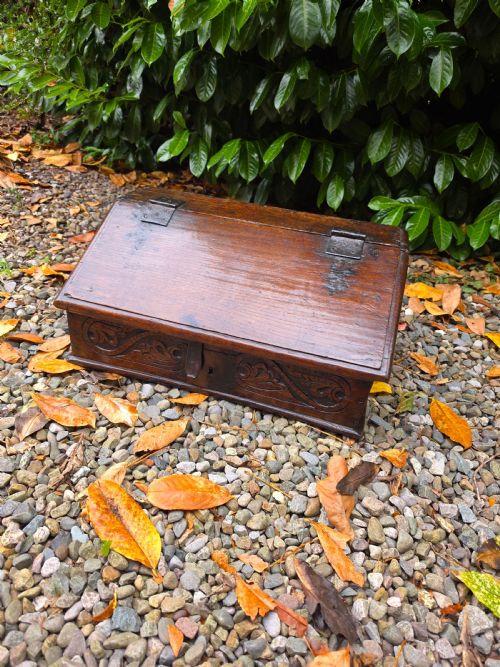
Many of these panels originate from larger storage forms like bible boxes, cupboards, and commodes where the front timber received the carver's primary attention. They function today as wall display pieces or structural elements for architectural salvage projects.
What varies in quality
Quality rests in the crispness and depth of the chisel work, where confident, sharp relief distinguishes master carvers from later mechanical or hasty copies. The handling of the oak grain also dictates value, with well-figured quarter-sawn boards providing a superior canvas.
Integrity of the timber forms the other half of the scale, separating panels that retain their original surface patination and colour from those subjected to excessive sanding or aggressive stripping.
Listings feature oak panels spanning the sixteenth century through to the nineteen-twenties, incorporating brass and iron hardware.
The Carved Oak Chest Front Glossary
- Linenfold
- A style of relief carving imitating folded parchment or linen, common on early panels. It creates vertical cylindrical folds across the timber surface.
- Arcaded
- A row of arches supported by piers or columns, carved in low relief across the front timber. This architectural motif frequently dates seventeenth-century pieces.
- Geometric block front
- A facade featuring projecting or recessed geometric mouldings arranged in symmetrical patterns. It requires precise joinery to execute across hardwood drawers.
- Coffer
- A large wooden chest used traditionally for storing valuables or clothing. The front panel often received the most elaborate carving on the entire box.
Carved Oak Chest Front: Frequently Asked Questions
How do I date a carved oak panel?
Dating relies on tool marks, joint construction, and the specific style of the carving. Seventeenth-century work often displays hand-split timber and peg joinery.
Later revivals from the Edwardian period or nineteen-twenties show machine assistance and softer, more uniform surface textures.
How were these chest fronts used originally?
They formed the decorative business end of storage furniture like blanket chests, coffers, and commodes. The front board displayed the wealth and taste of the household.
Today, many survive independently as wall art or architectural panels after the rest of the furniture succumbed to damage.
Can I hang a carved oak chest front on the wall?
Yes, many collectors mount them as architectural panels to display the relief carving closely. Proper backing and stable wall brackets are essential to support the weight of solid hardwood.
Ensure the room humidity remains stable to prevent the dry oak from warping over time.
What is the difference between seventeenth-century and revival pieces?
Seventeenth-century originals exhibit genuine wear, hand-forged or early joinery methods, and deep patination accumulated over centuries. Revival pieces from the twentieth century use older styles but feature cleaner machine cuts and lighter finishes.