


Blanket Box Panel
A blanket box panel antique offers robust domestic storage rooted in centuries of traditional joinery and sturdy timber construction.
Blanket Box Panel
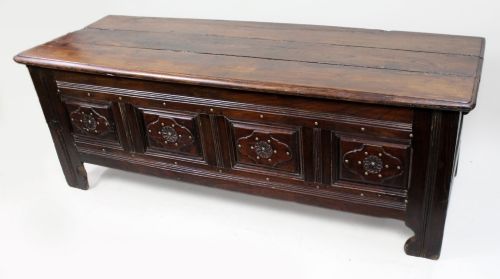
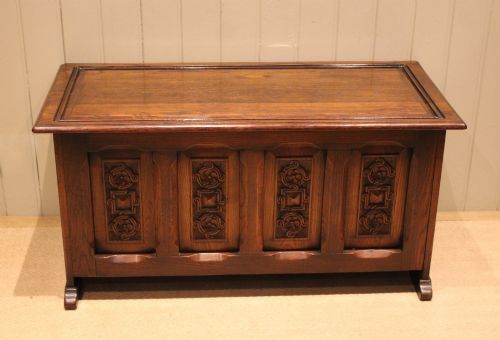
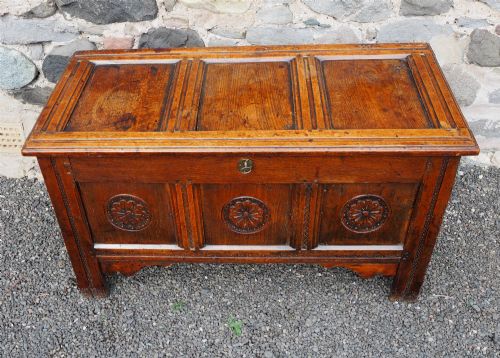
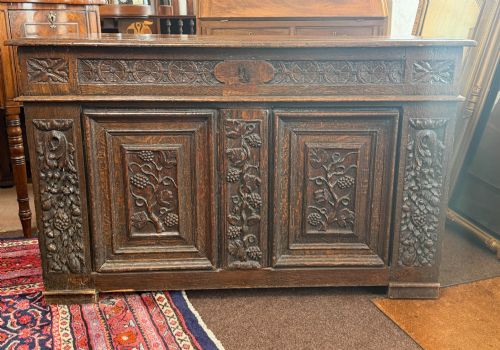
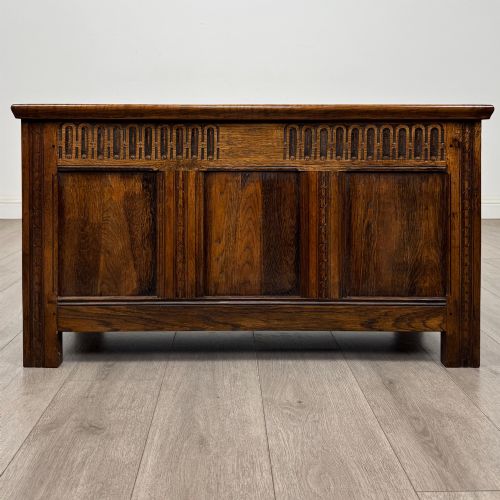
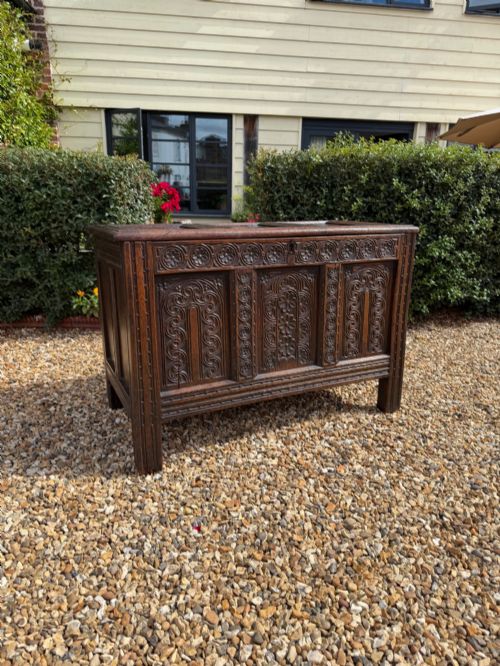
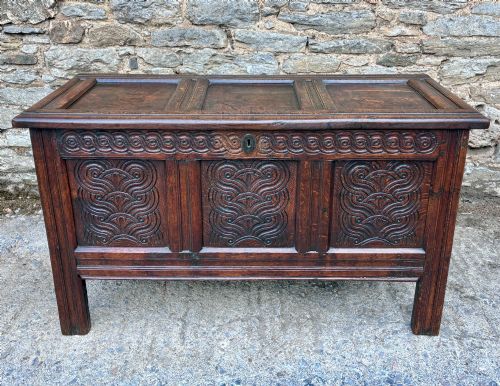
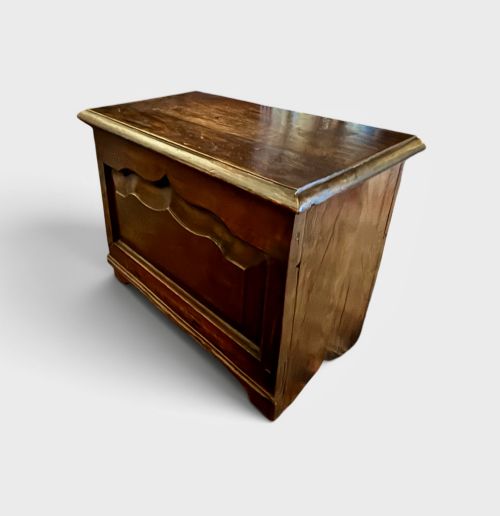
A blanket box panel antique typically takes the form of a coffer, chest, or mule chest designed for household storage. The pieces encountered most frequently span the seventeenth and eighteenth centuries, reflecting enduring domestic utility.
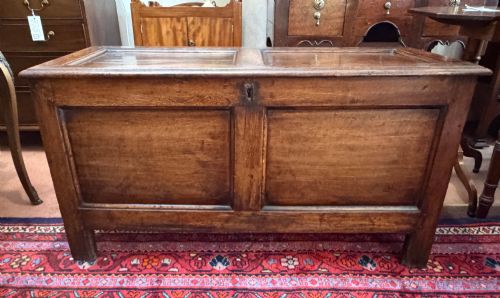
Makers constructed these storage pieces primarily from oak, incorporating panelled lids and sides to accommodate seasonal timber movement. Regional variations appear across English, Welsh, and French examples.
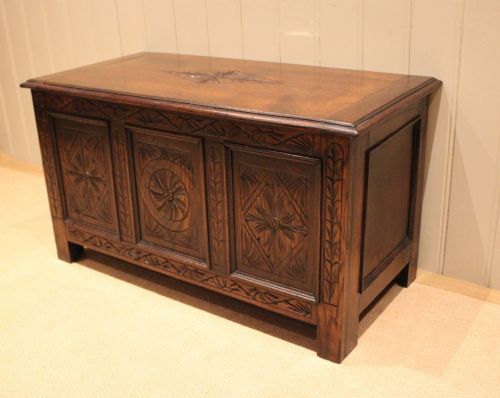
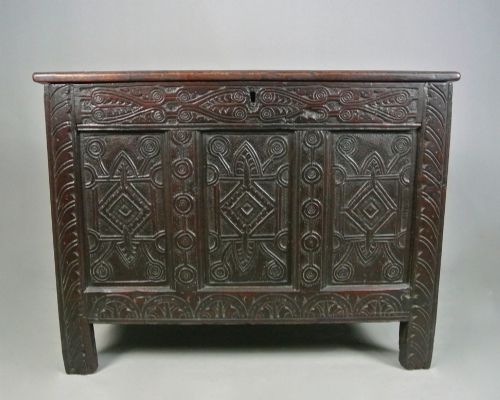
Many examples exhibit carved detailing on the front panels, ranging from geometric strapwork to foliate motifs. Simpler panelled surfaces rely on the natural figuring of the wood for visual interest.
Materials and construction methods
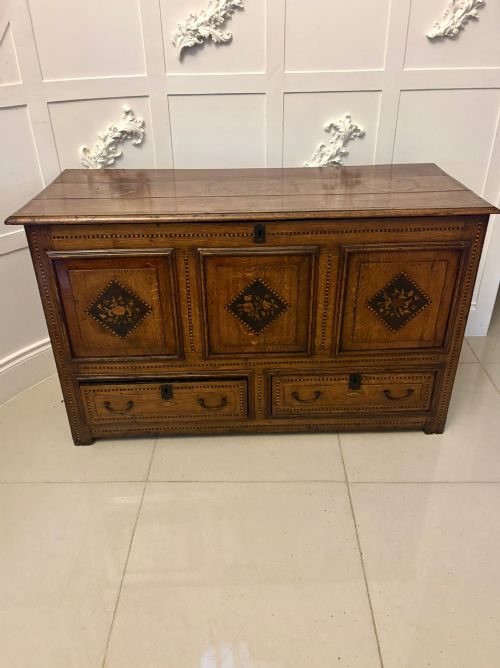
Joiners relied heavily on solid oak, utilising frame and panel construction to prevent the timber from warping as humidity changed. Iron hinges and brass escutcheons reinforced lids and keyholes, while some iterations incorporated marquetry and wood inlay.
Mule chests introduced lower drawers beneath the main storage compartment, requiring dovetail joints and additional framing. Surface finishing involved wax or oil application over time, developing deep patination on the oak.
Listings feature oak storage chests spanning the sixteenth century through the Edwardian era, incorporating iron, brass, and marquetry inlay.
Markers of distinction and quality
Quality rests upon the crispness of the hand-carved panels and the integrity of the original frame construction. Pieces retaining their early hinges, floorboards, and locks command greater attention from collectors.
Proportions also dictate distinction, with smaller marriage chests and provincial coffers demonstrating finer domestic scaling. The depth of the surface patina accumulated through centuries of handling distinguishes superior examples from heavily restored alternatives.
The Blanket Box Panel Glossary
- Coffer
- A heavy wooden chest traditionally used for storing valuables, textiles, or documents. These items frequently feature hinged lids and sturdy panelled construction.
- Mule chest
- A storage chest fitted with one or more drawers at the base beneath the main compartment. This form emerged as joiners sought to improve internal access without disturbing items stacked inside.
- Marquetry
- The art of applying decorative veneer pieces to a structure to form intricate patterns. This technique appears on select chests alongside simpler wood inlay.
- Ebonised
- Wood treated with a chemical stain or finish to imitate ebony. This dark finish highlights carved details on specific revival pieces.
- Escutcheon
- A flat plate surrounding a keyhole designed to protect the surrounding timber from wear. These fittings are frequently cast in brass or iron.
Blanket Box Panel: Frequently Asked Questions
What is a coffer?
A coffer is a traditional storage chest constructed with a hinged lid and thick wooden sides. They served as primary furniture for holding textiles, blankets, and valuables in early homes.
Over the centuries, these boxes adapted to changing domestic needs, occasionally incorporating bottom drawers to become mule chests. Their heavy timber frames allowed them to double as seating benches when space required.
How do I date an oak chest?
Dating relies on observing construction techniques, such as hand-split boards, pegged joints, and the style of surface carving. Seventeenth-century examples often display geometric panelling, while eighteenth-century pieces favour cleaner architectural lines.
Hardware like iron strap hinges and brass escutcheons also offer clues to the manufacturing period. Secondary woods used inside drawers help confirm whether components date to the original era.
What is a mule chest?
A mule chest is a hybrid storage form featuring a lidded compartment on top and one or more drawers at the bottom. The addition of drawers allowed owners to access items without lifting the heavy top lid.
These pieces became popular during the late seventeenth and eighteenth centuries in English and Welsh workshops. They frequently served as marriage chests to hold household linens.
How do I care for antique oak?
Antique oak benefits from stable indoor humidity and protection from direct sunlight to prevent timber splitting. Regular applications of beeswax nourish the grain and preserve the historic surface finish.
Avoid using modern liquid polishes containing silicone, which can penetrate open oak pores and damage the patina. Gentle dusting with a dry cloth keeps the surface clean without wearing away the aged wood.