







Dark Oak Apprentice Chest
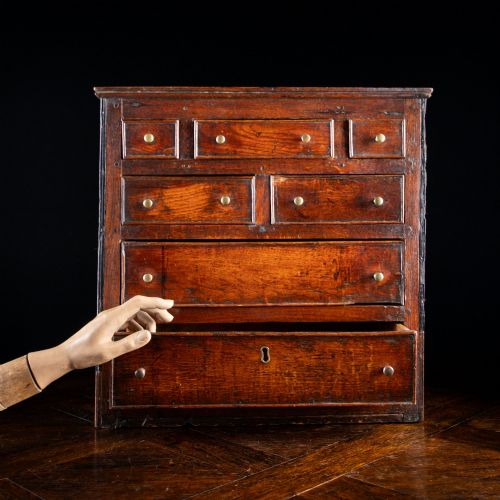
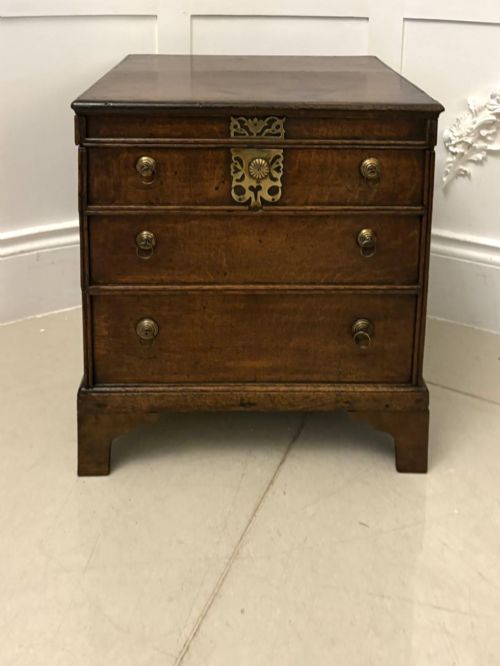
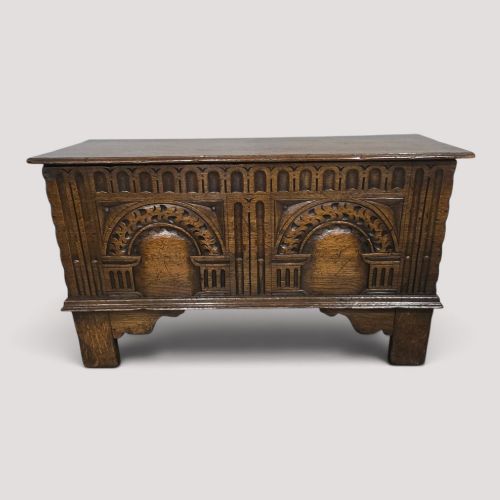
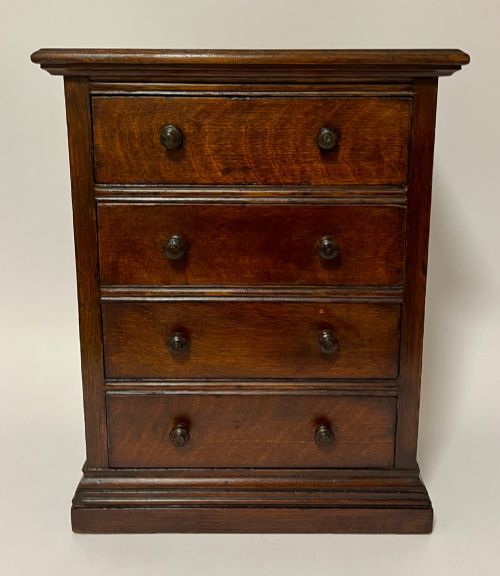
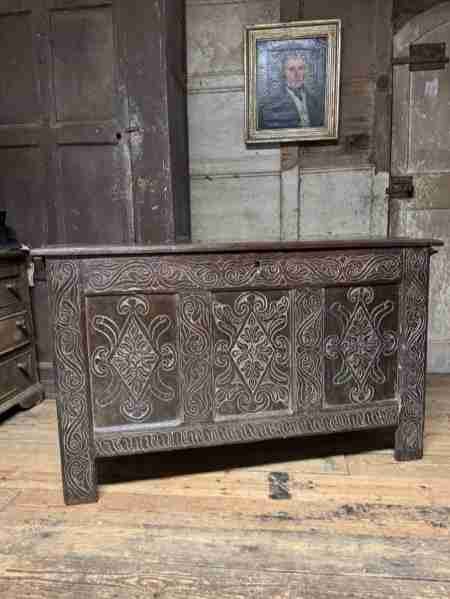
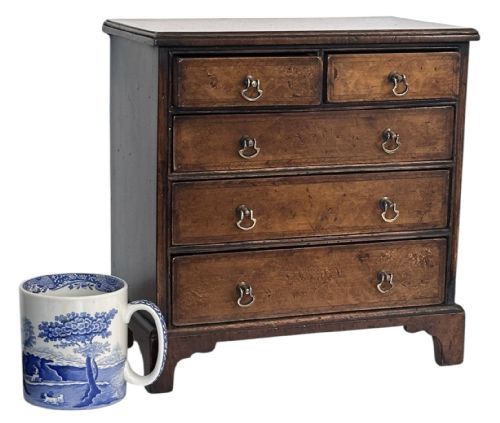
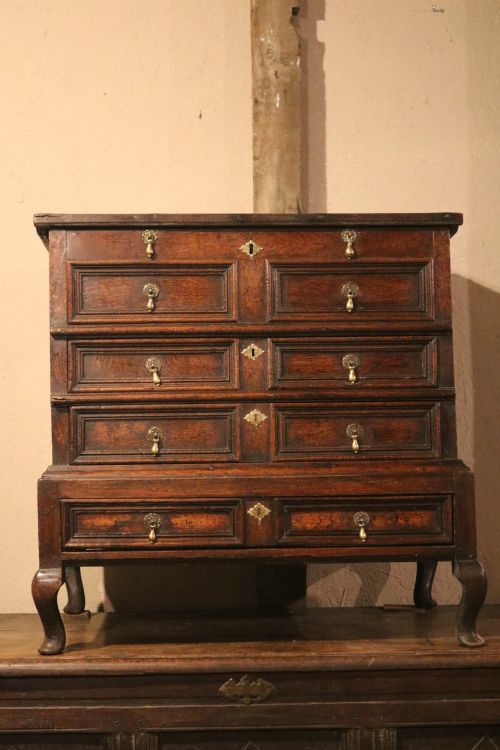
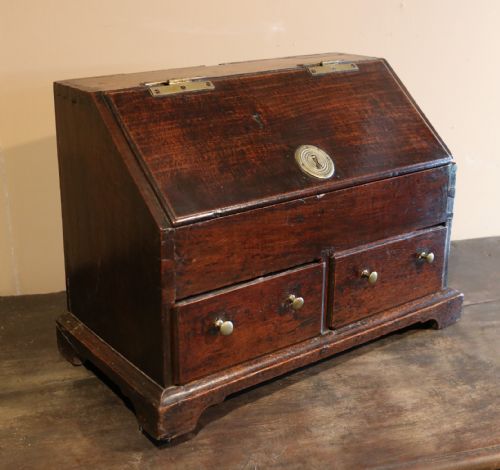
These dark oak apprentice chests are small-scale pieces of furniture spanning several centuries, prized for their traditional joinery and diminutive proportions.
Dark Oak Apprentice Chest
The selection includes regional pieces such as Welsh examples from South Wales and Glamorgan, alongside English and Dutch items. Forms vary from simple box coffers to sophisticated miniature tallboys and kneehole desks. Oak remains the predominant wood, frequently paired with secondary timbers like pine.
Many items date from the Georgian and Victorian eras, while others trace back to the seventeenth century. Their diminutive size served various historic purposes, from cabinetmaker demonstration pieces to desktop storage for valuables.
What varies in quality
The standard of execution in miniature furniture depends upon the fidelity of proportion and the sophistication of the joinery. Finer pieces demonstrate the same rigorous construction methods found in full-scale cabinetmaking, with precisely fitted drawers and clean interior surfaces.
Materials and surface patination heavily influence the character of each piece. Age-related wear, timber selection, and the crispness of any carved ornament separate standard workshop production from exceptional examples.
Dark Oak Apprentice Chest Retail Price Guide 2026
Typical asking prices for dark oak apprentice chest among the pieces listed under this phrase on Sellingantiques today, from the lower quarter to the upper quarter. They describe what is for sale here now, not the wider market.
Listings feature oak, pine, walnut, and mahogany, spanning periods from the seventeenth century through the Victorian era.
The Dark Oak Apprentice Chest Glossary
- Apprentice chest
- A small-scale piece of furniture traditionally attributed to young craftsmen demonstrating their mastery of joinery techniques. These pieces replicate full-sized chests of drawers or coffers in miniature.
- Coffer
- A traditional chest with a hinged lid, often constructed using heavy frame-and-panel techniques. Early examples frequently served for storage in domestic settings.
- Tallboy
- A piece of furniture consisting of one chest stacked upon another, creating a tall storage unit. Miniature versions scale down this imposing Georgian form for tabletop or cabinet use.
- Kneehole desk
- A writing desk featuring a central recess for the user's knees, flanked by pedestals of small drawers. Miniature variants replicate this complex configuration on a reduced scale.
- Mule chest
- A storage chest featuring one or more drawers built into the base beneath the main compartment. This form bridges the gap between the simple coffer and the chest of drawers.
Dark Oak Apprentice Chest: Frequently Asked Questions
What is an apprentice chest?
An apprentice chest is a small-scale model of a larger furniture form, traditionally made by trainees to demonstrate their woodworking skills to guild masters.
These pieces faithfully replicate the joinery and design of full-sized furniture in miniature proportions.
How were these chests used?
Historically, miniature chests served multiple functions ranging from salesman samples and apprentice demonstration pieces to desktop storage for jewellery, documents, or spices.
Their compact size allowed wealthy households to store valuable items securely on tabletops or inside larger cabinets.
How do I date an oak chest?
Dating relies upon examining construction methods, timber characteristics, and style markers such as hardware and drawer dovetailing.
Earlier pieces from the seventeenth and early eighteenth centuries display hand-split oak and pegged joints, whereas later Victorian examples exhibit machine-sawn components.
Where were these pieces made?
Miniature chests were produced across Britain and continental Europe, with notable regional variants originating from workshops in England, Wales, and the Netherlands.
Local timber availability and distinct regional joinery traditions often define the geographic origin of each piece.