


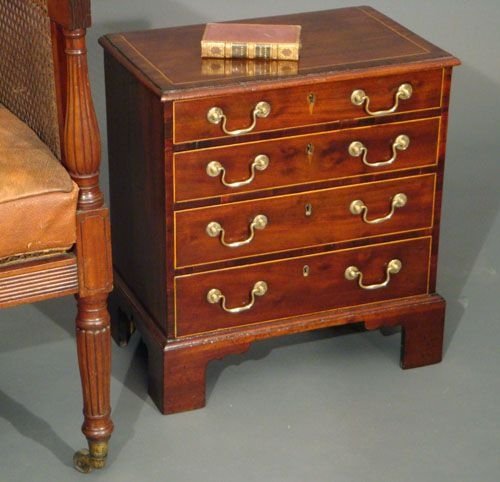


Brass Handle Jewellery Chest
A brass handle jewellery chest is a compact, fitted receptacle designed for precious trinkets, combining fine cabinetmaking with secure metalwork.
Brass Handle Jewellery Chest
A brass handle jewellery chest takes several forms across the inventory, ranging from dedicated jewellery boxes and caskets to miniature chests of drawers and apprentice pieces. Buyers hunting for a brass handle jewellery chest will encounter compact wooden boxes fitted with drawers, compartments, and secure metal mounts.
The pieces span multiple periods from the eighteenth century through to the early twentieth century, taking stylistic cues from Georgian, Regency, Victorian, and Edwardian eras. Forms such as miniature chests of drawers, travelling boxes, and strong boxes sit alongside traditional workboxes and caskets.
Origins vary across the selections, incorporating English craftsmanship alongside Dutch and Chinese examples in woods such as mahogany, walnut, and burr walnut. Leather bindings, silk linings, and bronze or brass hardware complete the construction of these small scale containers.
How they were made
Cabinetmakers constructed these chests using dense timbers including mahogany, walnut, burr walnut, and exotic hongmu, often framing the bodies with precise joinery. Surfaces were polished to highlight the natural grain of the wood, while specialised examples incorporated leather bindings or textured crocodile cases.
Functional metal hardware defines the category, utilising brass and bronze for carrying handles, hinges, escutcheons, and secret locking mechanisms. Interiors were lined with fabrics such as silk to protect delicate contents, accompanied by fitted compartments and internal drawers.
Brass Handle Jewellery Chest Retail Price Guide 2026
Typical asking prices for brass handle jewellery chest among the pieces listed under this phrase on Sellingantiques today, from the lower quarter to the upper quarter. They describe what is for sale here now, not the wider market.
A crocodile hide case hides beneath the brass handles, proving that Victorians had a wild side for storage.
What varies in quality
Quality rests upon the crispness of the cabinetwork and the integration of the brass hardware into the wooden body. Finer chests display harmonious proportions, tight joinery, and well-fitted internal drawers or secret compartments that operate smoothly.
The choice of primary timber and secondary materials dictates the tier of the piece, with burr walnut, figured mahogany, and heavy bronze or brass mounts marking superior production. Interiors lined in silk and fitted with clever organisational layouts distinguish the more ambitious commissions from simpler utility boxes.
The Brass Handle Jewellery Chest Glossary
- Apprentice piece
- A small scale item of furniture created by a craftsman to demonstrate skill and secure entry into a trade guild. These miniature chests replicate full sized furniture with exact proportions.
- Hongmu
- A dense, dark hardwood used in traditional Chinese cabinetmaking. It provides a heavy, durable structure for travelling chests.
- Escutcheon
- A protective plate surrounding a keyhole, usually fashioned from brass. It guards the wood from wear around the lock.
- Workbox
- A container fitted for sewing and small crafting tools. They often feature internal trays and compartments akin to jewellery chests.
- Strong box
- A secure metal and wood container designed for valuables. These incorporate heavy brass or bronze hardware and concealed locking mechanisms.
Brass Handle Jewellery Chest: Frequently Asked Questions
What were brass handle jewellery chests used for?
These chests served to store personal valuables, rings, necklaces, and delicate accessories securely. The sturdy brass handles allowed owners to transport their most prized possessions between rooms or during travel.
Interior compartments kept items separated and organised, preventing damage to fragile trinkets. Wealthy households relied on them as portable safes for daily adornments.
How can I tell a Georgian chest from a Victorian one?
Georgian examples tend to feature restrained classical proportions, straight lines, and simpler mahogany or walnut surfaces. Their brass hardware is typically functional and understated, focusing on clean construction.
Victorian pieces often incorporate more elaborate details, such as burr walnut veneers, complex internal trays, and heavier cast brass mounts. Miniature furniture forms also gained popularity during the nineteenth century.
Are these chests meant for daily use today?
Yes, many collectors and buyers use them to house modern jewellery, watches, or small keepsakes. Their velvet or silk lined compartments provide safe resting places for precious items.
Placing them on dressing tables or desks allows them to function as practical storage while adding period character to a room.
What woods are commonly found in these boxes?
Mahogany and walnut appear frequently across eighteenth and nineteenth century examples. Cabinetmakers valued these timbers for their stability and rich grain patterns.
More decorative pieces utilise burr walnut for figured surface patterns, while Asian examples employ dense hardwoods like hongmu. Brass and leather often supplement the primary wood structure.
Why do some chests have secret drawers?
Concealed compartments provided an extra layer of security for high value items, important papers, or currency. Makers designed hidden catches and sliding panels that only became visible when specific parts of the box were manipulated.
These clever mechanisms showcase the skill of the cabinetmaker and add an element of intrigue to the piece.