





Dark Navy Wool Carpet
A dark navy wool carpet anchors a room with deep indigo and midnight tones woven in wool and cotton.
Dark Navy Wool Carpet
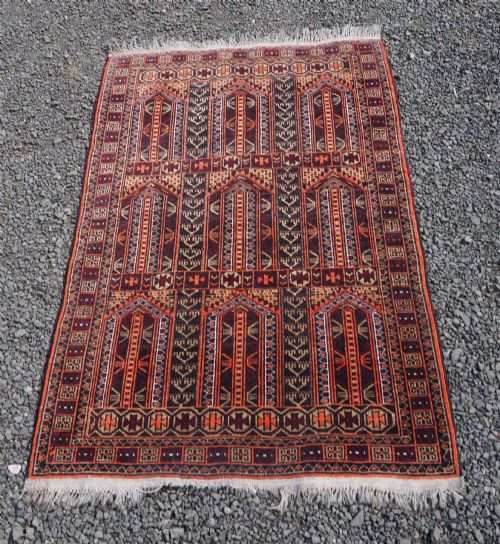
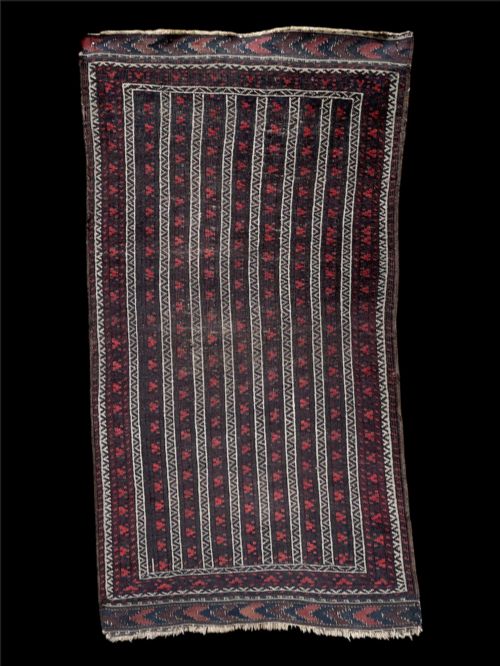
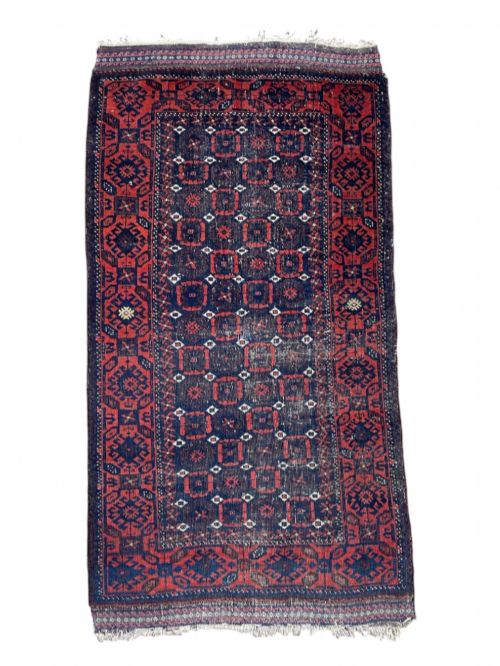
A dark navy wool carpet encompasses antique tribal and village rugs spanning from the late nineteenth century into the twentieth century, bringing deep indigo fields into domestic spaces. These pieces emerge from Persian, Caucasian, Anatolian, and Afghan weaving traditions, taking the form of area rugs, narrow hallway runners, and prayer rugs.
The selections encountered here most frequently include Baluch tribal pieces, alongside larger village carpets from centres such as Mahal, Malayer, and Tabriz. Their formats range from compact village formats to substantial room-sized carpets defined by dark wool foundations.
Materials and construction
These carpets rely upon durable wool for the pile and foundation structures, frequently paired with cotton for warps and wefts in regional village workshops and nomadic encampments.
Weavers knot the wool densely by hand onto supportive warps, creating resilient surfaces designed to endure generations of foot traffic.
Quality and execution
The distinction between ordinary and superior pieces rests upon the precision of the weave and the clarity of the underlying tribal or village design motifs.
Finer examples demonstrate tighter knotting, balanced proportions across runners or area formats, and carefully rendered geometric or floral patterns within the dark field.
The Dark Navy Wool Carpet Glossary
- Mihrab
- A niche design found on prayer rugs, indicating the direction of prayer. This architectural arch motif often frames the upper field of the carpet.
- Herati pattern
- A recurring floral motif composed of a central rosette enclosed by leaves within a lattice framework. It appears frequently across Persian village carpets.
- Runner
- A long, narrow carpet format designed specifically for hallways, corridors, or staircases. These pieces measure significantly longer than they are wide.
- Warp
- The stationary vertical threads stretched across the loom that form the structural skeleton of the carpet. The pile knots are tied directly around these parallel foundation strands.
- Weft
- The horizontal threads passed across the warps between rows of knots to secure the pile firmly in place. This technique compacts the structure row by row.
Dark Navy Wool Carpet: Frequently Asked Questions
How do I care for a wool carpet?
Vacuum the rug regularly with a suction-only attachment to prevent dust accumulation within the pile. Avoid rotating beater bars that can pull at the hand-knotted wool fibres.
Professional cleaning by specialists in antique textiles is recommended every few years. Keep the carpet out of direct, harsh sunlight to protect the natural dyes.
Where were these carpets made?
The pieces originate across regions including Persia, the Caucasus, Anatolia, and Afghanistan. Tribal groups and village workshops produced them for domestic use and local markets.
Nomadic weavers worked on portable horizontal looms, while settled village communities utilised upright wooden frames in regional centres.
How do I identify the age of a rug?
Age is determined by examining material wear, dye palettes, structural materials, and stylistic conventions characteristic of specific decades. Natural wool characteristics and regional motifs provide reliable indicators of the period.
Examining the tightness of the weave and the consistency of the hand-spun wool helps distinguish nineteenth-century examples from later twentieth-century productions.