
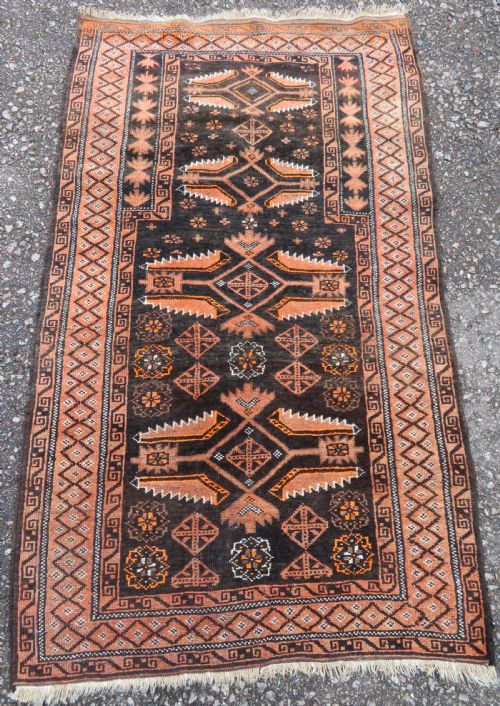


Antique Balouch Rug
An antique balouch rug brings nomadic woolwork into a room, offering deep tones and geometric patterns woven by tribal makers.
Antique Balouch Rug
An antique balouch rug is a tribal textile originating from nomadic and village weavers across regions spanning Afghanistan, Khorasan, and Sistan. These pieces encompass various forms on this page, including floor rugs, hallway runners, prayer rugs, and practical storage or grain bags.
The aesthetic is rooted in tribal and nomadic traditions, frequently displaying repeated guls, Herati motifs, or Mina Khani variant designs. Pieces date from the nineteenth century through the early decades of the twentieth century, reflecting enduring village weaving practices.
Materials and construction methods
Construction relies primarily on wool and cotton, utilised for pile and foundation yarns to create durable, dense floor coverings and utilitarian bags. Weavers employ hand-spun wool for the pile, yielding rich textures and varied natural coloration.
Techniques range from knotted pile carpets to flatwoven storage pieces, including banded weft work designs and plain weave backs on bags. These methods reflect traditional nomadic craftsmanship passed down through generations of tribal artisans.
Forms include hallway runners, prayer rugs, and storage bags featuring Sistan and Salar Khani attributions.
Distinguishing quality factors
Quality rests in the precision of the weave, the depth and integrity of the wool pile, and the retention of original structural elements like backs and edges. Superior examples display crisp execution of complex motifs such as large guls or Herati patterns.
The preservation of original format - whether a complete storage bag with its banded weft work or a runner with intact borders - defines the standing of a piece. Finer wool selection and balanced dyeing contribute to the visual resonance of the work.
The Antique Balouch Rug Glossary
- Gul
- A medallion motif commonly found in tribal weavings. It often repeats across the field of the rug in structured rows.
- Herati
- A repeating floral pattern featuring a central rosette enclosed by leaves. This classic design appears frequently in Khorasan and Baluch pieces.
- Prayer rug
- A small rug featuring a mihrab or niche design used historically for daily prayers. These textiles are typically oriented in a single direction.
- Runner
- A long, narrow carpet format designed for hallways or passages. Examples in this category provide linear tribal patterns for specific architectural spaces.
- Sofreh
- A spreading cloth or flatweave used for dining or food preparation. These utilitarian textiles share design vocabulary with regional rugs.
Antique Balouch Rug: Frequently Asked Questions
Can I use these rugs on heated floors?
Wool and cotton textiles tolerate moderate underfloor heating provided the temperature remains stable. Use a breathable, non-slip underlay to allow air circulation beneath the piece.
Excessive direct heat can dry out natural wool fibres over time. Monitoring the microclimate beneath the rug ensures the longevity of the foundation.
How do I identify a prayer rug?
Prayer rugs feature a distinct architectural arch or mihrab design at one end. This focal point directs the placement of the textile during ritual use.
The field often contains directional motifs pointing toward the niche. These formats are generally smaller and proportioned for individual use.
What is a storage bag used for?
Tribal storage and grain bags were originally functional containers for household possessions and provisions. Nomadic groups utilised them for transport and domestic organisation within tents.
Today, collectors appreciate these pieces as intact examples of flatweave and pile construction. Many retain their original plain weave backs and banded weft work.