
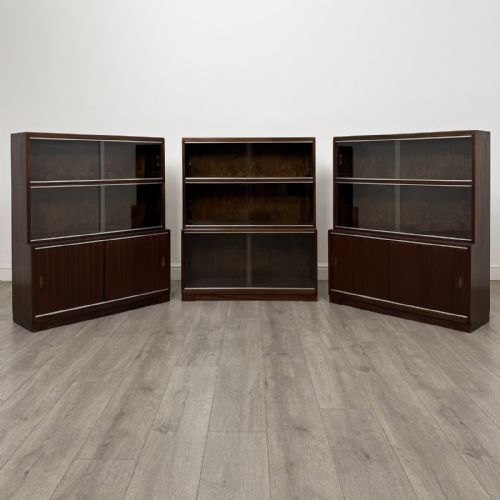
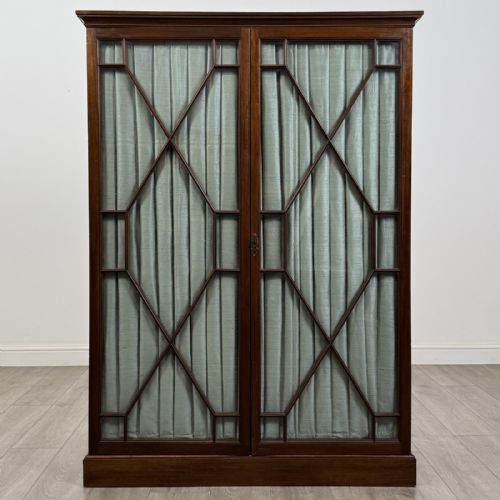
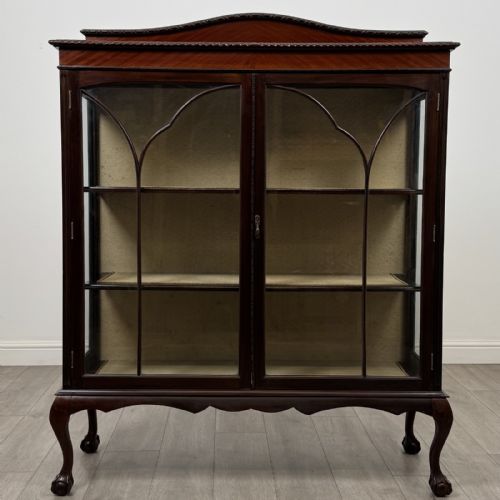
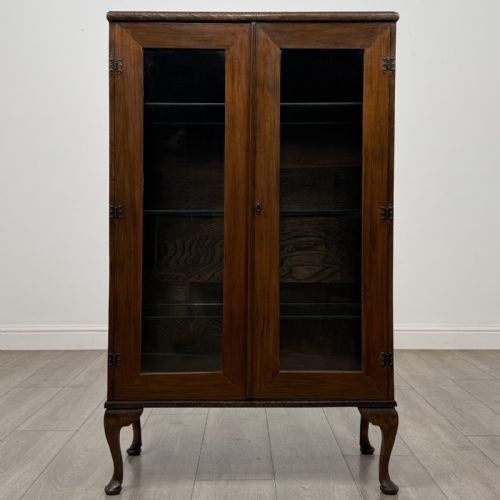
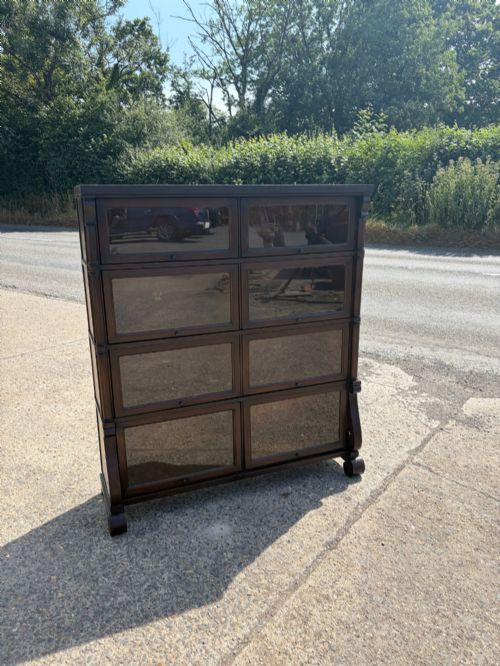
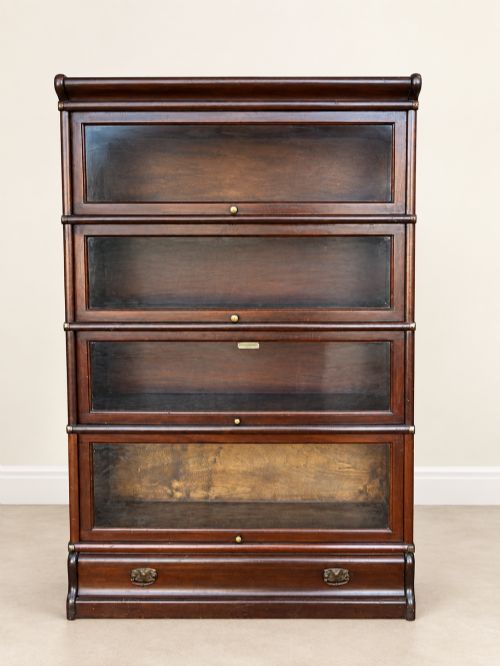
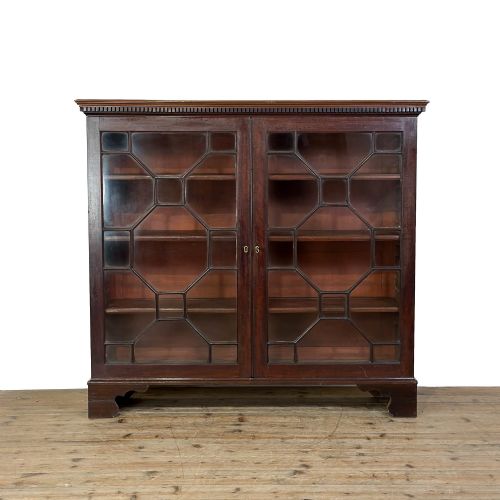
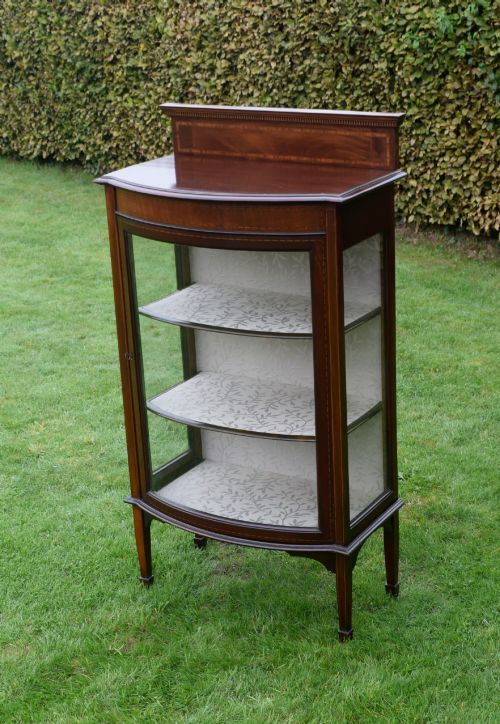
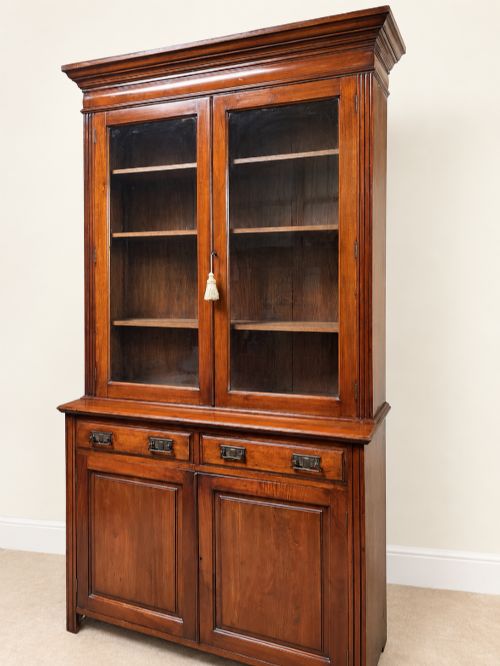
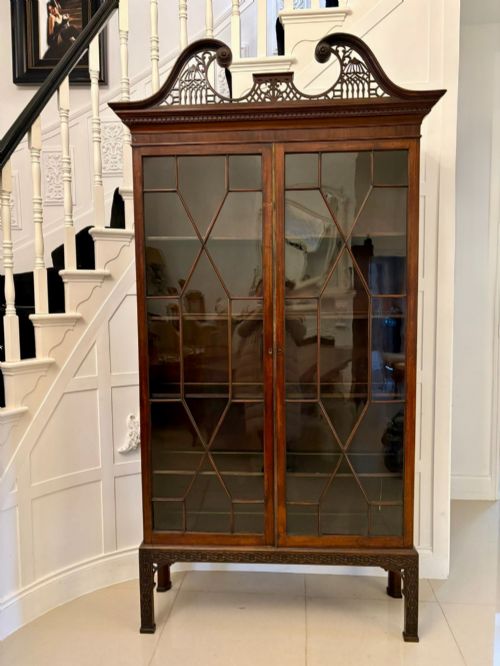
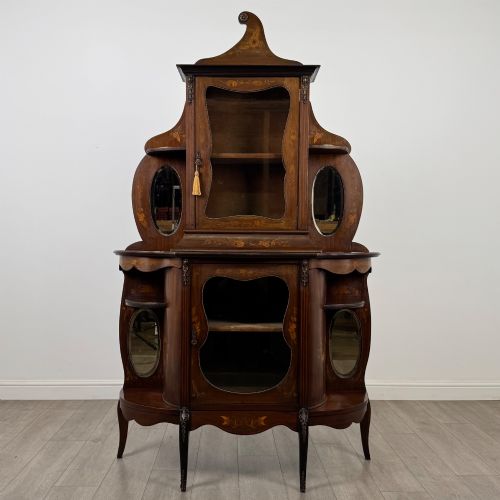
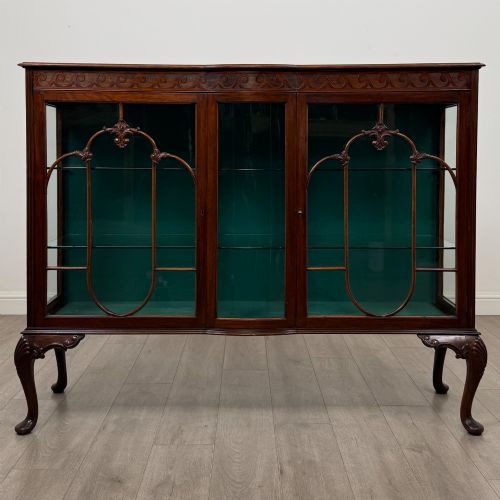
Dark Mahogany Glass Cabinet
A dark mahogany glass cabinet brings deep timber tones and transparent display to a room, uniting utility with formal presentation.
Dark Mahogany Glass Cabinet
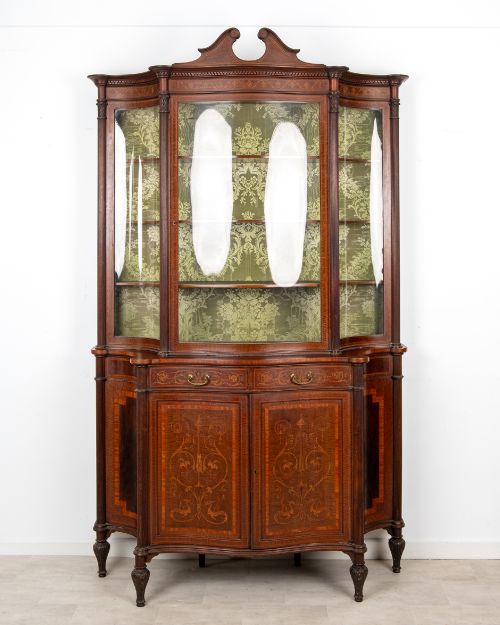
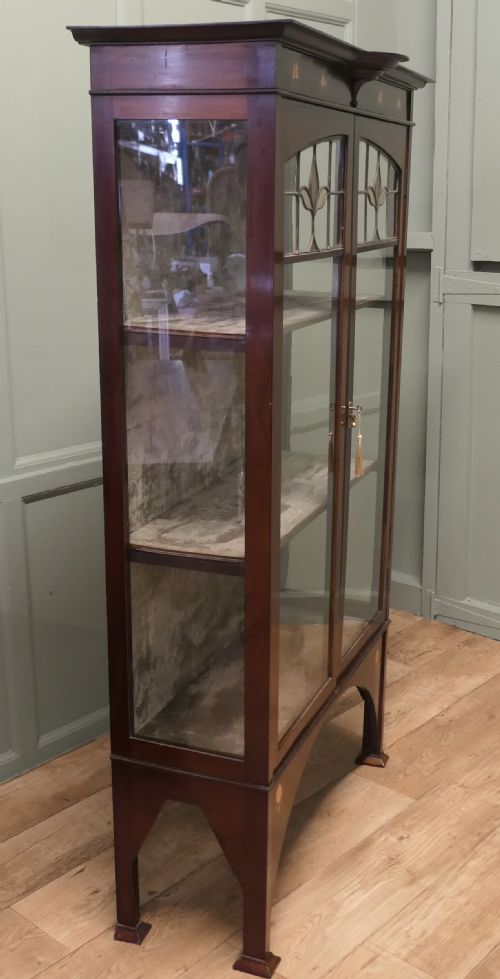
A dark mahogany glass cabinet serves to house books, china or curiosities behind transparent doors while protecting them from dust. These pieces span periods from the Georgian era through the Victorian age and into the Edwardian years.
The objects appearing most frequently on this page take the form of tall bookcases, wall-hanging corner units and freestanding display cabinets. Makers constructed them for parlours, libraries and drawing rooms where display carried social weight.
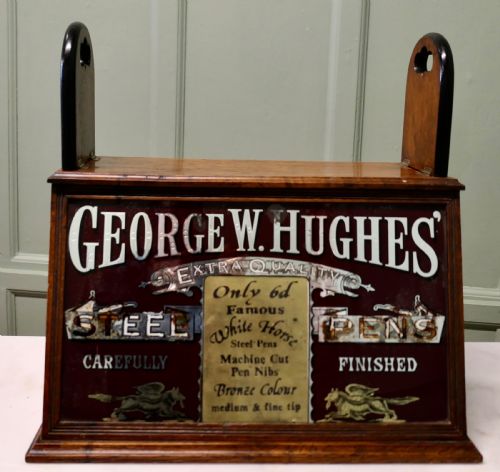
Buyers encounter regional variations including English vernacular pieces alongside French imports and specialised shop display units. Each format reflects the domestic or commercial habits of its original period.
Materials and construction methods
Cabinet makers relied primarily on solid mahogany and mahogany veneers laid over secondary timbers, finished with dark polishes that accentuated the dense grain. Glazing typically involved individual glass panes held in place by wooden astragals or lead cames.
Details frequently incorporated brass hardware, fabric-lined interiors and subtle satinwood inlay to provide contrast against the dark wood body. Carved decorative motifs appeared on cornices, pilasters and base plinths in accordance with prevailing revival styles.
Several cabinets retain their original silk fabric linings, preserving dust motes settled during the reign of Edward VII.
Factors influencing quality
The distinction between standard utility storage and superior cabinet work rests upon the selection of timber and the precision of the joinery. Fine examples display carefully matched veneer grains, tight dovetail joints in the drawers and crisp hand-carved mouldings rather than cast plaster ornaments.
Jas Shoolbred·Wylie and Lochhead·James Winter and Sons·Globe Wernicke
The Dark Mahogany Glass Cabinet Glossary
- Astragal glazed
- A method of framing glass doors with narrow moulded wooden strips that divide the opening into smaller panes. This technique is common in Georgian and Victorian bookcases.
- Vitrine
- A glass-fronted display cabinet specifically designed for the presentation of porcelain, silver or small objects of vertu. These pieces often feature glass on multiple sides.
- Bijouterie table
- A glass-topped display table intended for jewellery and small collectables, raised on slender legs. Edwardian examples often incorporate satinwood inlay.
- Globe Wernicke
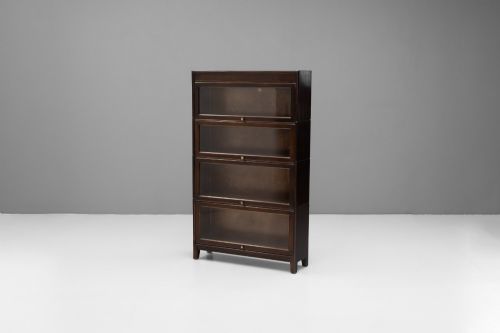
- A modular stacking bookcase system popular in the late nineteenth and early twentieth centuries. Individual glazed sections lift and slide inward on internal metal pivots.
- Bonheur du jour
- A light ladies writing desk usually featuring a small cabinet or shelving superstructure above the work surface. Edwardian versions frequently combine writing spaces with mirror backs.
Dark Mahogany Glass Cabinet: Frequently Asked Questions
How do I clean the glass?
Use a soft cloth dampened with a mild vinegar solution or specialised glass cleaner, applying it to the cloth rather than directly onto the glass to protect the surrounding mahogany timber.
Ensure moisture does not seep beneath the wooden astragals or into vintage joints, as accumulated dampness can cause the historic polish to cloud.
Can shelves be adjusted?
Many Victorian and Edwardian bookcases feature fixed wooden shelves supported by fixed battens or traditional wooden notches rather than modern metal peg systems.
Alterations to shelf heights generally require professional intervention to preserve the structural integrity of the interior lining.
Where should I place it?
Position the cabinet away from direct sunlight and heat sources to prevent the mahogany timber from drying out, fading or developing surface splits over time.
Ensure the floor beneath is level so the heavy glazed doors hang true within their frames and latch correctly without binding.
How do I identify the period?
Examine the construction methods, secondary woods inside the drawers, and the style of the carving or inlay work against known design eras from Georgian to Edwardian.
Cabinet hardware, such as brass locks and hinges, also provides reliable physical evidence regarding the date of manufacture.