


Dark Mahogany Etagere
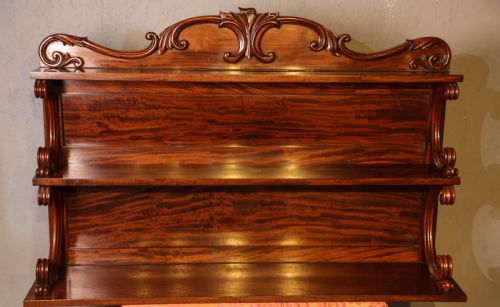
A dark mahogany etagere brings tiered display space and deep timber grain to a room, offering both practical surface area and architectural presence.
What a dark mahogany etagere is
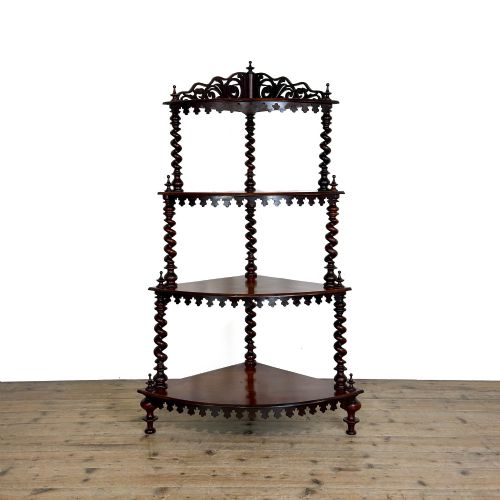
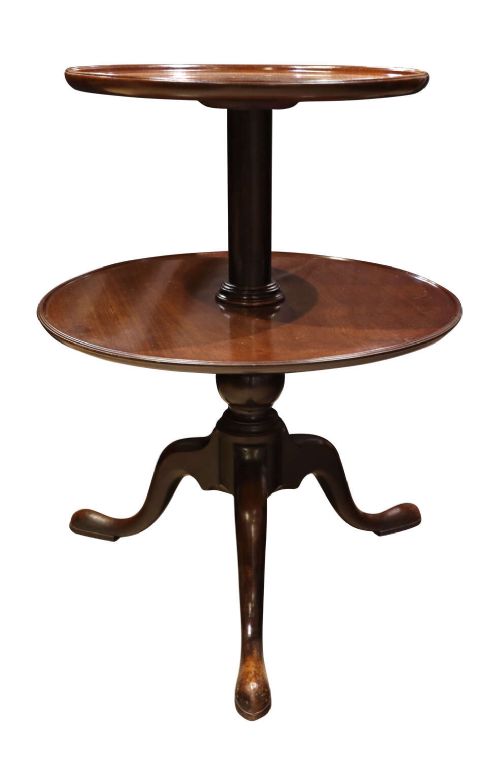
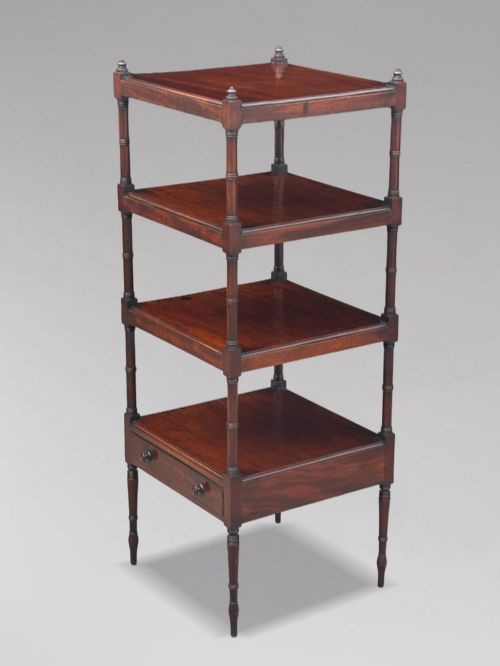
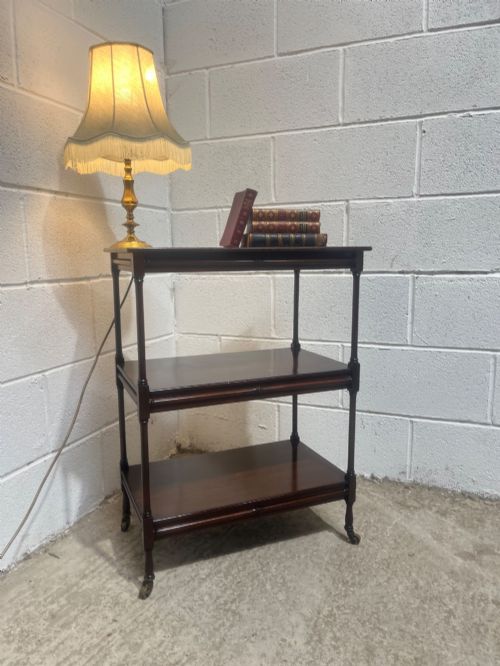
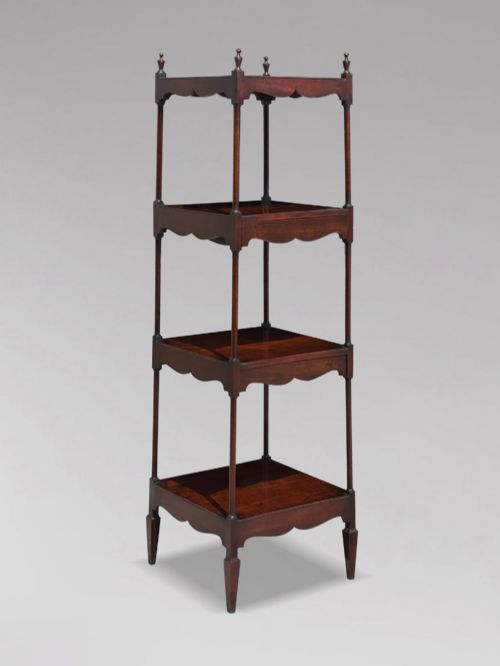
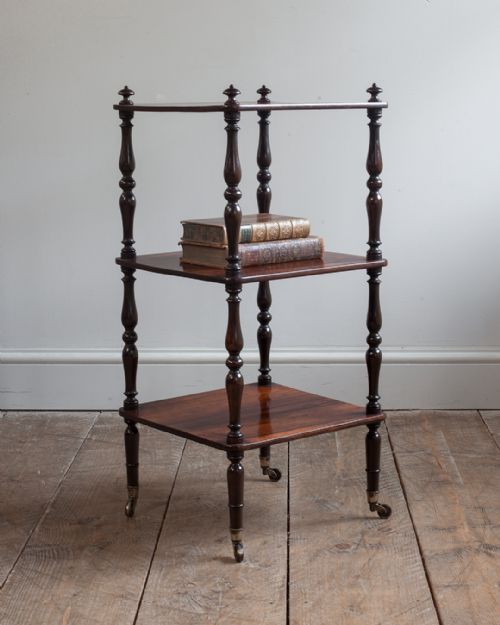
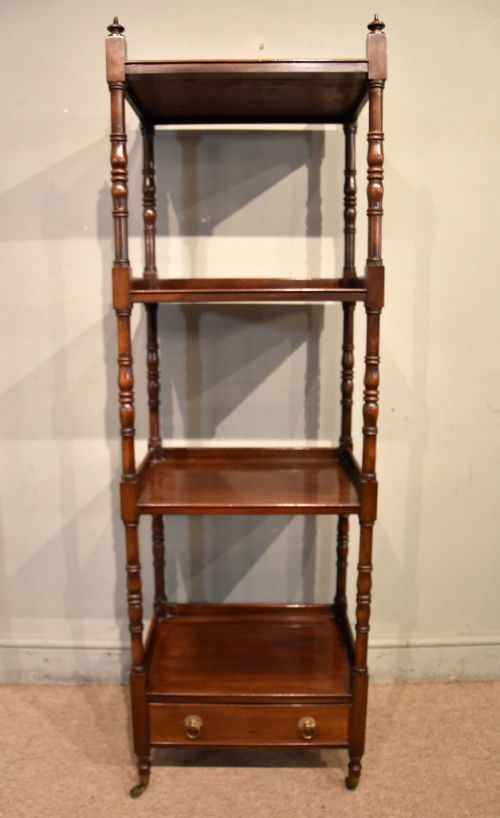
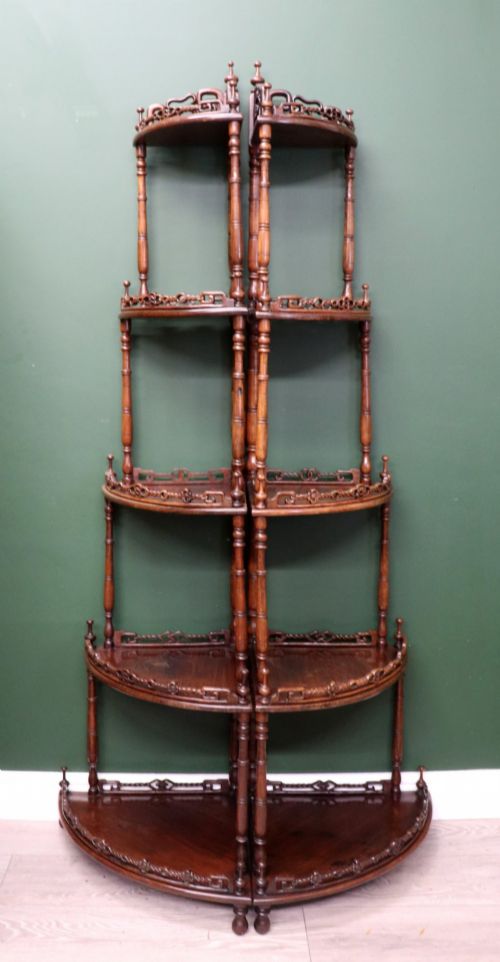
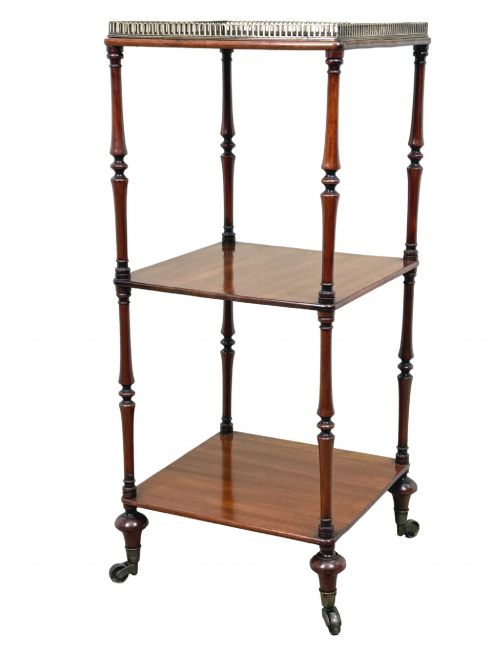
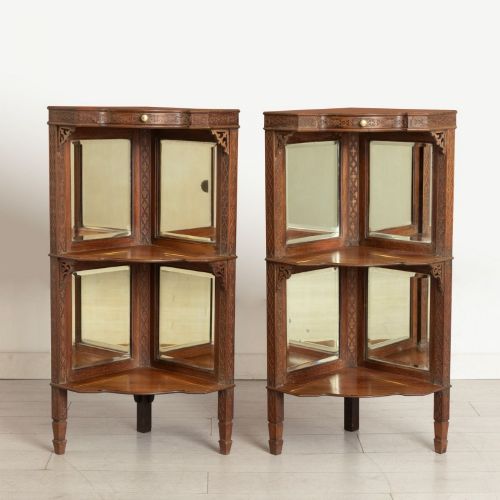
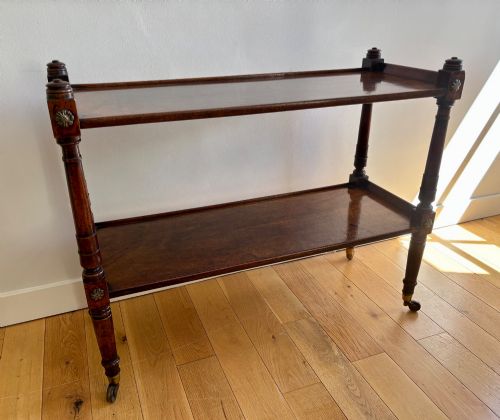
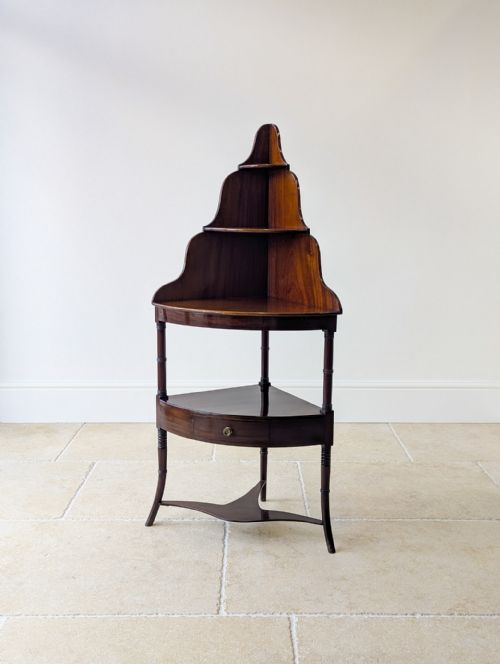
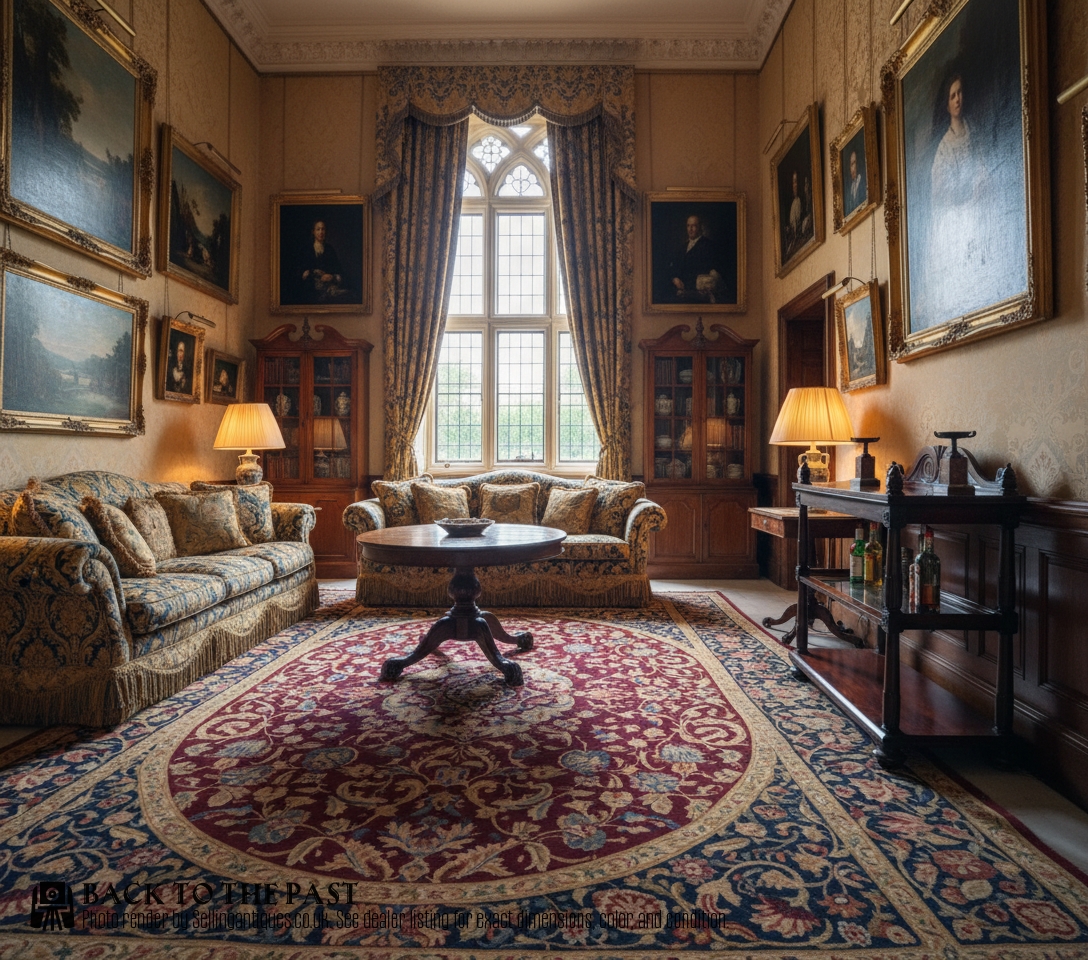
When you search for a dark mahogany etagere, you are looking at multi-tiered open furniture designed for display and storage, ranging from George III designs attributed to Gillows around seventeen ninety to Edwardian inlaid circular models. These pieces provide graduated open shelves supported by uprights, functioning equally well as side tables, buffets, or distinct etageres and whatnots.
On this page, you are most likely to meet pieces spanning the eighteenth century, the Regency and George IV periods, and the Edwardian era. Forms vary from tapering tiers to unusual buffet designs and circular three-tier structures, reflecting the evolving domestic needs for display across these periods.
How they were made
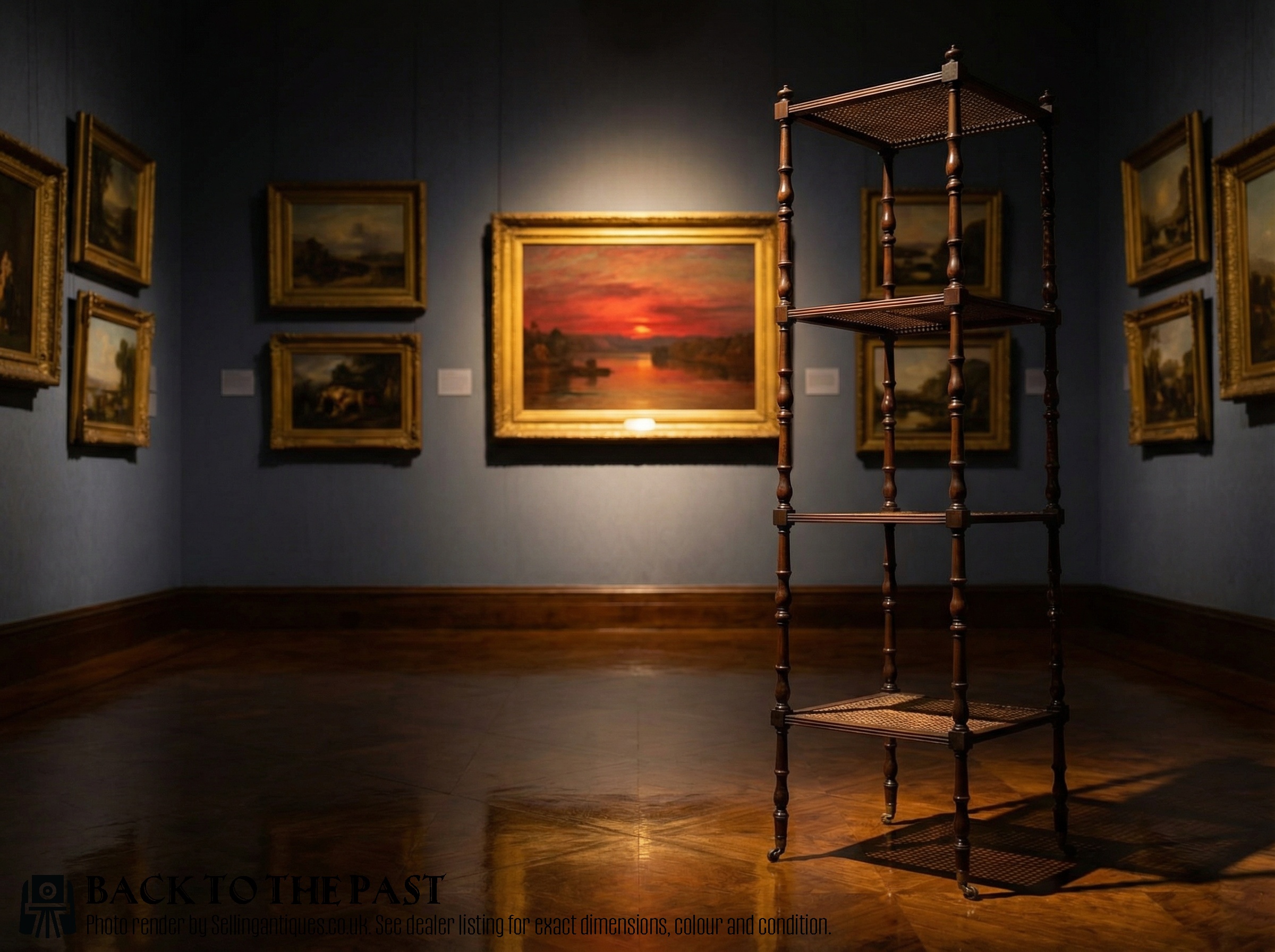
Construction relies heavily on rich mahogany, complemented in some examples by satinwood inlay, cane, brass, and glass. Cabinetmakers utilised these durable timbers to build sturdy upright supports and fine tiered platforms capable of holding decorative objects without losing structural grace.
Joinery techniques and decorative elements correspond to their specific eras, from late eighteenth-century craftsmanship associated with Gillows to Edwardian inlay work. The incorporation of brass details and glass elements adds functional refinement to the timber framework.
Retail Price Guide 2026
Typical UK retail prices for dark mahogany etagere, calculated from the Sellingantiques database of over a million retail prices indexed since 2003. This retail price guide relies exclusively on Sellingantiques data; no external sources or auction records are used, so the figures do not describe the wider market.
The site listings feature mahogany, cane, brass, satinwood inlay, and glass across periods from the eighteenth century through the Edwardian era.
What varies in quality
Quality in these pieces rests upon the crispness of the mahogany grain, the precision of any satinwood inlay, and the integrity of the tiered structure. Pieces attributed to distinguished workshops display superior proportion and careful selection of timber.
The sophistication of the design, whether a tapering form, a circular three-tier arrangement, or an unusual buffet layout, dictates the level of craftsmanship involved. Finer examples maintain architectural balance across all tiers while preserving the natural depth of the dark mahogany.
The Dark Mahogany Etagere Glossary
- Etagere
- A piece of furniture consisting of a set of open shelves for displaying small objects or ornaments. These tiered stands emerged to serve fashionable display requirements in domestic interiors.
- Whatnot
- A nineteenth-century term for an open multi-shelved piece of furniture used for books or ornaments. It is frequently grouped alongside etageres in period descriptions.
- Satinwood inlay
- A decorative technique using contrasting light satinwood set into the darker mahogany surface. This detail often defines the refined aesthetic of Edwardian pieces.
- Tapering form
- A structural silhouette where the upright supports or shelves narrow toward the top. This design creates a lighter visual balance in multi-tiered furniture.
- George III
- The stylistic period spanning from seventeen sixty to eighteen twenty, known for restrained classical elegance and high-quality cabinetmaking.
Frequently Asked Questions
What is a dark mahogany etagere used for?
These tiered pieces were traditionally designed to display decorative objects, porcelain, and small books in principal rooms. Their open shelves allow items to be viewed from multiple angles.
Today, they serve a similar purpose in domestic interiors, functioning as elegant side tables or corner display units that maximise vertical space without heavy timber bulk.
How do I identify a Regency etagere?
Regency pieces often display classical restraint, clean lines, and architectural proportions influenced by ancient Greek and Roman design. They frequently utilise solid mahogany with minimal but effective detailing.
Examining the construction of the tiers and the joinery helps distinguish pieces from this period compared to later Edwardian interpretations.
Are these pieces stable enough for daily use?
The multi-tiered construction of these stands is engineered to distribute weight across the upright supports and shelves. Solid mahogany provides the necessary strength for supporting everyday decorative items.
Placing heavier objects on the lowest tier helps maintain overall balance and structural security for older examples.
How do Edwardian etageres differ from eighteenth-century ones?
Edwardian versions often incorporate lighter decorative touches such as satinwood inlay and circular tier arrangements. They reflect the revival styles popular at the turn of the twentieth century.
Earlier eighteenth-century examples, such as those attributed to Gillows, focus more on strict architectural proportion and the natural figuring of the mahogany timber.