


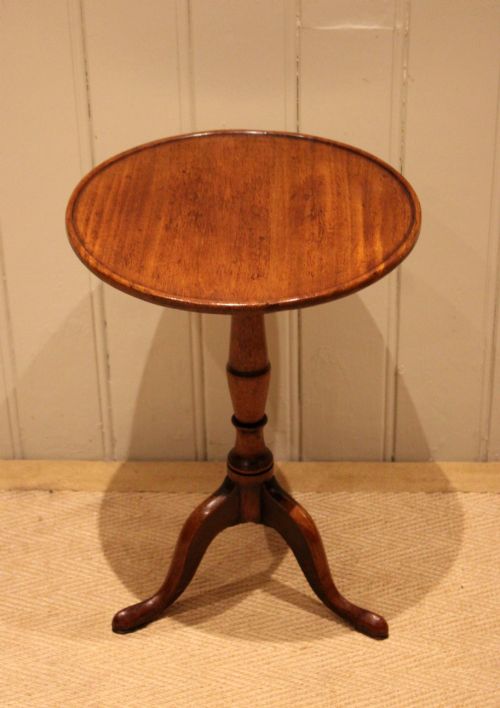
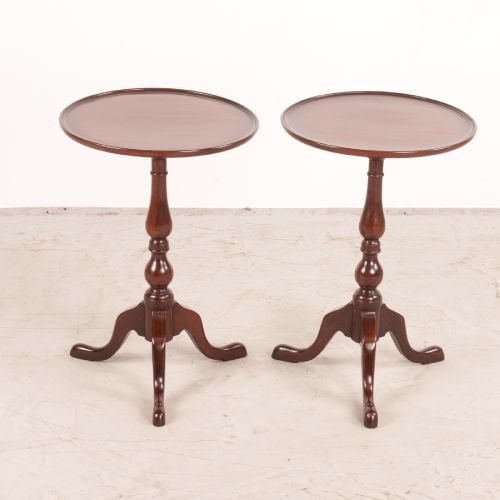
Circular Lamp Table
A circular lamp table provides a steady surface for low-level lighting while anchoring a seating arrangement with traditional form.

Circular Lamp Table
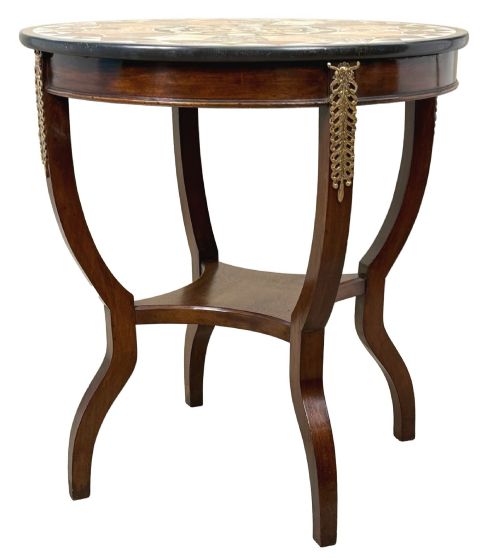
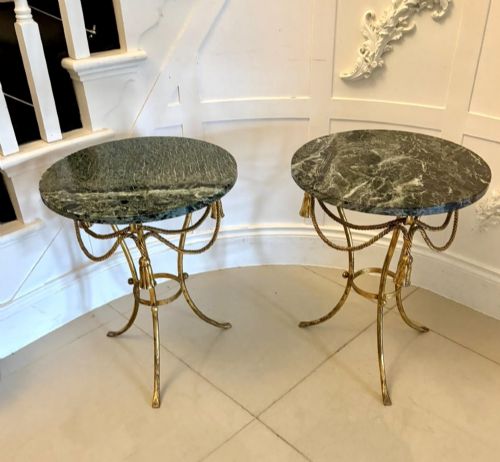
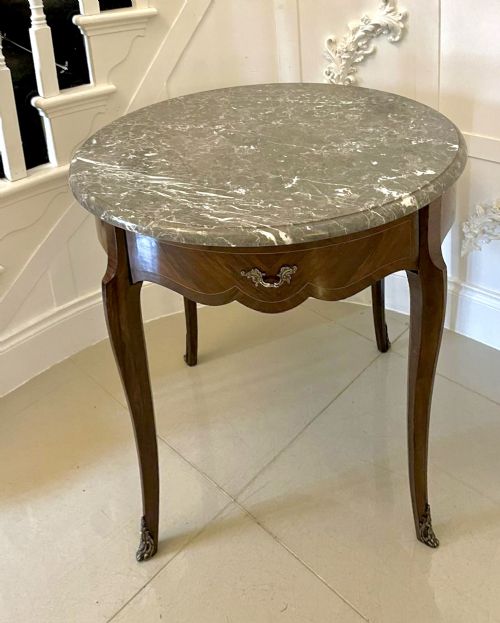
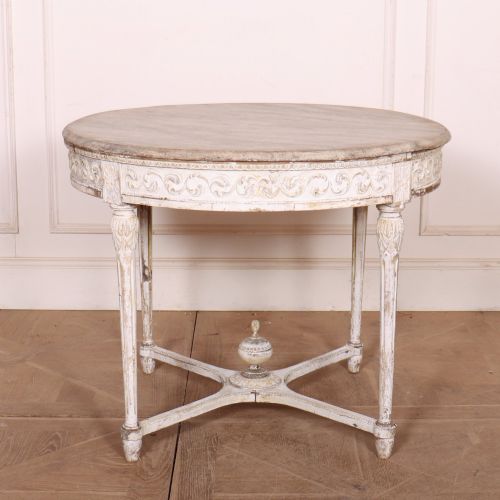
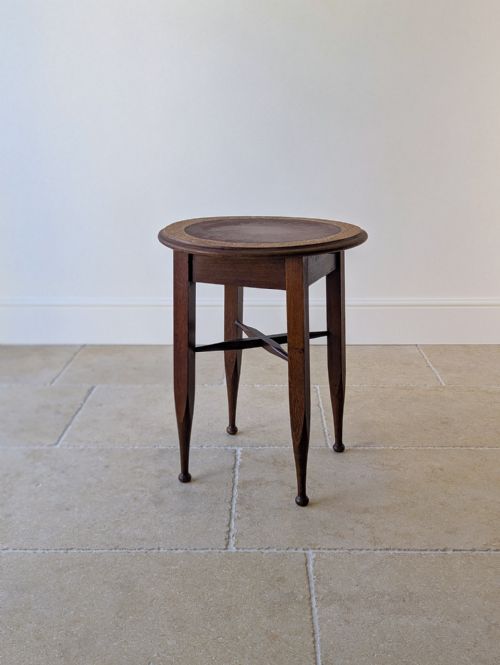
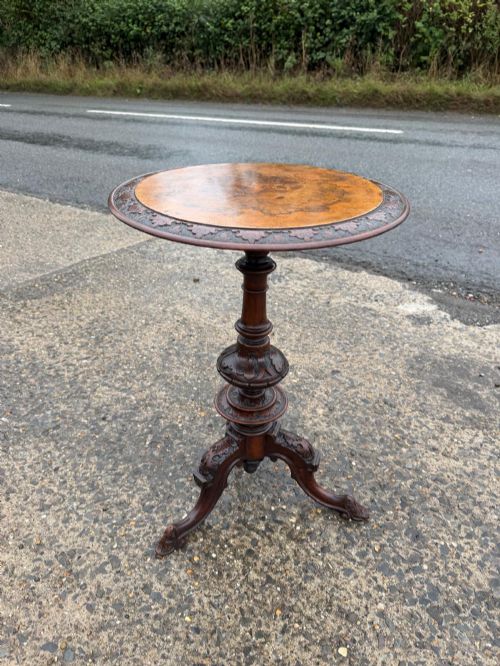
A circular lamp table is designed to support lighting within a room, appearing frequently in Victorian, Georgian, and Edwardian iterations across these records.
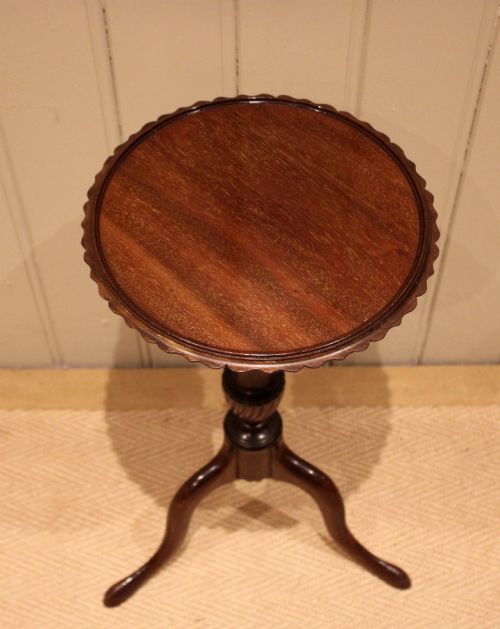
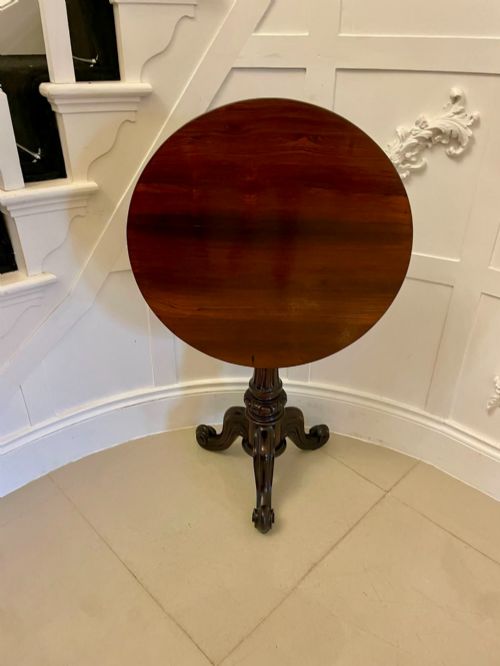
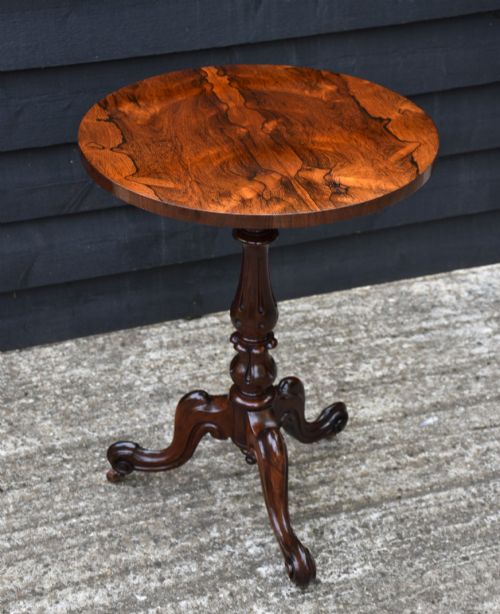
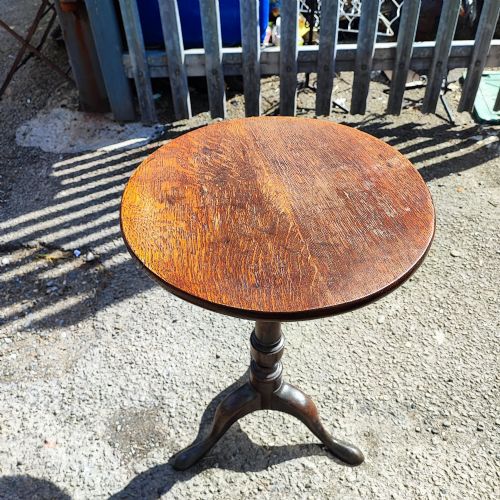
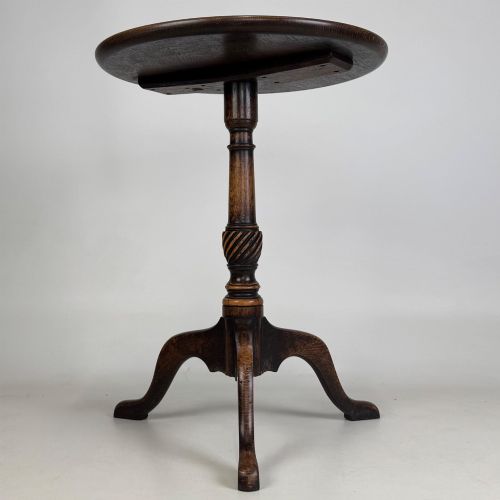
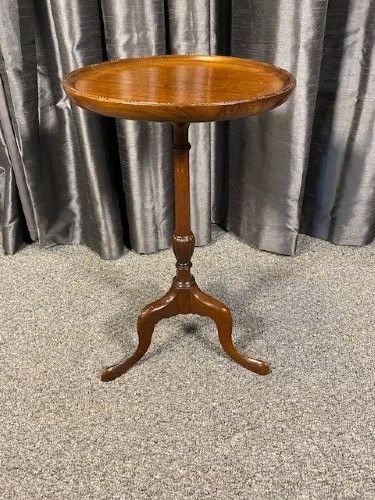
Makers often shaped these pieces as tripod tables, wine tables, or occasional tables, employing a central pedestal to maximise floor clearance.
Mahogany and rosewood dominate the standard forms, though walnut and oak examples appear alongside marble-topped specimens from the nineteenth century.
Materials and construction methods
Cabinetmakers utilised dense timbers like mahogany, walnut, and rosewood, often selecting figured veneers or burr walnut for the primary top.
Pedestal constructions frequently relied on a turned pillar supported by three outward-curving legs, sometimes fitted with tilt-top mechanisms.
Inlaid details incorporated lighter woods such as satinwood or boxwood, while heavier Italian and French pieces integrated inset marble slabs.
Circular Lamp Table Retail Price Guide 2026
Typical asking prices for circular lamp table among the pieces listed under this phrase on Sellingantiques today, from the lower quarter to the upper quarter. They describe what is for sale here now, not the wider market.
A 19th-century metamorphic table hides its secondary purpose behind clever joints, ready to transform when tea is served.
Assessing quality and execution
Superior examples display balanced proportions in the pedestal and crisp carving along the tripod base, avoiding clumsy joints or heavy timbers.
The choice of facing timber dictates the grade, with figured mahogany and marquetry-inlaid burr walnut sitting above plain secondary woods.
Original brass fittings, tight tilt mechanisms, and undamaged marble inserts separate standard production items from finer workshop pieces.
James Shoolbred
The Circular Lamp Table Glossary
- Tripod table
- A small stand supported by a central pillar and three legs. This configuration prevents wobbling on uneven floorboards.
- Tilt-top
- A table top hinged to the pedestal so it can pivot vertically. This allowed the furniture to be stored against a wall when not in use.
- Marquetry
- Decorative patterns formed by fitting contrasting veneers into a prepared wooden ground. Cabinetmakers used this technique on high-end tabletop surfaces.
- Snap top
- An alternative descriptor for a tilt-top table featuring a spring catch to secure the surface horizontally. It locks the board firmly in place during service.
- Specimen marble
- A tabletop composed of multiple geometric or figurative pieces of various coloured marbles. This mosaic work was popular on nineteenth-century centre tables.
Circular Lamp Table: Frequently Asked Questions
What is a circular lamp table used for?
These pieces were built to hold bedside or parlour lighting next to seating furniture without taking up excessive floor space.
Their compact footprints also accommodated small decorative items or drinking vessels in sitting rooms.
How do I identify a Victorian lamp table?
Victorian iterations typically feature dark timbers such as rosewood or mahogany with substantial turned central pedestals.
Many examples from this era incorporate carved tripod legs or burr walnut veneers on the round top.
What is the difference between a wine table and a lamp table?
Wine tables traditionally served port or tea and often included tilt-top mechanisms for storage.
Lamp tables share similar dimensions but generally remained fixed to support heavy table lighting.
Where should I place a tripod table in my home?
Their compact size makes them suitable as corner accents or bedside stands where space is limited.
They pair well beside armchairs to hold books or small lamps without obstructing walkways.