

Dark Mahogany Corner Cabinet
A dark mahogany corner cabinet makes effective use of unloved room junctions while displaying treasured possessions in deep timber tones.
Dark Mahogany Corner Cabinet
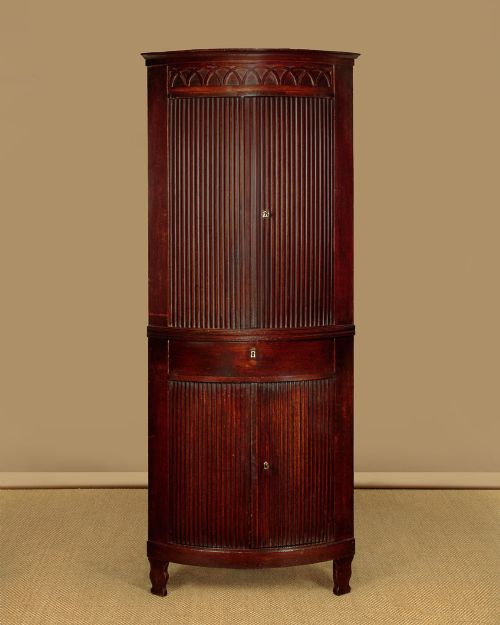
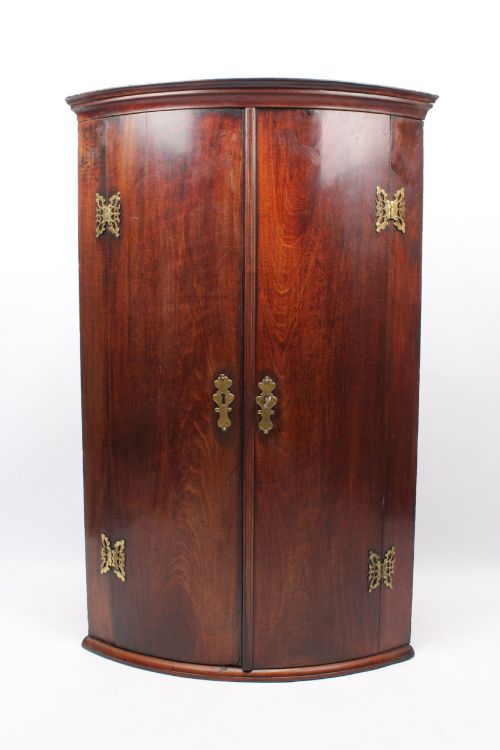
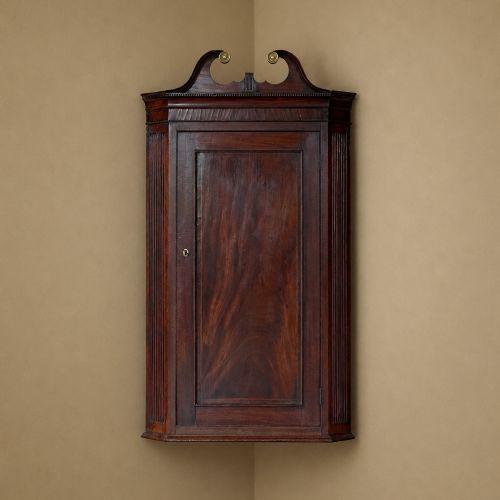
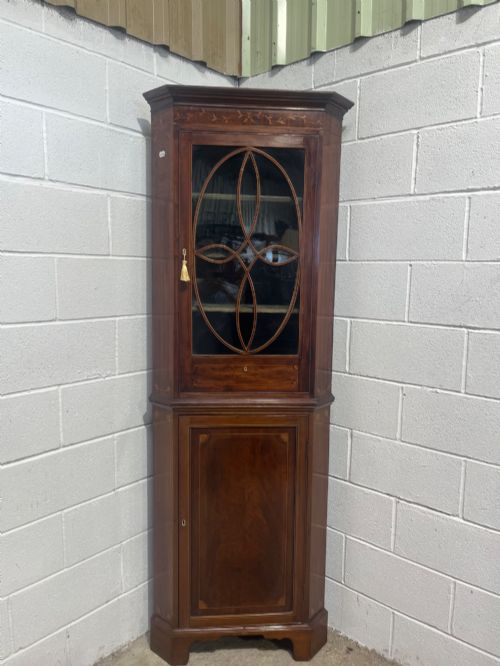
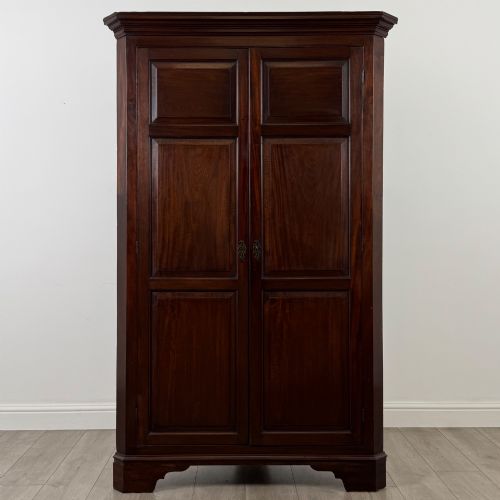
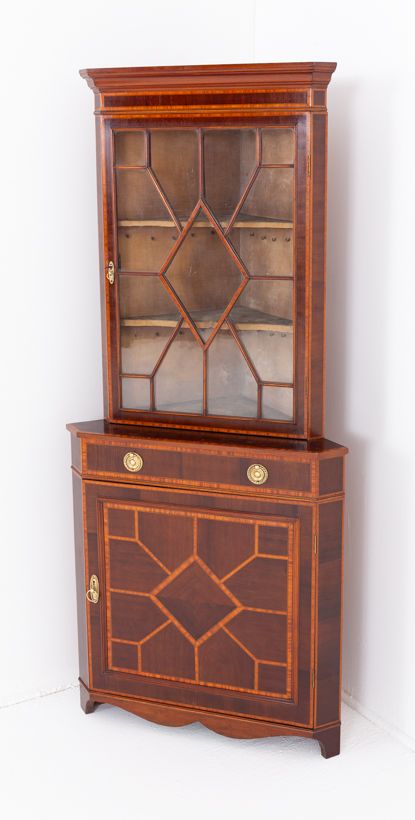
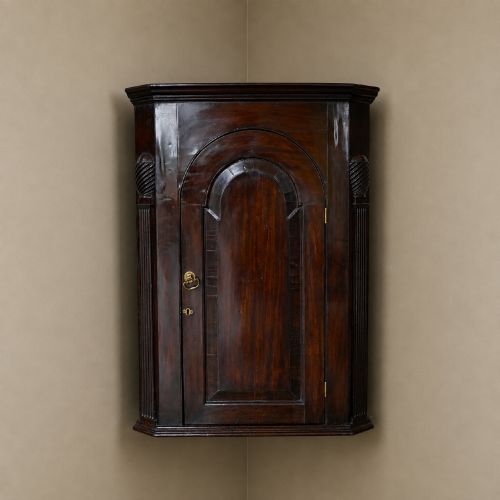
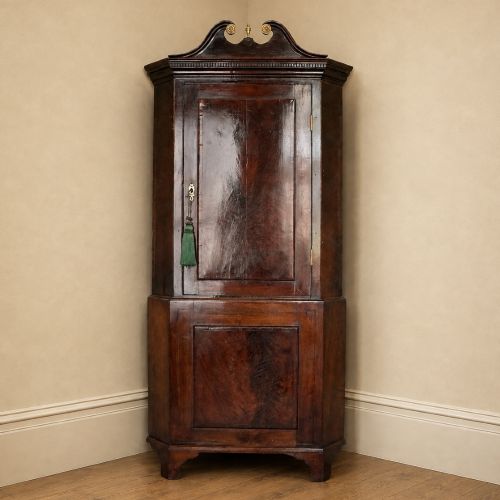
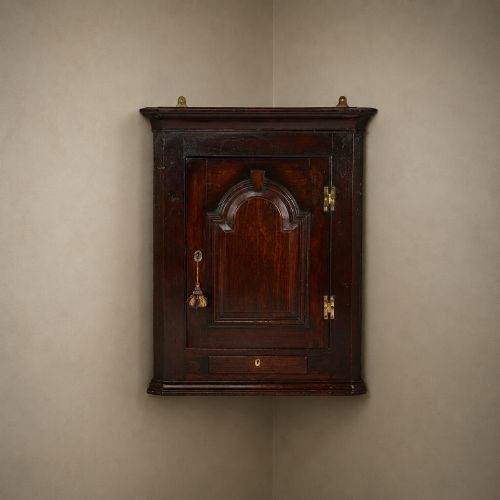
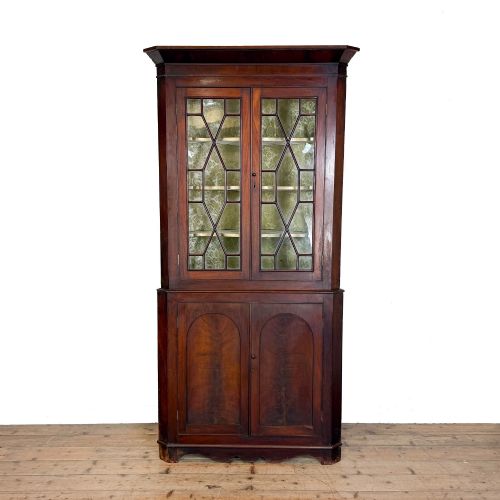
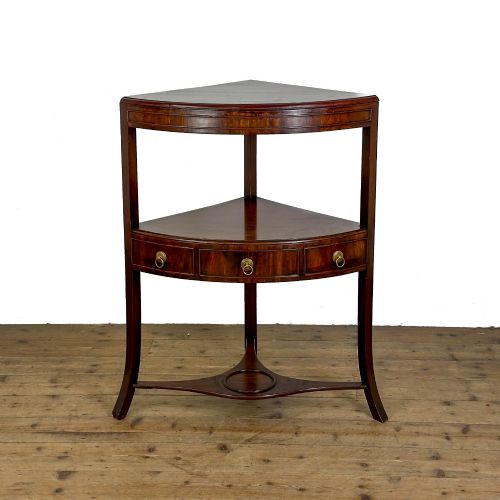
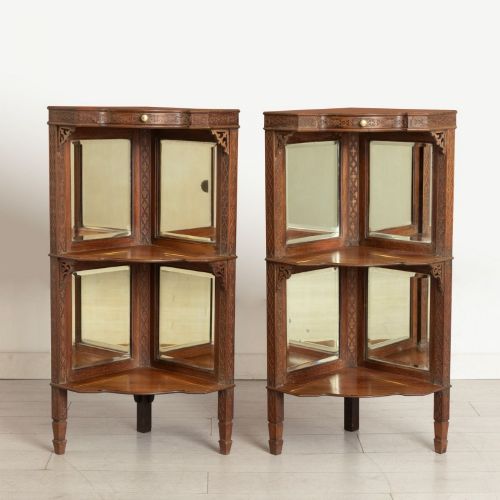
A dark mahogany corner cabinet is designed to fit snugly into room intersections, saving floor space while providing practical storage or display. The examples seen here range from wall-hanging cupboards to tall floor-standing variants, double-height units, and tiered stands.
Most pieces date from the Georgian, Victorian, and Edwardian periods, with eighteenth-century and nineteenth-century examples appearing frequently. These range from simple bow front cupboards to glazed display units and specialised washstands.
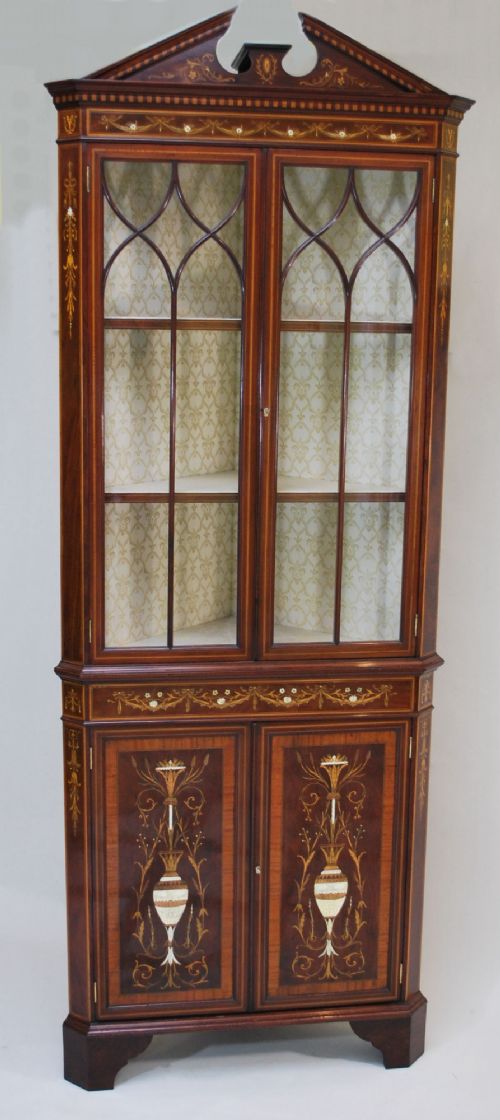
Makers utilise the rich grain of mahogany, sometimes enhanced with satinwood inlay or brass fittings, reflecting styles such as Sheraton Revival, Regency, and Campaign.
Materials and Construction
Makers constructed these cabinets primarily using solid mahogany and flame mahogany veneers, occasionally incorporating oak for internal shelving and secondary framing. Satinwood inlay provides contrasting detail on panels and doors.
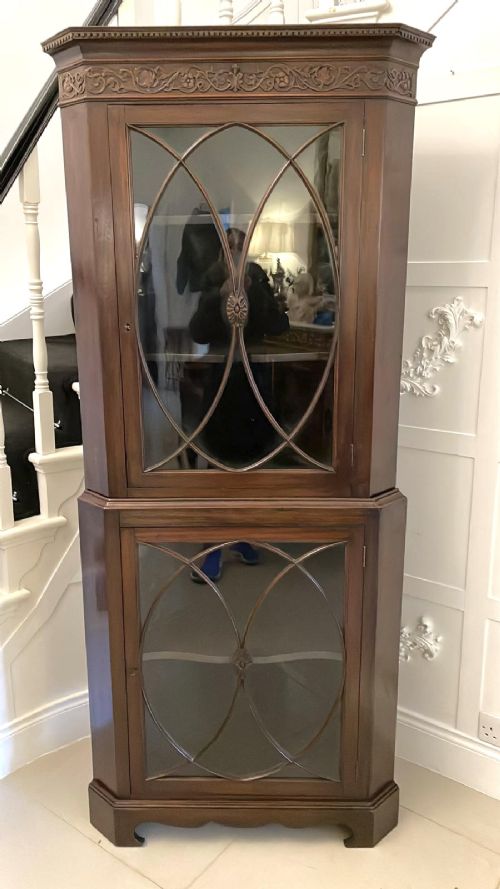
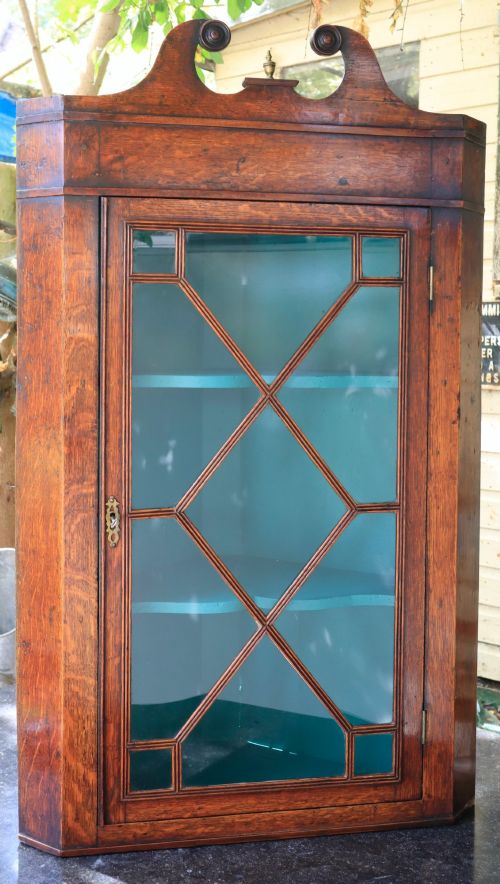
Glazing takes the form of astragal bars dividing glass panes on display variants, whilst solid timber doors feature on storage cupboards. Brass is utilised for hinges, escutcheons, and drawer pulls.
Listings feature mahogany, oak, satinwood inlay, and brass across Georgian, Victorian, and Edwardian periods.
Craftsmanship and Proportion
Quality rests in the selection of timber figures, such as flame mahogany, and the precision of the mitred joints where the cabinet meets the wall. Superior examples display refined proportions, subtle satinwood stringing, and well-executed architectural cornices or broken arch pediments.
Interior fittings, original brass hardware, and the condition of the glass panes further distinguish higher-tier pieces from more utilitarian storage cupboards.
Edwards & Roberts·Goodhall Lamb and Heighway
The Dark Mahogany Corner Cabinet Glossary
- Astragal glazed
- Glass doors divided into smaller panes by thin wooden mouldings called astragals.
- Bow front
- A convex curved cabinet front that projects outward.
- Broken arch pediment
- A decorative architectural gable top that is parted at the apex, sometimes featuring a central finial.
- Flame mahogany
- Timber veneer cut from the fork of the mahogany tree, producing a distinctive flickering flame-like pattern.
- Compactum
- A fitted wardrobe designed to provide diverse storage including hanging space and drawers within a single carcass.
Dark Mahogany Corner Cabinet: Frequently Asked Questions
Where should I place a corner cabinet?
These cabinets suit awkward room angles and dead corners where standard furniture cannot sit comfortably. They utilise vertical wall space effectively without obstructing walkways.
Position them away from direct sunlight and heat sources to protect the mahogany polish and prevent timber warping over time.
How do I distinguish a hanging cupboard from a standing one?
Hanging cupboards feature internal brackets or rear fixing points designed to secure the piece directly to wall studs. Standing versions rely on a plinth, base, or legs to rest upon the floor.
Floor-standing units often include double-height configurations or lower drawer sections that add substantial weight.
What is astragal glazing?
Astragal glazing refers to cabinet doors where individual glass panes are held within a grid of thin wooden bars. This technique allows light to enter the display area while maintaining structural rigidity.
Georgian and Victorian cabinetmakers favoured this method for libraries and display pieces.
How do I care for mahogany furniture?
Dust the timber regularly with a soft, dry cloth to prevent particulate accumulation on the polished surface. Avoid silicone-based polishes that can degrade historical finishes.
Maintain stable room humidity levels to protect solid mahogany and delicate satinwood inlay from cracking or lifting.