

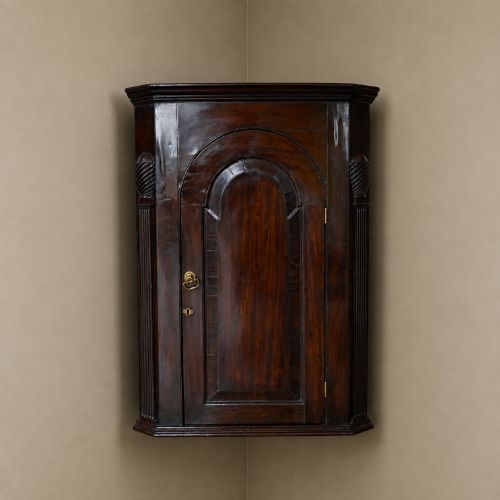
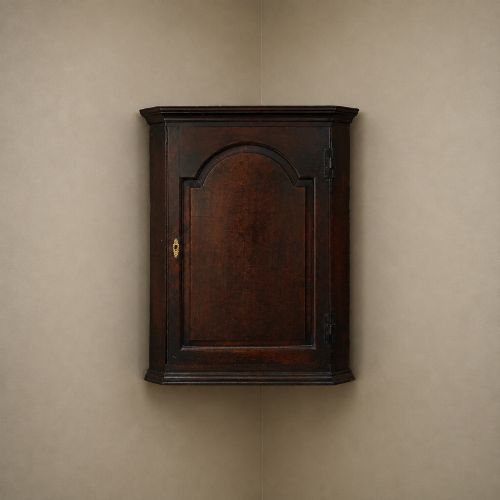
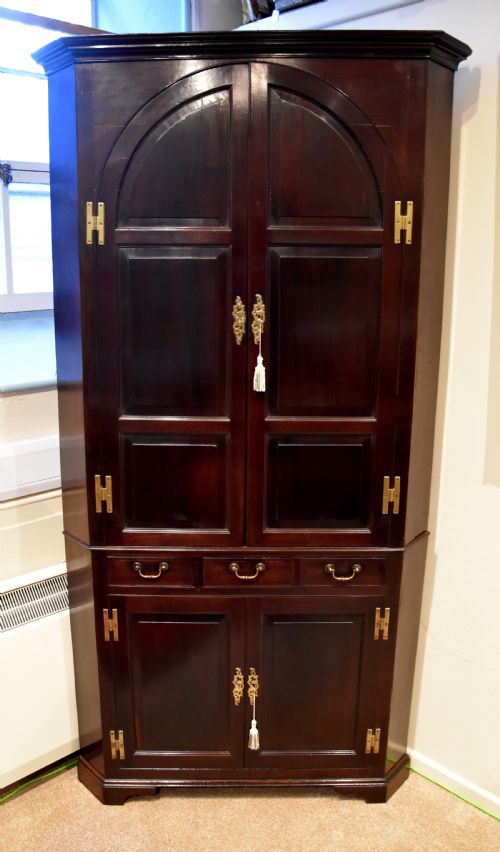


Arched Panel Corner Cupboard
An arched panel corner cupboard turns dead room space into useful display, bringing timber warmth and period character to empty corners.
Arched Panel Corner Cupboard
An arched panel corner cupboard is a fitted or freestanding storage piece designed specifically to occupy the junction of two walls. These cabinets appear primarily in 18th century, Georgian, and early Victorian formats, offering a practical solution for awkward spaces.
The most common version met on this page is the wall-hanging model, usually executed in oak or mahogany. Standing examples and pieces raised on stands also occur, including regional variations from Wales and Ireland.
Makers shaped these items to house porcelain or glassware, utilising the corner angle to draw the eye without blocking floor space. The arched door panels define the architecturalfront, echoing contemporary joinery traditions.
How they were made
Cabinet makers built these carcasses predominantly using solid oak and mahogany, often selecting Cuban or flame mahogany veneers for high-status commissions. Yew wood and standard timber feature in regional workshops, paired with brass H-hinges and escutcheons.
Construction relies on traditional frame and panel techniques, allowing timber to move naturally across seasonal temperature shifts. The distinctive arched door panels required precise woodworking skill to join curved grain without splitting.
Arched Panel Corner Cupboard Retail Price Guide 2026
Typical asking prices for arched panel corner cupboard among the pieces listed under this phrase on Sellingantiques today, from the lower quarter to the upper quarter. They describe what is for sale here now, not the wider market.
Some corner cupboards feature secret interior drawers hidden behind false shelf backs, designed for securely stoking household secrets.
What varies in quality
The grade of timber selection separates standard utilitarian pieces from exceptional examples, with flame and Cuban mahogany indicating superior workshop investment. Figured grain patterns and carefully matched panel layouts demonstrate the maker's priorities.
Structural integrity of the corner mitres and the crispness of the arched panel mouldings dictate the overall finish. Original brass hardware and untouched patination on the timber surface elevate the standing of any cabinet.
The Arched Panel Corner Cupboard Glossary
- Corner cupboard
- A cabinet built with a triangular cross-section to fit neatly into the corner of a room. These serve as wall-hanging or standing storage.
- Arched panel
- A wooden door insert shaped with a curved top edge. This architectural detail distinguishes formal Georgian joinery.
- Cuban mahogany
- A dense, dark timber imported from the Caribbean during the 18th century. Furniture makers prized it for rich figuring and durability.
- Flame mahogany
- A veneer cut from timber where branches join the trunk, creating a flamy, rippled figure. It provides high visual impact on cabinet doors.
- Standing corner cupboard
- A tall floor-resting cabinet designed for corners rather than wall suspension. These often provide more substantial internal shelving.
Arched Panel Corner Cupboard: Frequently Asked Questions
What is the difference between wall and standing versions?
Wall versions attach directly to room boundaries, saving floor space and sitting at eye level. Standing models rest on the floor, sometimes featuring a dedicated base or stand.
Floor-standing variations offer greater internal volume and often include lower enclosed cupboards. Wall cabinets emphasise compact display and historical joinery.
How do I date an 18th century cupboard?
Dating relies on timber species, hinge types, and construction methods visible inside the carcass. Oak predominates in earlier pieces, while mahogany gains popularity toward the Georgian era.
Hand-cut dovetails and wrought iron or brass fixings offer further chronological clues. Panel construction styles shift noticeably between early and late periods.
Can these cabinets hold heavy items?
Original shelves and historical fixings suit lighter display pieces like porcelain and glassware. Overloading old timber risks sagging internal boards.
Modern reinforcement should be approached cautiously to preserve original fabric. Moderate loading ensures the historical carcass remains undisturbed.