
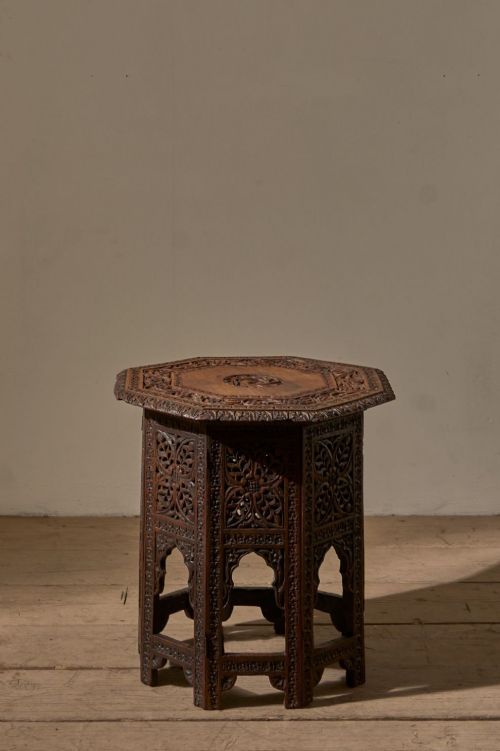
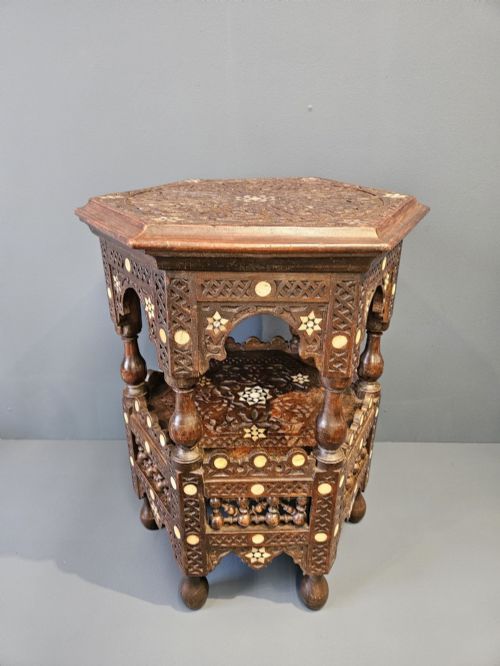


Dark Hardwood Tea Table
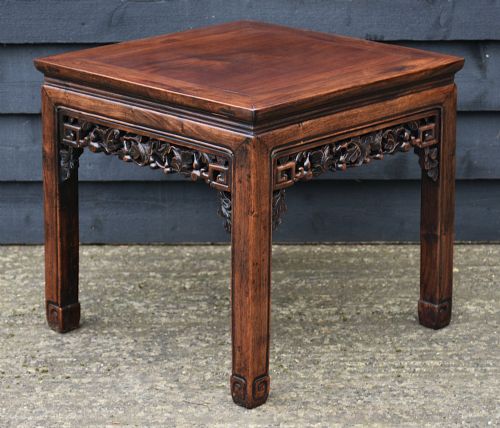
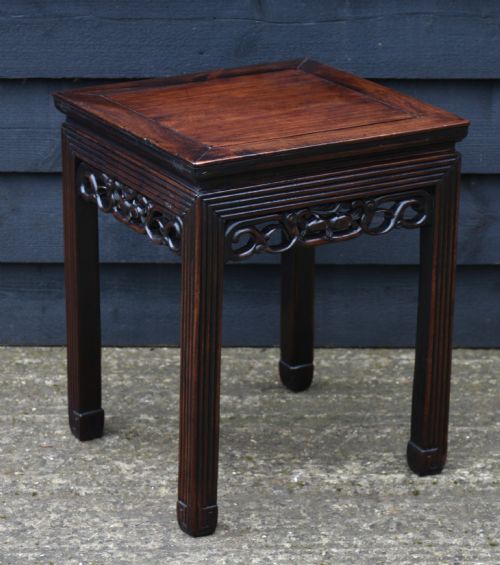
These dark hardwood tea table examples combine dense exotic timbers with intricate carving, offering a sturdy surface for serving tea.
Dark Hardwood Tea Table
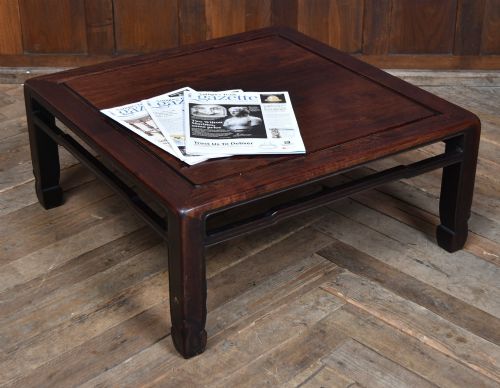
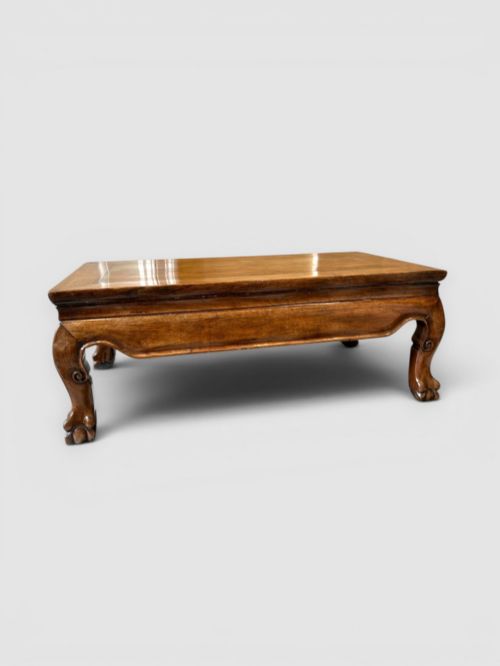
A dark hardwood tea table encompasses low opium tables, nesting sets, and octagonal occasional pieces originating from China and India during the nineteenth century. These items served functional domestic roles, from low seating arrangements to bedside stands and formal tea service.
The most common formats on this page are Chinese low tables and Anglo-Indian occasional pieces utilising dense timbers like rosewood and padouk. Buyers encounter forms ranging from square coffee tables to tilt-top and nesting arrangements designed to save space.
Materials and Construction
Craftsmen built these tables using heavy hardwoods such as rosewood, padouk, teak, and hongmu, often selected for their deep natural colour and density. These timbers were joined using traditional woodworking techniques that accommodated the expansion and contraction of solid wood.
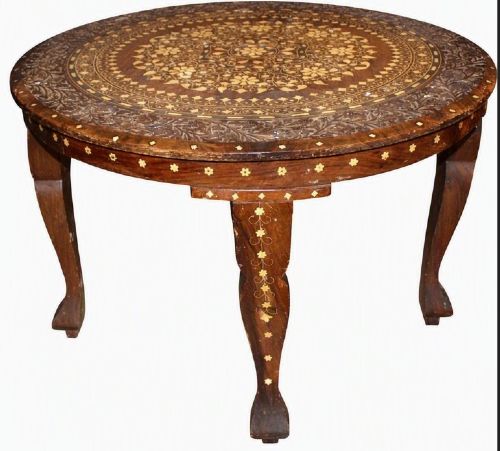
Surface decoration frequently involved deep hand carving depicting dragons, foliage, and geometric motifs. Artisans also incorporated bone and brass inlay into the timber surfaces to create contrasting patterns.
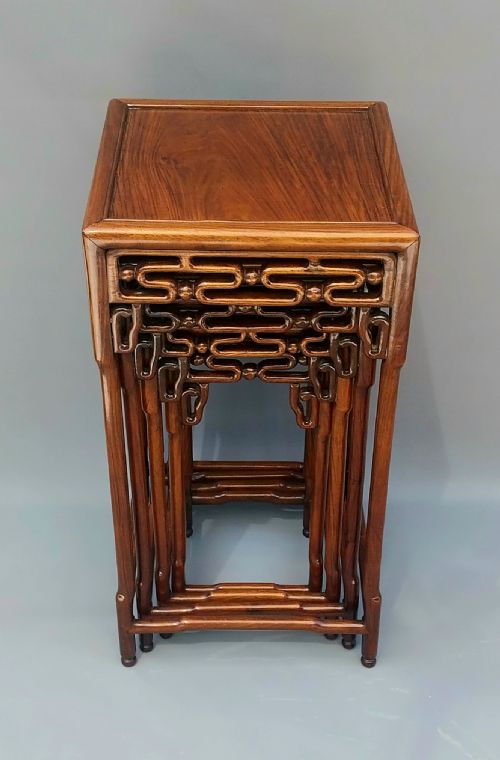
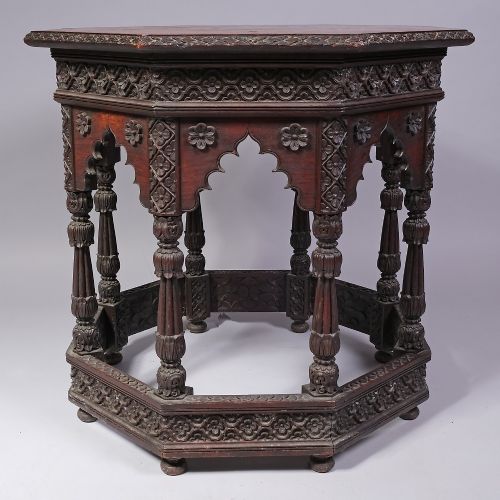
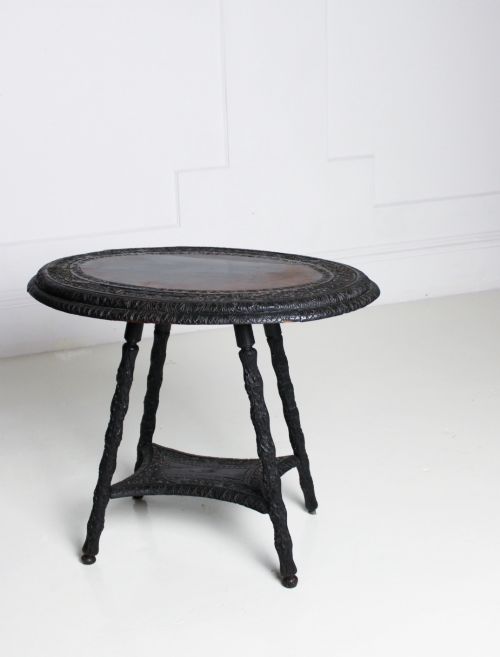
Table forms span coffee tables, nesting sets, and octagonal occasional stands originating from China and India.
Assessing Quality
Quality rests in the crispness of the hand carving and the selection of the timber, where dense grain and uniform colour denote superior work. Tables featuring intricate bone or brass inlay display greater labour and technical skill than plain surfaces.
Structural integrity also separates standard pieces from finer examples, with tight joints and well-preserved finishes indicating careful historical maintenance. Original hardware and makers' marks provide additional context for discerning provenance.
Liberty & Co
The Dark Hardwood Tea Table Glossary
- Padouk
- A heavy, durable tropical hardwood with a reddish-brown colour that darkens with age. It was frequently utilised in colonial furniture manufacturing.
- Hongmu
- A Chinese term translating to red wood, applied to dense, dark hardwoods used for fine furniture. This category includes varieties of rosewood.
- Opium table
- A low-standing Chinese table traditionally used for serving tea or smoking. These pieces typically feature short legs and carved aprons.
- Nesting tables
- A set of graduated tables designed to fit neatly beneath one another. They became popular in the nineteenth century for flexibility in entertaining.
Dark Hardwood Tea Table: Frequently Asked Questions
How do I style a dark hardwood tea table?
Place a low opium table in front of a sofa to act as a focal point for books and decorative objects. Its compact height suits casual seating arrangements.
Alternatively, use an octagonal occasional table beside an armchair as a lamp stand. The contrasting wood tones anchor lighter room colour schemes.
What is the difference between Chinese and Anglo-Indian tables?
Chinese tables often feature restrained lines, subtle panel construction, and carved dragon or floral motifs. They emphasise the natural grain of rosewood and hongmu.
Anglo-Indian tables tend to display denser, deeply undercut foliage carving, sometimes incorporating bone or brass inlay. They frequently adapt traditional British furniture forms to Indian timbers.
How do I care for antique hardwood furniture?
Dust the timber regularly with a dry, soft cloth to prevent grit accumulation on the carved surfaces. Avoid placing the table near direct heat sources to prevent wood splitting.
Apply natural wax occasionally to nourish the hardwood and maintain its finish. Keep moisture away from inlaid bone or brass sections.
Are nesting tables practical for modern homes?
Nesting sets offer flexible surface space that can be expanded or tucked away instantly. They work well in smaller rooms where permanent table space is limited.
Individual tables can be separated to hold drinks or books during gatherings. When not in use, they stack into a single footprint.