



Traditional Chinese Opium Table
These traditional chinese opium table pieces are low-slung timber surfaces built for informal seating, offering rich historic character to modern living spaces.
Traditional Chinese Opium Table
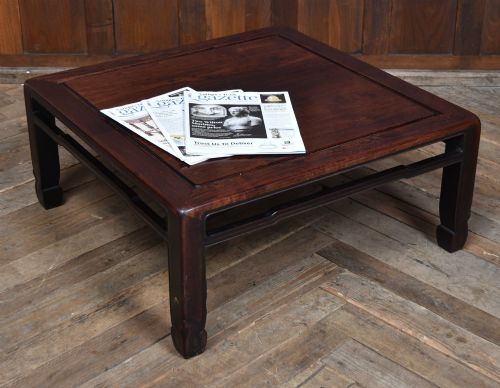
A traditional chinese opium table is a low-slung piece designed for floor-level living, serving as a coffee table in contemporary interiors. These items primarily date from the nineteenth and early twentieth centuries, spanning the Qing Dynasty and the Republic period.
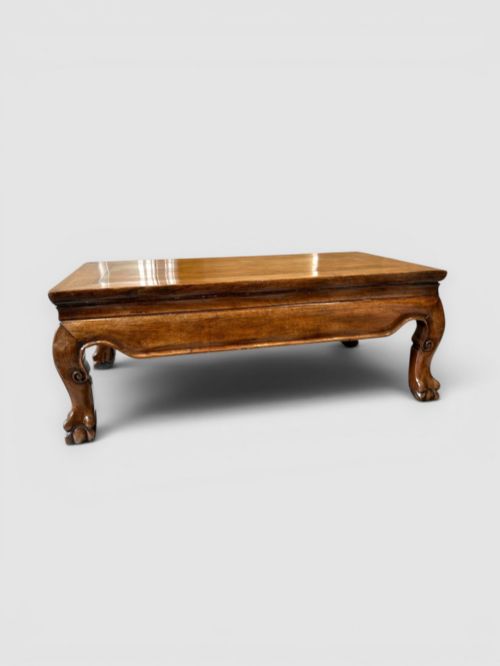
Forms include rectangular low tables, circular coffee tables, and kang tables featuring scroll ends. They often appear under designations such as low tables or coffee tables, maintaining their characteristic low profile regardless of the label.
How they were made
Carpenters utilised dense regional timbers including rosewood, padouk, elm, and general hardwoods to construct these surfaces. Ebonised finishes and red lacquer applications appear alongside plain wood, occasionally enriched with mineral pigment.
Construction techniques involve traditional joinery to support the low frames without extensive metal fasteners. Carved dragon details and scroll ends demonstrate the hand of skilled makers working within Qing Dynasty traditions.
Traditional Chinese Opium Table Retail Price Guide 2026
Typical asking prices for traditional chinese opium table among the pieces listed under this phrase on Sellingantiques today, from the lower quarter to the upper quarter. They describe what is for sale here now, not the wider market.
Listings span the eighteenth century to the early twentieth century, featuring rosewood, padouk, elm, and red lacquer.
What varies in quality
The choice of material dictates much of the standing of a traditional chinese opium table, with dense rosewood and padouk generally outranking softer elm. The depth and execution of carved dragon details or scroll ends separate standard items from superior works.
Patina plays a substantial role in distinguishing better examples, where decades of handling leave a deep, warm sheen across the timber. Scale also alters the character, as larger pieces require greater timber selection and structural stability.
The Traditional Chinese Opium Table Glossary
- Kang table
- A low platform table traditionally used on a heated brick bed in northern China. These share the same low proportions as opium tables.
- Padouk
- A heavy, durable tropical hardwood prized for its rich reddish-brown tone and strength. Makers utilised it for fine carved low tables.
- Huali
- A traditional Chinese term for certain fragrant hardwoods, often translated as rosewood. It forms the primary material for superior carved tables.
- Ebonised
- Timber treated to resemble ebony through a staining or painting process. This finish appears on specific low tables from the late period.
- Scroll end
- A turned or curved termination to the ends of a table top or stretcher. This detail distinguishes many Qing Dynasty kang tables.
Traditional Chinese Opium Table: Frequently Asked Questions
How do I use a traditional chinese opium table today?
These low pieces function effectively as coffee tables in front of low sofas or lounge seating. Their compact height brings a grounded focal point to modern living rooms.
They also serve as display surfaces for sculptures, ceramic vessels, or books. The proportions keep sightlines open across a room.
How do I care for timber surfaces?
Maintain the wood by dusting with a dry cloth and avoiding excess moisture. Natural wax can be applied periodically to preserve the patina.
Keep the timber away from direct heat sources to prevent splitting. Gentle handling ensures the historic finish remains intact.
How can I tell the period of a table?
Dating relies on timber choice, construction wear, and decorative motifs associated with the Qing Dynasty or Republic period. Nineteenth-century examples often display deeper patination and hand-carved joinery.
Later pieces from the early twentieth century may feature ebonised finishes or simpler export designs. Comparing the weight and grain helps identify the era.