


Dark Brown Wool Carpet
When you seek a dark brown wool carpet, you enter a world of tribal weaves produced across the nineteenth and early twentieth centuries.
Dark Brown Wool Carpet
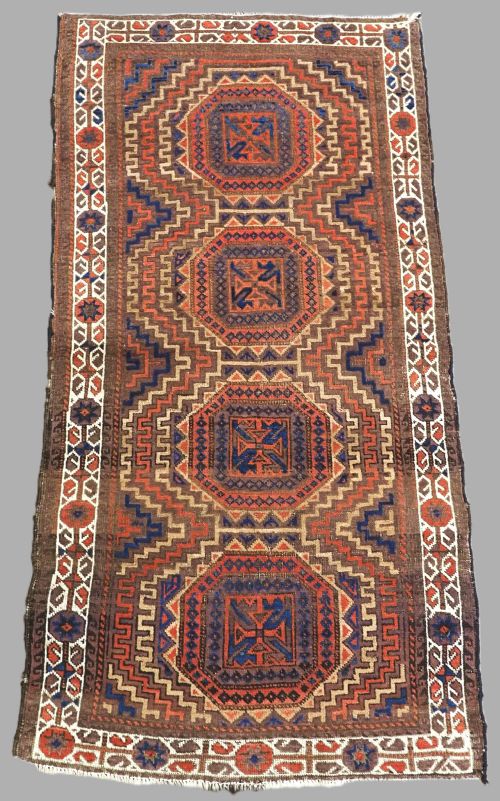
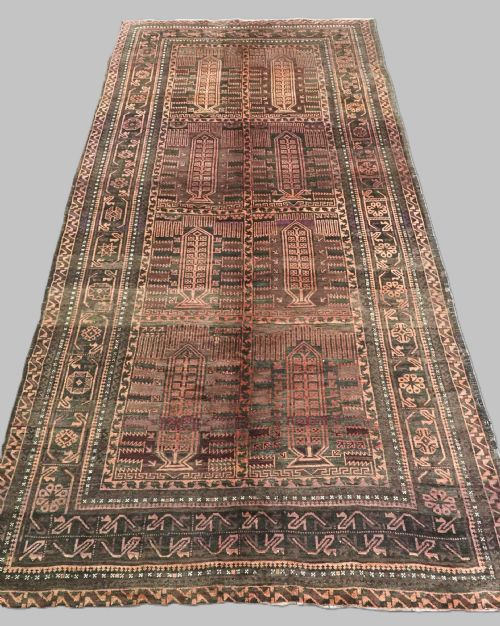
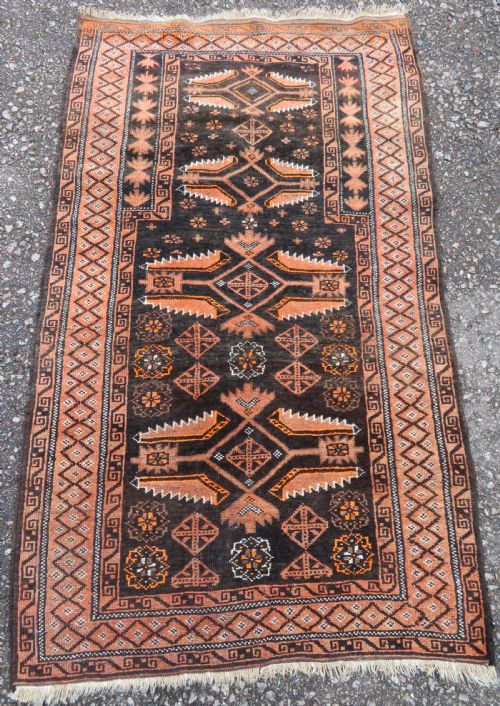
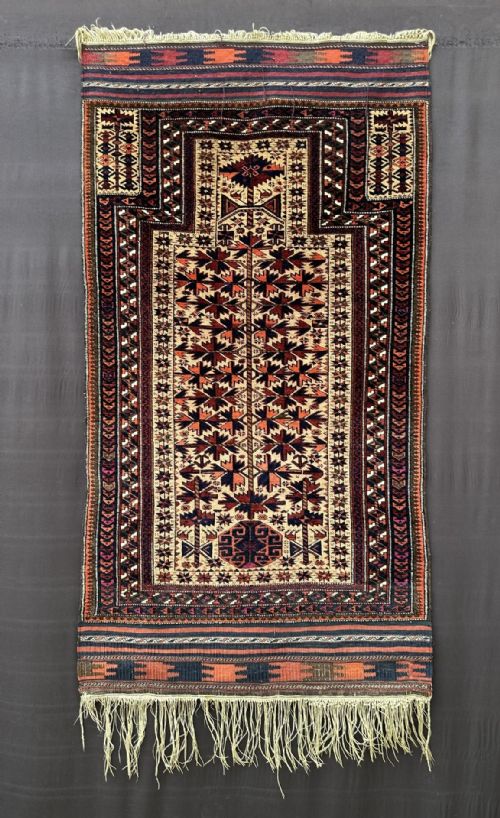
A dark brown wool carpet encompasses tribal rugs, long runners, and prayer formats originating from Persian and Afghan borderlands, the Caucasus, and Ukraine. You encounter pieces woven by Baluch, Timuri, Kurdish, and Yomud Turkmen weavers from the late nineteenth century into the 1930s.
The selection ranges from compact hearth rugs and mafrash panels to expansive main carpets and hallway runners. Most surviving examples deploy deep earthy tones and traditional guls, lattice motifs, or floral elements characteristic of their specific tribal groups.
Gradations of Execution
Quality depends on the fineness of the knotting, the handling of the pile, and the clarity of the design motifs. Tighter structures and more precise geometric or figurative drawing distinguish the finer examples from standard village production.
The depth and stability of the natural dyes influence the visual success of each piece. Variations in wool preparation and spinning create distinct textures that affect how the dark brown fields absorb and reflect light.
Listings feature pieces spanning the 1870s to the 1930s, constructed from wool, hand-spun wool, cotton, and goat hair.
The Dark Brown Wool Carpet Glossary
- Gul
- A medallion or octagonal motif frequently repeated across Turkmen and Baluch carpets. These symbols often denote specific tribal lineages and visual traditions.
- Kilim
- A flatwoven textile produced without a pile by tightly interweaving warp and weft threads. Ukrainian and Balkan examples often employ this method for geometric and floral compositions.
- Prayer Rug
- A smaller format featuring a mihrab or niche design intended to indicate the direction of prayer. These pieces frequently incorporate focused motifs such as lotus leaves or lattice work.
- Runner
- A long, narrow carpet format designed for hallways, corridors, or narrow spaces. Tribal weavers from Persia and the Caucasus produced these in various lengths.
- Mafrash
- A storage bag face or side panel woven by nomadic groups. These compressed formats often display dense geometric patterning within a smaller canvas.
Dark Brown Wool Carpet: Frequently Asked Questions
How do I care for a tribal wool carpet?
Vacuum gently without using a rotating brush bar to protect the wool pile and fringes. Keep the textile away from direct sunlight to prevent natural dye fading.
Rotate the rug periodically to ensure even wear across high-traffic areas. Professional cleaning should be undertaken sparingly by specialists familiar with antique dyed wools.
Where were these carpets originally woven?
Production centres span the borderlands of north-east Persia and north-west Afghanistan, alongside Kurdish regions and the Caucasus. Nomadic and semi-nomadic confederations created these textiles in encampments and rural settlements.
Specific tribes such as the Timuri, Yomud, and various Baluch subgroups developed distinct design vocabularies tied to their geographic regions.
What defines a prayer rug design?
Prayer formats typically feature a mihrab arch at one or both ends that frames the field. This architectural motif directed the user during daily devotions.
Additional elements like secondary arches, known as seh mihrab, and botanical fills often accompany the primary niche.
How do I distinguish between tribal groups?
Tribal attribution relies on specific structural characteristics, palette choices, and repeat motifs like guls or latch hooks. Baluch and Timuri pieces frequently utilise dark brown fields with subsidiary ivory or red highlights.
Kurdish and Caucasian runners display distinct border arrangements and bird or tree motifs that separate them from Turkmen or Anatolian weaving traditions.