

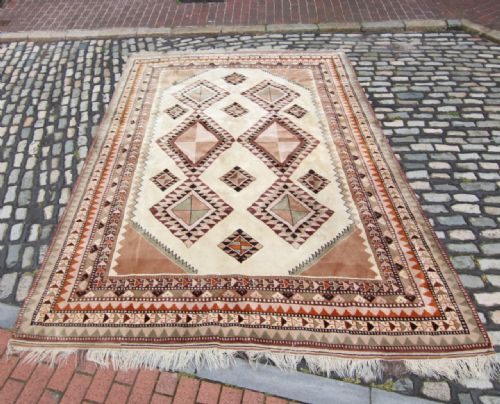
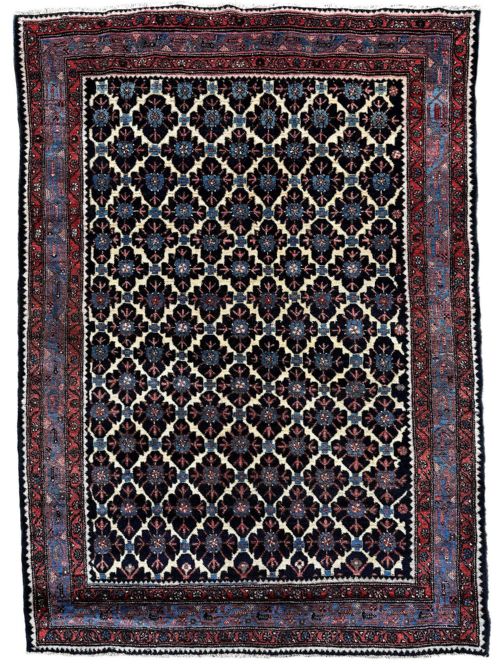

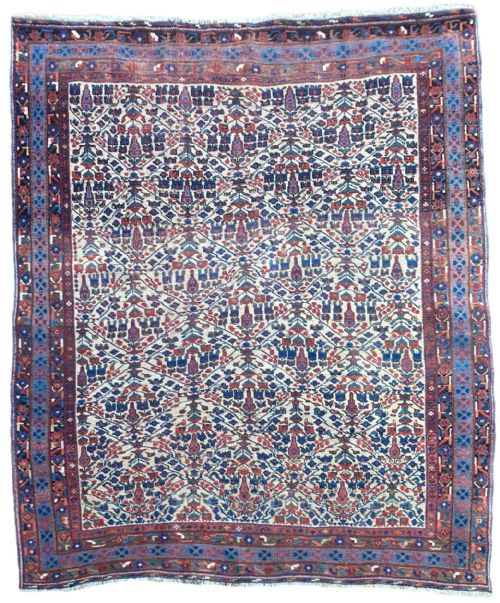

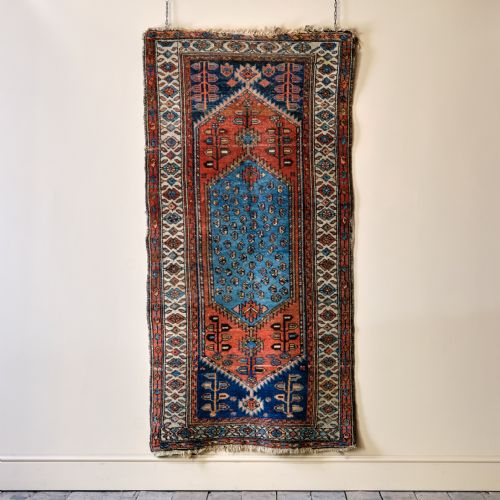


Geometric Patterned Floor Carpet
When buying a geometric patterned floor carpet, you are choosing a traditional textile woven with angular motifs across regional tribal workshops.
Geometric Patterned Floor Carpet
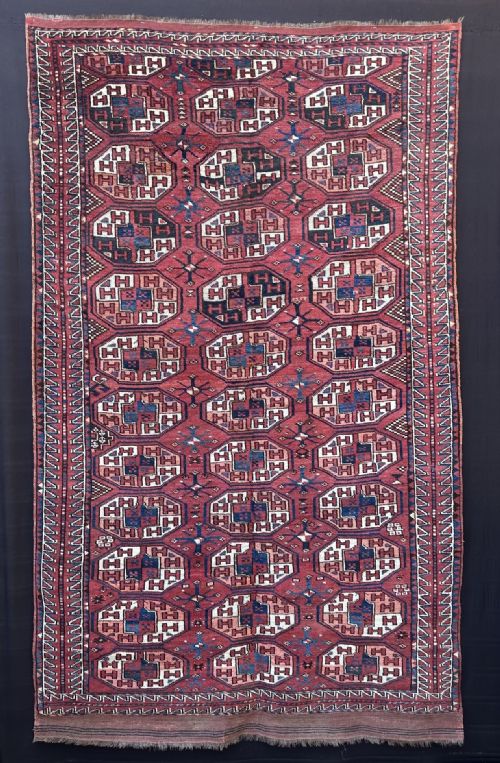
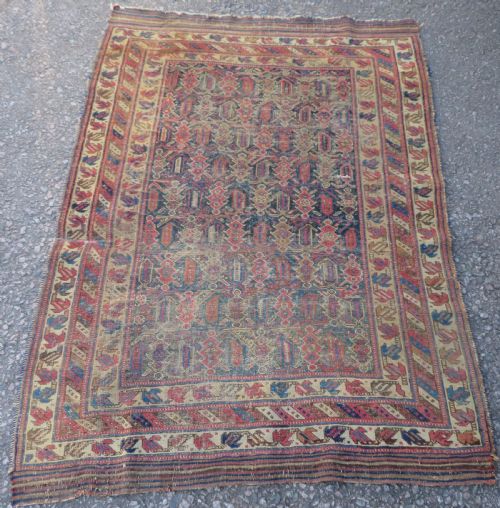
A geometric patterned floor carpet brings linear motifs, medallions, and repeated angular shapes directly into a room. These textiles span periods from the nineteenth century through the early twentieth century, originating across Persia, Central Asia, the Caucasus, and Turkey.
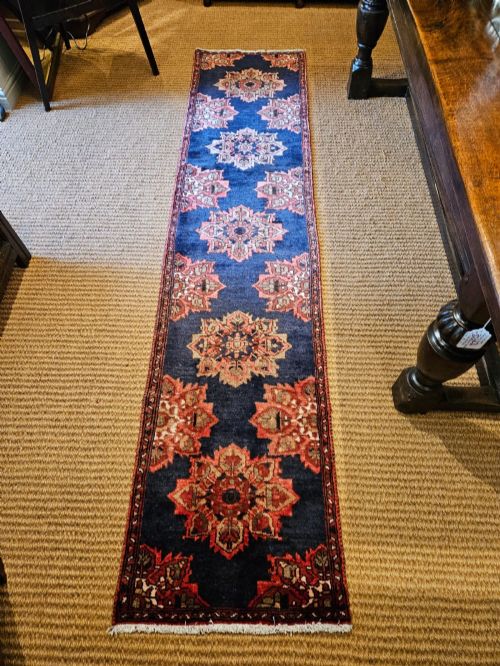
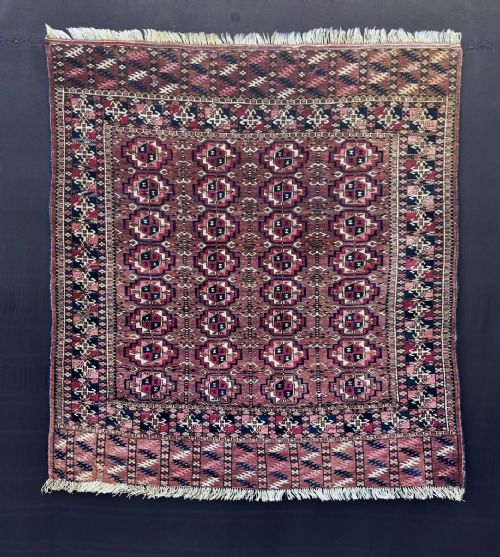
The most common formats met on this page are hand-knotted village rugs, tribal carpets, and long hallway runners. Buyers encounter formats ranging from square formats to room-sized carpets and flat-woven kilims.
These floor coverings reflect the distinct weaving traditions of specific tribal groups, such as the Turkmen, Afshar, Heriz, and Kazak makers. Each piece employs time-honoured design vocabularies passed down through generations of weavers.
Materials and Construction
These textiles rely primarily on wool and cotton foundations, utilising hand-spun wool for the pile and sturdy cotton or wool for the warps and wefts. The manipulation of these natural fibres gives each piece its characteristic weight and structural integrity.
Weavers employed traditional hand-knotting and flat-weaving techniques, securing the pile firmly to the foundation or creating pattern through interlocking wefts. Natural dyes provided the rich palette of indigo, madder, and earthy tones observed across the inventory.
The listings span from the nineteenth century to the 1930s, featuring wool, cotton, and natural dyes across Persian, Caucasian, and Turkmen tribal styles.
Factors of Quality
Quality in these carpets rests upon the density of the knotting and the precision of the geometric layout. Tighter knots allow for sharper definition within medallions and borders, indicating greater labour investment by the weaver.
The purity and depth of the dyes heavily influence the character of the piece. Natural dyes yield subtle tonal variations and patinas that evolve gracefully over decades of use, distinguishing superior examples from simpler village work.
The Geometric Patterned Floor Carpet Glossary
- Gul
- A repeating octagonal medallion motif frequently found in Turkmen and Central Asian carpets. It serves as a primary structural element in tribal design.
- Kilim
- A flat-woven carpet or rug produced without a pile by tightly interweaving warp and weft strands. These pieces offer a lightweight and geometric surface texture.
- Herati
- A repeating botanical pattern composed of a central rosette enclosed by a diamond lattice and flanked by curved leaves. It is a cornerstone motif in Persian weaving traditions.
- Soumak
- A flat-weaving technique where decorative weft threads are wrapped over and under the warp strands to create a textured, durable surface. This method results in a braided appearance on the reverse.
Geometric Patterned Floor Carpet: Frequently Asked Questions
How do I style a geometric patterned floor carpet?
These carpets anchor a room by introducing strong linear patterns and rich historical texture to hardwood or stone floors. They work effectively in high-traffic hallways as runners or as central feature pieces in living spaces.
Allow the colours within the rug to guide your selection of soft furnishings and wall paint. The tribal designs pair naturally with both rustic wooden furniture and minimalist modern interiors.
How do I identify a tribal carpet from a village rug?
Tribal carpets often display geometric guls, stepped medallions, and asymmetrical motifs tied to specific nomadic or semi-nomadic groups. Their wool is frequently hand-spun with noticeable variations in texture and dye absorption.
Village rugs tend to follow structured regional traditions while retaining spontaneous local variations in design. Examining the weave density and back knotting helps reveal the specific provenance of the piece.
How should I care for an antique wool carpet?
Vacuum the rug gently on a low suction setting without a rotating brush bar to protect the pile and fringing. Rotate the piece every six months to ensure even wear across the surface from foot traffic and sunlight.
Professional cleaning should be undertaken periodically by specialists familiar with antique textiles and natural dyes. Avoid harsh chemical spot treatments that can strip the natural lanolin from the wool.
What is the difference between a piled rug and a flat weave?
Piled rugs feature vertical strands of wool knotted onto a foundation, creating a soft, plush surface underfoot. They offer warmth and substantial weight, making them ideal for living areas and bedrooms.
Flat weaves lack this raised pile entirely, relying on tightly woven warp and weft threads to form a thin, durable textile. They function well in dining rooms or entryways where minimal door clearance is required.