



Antique Afghan Main Carpet
An antique afghan main carpet delivers robust tribal character and deep saturated colour to heavy-traffic rooms.
Antique Afghan Main Carpet
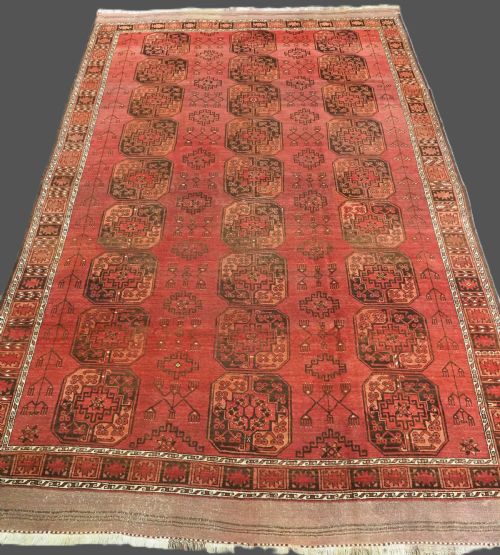
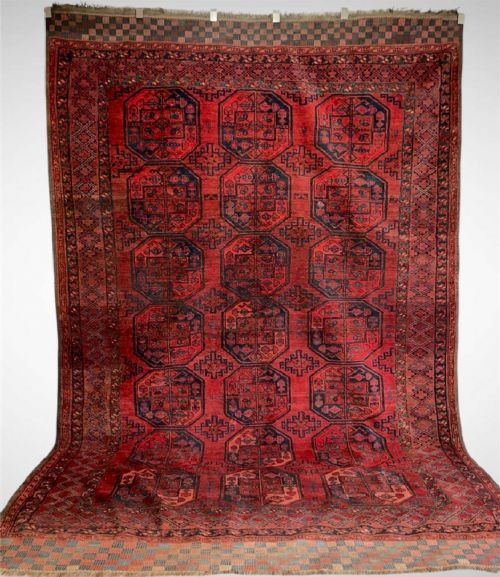
When someone searches for an antique afghan main carpet, they encounter substantial tribal floor coverings woven by Turkmen and Baluch groups in northern and western Afghanistan. These pieces typically measure larger than standard scatter rugs, fulfilling a utilitarian role as primary floor coverings within nomadic and village dwellings.
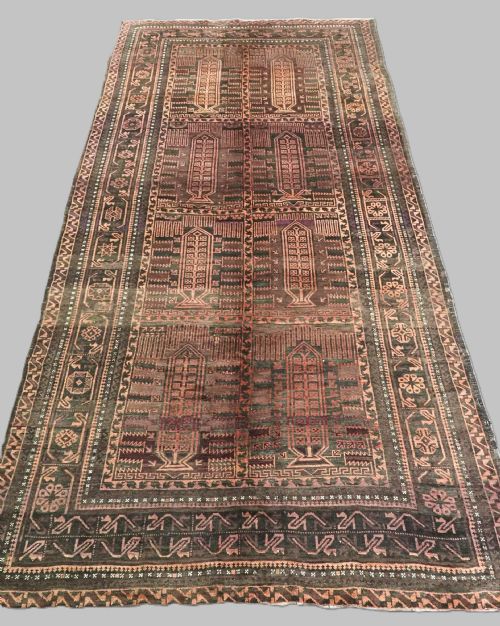
The most common examples on this page stem from the Ersari Turkmen tradition or originate as Timuri and Chakhansur Baluch productions. They span the late nineteenth century and the early twentieth century, showing classic tribal motifs rooted in regional heritage.
How they were made
Weavers constructed these carpets using hand-spun wool for the pile, often supported by goat hair or horsehair foundations that provided exceptional structural durability. Natural dyes yielded the characteristic deep tones seen across these rugs, absorbing light and ageing with considerable depth.
Nomadic and village workshops relied on upright looms, utilising traditional knotting techniques passed down through generations. The integration of durable animal hair in the foundations ensured the heavy duty and hard wearing nature required for daily life.
Antique Afghan Main Carpet Retail Price Guide 2026
Typical asking prices for afghan main carpet among the pieces listed under this phrase on Sellingantiques today, from the lower quarter to the upper quarter. They describe what is for sale here now, not the wider market.
Listings feature pieces dated between eighteen seventy and nineteen twenty, utilising wool, goat hair, and natural dyes.
What varies in quality
Quality in these carpets rests upon the handling of natural dyes and the crispness of the tribal design work. Pieces featuring harmonious colour palettes and balanced proportions command greater attention from collectors than those with muddy tones or hurried execution.
The choice of foundation materials also influences overall calibre, with tightly packed hand-spun wool pile on secure goat hair or horsehair structures representing the higher end of the range. Preservation of original borders and structural integrity further distinguishes superior examples from heavily restored pieces.
The Antique Afghan Main Carpet Glossary
- Main carpet
- A large floor covering traditionally woven for domestic use rather than export. These pieces occupied the central floor space of a nomad tent or village home.
- Gul
- A repeating medallion motif often found in Turkmen weaving. Each pattern typically identifies a specific tribal lineage or clan.
- Pencil box design
- A specific decorative layout featuring stacked compartment motifs resembling small boxes. This pattern appears frequently in western Afghan weaving.
- Natural dye
- Colour derived from plant, insect, or mineral sources prior to the introduction of synthetic alternatives. These dyes mellow gracefully over decades of exposure.
- Foundation
- The underlying framework of warp and weft threads that supports the wool pile. Goat hair and horsehair were frequently utilised here for added strength.
Antique Afghan Main Carpet: Frequently Asked Questions
Where were these carpets made?
These carpets originated in northern and western Afghanistan, produced by tribal groups such as the Ersari Turkmen, Timuri, and Baluch.
Weavers worked within nomadic encampments or settled villages, utilising regional materials and traditional motifs specific to their communities.
How do I care for my carpet?
Protect the wool pile by placing the rug in areas with moderate foot traffic and utilising a quality underlay to prevent sliding.
Vacuum gently without using a rotating brush roll, and consult a specialist in antique textiles for professional cleaning when necessary.
What is a pencil box design?
The pencil box design, or kalam donneh, is a distinct pattern composed of stacked rectangular compartments filled with traditional motifs.
This layout is characteristic of western Afghan Timuri and Baluch weaving traditions from the nineteenth century.
How do I date an antique carpet?
Dating relies on assessing the natural dye palette, the spin of the wool, and the structural characteristics of the foundation.
Earlier examples from the nineteenth century often display more organic dye variations and finer hand-spun textures compared to later pieces.