

Dark Brown Wooden Chairs
Dark brown wooden chairs offer substantial seating through centuries of timber work, ranging from sturdy country Windsors to formal Georgian dining sets.
Dark Brown Wooden Chairs
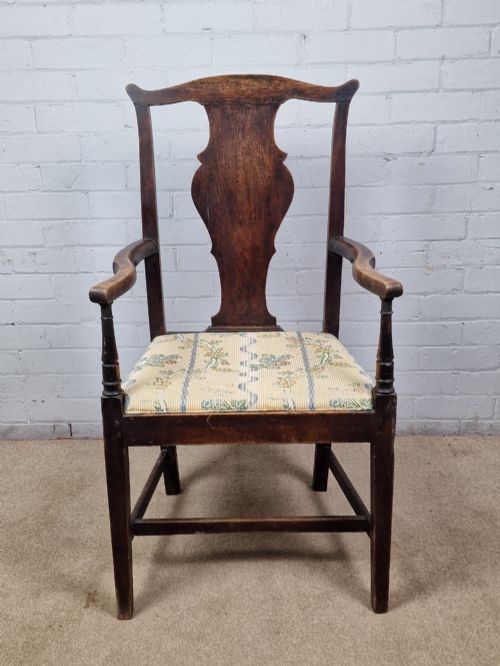
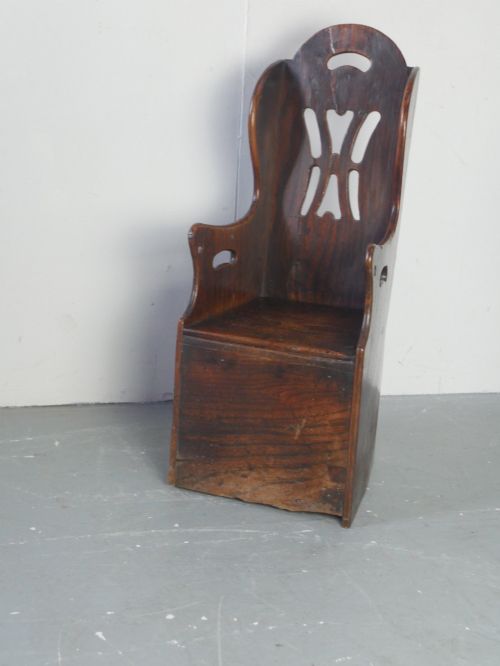
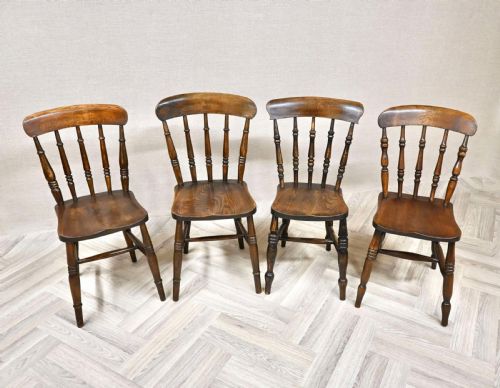
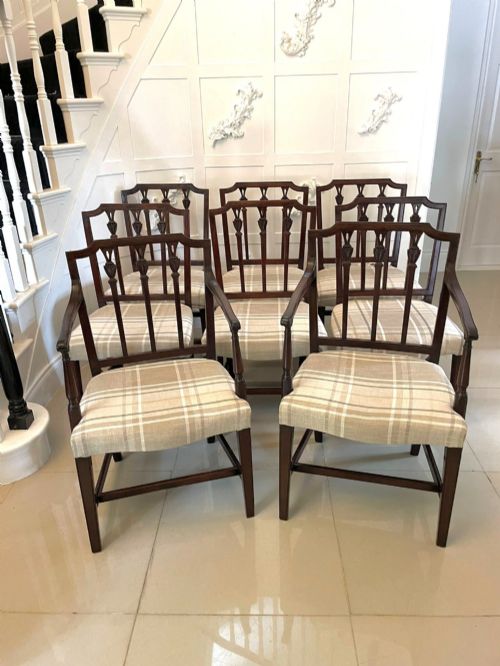
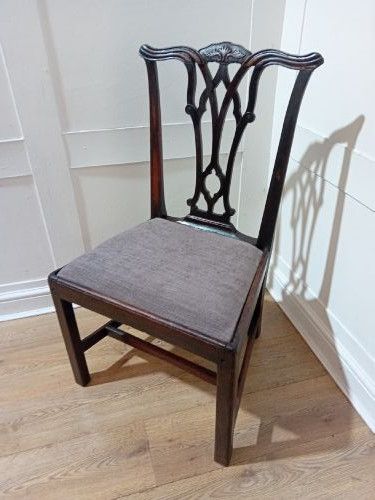
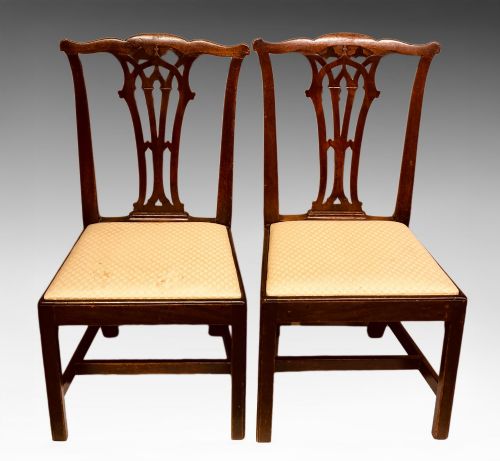
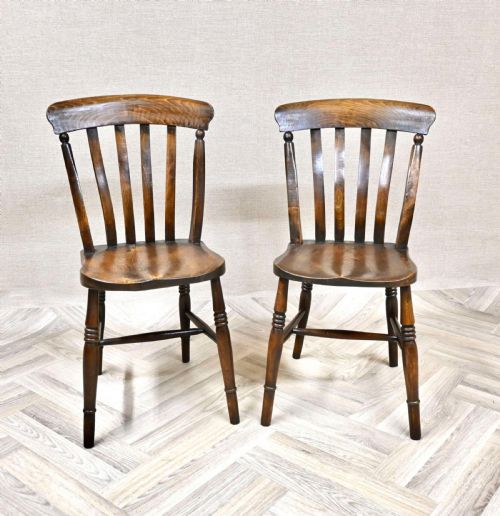
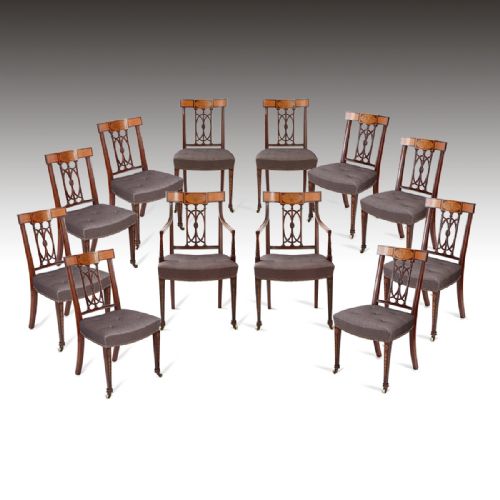
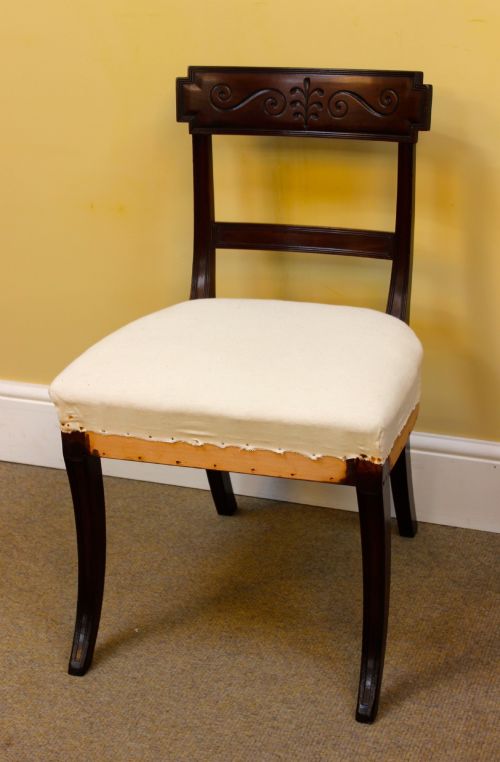
Dark brown wooden chairs span formats like formal dining sets, kitchen Windsors, and architectural hall chairs originating across the eighteenth, nineteenth, and early twentieth centuries. Buyers seeking dark brown wooden chairs encounter sturdy oak, mahogany, and elm iterations shaped in Georgian, Victorian, and Edwardian aesthetic traditions.
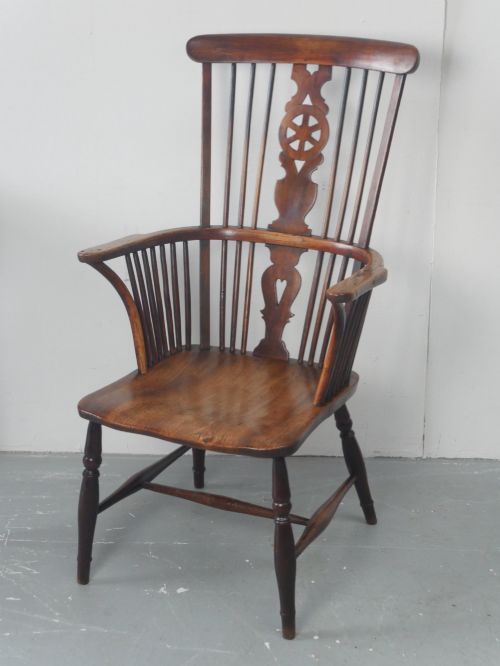
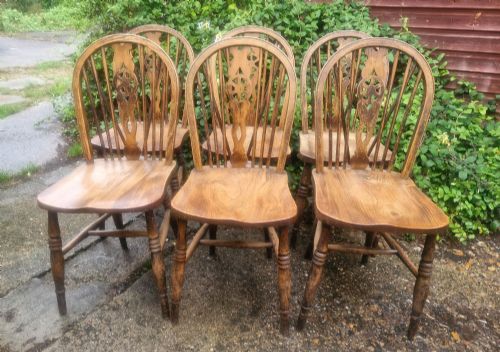
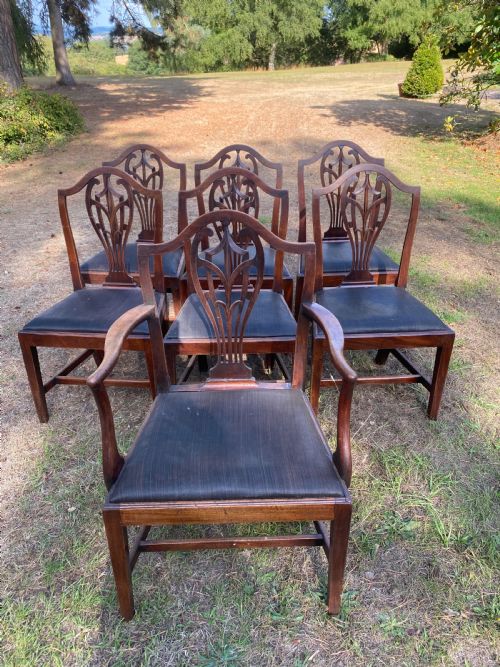
Kitchen and farmhouse Windsor chairs dominate the simpler seating forms, utilising bentwood parts and turned spindles. Formal dining sets and library seating arrive in heavier mahogany and walnut timbers with carved details.
Regional variations appear in Scottish, Irish, and English workshops, adapting local timber supplies into distinctive spindle backs, wheel backs, and solid plank seats.
Materials and construction methods
Cabinet makers and country joiners utilised native hardwoods including oak, elm, beech, ash, and imported mahogany. Timbers were selected for specific structural demands, employing flexible ash for bent rails and dense elm for solid saddle seats.
Joinery methods rely heavily on traditional mortise and tenon joints, steam bending for curved crest rails, and turned spindles secured with wedges. Surfaces show historical polishing methods, wax finishes, and natural grain darkening over centuries of handling.
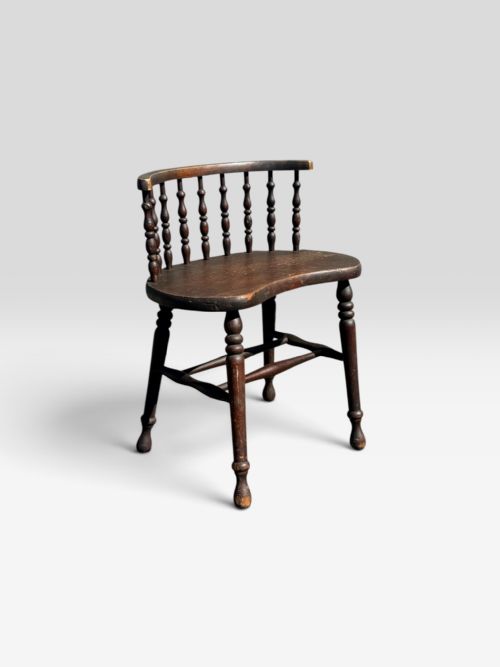
Some nineteenth-century kitchen seating includes designated smokers bows with widened arms designed for resting pipes.
Assessing construction and finish quality
Structural integrity separates utilitarian daily seating from exhibition pieces, depending on the tightness of joints and the retention of original timber components without extensive modern replacements. Heavy wear on footings and arms reveals the practical history of utilitarian country seating.
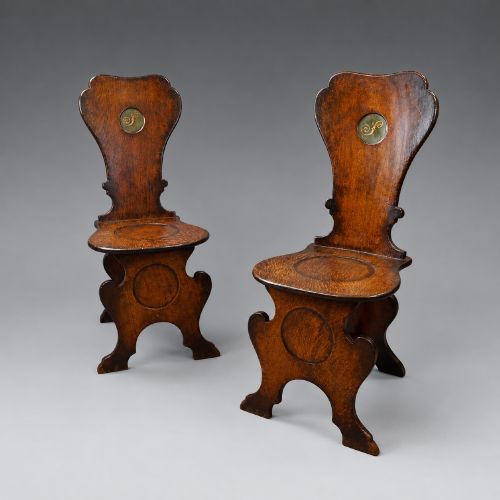
Carved ornament depth and timber selection dictate the hierarchy among formal dining and hall seating. Higher tier examples maintain crisp carved details on mahogany shields or walnut panels, whereas lower grades use simpler turned members and domestic softwoods.
The Dark Brown Wooden Chairs Glossary
- Windsor chair
- A wooden chair constructed with a solid saddle-shaped seat into which the back and legs are direct-inserted. These rural seats often feature bowed backs and turned spindles.
- Hall chair
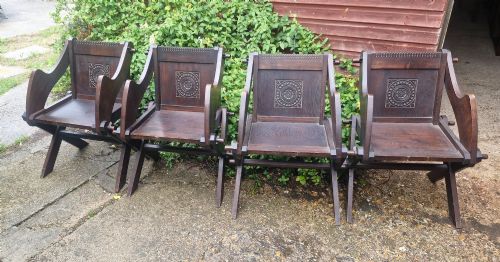
- A rigid wooden seat placed in hallways or reception spaces, frequently featuring a solid panel back with carved heraldry or painted crests. They prioritise architectural presence over comfort.
- Sgabello
- An early portable wooden chair form consisting of two carved board legs and a flat seat supporting a high back. Originating in the Italian Renaissance, they display flat carved decoration.
- Draw leaf table
- A dining table equipped with sliding leaves stored beneath the main top that pull out to extend the surface length. They frequently accompany matching sets of dining chairs.
- Glastonbury chair
- A specific nineteenth-century revival armchair form with X-framed legs and a sloping paneled back. They draw inspiration from early medieval ecclesiastical furniture designs.
Dark Brown Wooden Chairs: Frequently Asked Questions
How do I date an antique wooden chair?
Dating relies on observing construction marks, timber choice, and tool evidence left by the maker. Hand-sawn boards and traditional pegged joinery point toward earlier Georgian or eighteenth-century origin.
Later Victorian and Edwardian examples often display machine-sawn components and standardised turning methods. Comparing the style against documented period forms helps confirm the manufacturing era.
Are Windsor chairs comfortable for daily use?
Windsor chairs provide surprising ergonomic support through their sculpted elm or beech saddle seats. The curved bow backs and spindle arrangements accommodate natural posture during long sitting periods.
Their solid wood construction means adding loose squab cushions is common for extended dining or desk use.
What is the difference between a side chair and an armchair?
Side chairs are built without armrests, designed originally to fit compactly around dining tables or against room walls. Their narrow profiles allowed multiple chairs to line formal dining spaces.
Armchairs incorporate structural arm supports integrated into the seat rail or back bow, offering a more commanding seat intended for heads of tables or desks.
How should I clean dark brown wooden chairs?
Maintenance requires gentle dusting with a dry microfibre cloth to remove surface grit without abrasion. Avoid harsh chemical sprays or silicone polishes that build up sticky residues over the original finish.
Applying a traditional beeswax periodically feeds dry timber and preserves the deep brown patina developed over generations.