



Traditional Cottage Dining Chairs
Traditional cottage dining chairs bring vernacular charm to a room, offering sturdy construction and honest materials honed through centuries of rural domestic use.
Traditional Cottage Dining Chairs
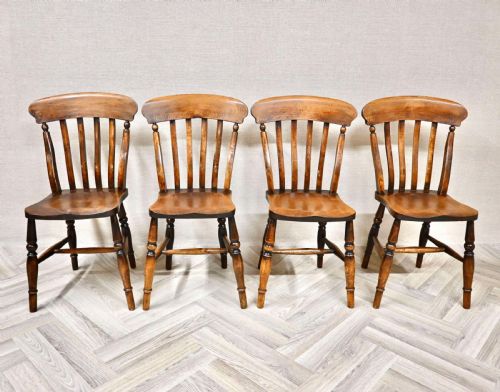
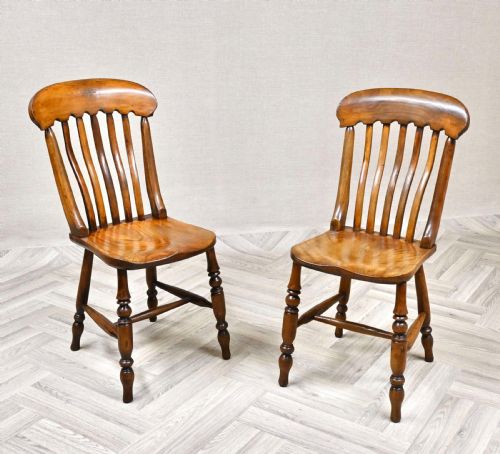
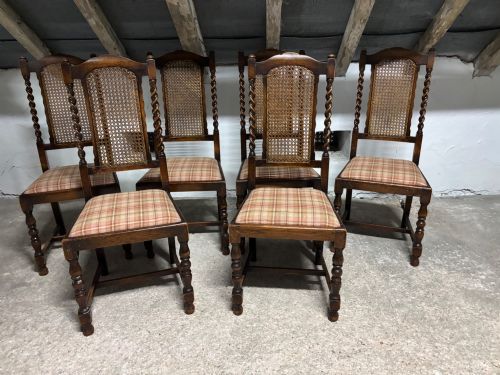
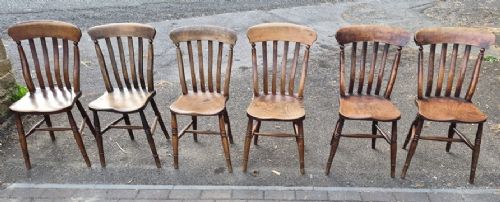
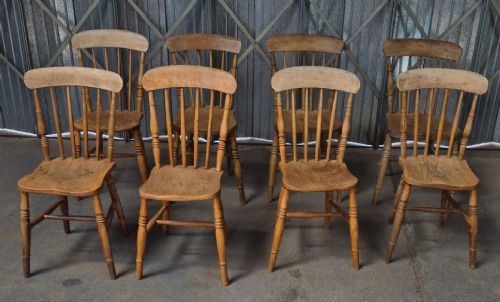
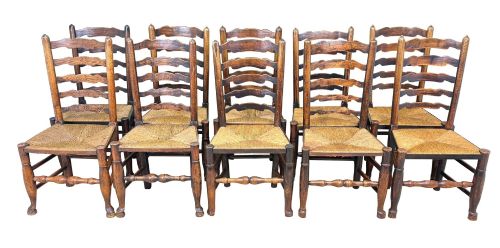
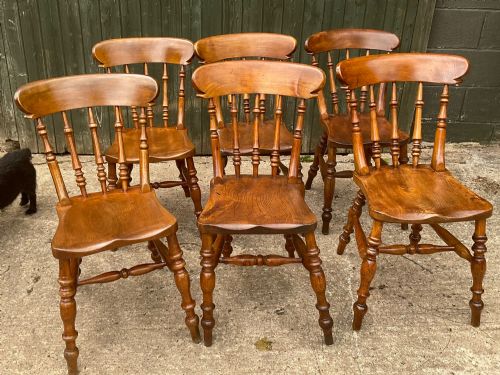
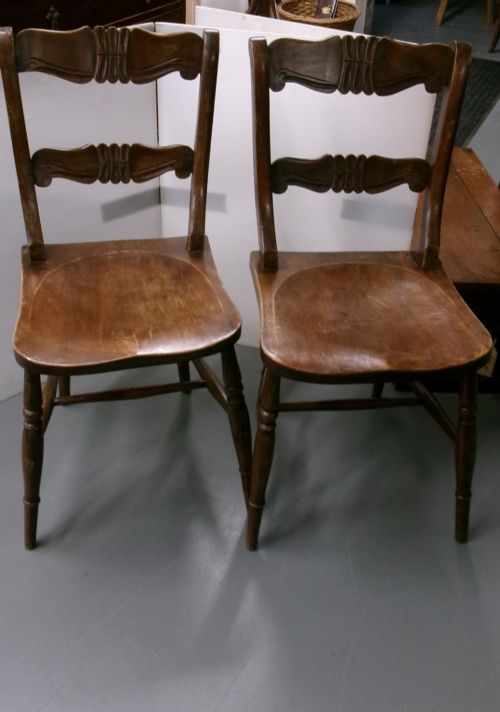
Traditional cottage dining chairs comprise vernacular seating forms designed for farmhouse and kitchen use, spanning periods from the eighteenth century through the Victorian era and into the early twentieth century. These pieces appear primarily as sets or pairs of dining and side chairs reflecting regional English, Irish, and rural styles such as Windsor, lathback, stick back, wheel back, and ladderback.
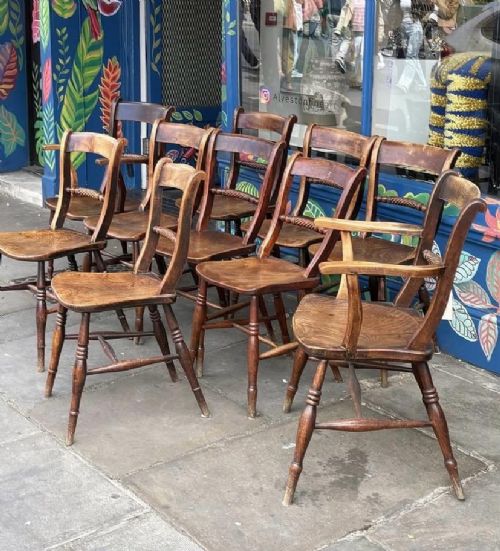
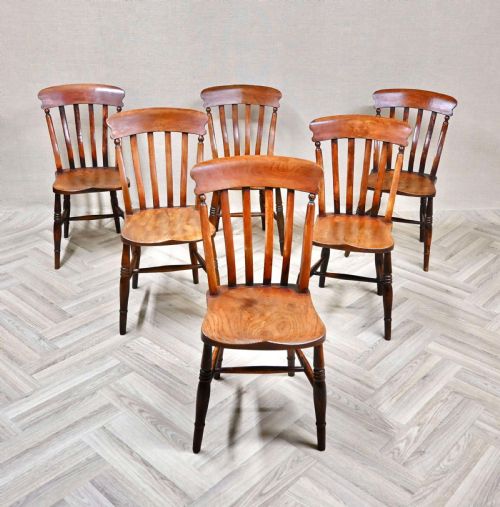
The options here range from single chairs to extensive sets of ten or twenty-two pieces, often grouped as harlequin sets that share similar forms. Buyers frequently encounter nineteenth-century elm and ash Windsor variations alongside rush seat and caned examples originating from local traditions.
Makers and regional outputs include specific nineteenth-century models from Worksop and Ormskirk alongside Thames Valley and Suffolk vernacular designs. The structural variety spans low country kitchen chairs to high-backed spindle forms tailored for daily domestic service.
Materials and construction methods
Makers utilised native timbers predominantly, pairing elm seats with ash, beech, oak, and alder for spindles, legs, and bentwood bows. Elm provided a tough, split-resistant surface for solid wooden seats, while ash and beech offered the necessary flexibility for steam-bent components and turned uprights.
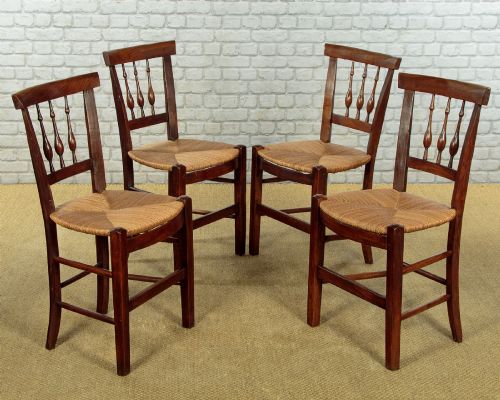
Seating surfaces often incorporate woven rush, plaited straw súgán, or cane panels fitted into wooden frames alongside solid timber planks. Joinery relied on traditional pegged mortise and tenon joints and turned spindles wedged directly into bored seats.
Listings feature eighteenth-century, Georgian, and Victorian periods alongside Arts and Crafts designs, constructed in elm, ash, beech, oak, cane, rush, and fabric.
Evaluating quality and condition
Quality separates chairs retaining original timber patination and matching vernacular proportions from those altered by aggressive sanding or mismatched replacement components. Superior sets display cohesive turning details across all members and minimal structural replacement in the spindles and undercarriages.
The integrity of woven rush or cane seating surfaces dictates daily utility, with tightly plaited historic strands scoring above poorly executed modern re-weaves. Solid elm seats showing deep grain movement without structural splitting indicate superior initial timber selection by the regional carpenter.
Worksop Allsop·Worksop
The Traditional Cottage Dining Chairs Glossary
- Windsor chair
- A wooden chair built with a solid timber seat into which the legs and back spindles are separately bored and wedged. This form dominates nineteenth-century rural kitchen seating.
- Lathback
- A chair back featuring a wide horizontal central splat or slat flanked by vertical spindles. This style provides robust back support in farmhouse dining settings.
- Harlequin set
- A group of dining chairs assembled to match in general style and period while differing in minor details or exact turning. These groups formed organically over time rather than in a single workshop batch.
- Súgán chair
- An Irish vernacular chair featuring a seat woven from plaited straw or hay rope. These pieces utilise native ash frames paired with organic cordage.
- Spindle-back
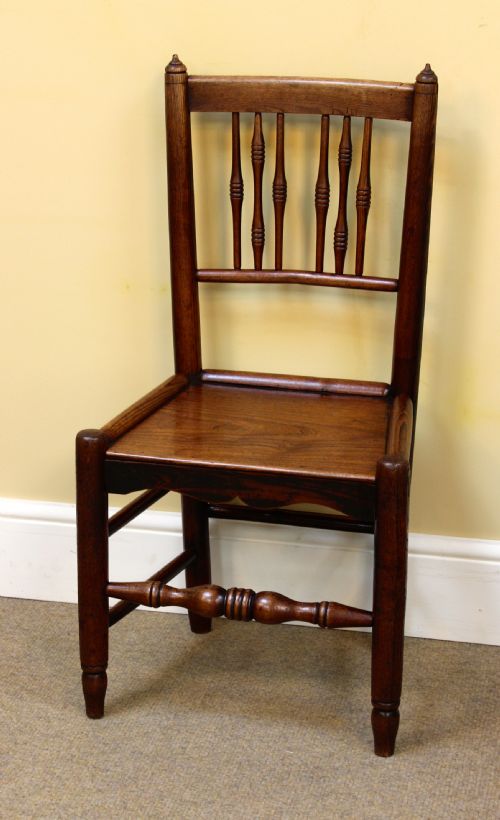
- A chair construction utilising numerous thin turned wooden rods to form the backrest. This design lightens the visual weight while maintaining structural rigidity.
Traditional Cottage Dining Chairs: Frequently Asked Questions
How do I spot a harlequin set?
A harlequin set consists of chairs sharing similar regional forms, timber choices, and heights while showing subtle variations in spindle turning or crest rails. These groups were gathered over time to serve around a single dining table.
Inspect the individual frames closely to trace these minor discrepancies in manufacture. Such sets offer a historically authentic method of seating a large group without requiring a uniform factory batch.
Are rush seats durable for daily dining?
Historic rush seats withstand regular daily use provided the natural sea grass or rush material remains taut and dry. Generations of rural households relied upon these woven surfaces for everyday kitchen seating.
Protect the weave from excessive moisture and abrasive wear to preserve the historic cordage. Professional re-rush work can restore compromised panels while maintaining the structural integrity of the frame.
How do I date a nineteenth-century chair?
Dating relies upon observing tool marks, timber shrinkage patterns, structural joinery, and stylistic conventions recorded across the Victorian era. Earlier nineteenth-century examples often display hand-turned components and deep patination on solid elm.
Compare the specific undercarriage stretcher placement and arm bow construction against dated regional typologies. Subtle shifts from eighteenth-century survivals help narrow the decade of production.