
Victorian Elm Side Chairs
Victorian elm side chairs are sturdy vernacular seating pieces that bring honest country character to a dining table.
Victorian Elm Side Chairs
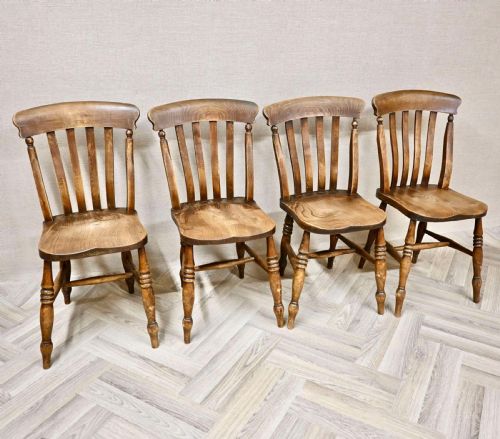
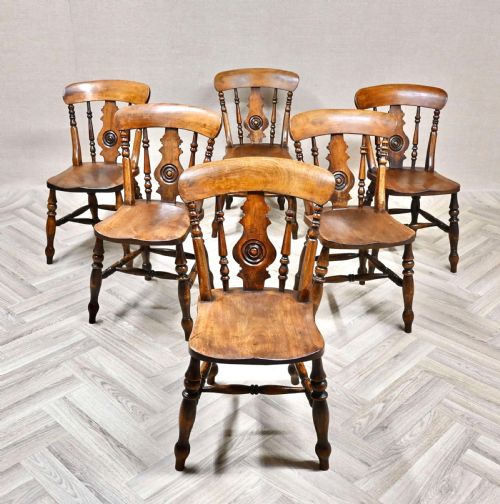
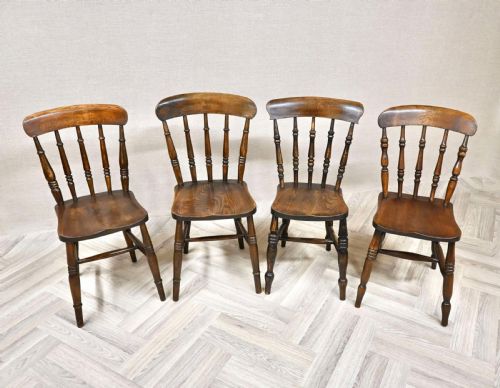
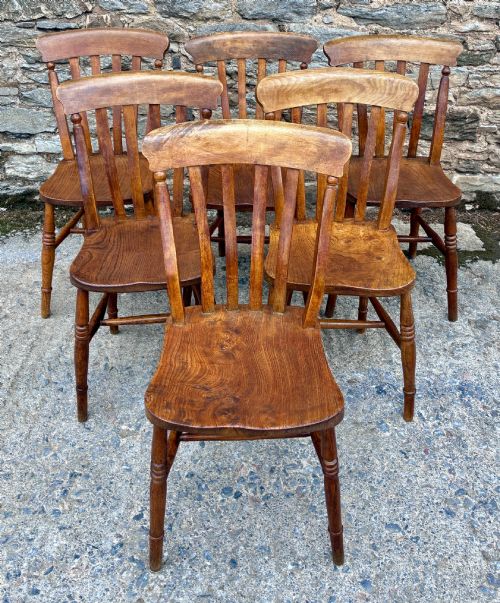
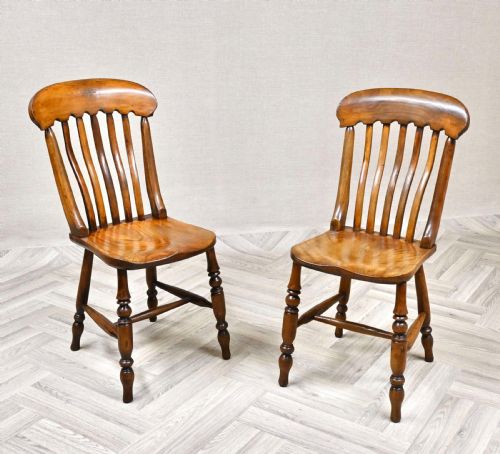
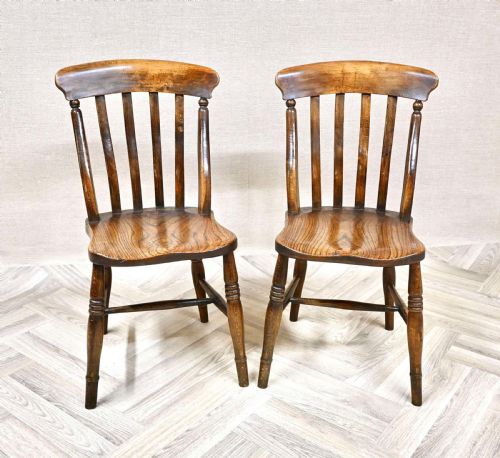
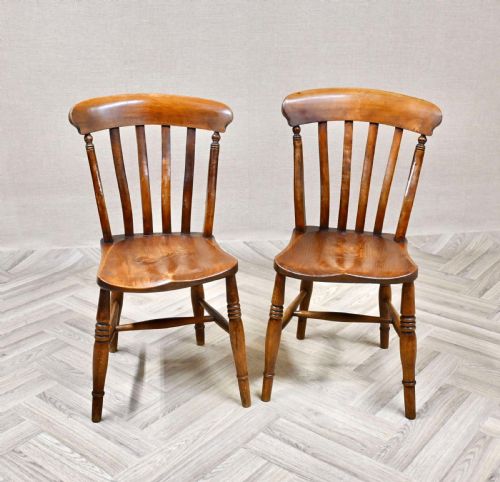
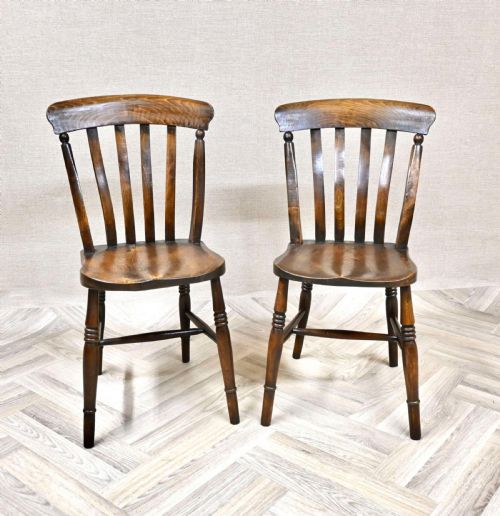
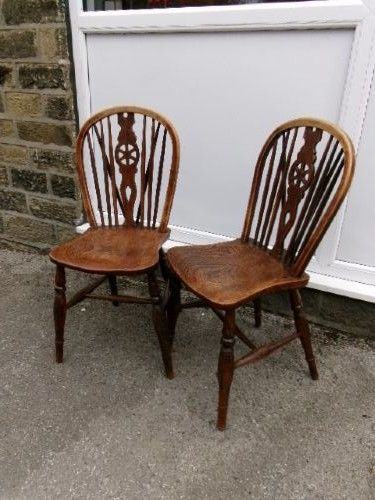
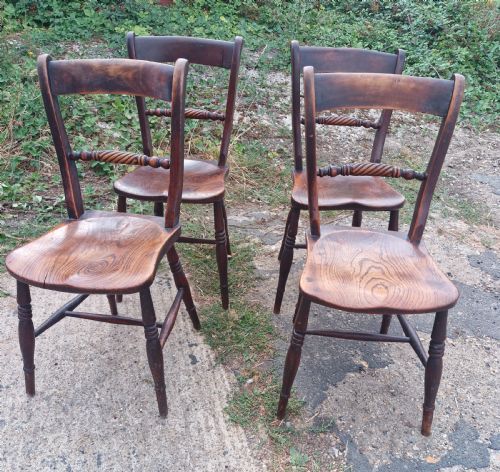
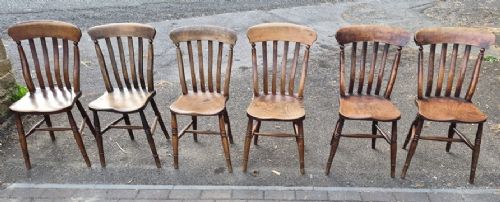
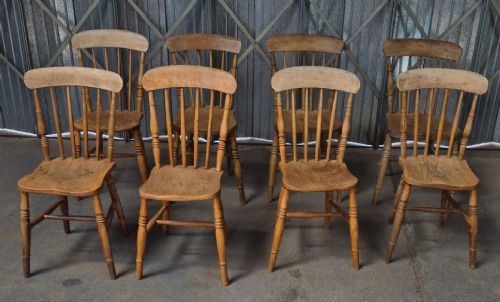
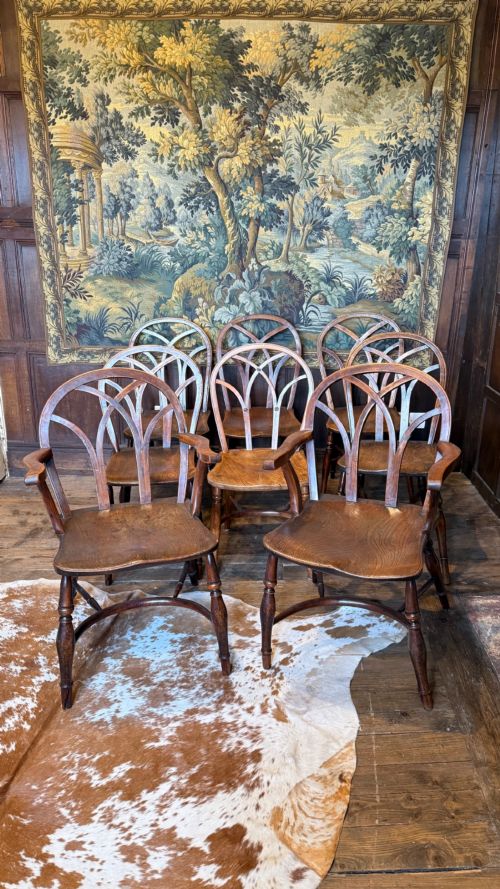
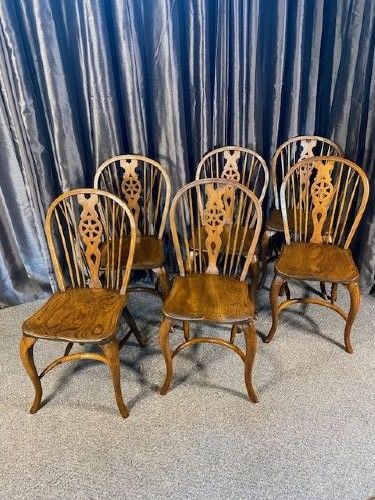
When you examine victorian elm side chairs, you are looking at practical domestic seating produced during the nineteenth century for farmhouse kitchens, reception halls, and country homes. The most common versions appearing here are Windsor and country kitchen chairs featuring shaped wooden seats and spindle backs.
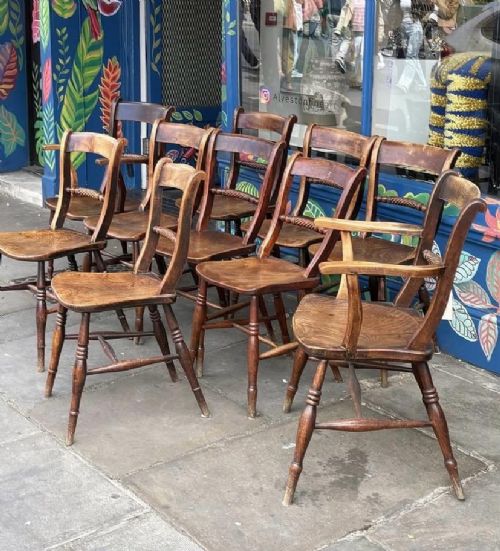
These pieces generally emerge from traditional English regional traditions such as the Thames Valley, combining robust construction with simple rustic charm. While many survive as pairs or larger matched sets, harlequin sets gathered together over time also appear frequently.
Makers designed these chairs for everyday utility rather than formal display, resulting in forms that prioritise durable construction and comfortable seating. Common variations include lath backs, wheel backs, and stick backs supported by sturdy turned legs.
Assessing Quality and Character
The distinction between standard utility seating and superior examples rests on the grace of the turning, the depth of the figured elm seat, and the integrity of the original construction. Better examples display carefully sculpted saddle seats and balanced proportions that reflect the maker's confidence.
Original surface patination and the retention of matching components across a set elevate the standing of these chairs significantly. Pieces that retain their early structural bracing and show minimal timber replacement offer a more authentic connection to their period of manufacture.
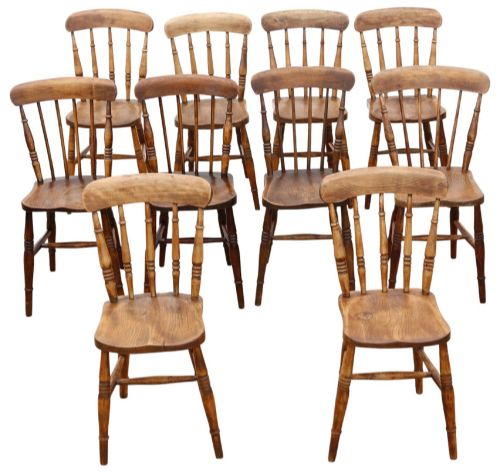
The inventory ranges from single farmhouse reception chairs to assembled sets of ten dining seats.
Worksop best model
The Victorian Elm Side Chairs Glossary
- Elm
- A tough, interlocking native timber utilised extensively for solid chair seats because it resists splitting when drilled and worked.
- Windsor
- A traditional chair type featuring a solid wooden seat into which the legs and back spindles are directly socketed.
- Lath back
- A chair back design incorporating horizontal wooden slats or laths framed by upright supports.
- Harlequin set
- A collection of dining chairs that share a similar style or period but were assembled from different sources.
- Stretcher
- A horizontal wooden rod connecting the legs of a chair to provide structural rigidity and support.
Victorian Elm Side Chairs: Frequently Asked Questions
How do I date these chairs?
Dating relies on observing construction methods, timber choice, and stylistic cues such as turning patterns on the legs and stretchers.
Nineteenth-century examples often exhibit hand-turned components and subtle variations in the grain of solid elm seats that distinguish them from later reproductions.
Are they comfortable for daily dining?
These chairs were originally built for daily domestic use in farmhouse kitchens, so their wooden saddle seats are shaped to fit the body.
Adding loose seat pads can increase comfort during longer meals while preserving the visible wood of the seat.
How should I care for elm timber?
Elm responds best to a stable indoor environment away from direct heat sources and sudden humidity changes.
Applying a traditional beeswax polish occasionally helps nourish the wood and maintain the natural lustre of the surface.
What is a Thames Valley chair?
Thames Valley chairs represent a specific regional British style known for refined turning, high-quality timber selection, and distinctive comb or wheel back designs.
Cabinetmakers in this region often combined elm seats with yew or ash framing to create particularly elegant country seating.