


Antique Cottage Chairs
Antique cottage chairs are sturdy vernacular seats built for everyday domestic life, offering honest materials and regional character to any room.
Antique Cottage Chairs
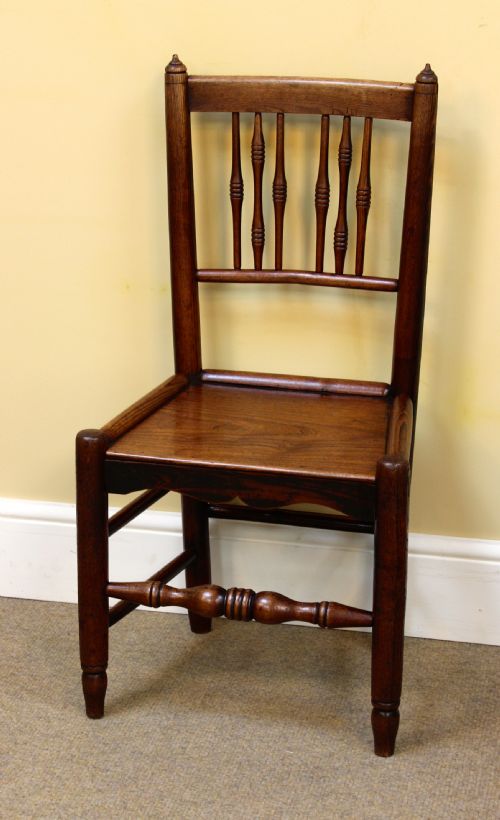
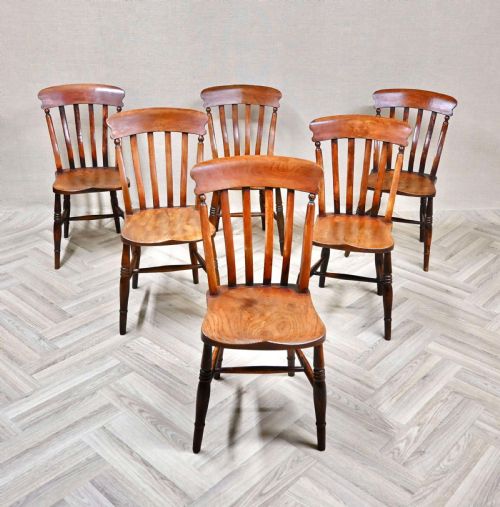
When searching for antique cottage chairs, you encounter practical vernacular seating shaped by regional traditions across the eighteenth and nineteenth centuries. These pieces encompass dining chairs, side chairs, armchairs, rocking chairs, and stools designed for hard domestic use.
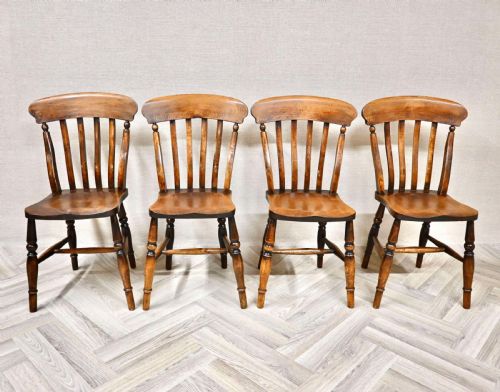
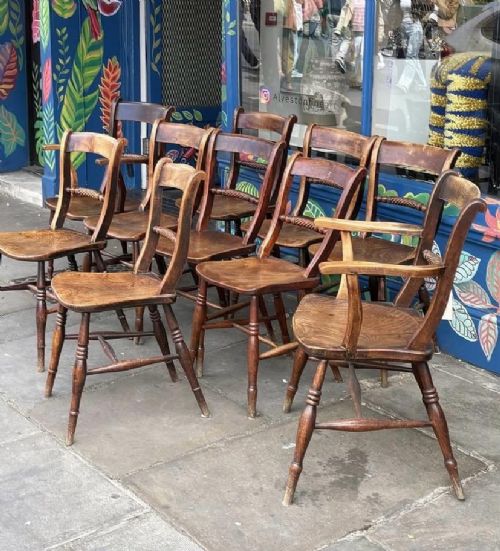
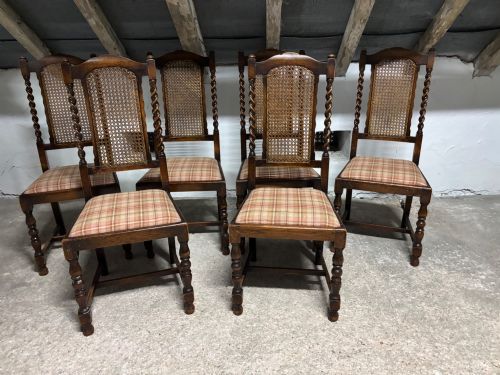
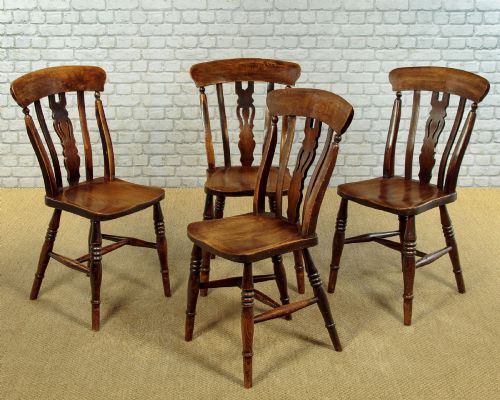
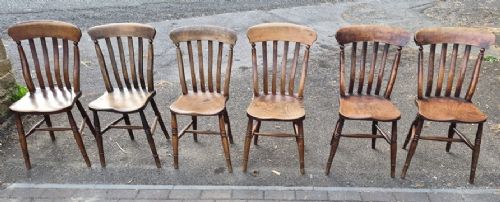
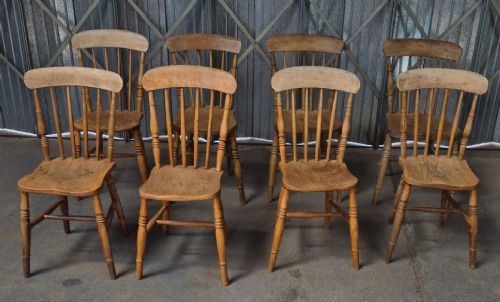
The most common examples on this page are nineteenth-century kitchen and dining chairs, often found in matched or harlequin sets. Makers produced these forms in rural workshops for farmhouses, cottages, and provincial homes rather than grand urban drawing rooms.
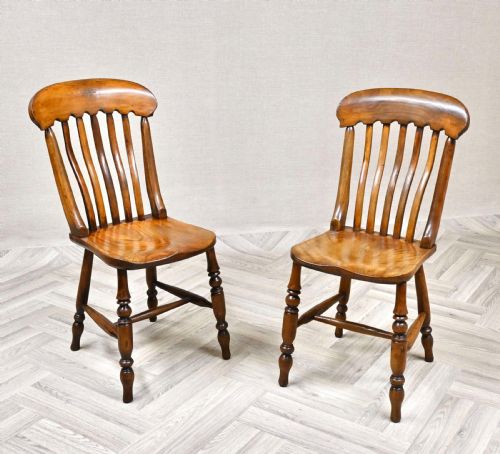
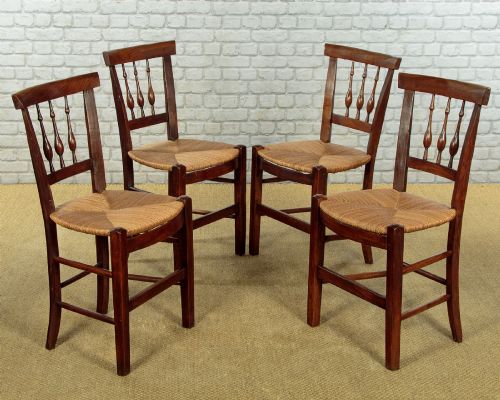
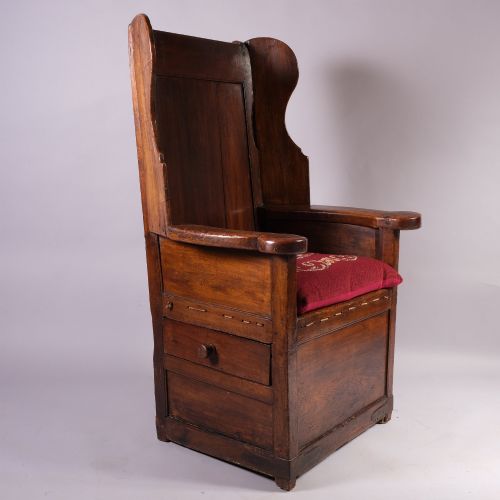
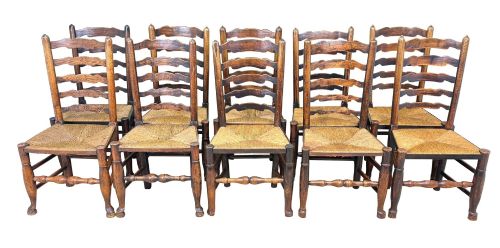
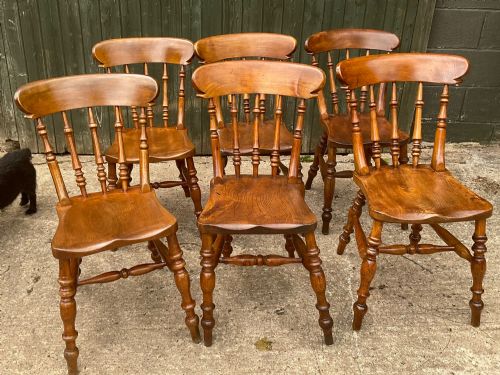
The selection ranges from simple rush-seated ladderbacks to substantial Thames Valley stick backs and Windsor lathbacks. Alongside standard seating, the evidence includes specialised forms such as lambing chairs, spinning chairs, and nursing rocking chairs.
How They Were Made
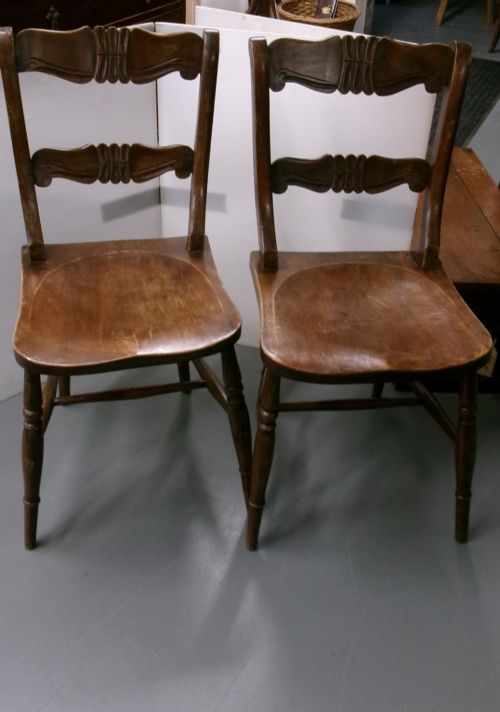
These chairs rely on native British timbers selected for local availability and mechanical strength. Elm frequently provides the solid, burled, or figured wood for shaped seats, while ash, beech, and oak form the turned spindles, legs, and bentwood bows.
Constructors utilised traditional green woodworking and joinery techniques, combining steam-bent components with wedged mortise-and-tenon joints. Many regional types feature seats woven from rush or plaited straw, providing resilient support without rigid nailing.
Listings feature eighteenth-century and nineteenth-century pieces alongside Arts and Crafts revivals, constructed in elm, ash, beech, oak, and rush.
What Varies in Quality
Quality in these vernacular seats rests upon structural integrity and the retention of original surfaces. Better examples maintain tight joinery and well-balanced frames that have not suffered aggressive scraping or modern chemical stripping.
Another factor is the balance of regional proportions and the quality of turning on the spindles and legs. Chairs featuring nicely figured elm seats or scarce regional forms display superior craftsmanship compared to mass-produced utilitarian equivalents.
Worksop Allsop·Heals
The Antique Cottage Chairs Glossary
- Windsor
- A traditional wooden chair featuring a solid saddle-shaped seat into which the legs and back spindles are directly fitted. The upper back incorporates a bentwood bow or a solid central splat.
- Rush seat
- A seating surface woven from dried marsh rushes around a wooden frame. This technique produces a pliable, textured pad common in vernacular country seating.
- Harlequin set
- A collection of chairs that share a similar style, period, or region but were not originally made as a single set. They match closely in height and general form while displaying slight individual variations.
- Spindle-back
- A chair design utilising numerous slender, turned vertical wooden rods to form the backrest. These members offer flexible support while keeping the frame lightweight.
- Scumbled
- A decorative paint finish applied to imitate the natural grain of more expensive timber. Artisans created mottled or layered patterns over a base coat using combs, rags, or brushes.
Antique Cottage Chairs: Frequently Asked Questions
What is an antique cottage chair?
An antique cottage chair is a piece of vernacular wooden seating made for provincial homes and farmhouses. These chairs prioritize utility and regional design over formal academic styles.
They encompass Windsor chairs, ladderbacks, and rush-seat stools produced mainly during the eighteenth and nineteenth centuries using local hardwoods.
Can I mix different cottage chairs?
Mixing different cottage chairs is a traditional way to furnish a rural dining space. Harlequin sets bring together pieces of the same era and wood type while showing individual character in the turnings.
Ensure the seat heights match comfortably around your dining table to maintain practical usability.
What woods were used?
Makers utilised native British timbers that grew near their regional workshops. Elm is frequently found in the carved, solid seats because its interlocking grain resists splitting.
Ash, beech, and oak supplied the turned legs, stretchers, and steam-bent back bows due to their strength and flexibility.