
Dark Brown Trestle Table
A dark brown trestle table provides a sturdy timber surface rooted in centuries of dining and writing forms.

Dark Brown Trestle Table
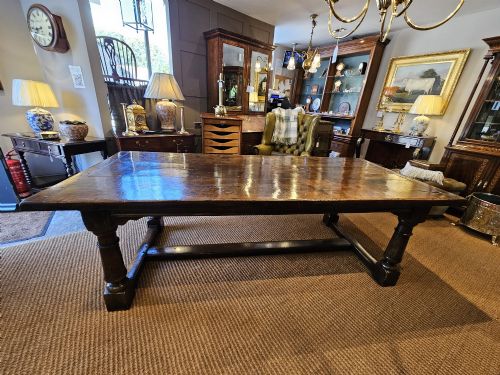
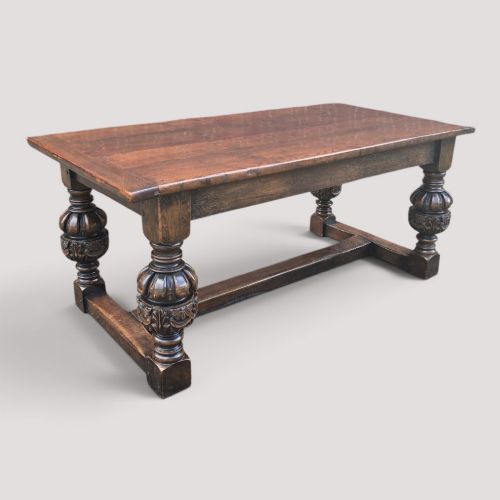
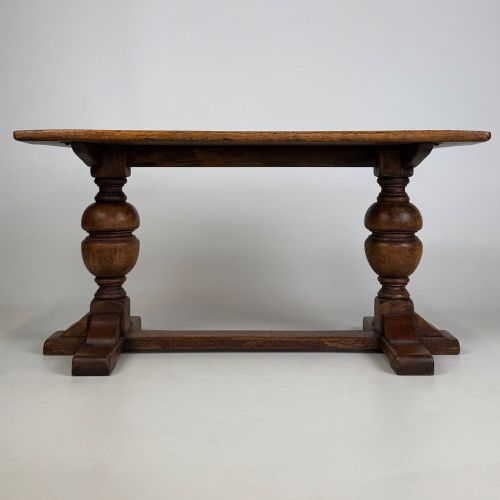
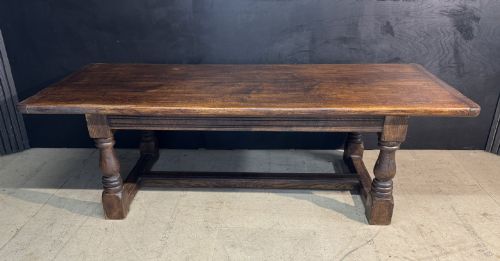
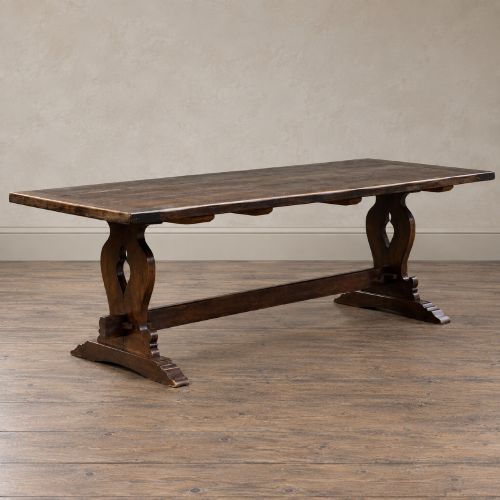
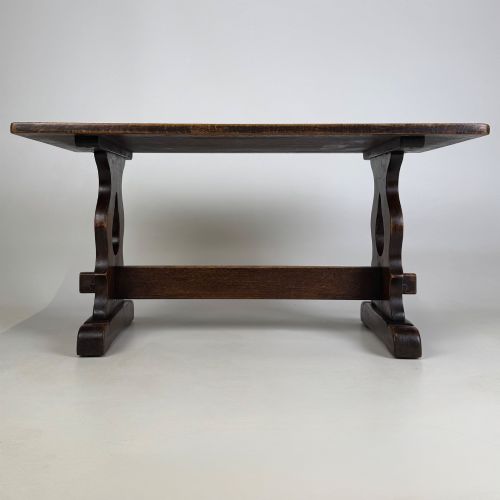
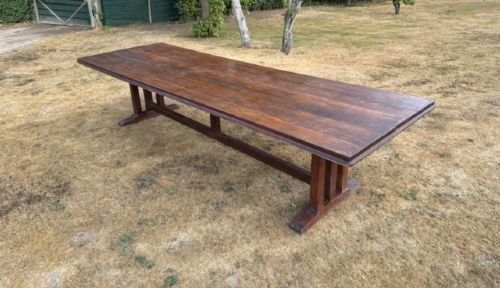
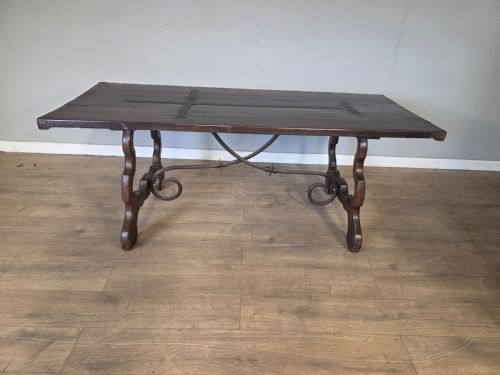
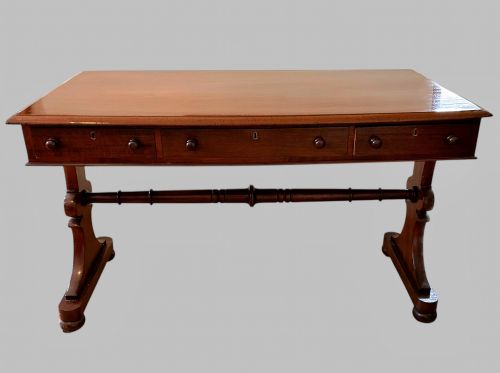
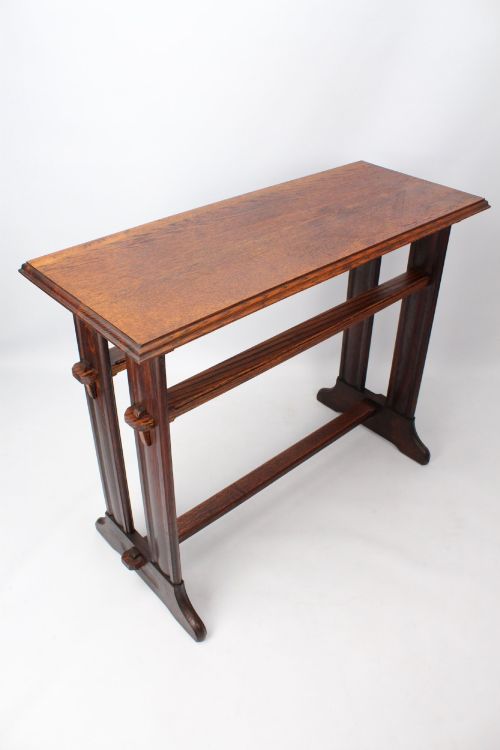
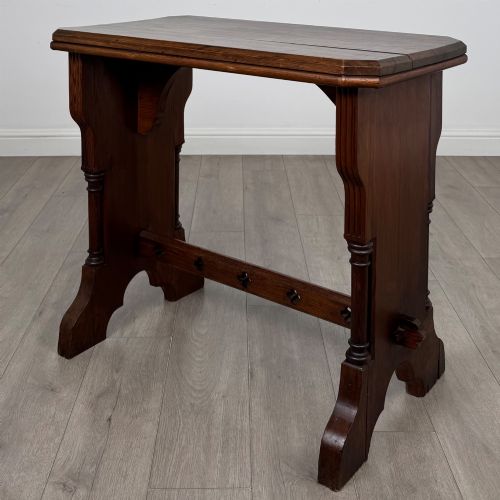
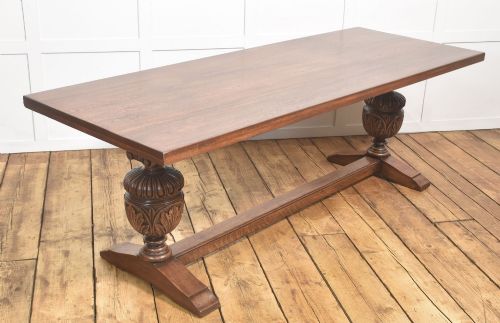
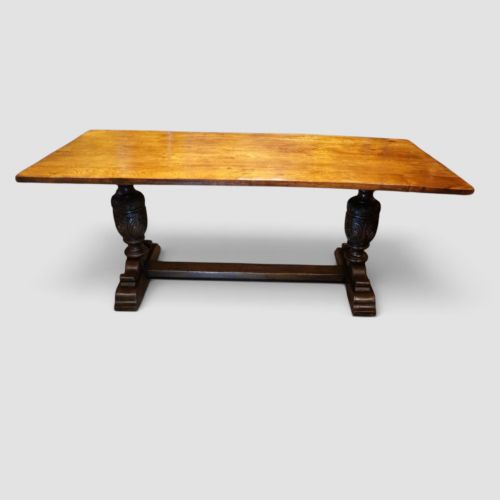
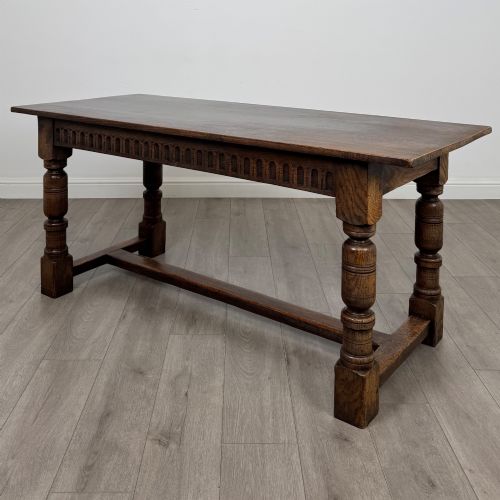
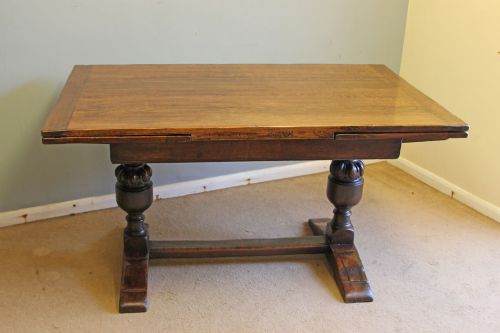
A dark brown trestle table typically appears as a refectory dining table, a farmhouse board, or a library table resting on trestle supports or thick legs. These pieces originate from periods spanning the seventeenth century through to the Edwardian era and the 1930s.
The version most commonly met on this page is the oak refectory table, often built in heavy timber with long boards designed for communal dining. Alongside these, buyers find walnut, mahogany, elm, and pitch pine variations functioning as side, coffee, and console tables.
How they were made
Makers constructed these tables predominantly from solid oak, walnut, mahogany, and pitch pine, selecting dense timbers capable of bearing heavy daily use. Planks were joined with pegged mortise and tenon joints to secure the thick tops to robust underframes.
Surfaces were finished to highlight the natural grain of the wood, utilising hand-planing and traditional wax or polish applications to achieve deep brown tones. Brass fittings occasionally appear on drawers in library and games variants.
Listings span seventeenth-century origins through the Edwardian period, utilising oak, walnut, mahogany, and pitch pine across dining and writing forms.
What varies in quality
Quality rests in the selection of timber and the integrity of the structural joinery, where thick, solid boards outperform thinner or later replacements. Tables featuring period construction methods display stability across the top planks and minimal timber movement.
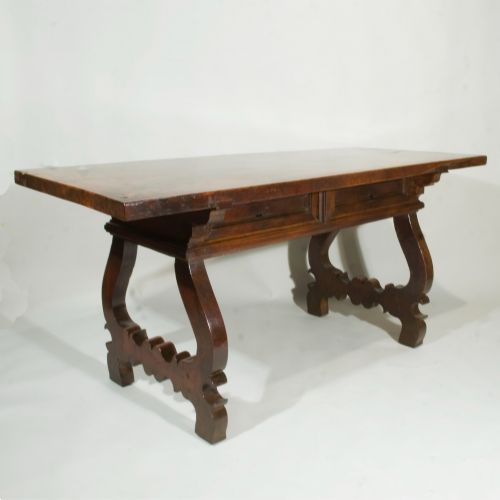
Proportion and scale separate standard utility boards from finer examples, such as George III library pieces or seventeenth-century Spanish walnut tables. The weight of the timber and the subtlety of hand-worked edges dictate the standing of each piece.
The Dark Brown Trestle Table Glossary
- Refectory table
- A long dining table traditionally used in monastic refectories and later adopted for domestic halls. These forms dominate the dark brown trestle table selection.
- Trestle
- A structural support consisting of a horizontal beam or top secured by two pairs of slanted legs. It provides stable floor contact for long wooden boards.
- Mortise and tenon
- A joint wherein a projecting tongue fits snugly into a corresponding hole to lock timbers together firmly. This method underpins seventeenth and eighteenth century framing.
- Pitch pine
- A resinous North American pine variety yielding durable timber with a pronounced grain. It appears in nineteenth-century utility and serving tables.
Dark Brown Trestle Table: Frequently Asked Questions
What is a trestle table?
A trestle table is a long board supported by upright legs connected to a central beam.
This design allows for unhindered seating along the entire length of the timber top.
How do I date an oak table?
Dating relies on examining the joinery methods, timber thickness, and surface wear patterns.
Hand-cut pegs, uneven board widths, and period style indicators help establish the manufacturing era.
Where should I place a refectory table?
A refectory table suits large dining rooms, kitchens, or open-plan living spaces.
Its long format requires ample clearance around the perimeter for chairs and movement.
Are these tables made of solid wood?
The listings feature solid timbers including oak, walnut, mahogany, elm, and pitch pine.
Construction utilises heavy planks rather than veneered surfaces to ensure long-term durability.